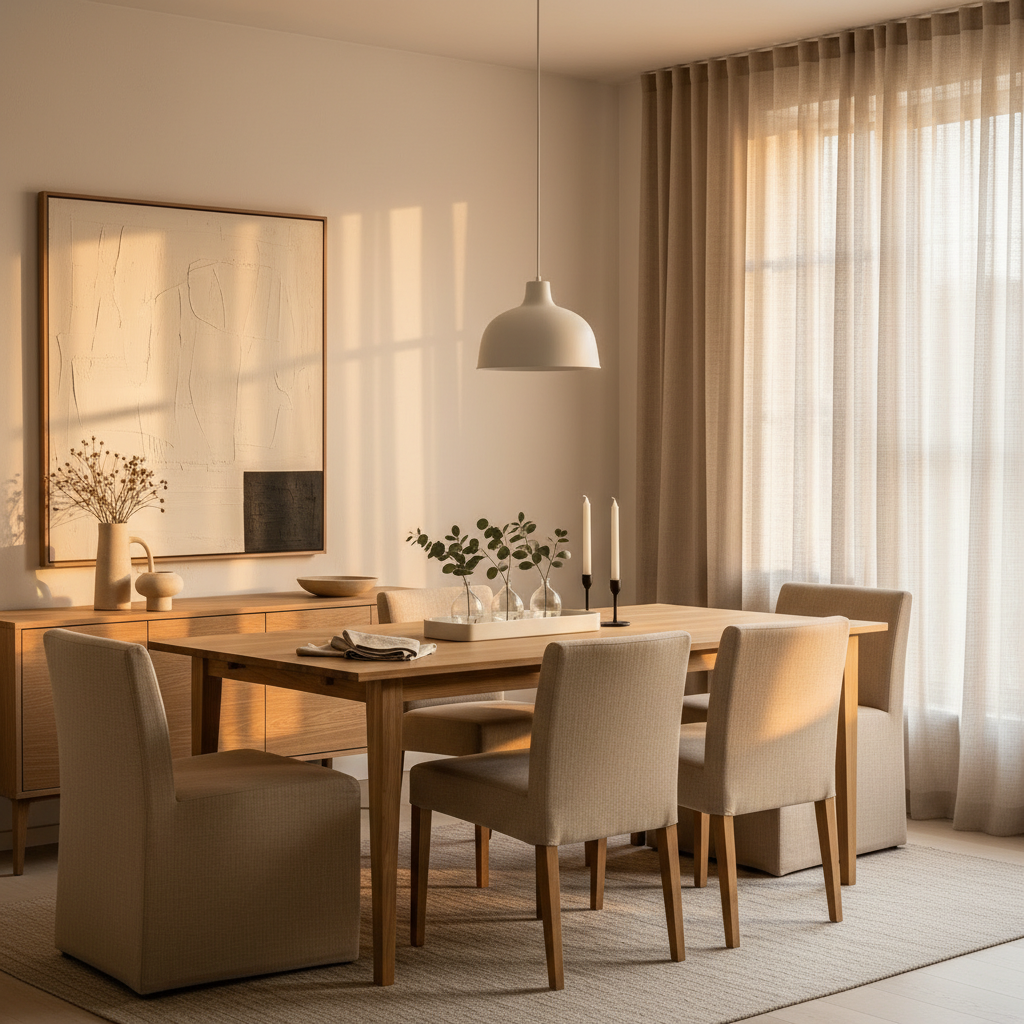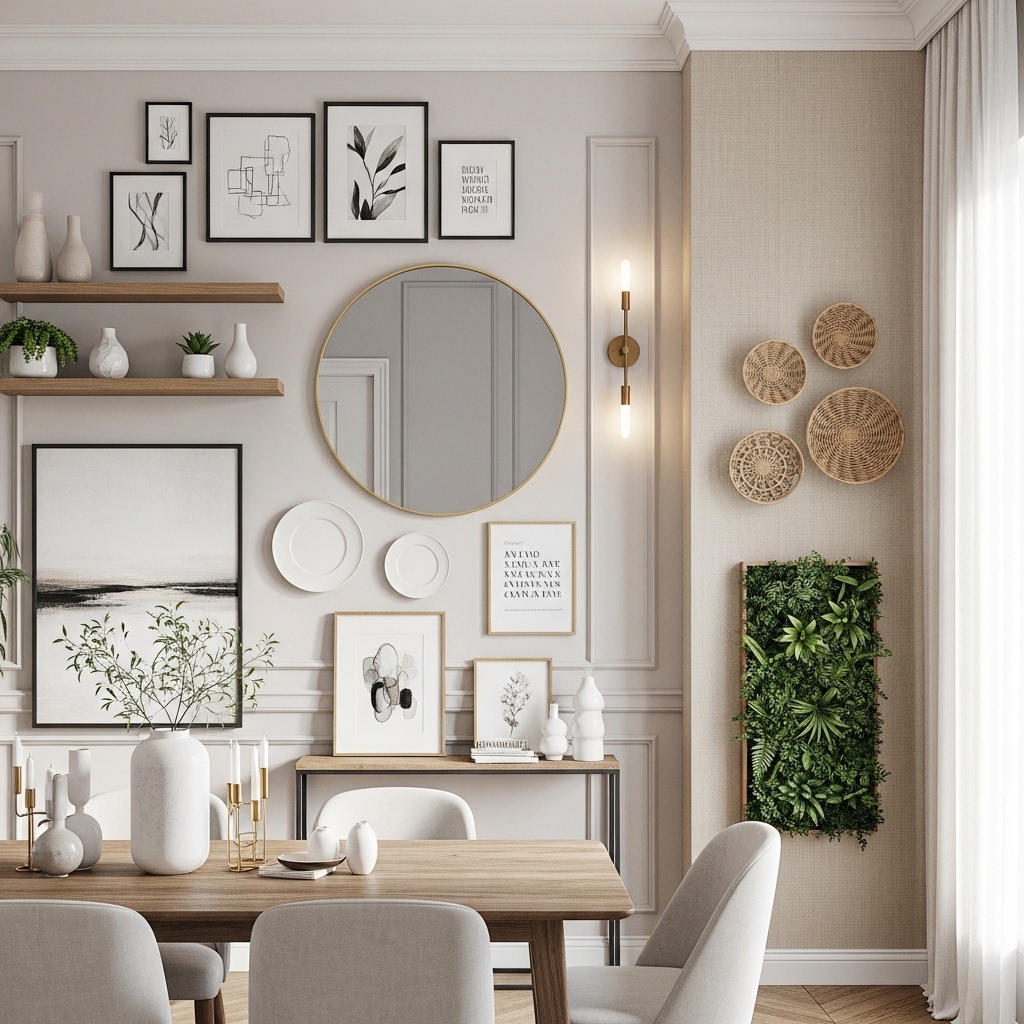
Mirrors in a dining room aren’t just decorative—they’re strategic. A well-placed mirror can stretch a tight space, bounce light where it’s desperately needed, and add that polished, “someone thought this through” feeling. But not every mirror works everywhere, and that’s where most people get it wrong. It’s not about buying the biggest piece you can find—it’s about proportion, material, and what it reflects.
Some mirrors make a room feel airy and elegant; others can feel cold or overly busy if handled poorly. The goal is balance. Think of your mirror as part of the composition, not just an accessory slapped onto a wall.
Below are 12 distinct approaches that actually work—each with its own personality, practical tips, and a few honest caveats.
1. The Classic Oversized Statement Mirror
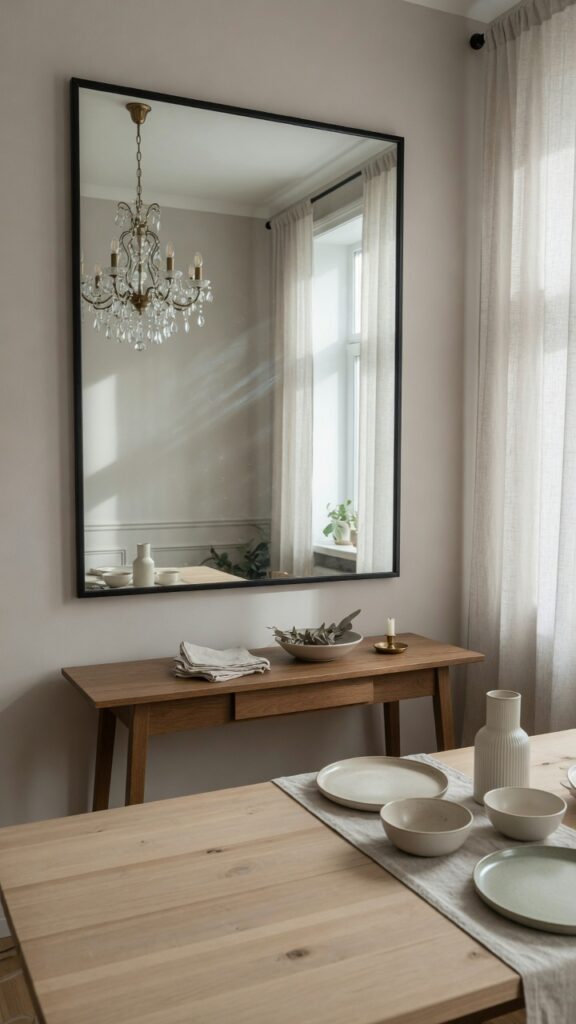
Big mirrors are the easiest way to make a dining room feel intentional. There’s something quietly confident about a single oversized piece—it doesn’t compete, it anchors.
Go for a mirror that’s at least two-thirds the width of your dining table or sideboard. Thin frames in black metal or brushed brass tend to age better than anything ornate. Position it so it reflects either a window or a light fixture—never a blank wall.
One thing to watch: oversized mirrors in small rooms can feel overwhelming if everything else is also heavy. Keep surrounding decor light—think linen, glass, and soft textures.
Takeaway: If you want impact without clutter, go big and keep everything else restrained.
2. Round Mirror for Soft Balance
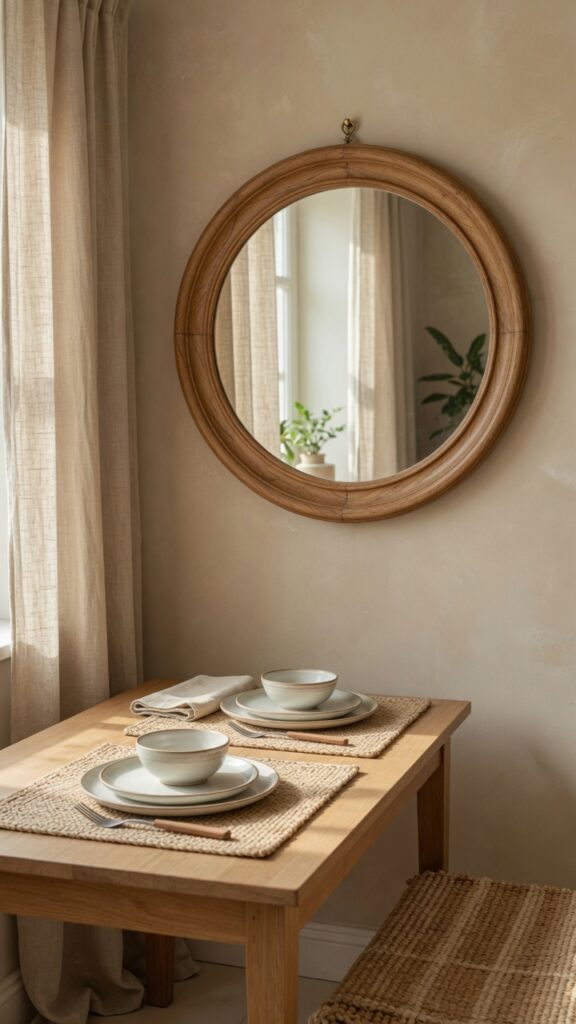
Round mirrors calm a room down. If your dining space has sharp lines—rectangular tables, straight-backed chairs—a circular mirror breaks that rigidity.
Keep the diameter proportional: too small and it looks like an afterthought, too large and it dominates awkwardly. Wood frames add warmth, while metal frames feel more modern.
Here’s the trick: align the center of the mirror at eye level when seated, not standing. It makes the room feel more intimate during meals.
Avoid pairing a round mirror with overly busy wallpaper—it can get visually chaotic fast.
Takeaway: Use round mirrors to soften structured spaces and create visual flow.
3. Antique Mirror Panels for Texture
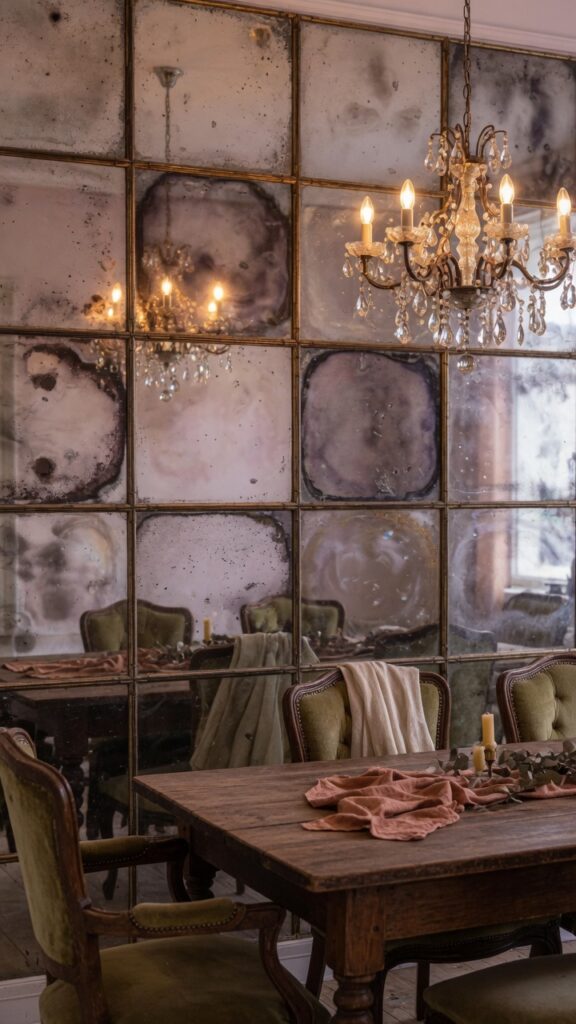
If you want character, this is it. Antique mirror panels bring depth and a slightly imperfect, lived-in elegance.
They work especially well in traditional or transitional interiors. The subtle distressing prevents harsh reflections, which can feel more comfortable in dining settings.
Install them in grids or as a full wall treatment. Pair with warm lighting—cool LEDs will kill the charm instantly.
Downside? They can be pricey, and if overused, the room might feel overly formal.
Takeaway: For texture and depth, aged mirrors beat pristine glass every time.
4. Floor-Leaning Mirror for Casual Elegance
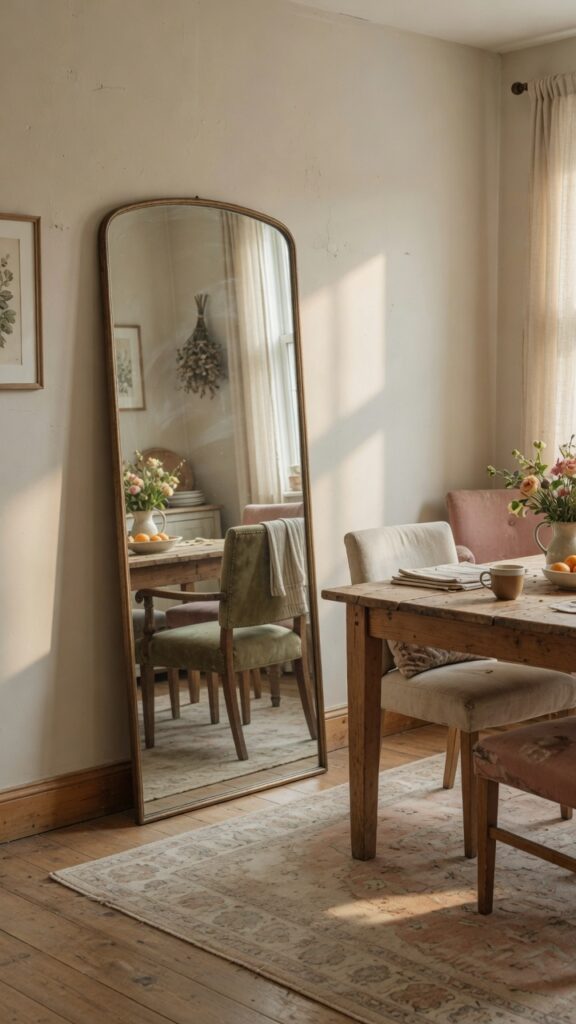
Leaning mirrors feel effortless—almost like you didn’t try too hard (even if you did). They’re perfect for renters or anyone who hates drilling walls.
Choose a tall mirror with some weight to it—flimsy frames ruin the effect. Position it where it catches natural light or reflects greenery.
But be careful: if your dining area is tight, a leaning mirror can eat up floor space quickly.
Takeaway: Ideal for flexible, relaxed styling—just make sure it doesn’t feel temporary.
5. Mirror Gallery Wall
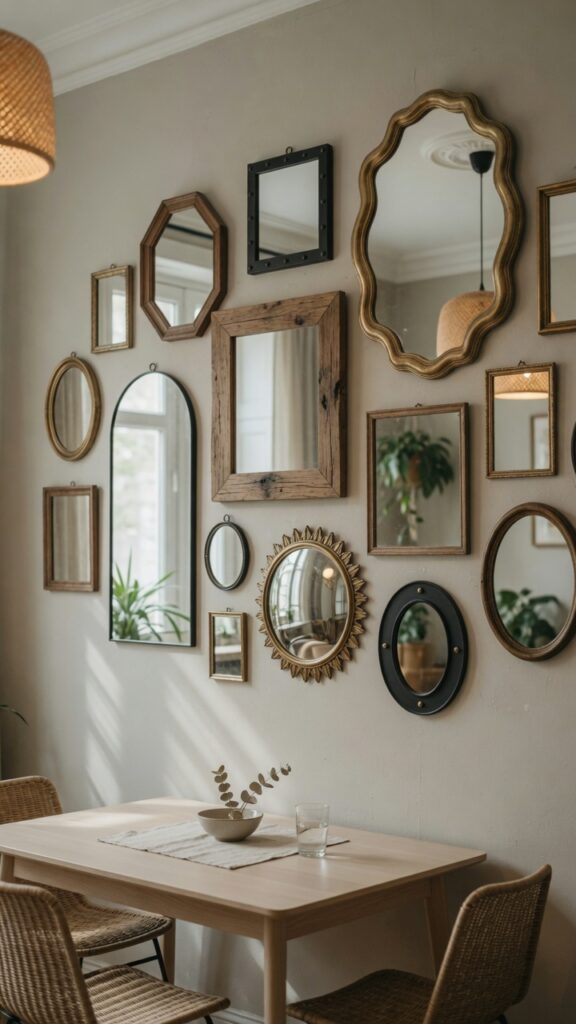
Gallery walls aren’t just for art. Mixing mirrors creates movement and reflects light from multiple angles.
Stick to a controlled palette—too many frame styles can look chaotic. Start with a central piece and build outward organically.
Spacing matters more than you think. Keep gaps consistent, or it’ll look messy instead of curated.
Not ideal for minimalists—this look thrives on visual complexity.
Takeaway: A layered, expressive option if you enjoy a bit of visual energy.
6. Arched Mirror for Architectural Interest
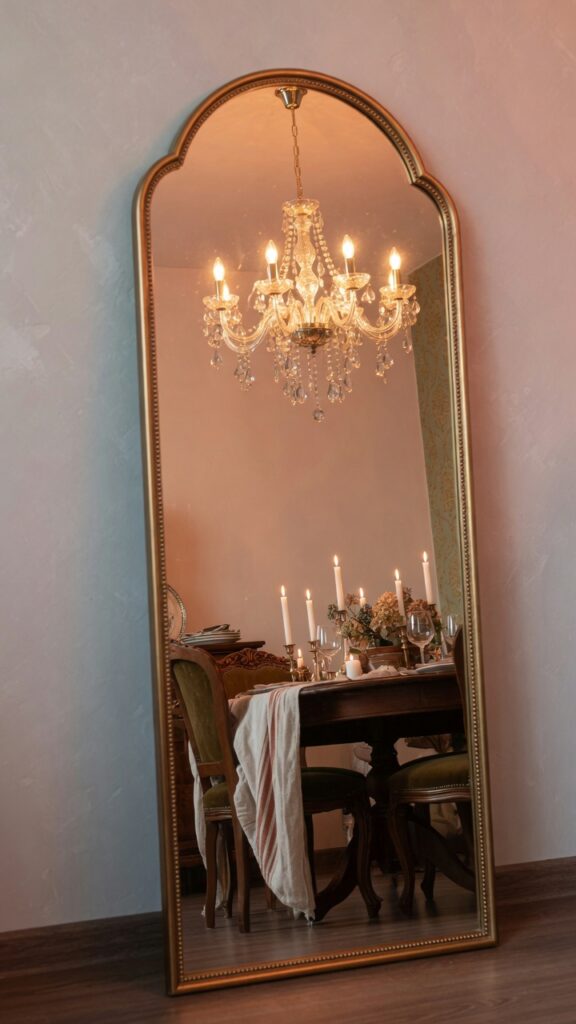
Arched mirrors mimic windows, which makes them perfect for rooms lacking architectural detail.
They add height and a subtle elegance without feeling stiff. Pair with soft materials like velvet or boucle for contrast.
Positioning matters—center it with intention. Off-balance placement can feel accidental.
Skip this if your space already has strong architectural elements—it might feel redundant.
Takeaway: Great for adding shape and softness to plain walls.
7. Minimal Frameless Mirror
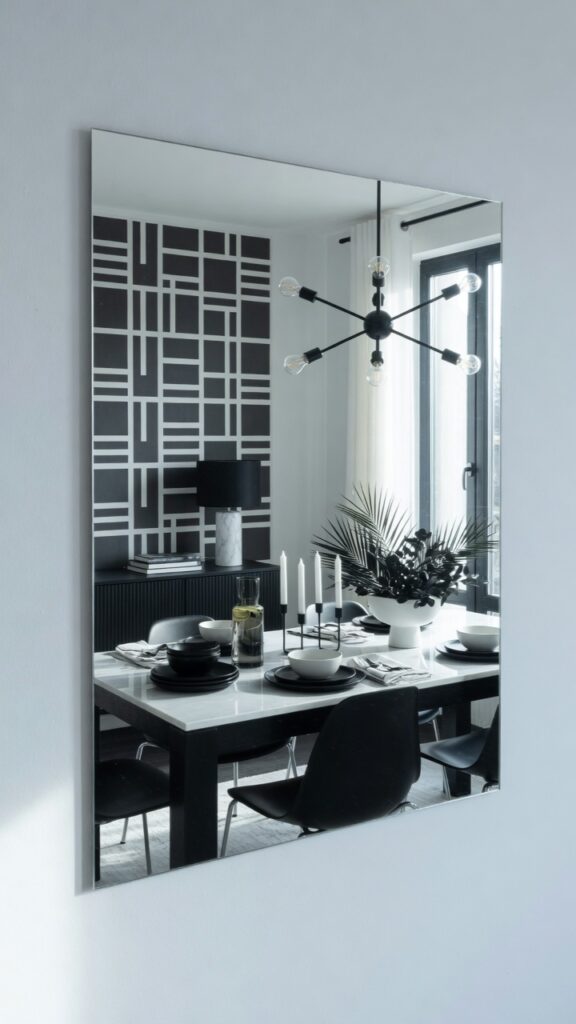
Frameless mirrors are about restraint. They disappear into the wall, letting reflections do the work.
Perfect for modern interiors where less is more. Pair with matte finishes and simple furniture.
But here’s the catch: they can feel cold if the rest of the room lacks warmth.
Balance with textiles—linen, wool, or wood elements help.
Takeaway: Clean and modern, but needs warmth elsewhere to feel inviting.
8. Mirror with Built-In Shelf
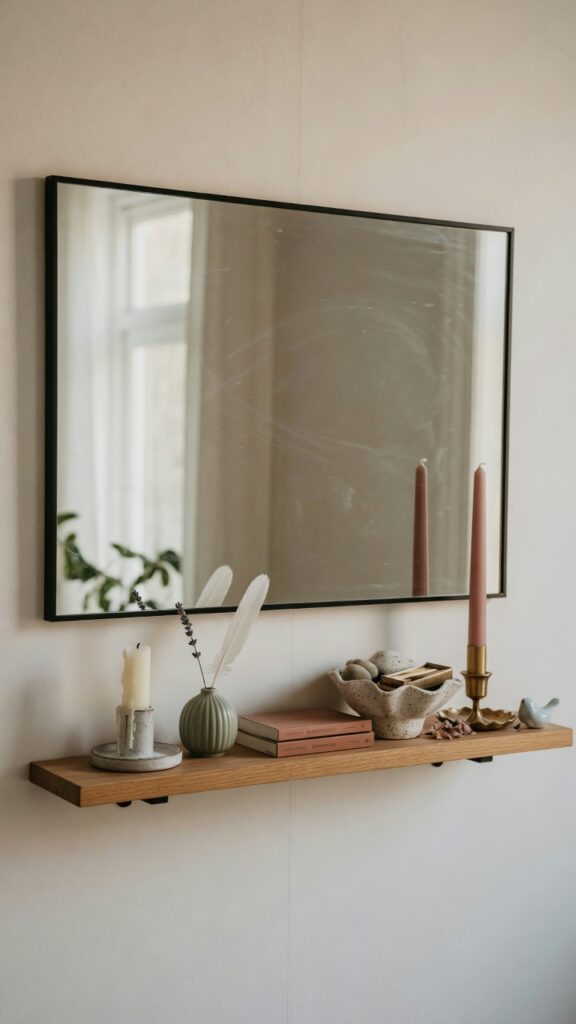
Function meets style here. A shelf adds practicality without cluttering the room.
Keep styling minimal—two or three objects max. Overloading defeats the purpose.
This works especially well in smaller dining areas where every surface counts.
Watch out for height placement—too high and the shelf becomes useless.
Takeaway: Smart, practical, and visually tidy.
9. Black-Framed Grid Mirror
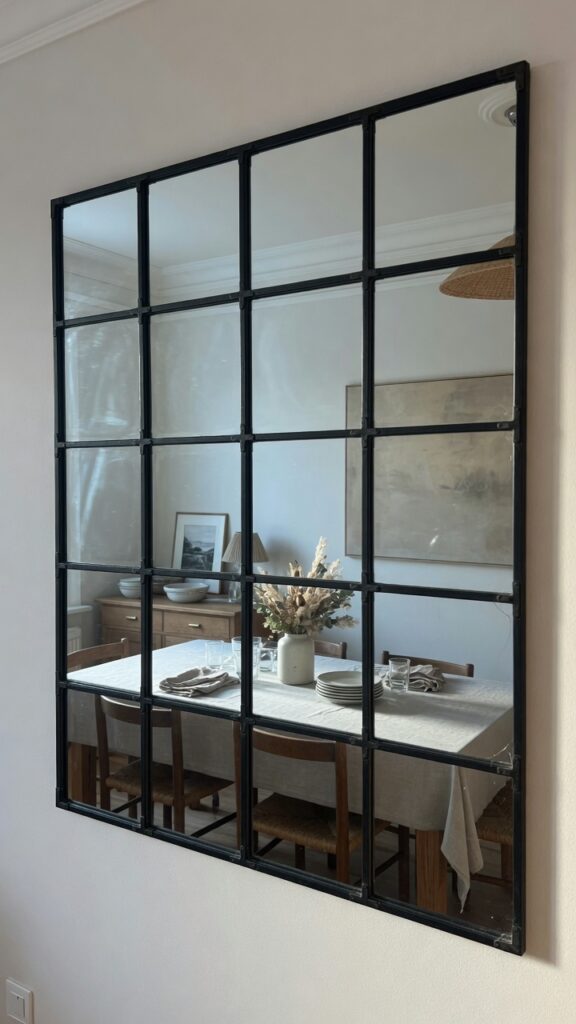
Grid mirrors bring structure and a slightly industrial edge.
They’re great in contemporary or loft-style spaces. The divisions break reflections, adding interest.
Pair with softer elements—linen curtains, wooden tables—to avoid a harsh feel.
Too many black elements nearby can make the room feel heavy.
Takeaway: Structured and bold—best balanced with softer textures.
10. Oval Mirror for Subtle Elegance
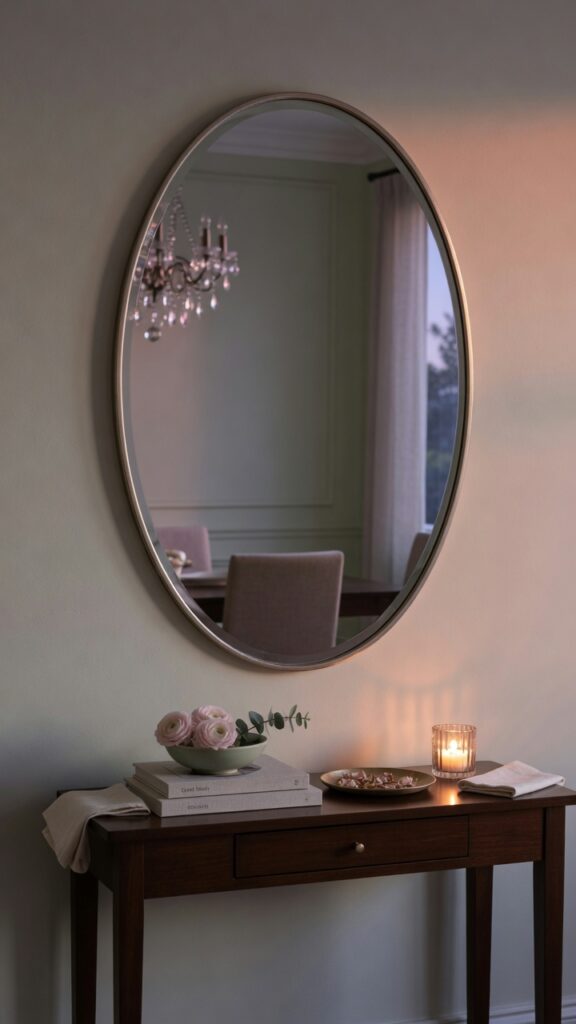
Oval mirrors are underrated. They’re softer than rectangles but more refined than circles.
They work beautifully in transitional spaces—neither too modern nor too traditional.
Keep proportions in check. Too narrow and it looks awkward.
Avoid pairing with overly ornate furniture—it can tip into dated territory.
Takeaway: A quiet, elegant choice that rarely feels overdone.
11. Backlit Mirror for Ambient Glow
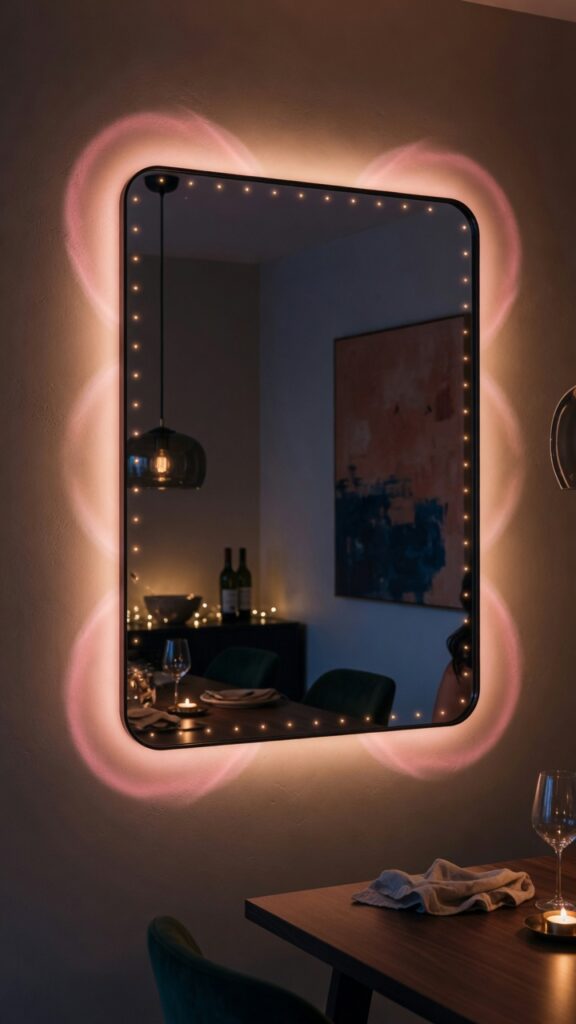
Lighting changes everything. Backlit mirrors add mood, especially for evening dining.
Go for warm tones—cool lighting feels clinical. Use dimmable options if possible.
This works best in modern interiors. In traditional settings, it can feel out of place.
Also, wiring can be tricky—plan ahead.
Takeaway: Perfect for ambiance, but requires thoughtful integration.
12. Rustic Wooden Frame Mirror
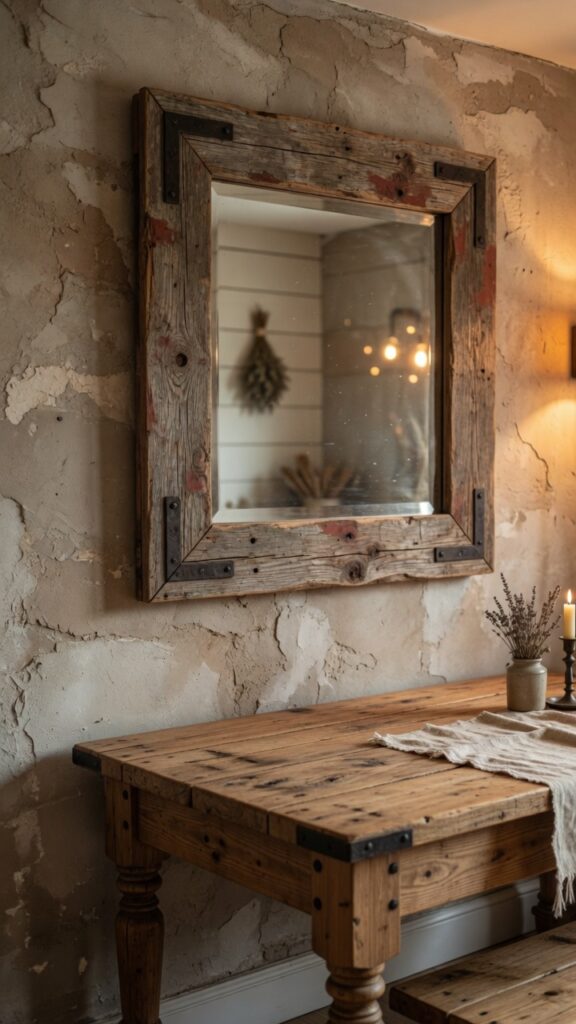
If your space leans cozy, rustic frames bring instant warmth.
Look for natural imperfections—grain, knots, slight unevenness. That’s the charm.
Pair with soft textiles and earthy tones. Avoid mixing with ultra-modern pieces—it clashes.
Too heavy a frame can dominate small spaces.
Takeaway: Warm, grounded, and full of character—just don’t overdo it.
Conclusion
A dining room mirror isn’t just decoration—it’s a tool. It shapes light, alters perception, and quietly defines the atmosphere of your space. The difference between a well-designed room and an average one often comes down to these subtle choices.
What matters most is intention. Think about what your mirror reflects, how it interacts with materials around it, and whether it supports the mood you want—calm, bold, cozy, or refined. There’s no one-size-fits-all solution, and that’s the point.
If you’ve made it this far, you now see mirrors differently—not just as objects, but as design elements with real impact. And that shift in perspective is what elevates your space from functional to thoughtfully styled.