There’s something quietly magical about a well-made trellis. It’s part architecture, part invitation — a structure that gives climbing plants a reason to show off and gives your garden a backbone it didn’t know it needed. Done right, a trellis transforms an awkward fence line into a living wall, turns a boring patio corner into a private nook, and adds height to spaces that feel flat and forgotten.
I’ve spent years tinkering with outdoor spaces (mine and other people’s), and I keep coming back to trellises because they punch above their weight. They’re affordable compared to building a whole pergola, they work for renters and homeowners alike, and they give you that lush, layered, slightly-overgrown look that makes a garden feel established. Below are twelve ideas I genuinely love — some classic, some unexpected — with the practical notes I wish someone had given me before I started drilling into stucco at 7pm on a Sunday.
1. The Classic Diamond Lattice Against a White Wall
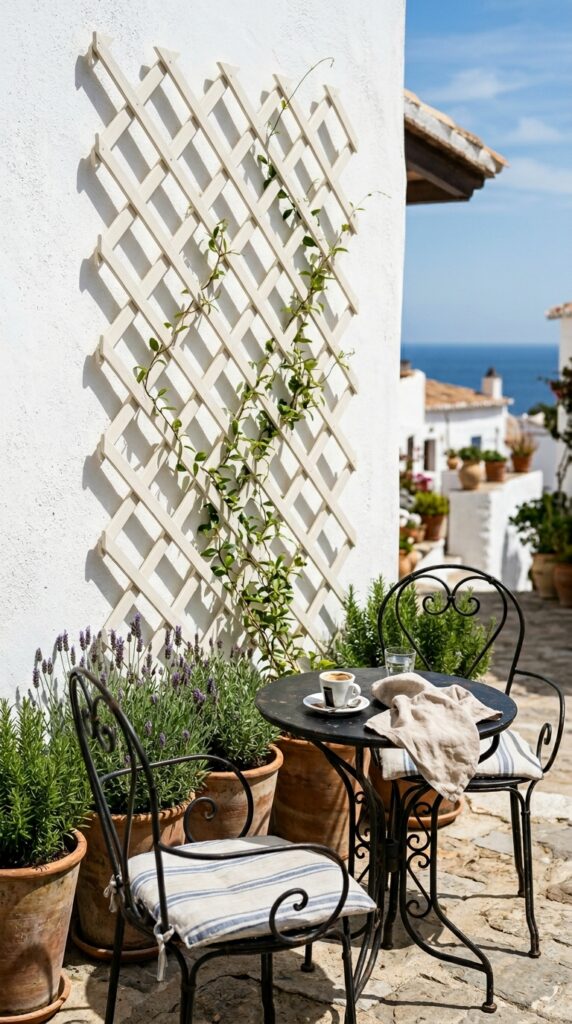
The diamond lattice is the little black dress of trellises — it never feels wrong. Painted in the same soft white as the wall behind it, it almost disappears until the vines fill in, and then suddenly you have this gorgeous geometric pattern peeking through the leaves.
A few things I’d actually do here. Pick a vine that flowers in stages (star jasmine, climbing hydrangea) so the wall changes through the seasons. Mount the lattice on small wooden spacers — about an inch off the wall — so air circulates behind it and your stucco doesn’t rot. And go bigger than you think; a small lattice on a tall wall looks like a postage stamp.
The watch-out: white paint on wood outdoors is high-maintenance. If you hate repainting every two or three years, choose powder-coated metal in warm white instead. Crisp, classic, and completely foolproof for the right wall.
2. Cedar Slatted Privacy Screen With Built-In Planter
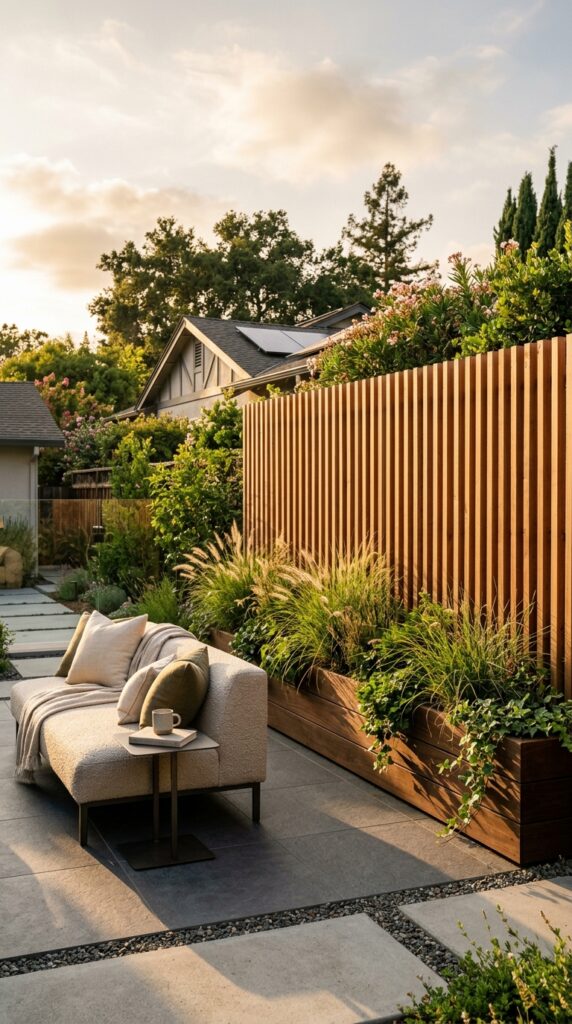
This one’s for anyone who lives close to the neighbors. A cedar slat trellis with a built-in planter is genuinely one of the best privacy moves you can make outdoors — it blocks sightlines without feeling like a wall, and the planter at the base means you don’t waste any patio space on a separate pot.
Vertical slats read more modern than diagonal lattice, so this works beautifully alongside contemporary architecture. Space the slats about an inch and a half apart for that perfect balance of airflow, light, and privacy. Use untreated cedar if you want it to silver gracefully over time, or seal it if you prefer the warm honey tone to stay.
One thing to watch: the planter needs proper drainage holes and a layer of gravel, otherwise you’ll be dealing with mushy roots within a season. Not glamorous, but worth it. Treat this as architecture and it’ll behave like architecture.
3. Black Metal Grid Trellis For Modern Edge
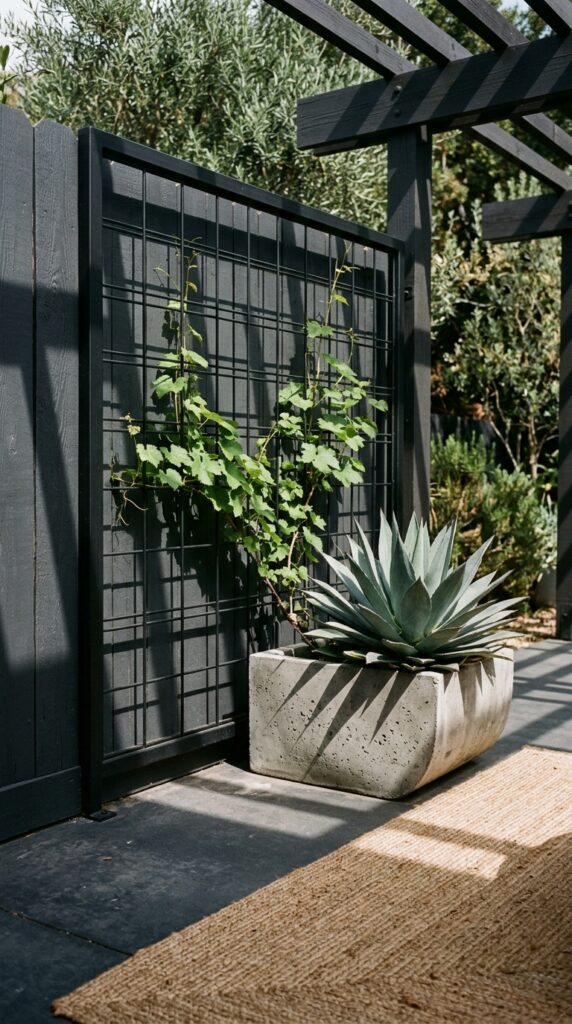
If white lattice feels too cottage-y for you, black metal grid trellises are where it gets interesting. The contrast between dark, geometric framing and soft green foliage is genuinely stunning — and it photographs beautifully if you’re someone who actually uses your garden for entertaining.
Go with powder-coated steel rather than wrought iron unless you live somewhere bone-dry; iron rusts fast in humidity and the orange streaks will stain everything below. Choose a grid with thicker bars (around half an inch) so it reads architectural, not flimsy. And pair it with bold, structural plants — climbing roses look fussy here, but a grapevine, climbing hydrangea, or even kiwi vine looks incredible.
The constraint: black absorbs heat, so don’t use this in full afternoon sun with delicate vines, or you’ll cook the new growth. Place it on an east or north wall and it’ll be a showstopper for years.
4. Arched Trellis Doorway Between Garden Rooms
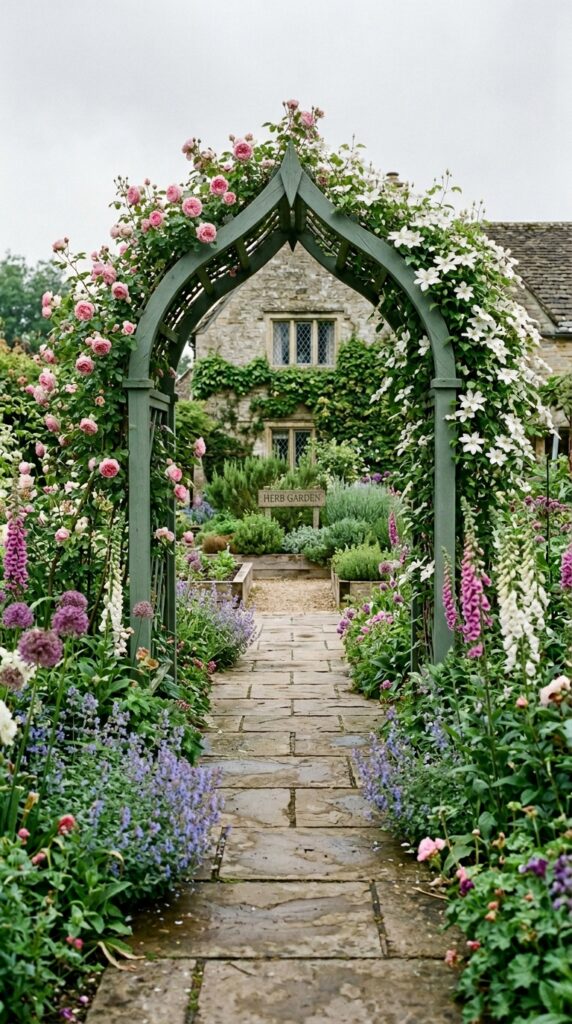
An arched trellis instantly does something a flat one can’t: it creates the feeling of moving from one place to another. Even if your garden is small, framing a path with an arch makes it feel layered and intentional, like you’ve designed proper “rooms” outdoors.
The trick is scale. Most off-the-shelf arches are too small — go for at least seven feet tall and four feet wide so people can walk through without ducking, and so the climbing plants have room to drape without smacking you in the face. Paint it a saturated color (deep sage, plum, or charcoal) to give the structure presence even before plants take over.
Watch out for wind. Arched trellises act like sails, so anchor the legs deep — at least eighteen inches into the ground with concrete footings. Skip this and your romantic arch becomes a romantic kite.
5. Pocket-Friendly Bamboo Trellis For Vegetable Gardens
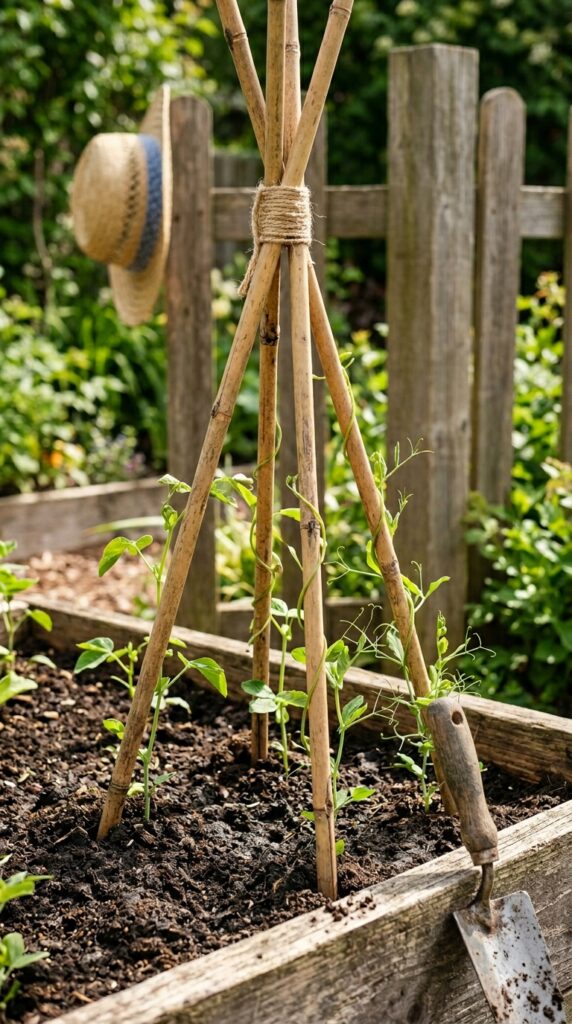
Sometimes the prettiest trellis is the cheapest one. A simple bamboo teepee, lashed together with jute twine, costs about twelve dollars and looks like something out of a slow-gardening book. It’s also the trellis I recommend most for renters and beginners.
Use bamboo canes around six to eight feet long, push them deep into the soil (a foot down minimum), and tie them at the top with twine wrapped tightly several times. For vegetable gardens, this is unbeatable for pole beans, sweet peas, cucumbers, and even small squash varieties. You can dismantle it at season’s end and store it flat.
The honest watch-out: bamboo lasts about two seasons outdoors before it starts to splinter. Treat it as a renewable annual rather than a permanent fixture. Cheap, charming, and completely fuss-free — exactly what a kitchen garden should be.
6. Wall-Mounted Copper Wire Trellis For Renters
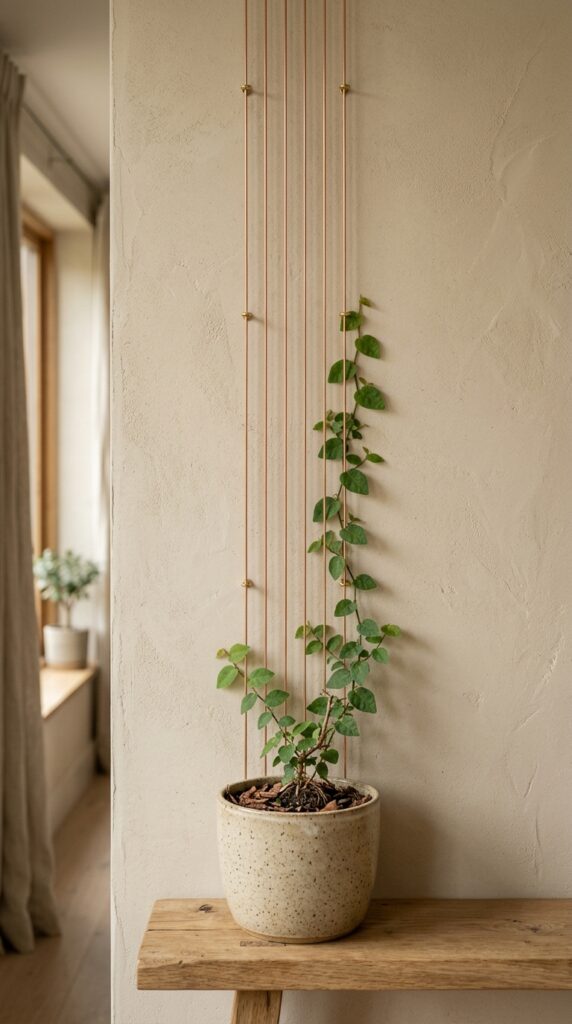
Renters, this one is for you. A copper wire trellis is essentially invisible from a distance, leaves only tiny holes in the wall, and develops the most gorgeous patina over a year or two. It’s the kind of detail that makes guests squint and ask, “wait, how did you do that?”
Use coated copper wire (the uncoated stuff stains stucco and brick green over time). Run it in vertical lines about six inches apart, anchored top and bottom with small brass eye hooks. For climbing fig, jasmine, or small clematis, this is all the structure they need. The whole project costs around twenty-five dollars.
The constraint: this only works for lightweight climbers. Don’t try it with wisteria or grapevine — they’ll rip it off the wall by year three. Quiet, elegant, and almost rental-proof. A small move with serious payoff.
7. Freestanding Folding Screen Trellis For Decks
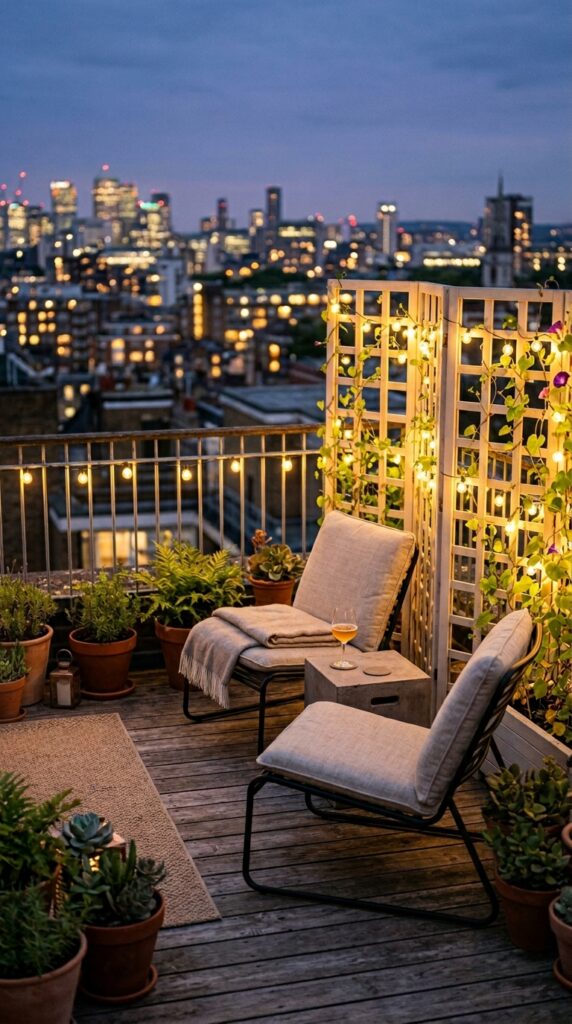
If you can’t drill into anything — concrete patio, rented deck, balcony with strict rules — a freestanding folding trellis is the answer most people don’t think of. Three hinged panels stand on their own, fold flat for storage, and create instant privacy or vertical garden space wherever you put them.
Buy hardwood (teak or ipe) if your budget allows; cheaper pine warps badly within a year of weather exposure. Weight the base with heavy planters on either end so wind doesn’t knock the whole thing over. And string warm white fairy lights along the top edge for evenings — it transforms the corner.
The watch-out: hinged trellises wobble if you don’t anchor them properly. If you can, screw the bottom of each panel to a heavy wooden plank running underneath. Portable, flexible, and surprisingly substantial once it’s dressed in vines and lights.
8. Living Green Wall With Wire Mesh System
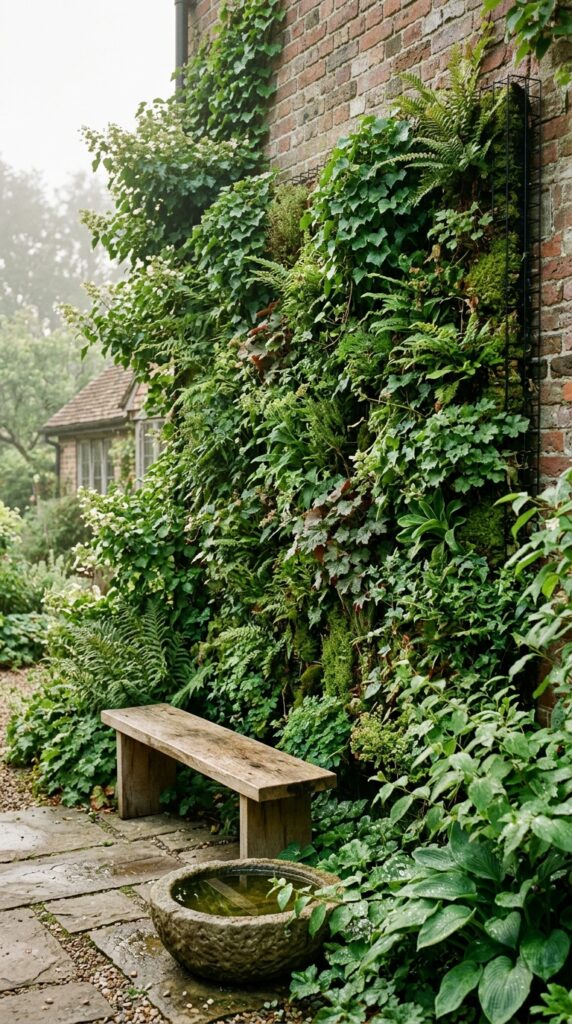
A living green wall sounds intimidating but it’s really just a serious trellis with ambition. Done with a tensioned wire mesh system, you can cover an entire wall with climbing greenery and create the kind of lush backdrop that makes a small yard feel infinite.
Pick climbers that fill in fast but stay behaved — climbing hydrangea, Boston ivy, or evergreen clematis are all good choices. Install the wire mesh with stainless steel cables tensioned by turnbuckles, and keep the system about two inches off the wall for airflow. Plant generously at the base, three to four feet apart, and be patient through year one.
The honest constraint: a living wall needs real watering discipline, especially in the first two summers. Install a drip line if you can, otherwise plan on fifteen minutes with the hose every other evening. The payoff is worth every minute.
9. Trellis Headboard For An Outdoor Daybed
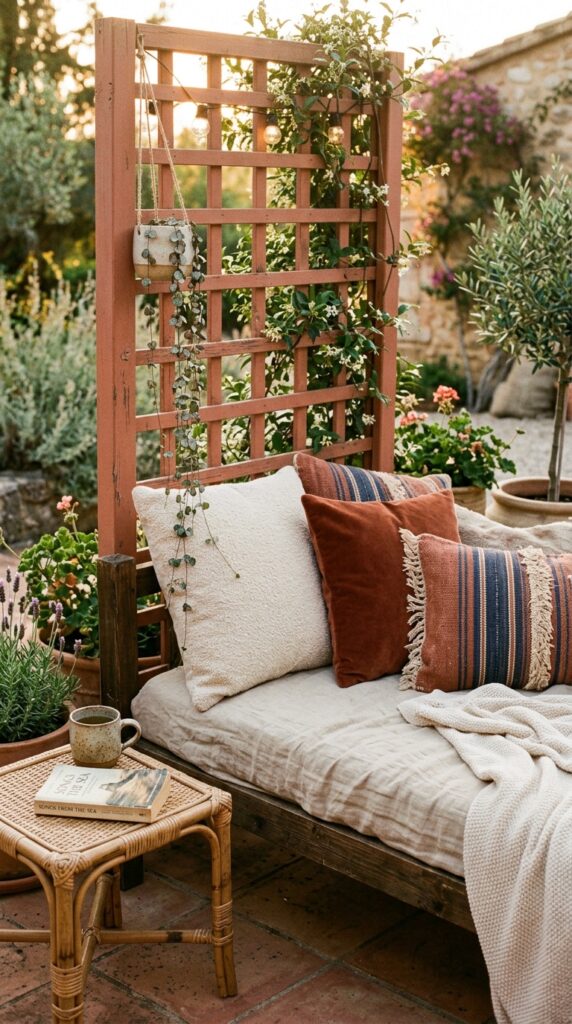
Here’s a use that almost no one thinks of: a trellis as a headboard for an outdoor daybed. It immediately makes the bed feel intentional rather than like a random piece of furniture floating in the yard, and it gives you a ready-made spot for hanging planters, lanterns, or string lights.
A reclaimed wood trellis painted in a saturated earth tone — terracotta, rust, deep ochre — feels much more grown-up than raw cedar here. Layer the bed with mixed textiles: linen, boucle, a bit of velvet for evenings. Hang one or two small trailing plants from the trellis bars for that lived-in, slightly bohemian feel.
The watch-out: outdoor textiles need to actually be outdoor textiles. Indoor velvet will mildew within a month. Buy performance fabric or commit to bringing cushions in nightly. Feels like a mini vacation in your own backyard.
10. Minimalist Steel Cable Trellis For Modern Homes
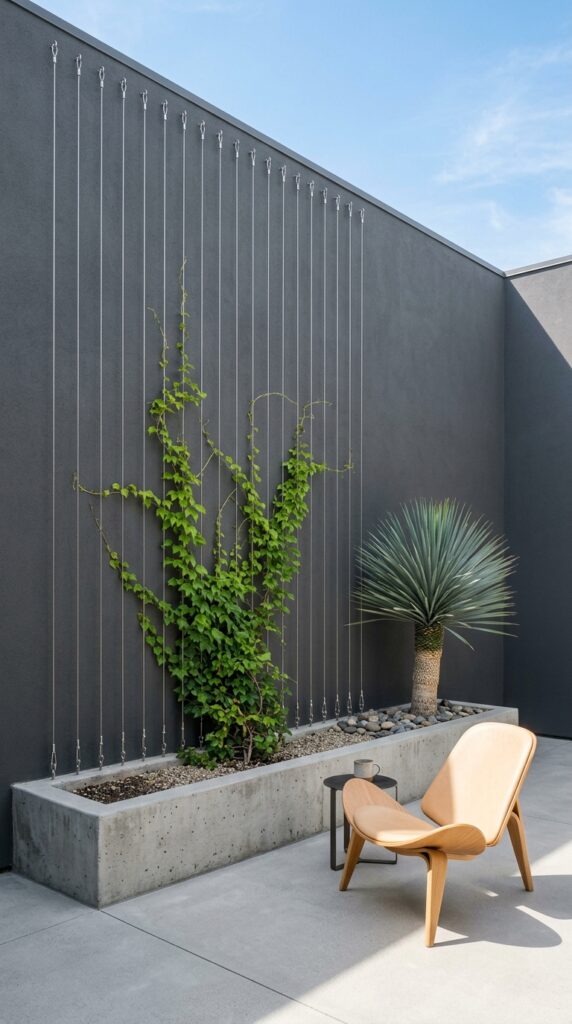
For modern, architectural homes, nothing beats a tensioned stainless steel cable trellis. It’s almost invisible — just thin vertical lines catching the light — and lets the climbing plant become the entire visual statement against the wall.
Use 3mm stainless cable with proper tensioners at top and bottom; loose cables sag and look terrible within a month. Space them vertically, about eight inches apart, for vines like Boston ivy, climbing hydrangea, or evergreen clematis. The whole installation should feel intentional and exact, almost like art hanging on the wall.
The constraint: this aesthetic is unforgiving. Sloppy installation, dead leaves left hanging, or a half-grown vine all stand out painfully because the trellis itself disappears. If you’re not willing to maintain it, choose something more forgiving. But when it works, it’s stunning. Less trellis, more sculpture — and the plant gets to be the hero.
11. Painted Old Door As A Cottage Garden Trellis
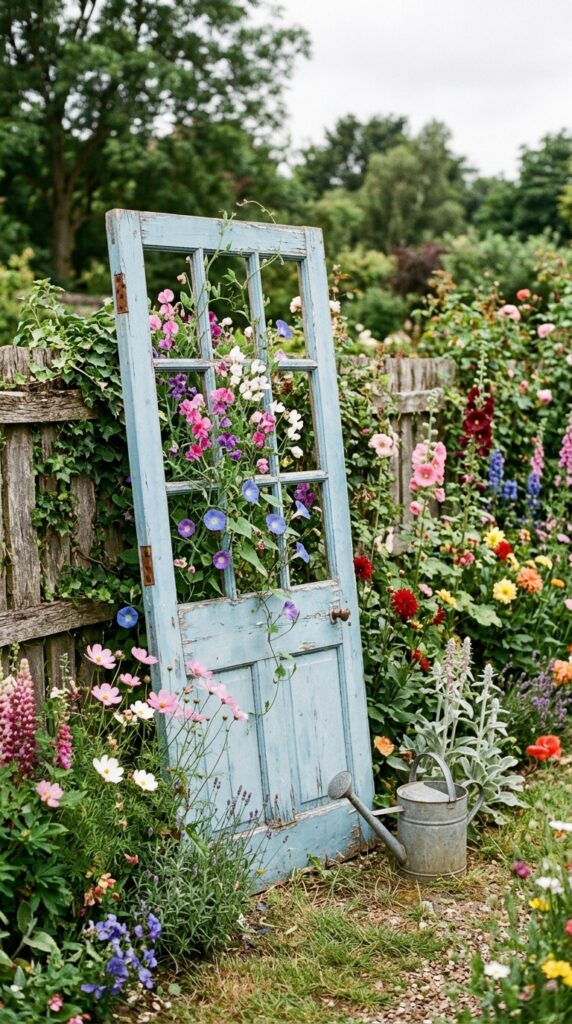
This is the most charming budget idea in the whole article. An old wooden door — the kind with empty window panes or removable glass — leaned against a fence and used as a trellis is unbeatable for cottage-style gardens. There’s a softness and storytelling quality you simply can’t manufacture with new materials.
Look for old doors at salvage yards, estate sales, or curbside on a lucky weekend. Sand off any flaking lead paint (assume it’s there if the door is pre-1980), then repaint in a soft chalky color: dusty blue, pale sage, faded pink. Anchor it firmly to a fence post or wall — old doors are heavier than they look and unstable on their own.
The honest watch-out: this style only works if the rest of the garden leans into it. In a sleek modern yard, a leaning painted door looks like a yard sale prop. Romantic, cheap, and full of character — when the setting is right.
12. Pergola-Topped Trellis For An Outdoor Dining Nook
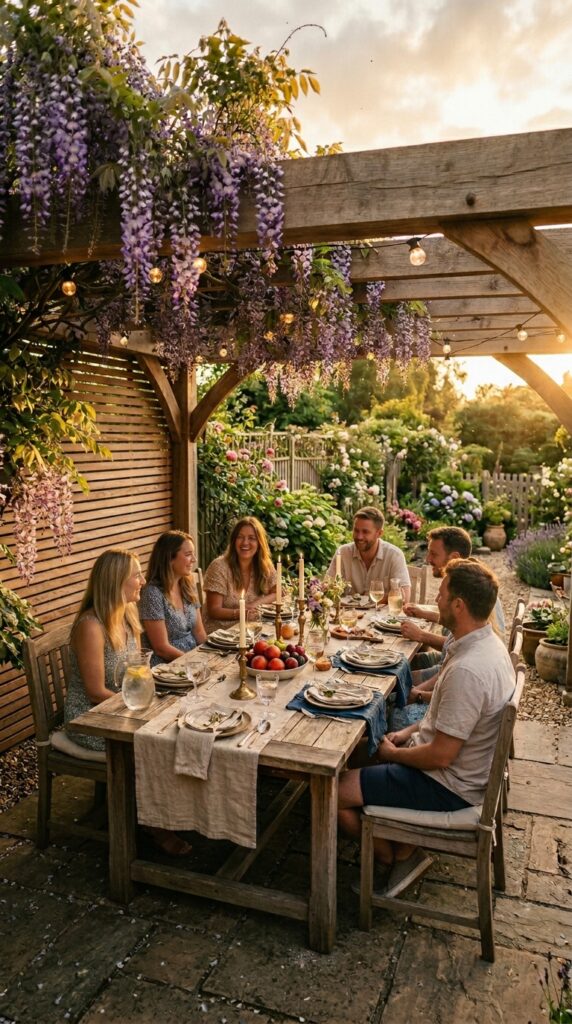
If you only do one thing in this whole list, consider this: a pergola-topped trellis in the corner of your patio creates an outdoor dining nook that becomes the most-used space in your entire house. The combination of overhead beams and side trellis panels gives you shade, privacy, and that magical filtered light all at once.
Build it with proper hardwood beams (oak, ipe, or pressure-treated cedar), and don’t skimp on the height — eight feet minimum so people don’t feel hunched. Train wisteria, grape, or climbing roses across the top for shade by year three. Add side trellis panels on one or two walls for privacy from neighbors and to anchor string lights.
The watch-out: wisteria is gorgeous but ferocious — it will lift roof tiles and crack trellis joints if you don’t prune it twice a year. Commit to maintenance or choose a milder grapevine instead. Build it well and you’ll never want to eat indoors again.
Final Thoughts
A trellis is one of those rare design moves that gives back more than you put in. Plant it, train it, leave it alone for a season or two, and suddenly you have this lush, layered, slightly wild backdrop that makes your whole outdoor space feel considered and alive. Whether you’re working with a tiny rented balcony, a sleek modern courtyard, or a sprawling cottage garden, there’s a version of this idea that will fit — and most of them cost less than a single piece of decent outdoor furniture.
The honest secret is patience. Year one looks sparse. Year two, things start filling in. Year three, you stop being able to remember what your yard looked like before. That’s the magic of vertical gardening, and it’s something you can’t fake or shortcut.
I hope one of these twelve ideas sparked something for you — a corner you’d forgotten about, a fence you’d given up on, a wall begging for greenery. Bookmark this page, come back when you’re ready to plan, and tell us which one you tried. We love seeing how readers make these ideas their own.