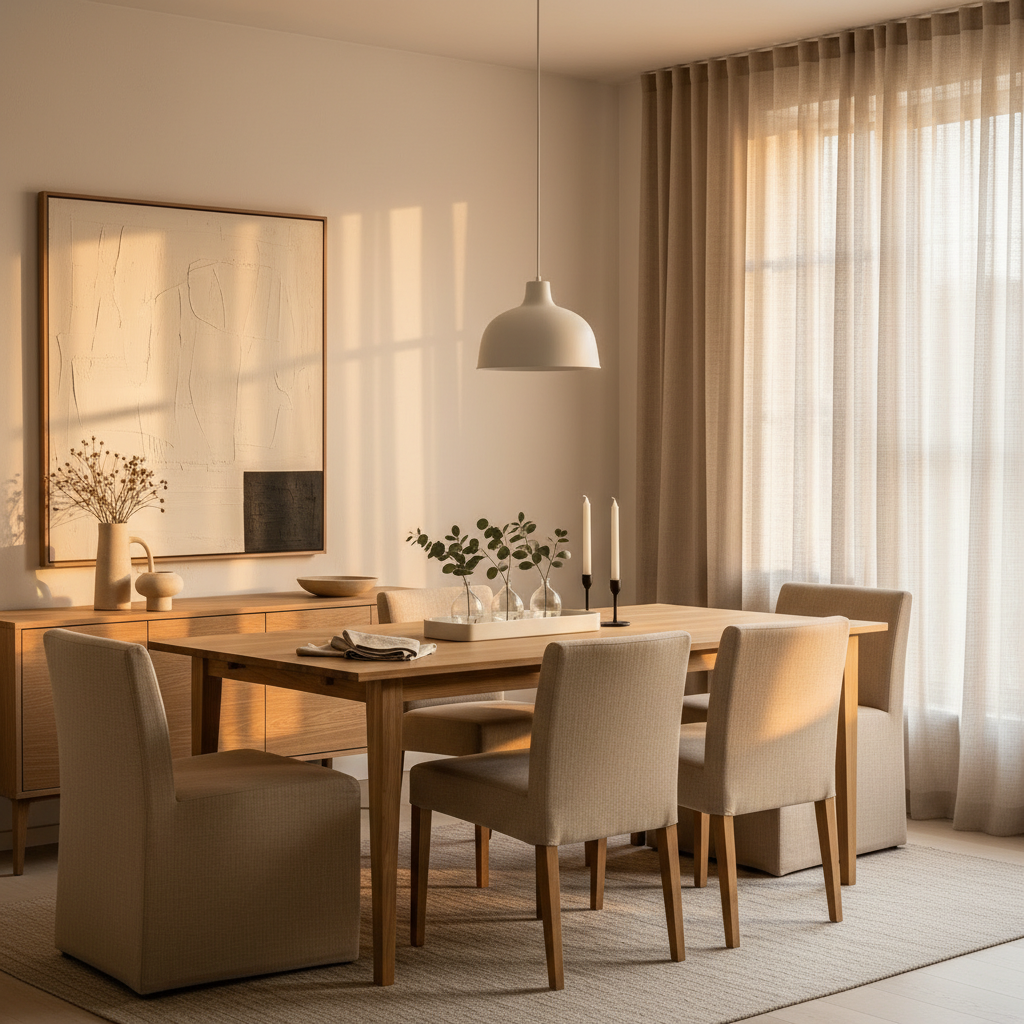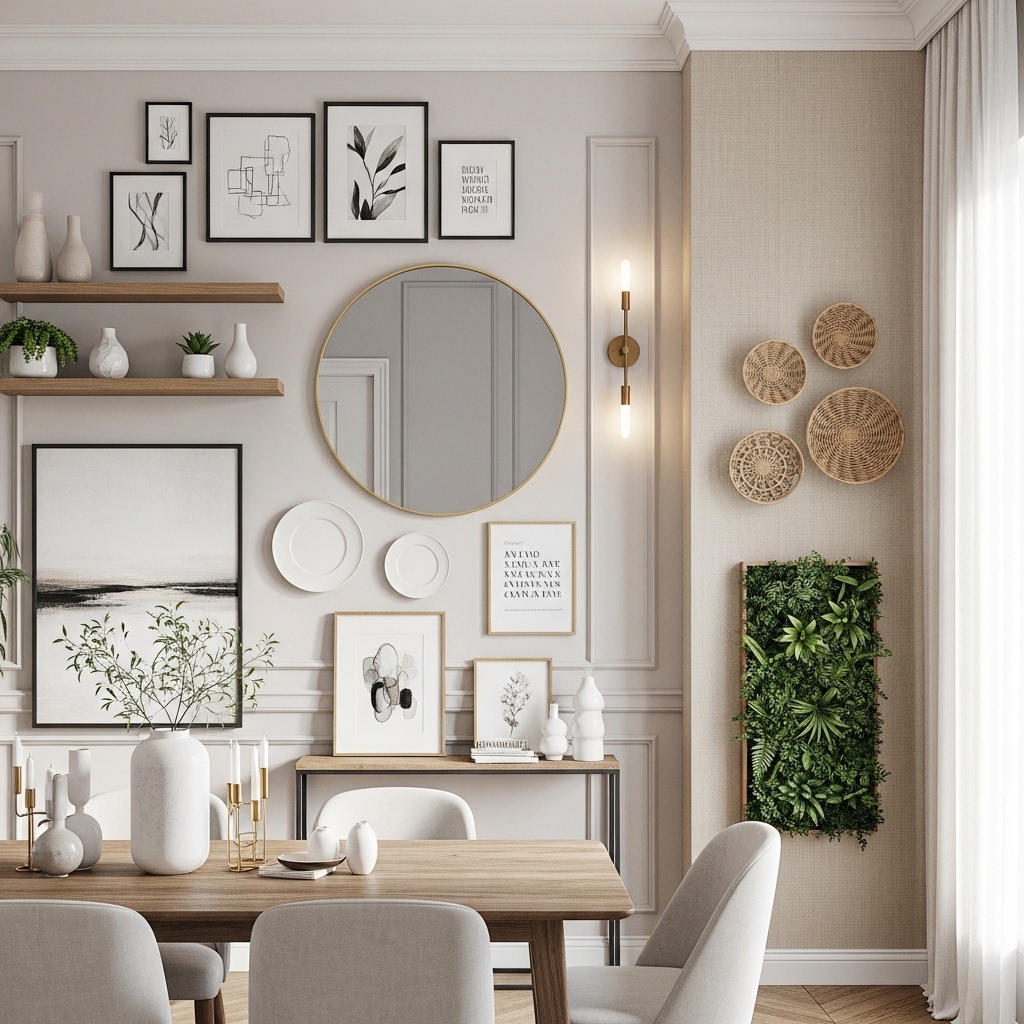
There is something quietly powerful about a sideboard. It just sits there — long, steady, grounded — and yet it has more styling potential than almost any other piece of furniture in a dining room. People obsess over the dining table, argue about chairs, overthink the rug, and completely neglect the sideboard. That is a mistake.
A well-decorated sideboard does three things at once: it adds storage, anchors the wall it lives on, and gives you a proper surface to play with seasonally without committing to anything permanent. Whether yours is a sleek mid-century console, a chunky oak buffet, or a vintage painted piece you found secondhand, the styling rules largely hold. What changes is the mood you want to create — and that is exactly what this guide is about.
These twelve ideas cover everything from bold statement art to the quietest, most minimal arrangements. Some work beautifully in small rooms. Some are tailor-made for renters. All of them are practical, specific, and genuinely useful for real homes — not just styled shoots.
1. Anchor It With a Large-Scale Art Piece
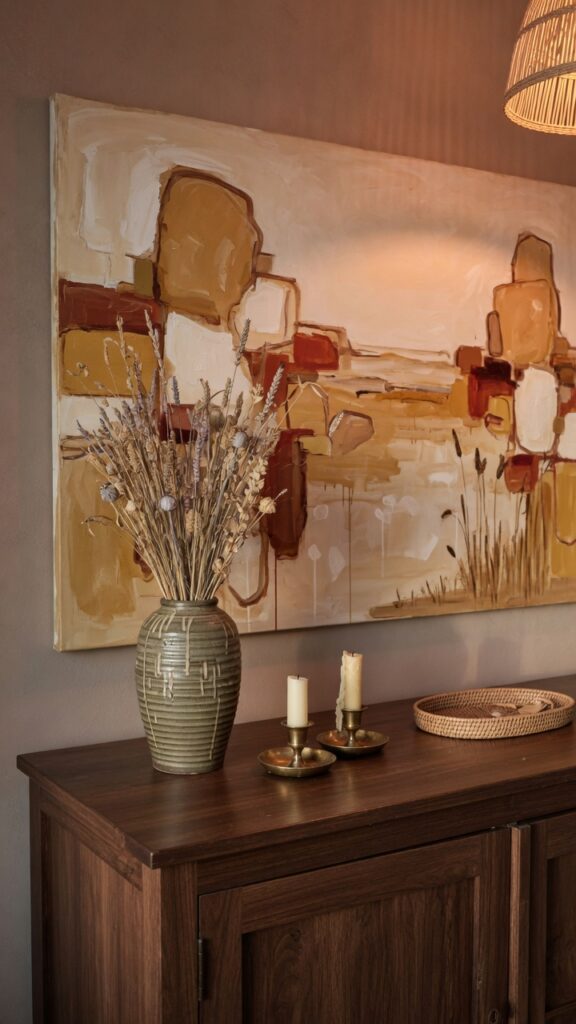
Most sideboards look lost without something strong on the wall above them. A single large-scale artwork — something that spans at least two-thirds of the sideboard’s width — immediately transforms a plain buffet into a proper focal point. This is the highest-impact, lowest-effort change you can make.
The trick is hanging it lower than instinct tells you. Most people hang art too high. Keep the bottom edge of the frame roughly six to eight inches above the sideboard surface so everything reads as one unified composition rather than two separate elements floating at different heights.
Abstract works in warm earth tones — ochre, rust, warm white, clay — tend to age beautifully in dining rooms and photograph well in any light. That said, a graphic black-and-white print can be equally stunning if the rest of the room skews neutral. Avoid overly literal subject matter like fruit bowls or wine bottles unless they genuinely reflect your taste, not just a generic “dining room” theme.
One thing to watch: in a narrow room, an oversized canvas can feel crushing. If your ceiling is low or the wall is tight, try a horizontal diptych instead — two medium canvases side by side read as one large piece without the visual weight.
Strong art makes everything else on the surface feel intentional rather than random.
2. Layer Mirrors for Light and Depth
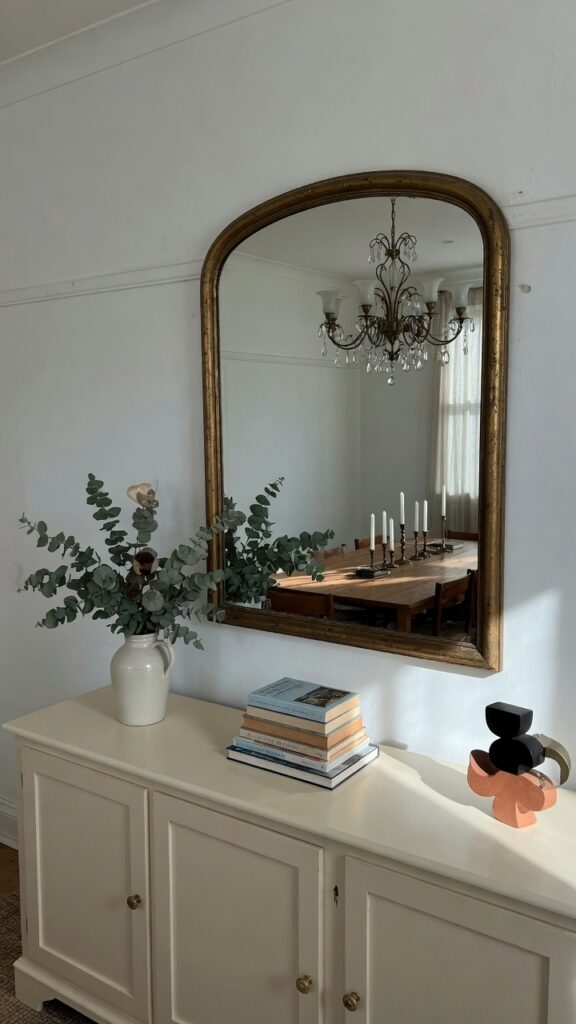
Mirrors above sideboards are a classic for a reason — they genuinely work. A generously sized mirror bounces light around the room, visually deepens the space, and adds a softly glamorous quality that no artwork quite replicates. In north-facing dining rooms that feel perpetually dim, this trick is less decorative and more necessary.
The shape matters. Arched mirrors are having a well-deserved extended moment because their curved top softens the hard horizontal line of the sideboard beneath them. Round mirrors work beautifully too, especially above longer sideboards where the contrast between circle and rectangle creates visual tension in a good way. Avoid perfectly rectangular mirrors in the same proportions as the sideboard — they can feel redundant rather than complementary.
Aged brass or blackened steel frames add warmth and character over polished chrome, which tends to feel cold and corporate in dining spaces. If you are renting and can’t hang anything heavy, a large leaning mirror propped against the wall behind the sideboard achieves a similar effect with zero wall damage.
One constraint: be deliberate about what the mirror reflects. A mirror that catches a cluttered kitchen counter or a blank wall works against you. Position it so it reflects something worth doubling — the dining table, a window, the chandelier.
Mirrors do the quiet work of making a room feel twice as good as it actually is.
3. Build a Curated Vignette With Varying Heights
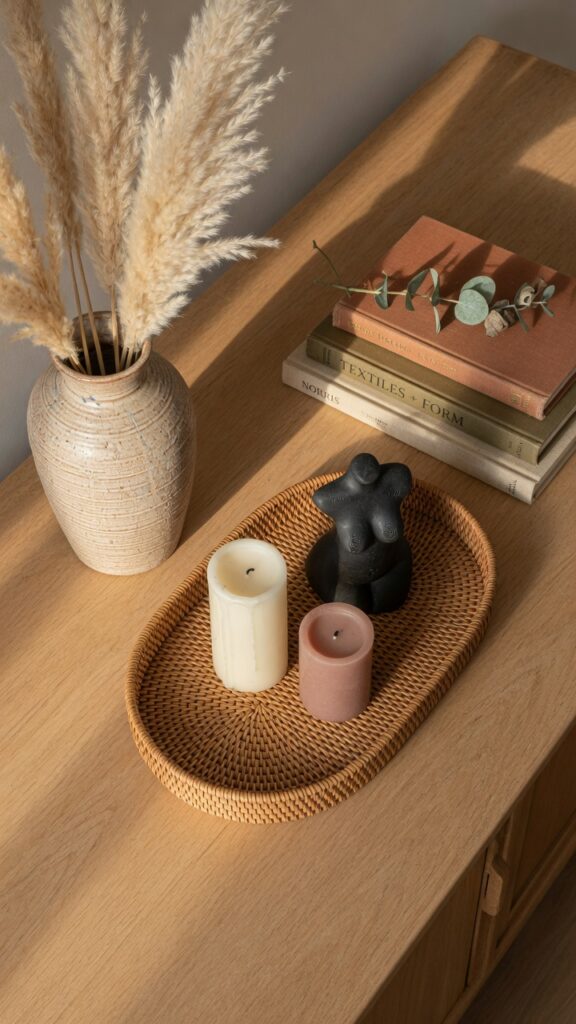
Styling a sideboard surface well comes down to one principle: vary the heights. Flat arrangements — everything at the same level — look like a shop display, not a home. The eye needs somewhere to travel.
Start with your tallest element on one side (a ceramic vase, a sculptural lamp, a tall candlestick) and graduate down toward the opposite end. Group objects in odd numbers — threes and fives naturally feel more dynamic than pairs. Use a tray or low bowl to anchor the middle, which visually grounds the whole arrangement and prevents it from feeling scattered.
Material contrast is just as important as height variation. Pair something rough and organic (rattan, dried botanicals, raw linen) with something smooth and refined (glazed ceramic, brass, polished stone). That friction between textures is what makes a vignette feel considered rather than collected randomly.
One practical note: if your sideboard is in a high-traffic area near a doorway, keep the arrangements weighted toward the back of the surface and avoid anything top-heavy that wobbles when someone brushes past.
A well-built vignette makes even a plain IKEA sideboard look like a deliberate design choice.
4. Use Wallpaper or Limewash Paint as a Backdrop
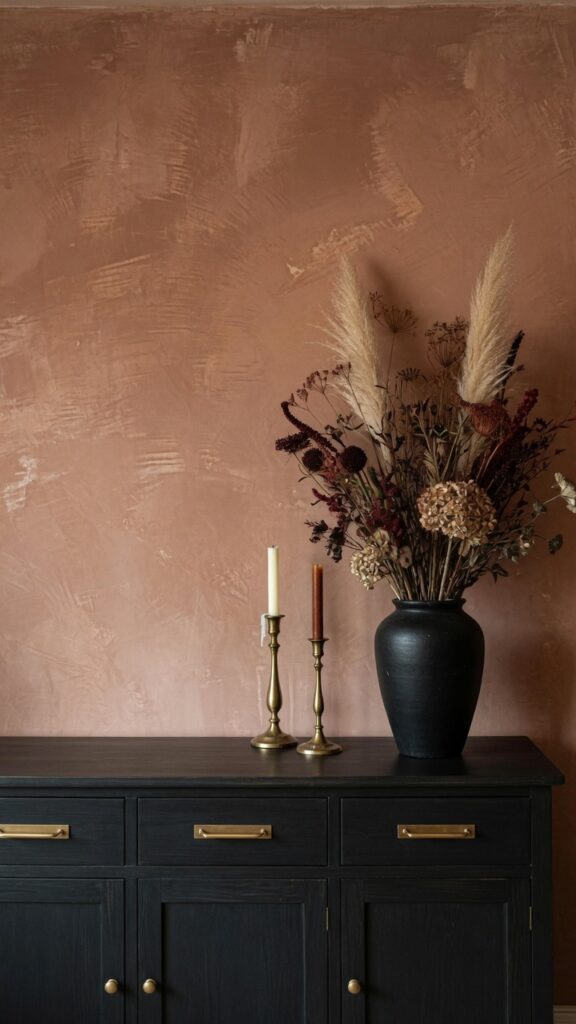
The wall behind your sideboard is not neutral — it is either working for you or against you. A plain builder-white wall makes even a beautiful sideboard feel unfinished. A textured or colored wall, on the other hand, frames the entire piece and elevates everything sitting on it.
Limewash paint is my strongest recommendation here. It has a soft, chalky, layered quality that shifts with the light throughout the day — warm in the morning, moodier in the evening. It also hides imperfections beautifully, which matters in older homes. Dusty terracotta, warm clay, and soft sage are all excellent choices for dining rooms.
For renters, peel-and-stick wallpaper on a single accent wall behind the sideboard is genuinely good now — the textures and patterns available have come a long way from the early removable paper days. A botanical print, a subtle linen texture, or a geometric in warm neutrals all work well.
One thing to watch: dark dramatic wallpaper can make a small dining room feel cave-like if the room lacks natural light. If your windows are small, keep the wall treatment lighter or limit it to matte paint rather than a busy pattern.
The wall is the frame. Treat it like one.
5. Style With Plants and Organic Greenery
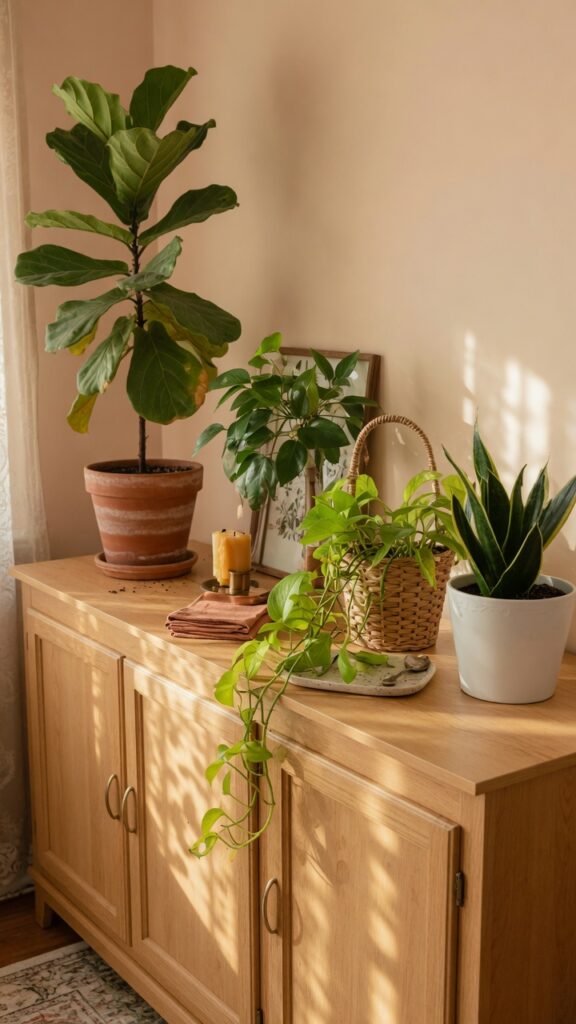
Plants transform a sideboard from a decorative surface into something that feels alive. That sounds obvious, but the difference between a sideboard with one sad small succulent and one properly styled with real greenery at considered heights is enormous in person.
The same height-variation rule applies here. A tall architectural plant — fiddle leaf fig, snake plant, monstera — on one end gives the arrangement vertical presence. Medium trailing plants in the center or slightly off-center add softness and movement. Low compact plants anchor the ends without competing for attention.
Choose pots and planters that match your existing material palette. Terracotta works with warm, earthy rooms. Matte white or black ceramics suit contemporary spaces. Rattan and woven baskets add texture and warmth in bohemian or natural interiors. Avoid plastic nursery pots left visible on a styled surface — they undo everything else.
One realistic constraint: sideboards against interior walls often lack the light levels that plants need. If yours is in a low-light position, choose genuinely shade-tolerant species (ZZ plant, pothos, cast iron plant) rather than struggling with sun-lovers that will sulk and yellow.
Living greenery does something that no candle or vase can replicate — it makes the room feel genuinely cared for.
6. Introduce Candlelight and Atmospheric Lighting
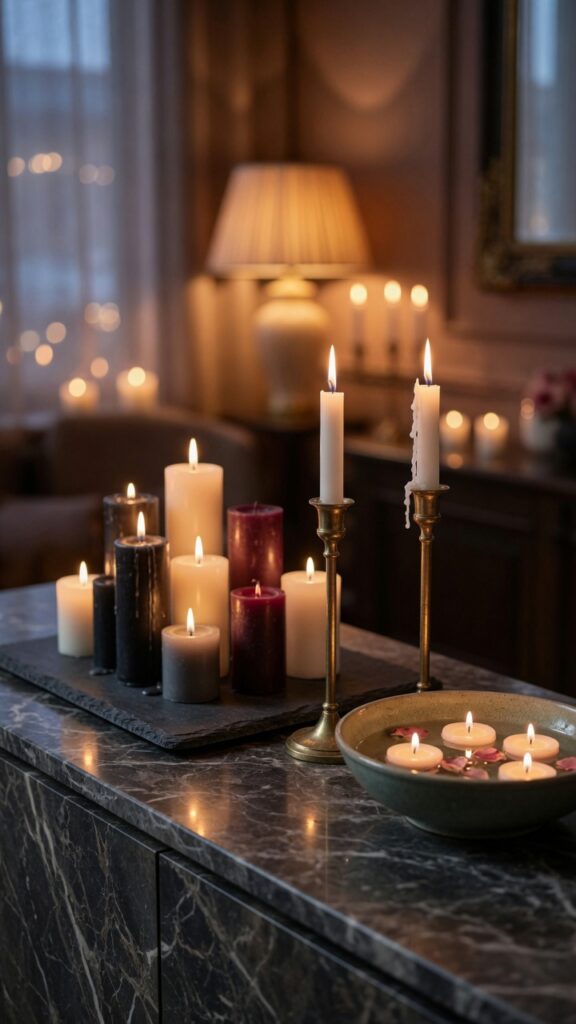
Candlelight on a sideboard changes the entire emotional register of a dining room. Not the harsh overhead kind — the warm, flickering, pooled kind that makes people relax and conversations deepen. If your dining room has a cold or corporate feel in the evenings, adding layered candle sources to your sideboard is the fastest fix available.
Group pillar candles in clusters of three or five on a flat tray or slate board rather than placing them individually around the surface. The grouping creates a stronger visual impact and also contains any wax drips. Varying the heights within the cluster adds interest — a tall, medium, and short pillar together look far more intentional than three matching ones.
Brass candlesticks with tapers add formality and elegance. Chunky ceramic or concrete holders read as more casual and contemporary. Mix both for a layered, collected look.
One watch-out: avoid strongly scented candles in the dining room specifically. Competing with food aromas rarely works well. Unscented or very lightly scented is the rule for dining spaces.
Candlelight on a sideboard turns dinner into an event rather than just a meal.
7. Display a Collection Thoughtfully
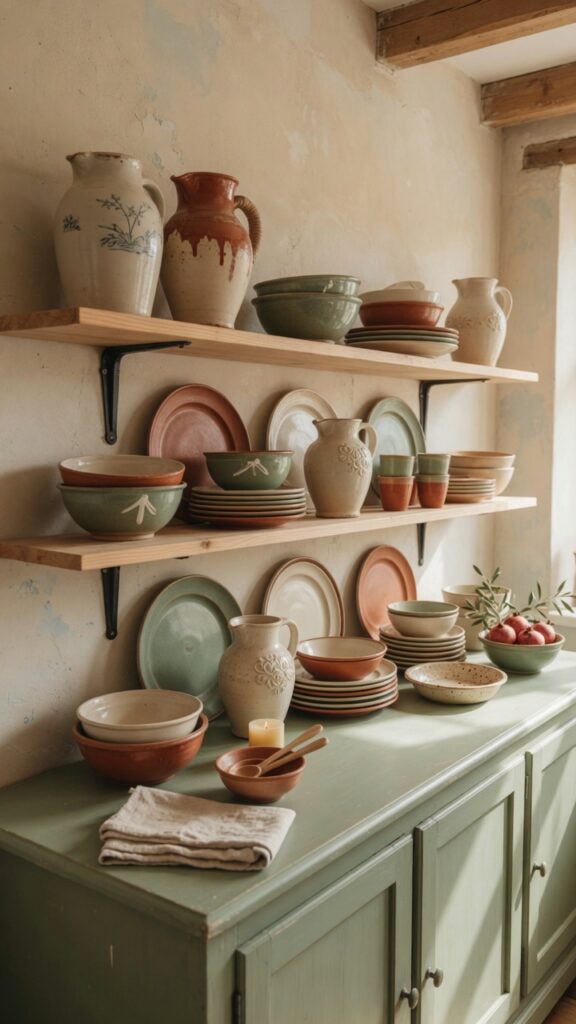
Collections displayed well are one of the most personal and visually compelling things you can do with a sideboard. The keyword is well. A random grouping of unrelated objects just looks like clutter. A collection with a unifying thread — material, color family, era, shape — looks intentional, interesting, and tells a story about who lives there.
Ceramics are the easiest starting point. A grouping of handmade or vintage pieces in similar tones — creams, sages, terracottas — looks beautiful and ages gracefully. The small imperfections and variation between handmade pieces add exactly the kind of warmth that mass-produced decor cannot replicate.
Other collections that work well on sideboards: small sculptures, glass bottles or decanters, stacked vintage books, wooden objects, brass vessels. The rule is loose grouping by theme or palette, varied heights within the group, and enough breathing space between clusters so nothing looks crowded.
One firm constraint: editing is more important than accumulating. A collection of eight beautiful objects displayed with intention beats a collection of twenty-five objects fighting for attention. Add a new piece, remove an old one. Keep it curated.
Collections make a house feel inhabited by a real person with real interests.
8. Keep It Minimal for a Modern, Calm Effect
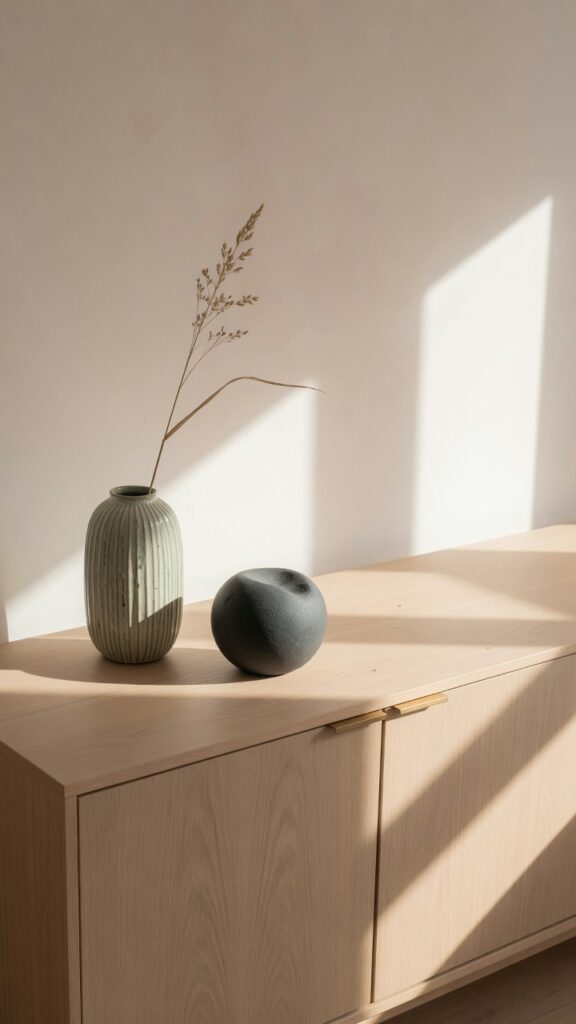
Not every sideboard needs to be loaded with styling. Sometimes the most striking choice is restraint — letting the piece itself, and the wall behind it, do the heavy lifting. If your dining room already has strong architectural details, a patterned rug, or a bold light fixture, a minimal sideboard styling creates necessary breathing room.
The rule for minimal styling is ruthless editing. Choose three objects maximum for a medium-length sideboard. One tall, one medium, one low — placed asymmetrically rather than centered. Negative space on one end of the surface is not emptiness; it is a deliberate choice that makes the objects present feel more considered.
Materials matter even more when you are using fewer of them. A single beautifully made ceramic vase in an interesting glaze, one sculptural object in natural stone or wood, a considered candle holder — each piece needs to earn its place.
One honest warning: minimal surfaces show every speck of dust and every scratch. If your household is busy with kids or you simply dislike constant maintenance, pure minimalism may frustrate you. A loosely minimal approach — fewer objects, but not precious about dust — is more liveable.
Restraint, done confidently, is its own form of decoration.
9. Add Functional Storage With Style
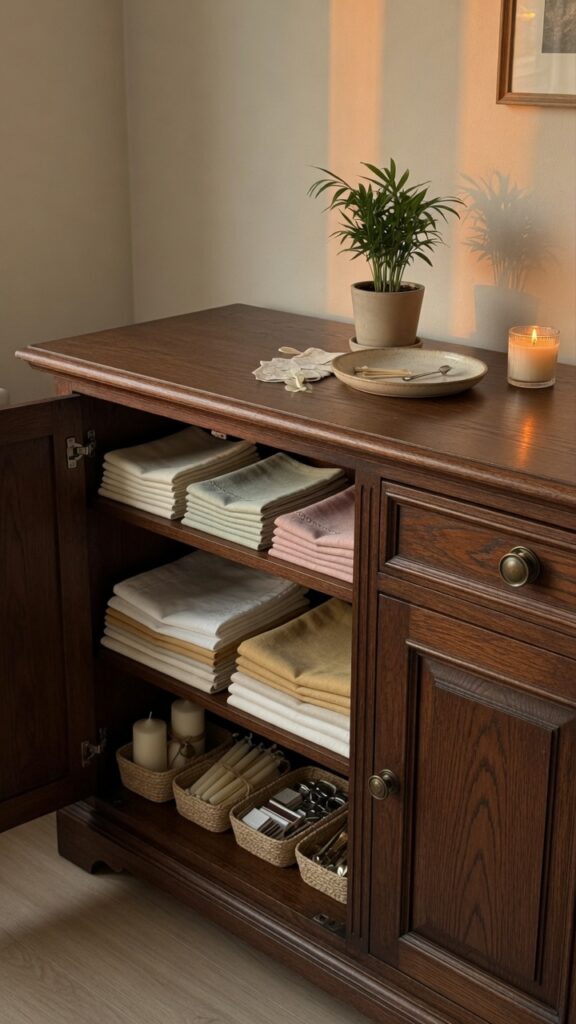
The sideboard’s greatest practical advantage over other decorative furniture is storage — and yet most people treat it purely as a display surface and forget the cabinets beneath exist. A well-organized interior that actually functions makes the whole piece feel more considered, not less.
Use the interior storage for the things that always end up on the dining table and need a nearby home: extra napkins, cloth placemats, candles, matches, serving utensils, table linens. Decant these into woven baskets or linen-lined trays inside the cabinet so even an open door looks tidy rather than chaotic.
On the surface itself, a small ceramic tray or wooden bowl for frequently used items — a candle, a small plant, a decorative object — creates an everyday vignette that is easy to maintain rather than elaborate to style.
One thing to watch: a sideboard crammed to capacity behind beautiful closed doors still affects how the piece looks overall. Overstuffed drawers that stick, warped doors, and bulging cabinets signal a furniture piece that is working too hard. Edit what’s stored inside with the same intention you bring to the surface.
Good storage and good styling are not opposites — they reinforce each other.
10. Play With Color Through the Sideboard Itself
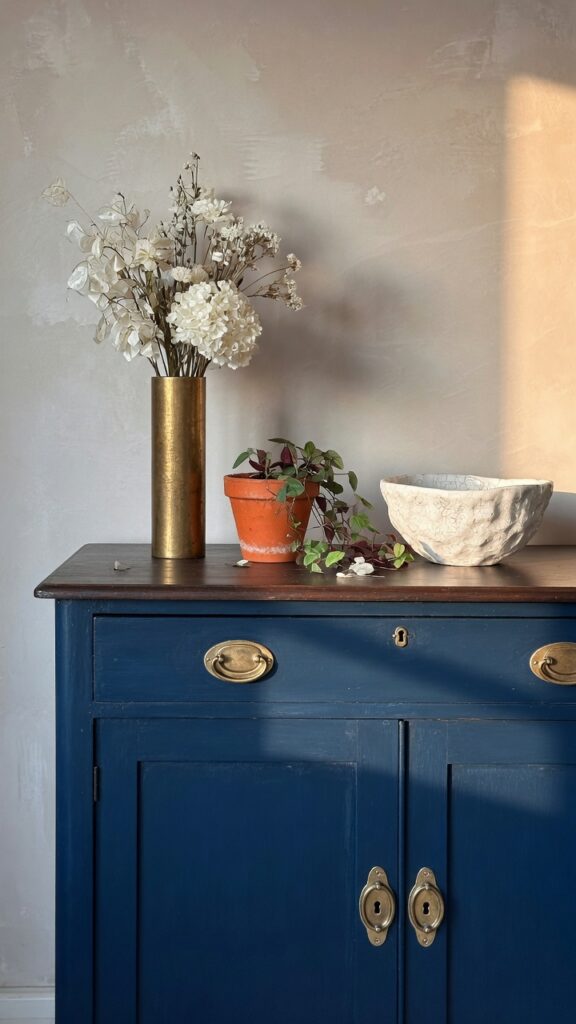
If your dining room feels safe to the point of boring, the sideboard is the single best piece of furniture to paint, replace, or re-front in a bold color. A deep navy, a forest green, a terracotta, a dusty charcoal — any of these on a sideboard against a lighter wall creates an instant anchor point that pulls the whole room together.
Painted furniture holds up beautifully when done properly. A quality chalk paint or eggshell finish in a deep tone, lightly sanded between coats and sealed, will last years of daily use in a dining room. Swap out original hardware for aged brass or matte black to complete the transformation.
If you rent or simply hate commitment, look for sideboards already available in bolder tones — the furniture market now offers far more than the beige-and-grey spectrum of a few years ago. A colored sideboard against a neutral wall reads as a deliberate design choice rather than a furniture purchase you defaulted into.
One consideration: in small or dark dining rooms, very deep tones on large furniture can make the space feel compressed. If the room is tight, try a mid-tone — warm sage, dusty blue, olive — rather than the darkest version of the color.
Color on furniture is commitment that pays off every single day.
11. Layer Textiles and Trays for a Relaxed Lived-In Feel
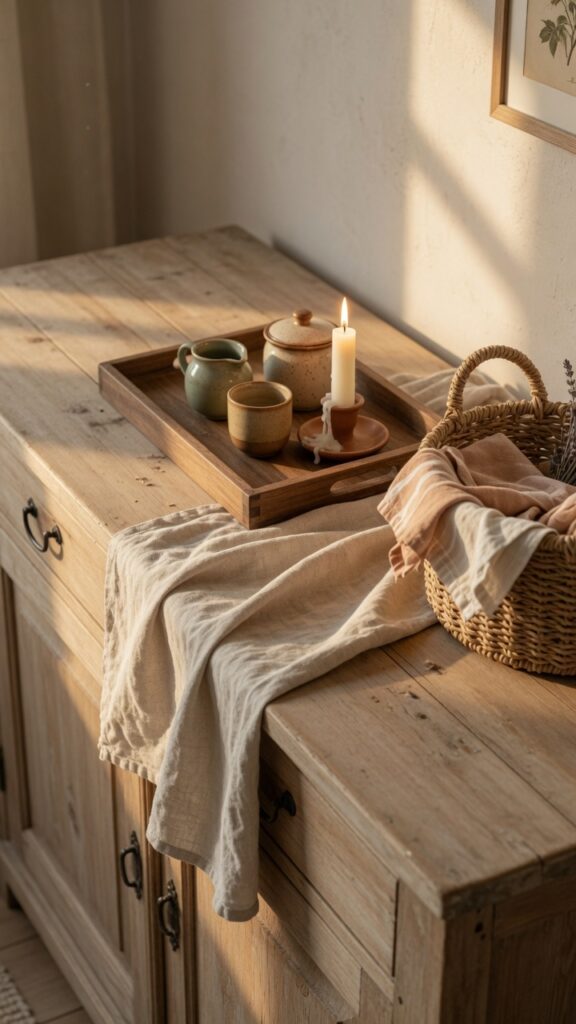
Textiles on a sideboard surface are underused and underrated. A loosely draped linen runner across the length of the surface immediately softens a hard wooden top and adds a layer of warmth that no ceramic object can replicate on its own. This works especially well on sideboards in open-plan spaces where the dining area connects to a living room — the textile brings the two areas into tonal alignment.
Choose natural fibers: linen, cotton, loosely woven jute. Avoid anything stiff, synthetic, or overly precious. The beauty of a linen runner is that it looks better slightly rumpled than perfectly pressed — it signals a home that is lived in, not a showroom.
Layer a wooden serving tray or a flat stone board on top of the runner in the center, and use it to corral candles, a small vase, and a bowl into a contained vignette. The tray creates a visual boundary that keeps the arrangement from spreading across the surface formlessly.
One practical point: machine-washable textiles for the sideboard are a non-negotiable in real households. Wax drips, wine splashes, and dusty hands happen. Anything dry-clean-only on a daily-use surface is asking for stress.
Textiles bring the intimacy of a bedroom into the dining room — which is exactly the warmth the space usually needs.
12. Rotate Seasonally for a Fresh Look Year-Round
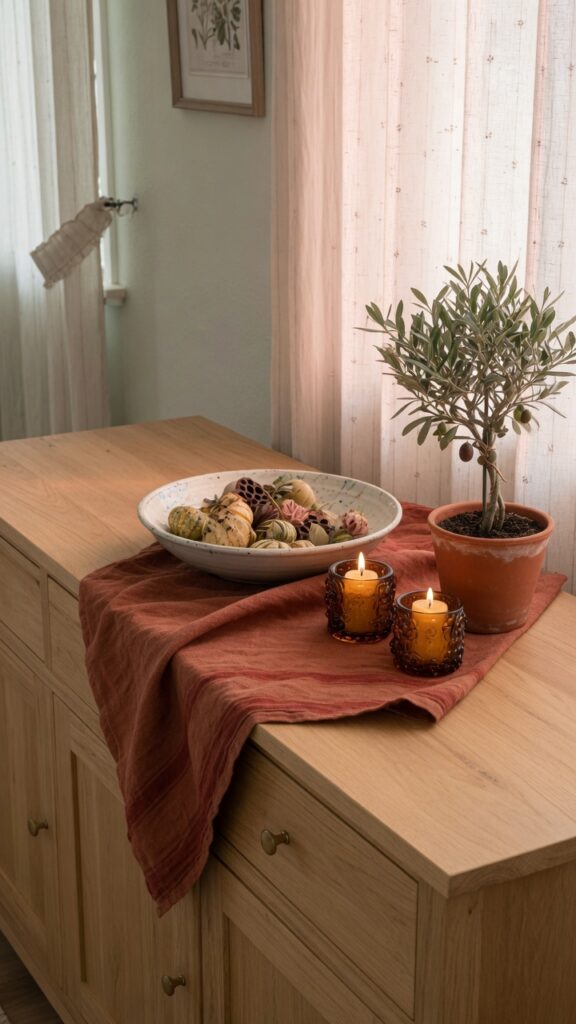
The sideboard is the easiest piece of furniture in your home to restyle seasonally — and doing so keeps the dining room feeling fresh without any major investment or renovation. The bones stay the same: the art, the mirror, the furniture itself. What rotates is everything sitting on top.
Keep a small labeled bin in a nearby closet or cupboard with off-season decor: a summer grouping of white ceramics and light linen, an autumn set of dried botanicals and amber glass, a winter arrangement of pillar candles and pine branches, a spring edit of fresh-cut stems and pale pottery. Swapping takes twenty minutes and completely changes the mood of the room.
The most successful seasonal styling borrows from nature rather than retail trends. Dried seed pods, branches, fresh citrus, seasonal blooms, and textural grasses are all inexpensive, genuinely beautiful, and never look like you raided a holiday section at a chain store.
For renters especially, this rotational approach means your dining room feels personal and considered regardless of what the landlord’s walls look like.
One small investment that pays off: buy a few excellent neutral vessels — two or three quality ceramic vases in simple shapes and muted tones — and rotate what goes inside them. The vessels stay. The seasons change. The sideboard always looks like someone with real taste lives there.
Conclusion
A sideboard is one of those pieces of furniture that rewards attention. Most people buy it for the storage, push it against a wall, and never think about it again. But the twelve ideas in this guide prove that the sideboard — styled well — can be the most characterful, most personal surface in your entire dining room.
You do not need to implement all twelve. Pick two or three that genuinely resonate with your space, your lifestyle, and your taste. Start with the wall treatment if your backdrop feels flat. Start with a mirror if your room lacks light. Start with a seasonal swap if you just want to refresh things quickly without spending money.
What you take away from this guide is simple: the sideboard is not an afterthought. It is an opportunity. And unlike the dining table — which has to function first and look good second — the sideboard gets to be almost entirely about beauty, mood, and personal expression. That is a rare thing in a dining room. Use it well.