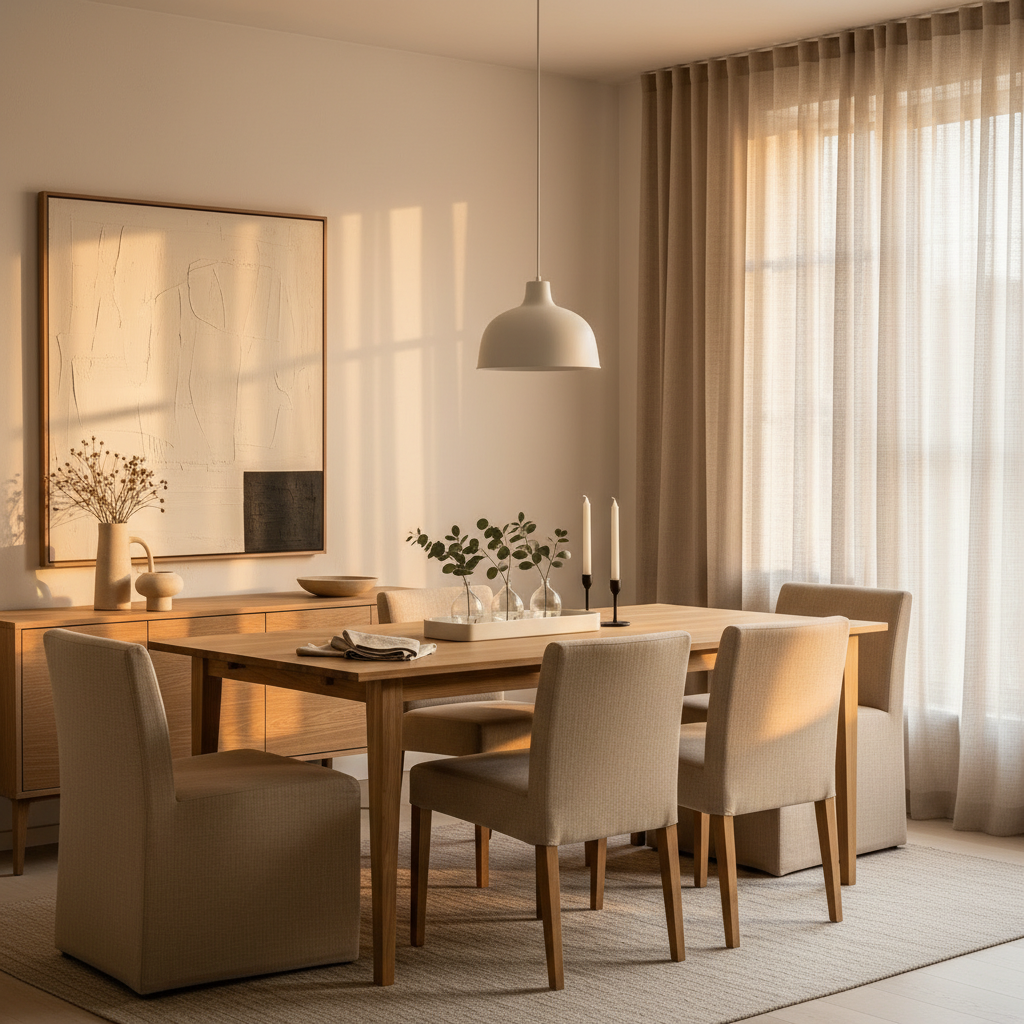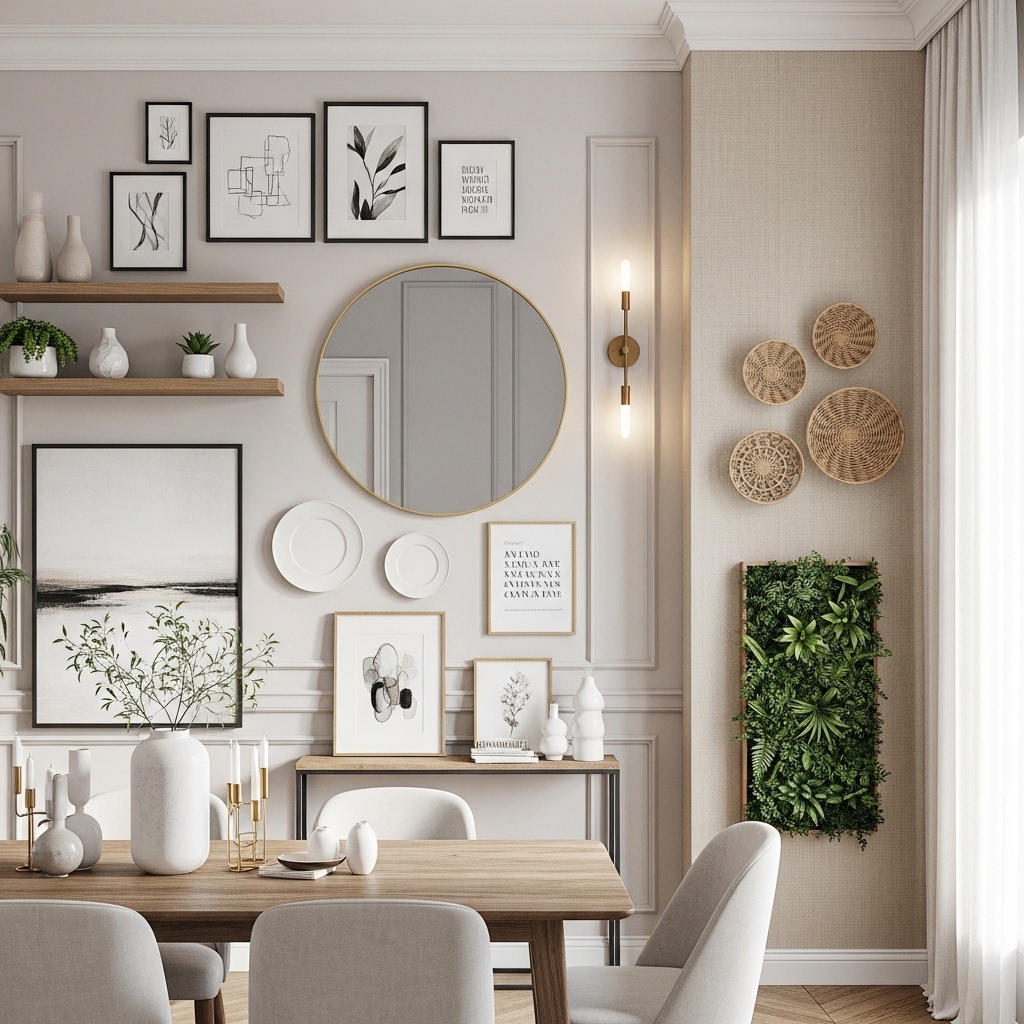
A clean dining room doesn’t mean cold. It doesn’t mean sterile or stripped of personality. It means edited. Thoughtful. Calm enough that you can sit down, exhale, and actually enjoy your meal without visual noise tugging at your attention.
Most dining rooms collect things over time — extra chairs, random art, centerpieces that never quite worked. A clean look isn’t about buying more. It’s usually about choosing better and choosing less.
That said, “simple” still needs intention. Clean spaces rely on proportion, texture, and balance to avoid feeling flat. A room can be neutral and still layered. It can be minimal and still warm.
Below are twelve practical, realistic ideas to help your dining room feel polished without feeling precious.
1. Start With a Tight Color Palette
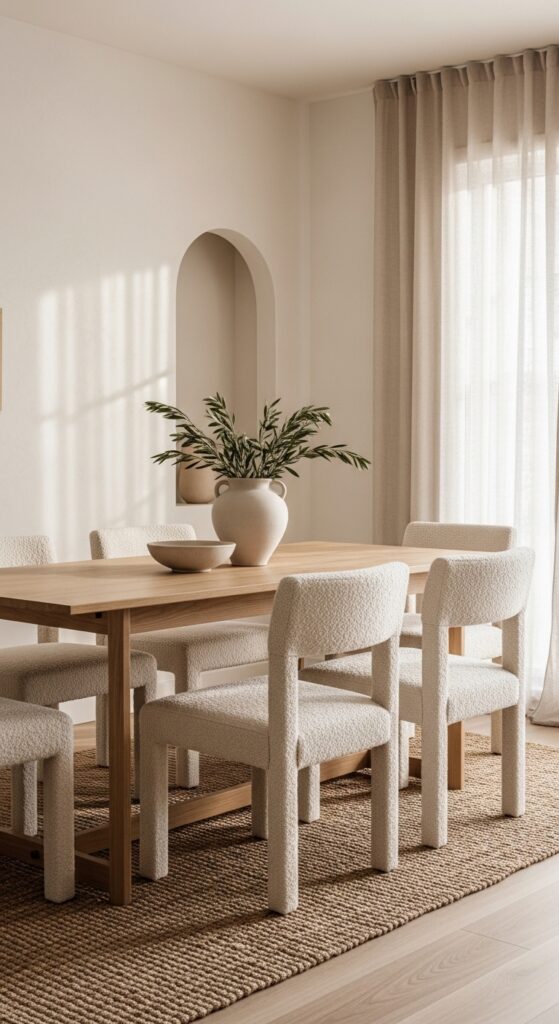
If you want a clean look, color discipline is everything.
Choose two main tones and one accent — that’s it. Think warm white, soft beige, and natural oak. Or charcoal, cream, and brushed brass. When everything speaks the same color language, the room automatically feels more intentional.
Walls should lean soft rather than stark. True bright white can feel harsh, especially under overhead lighting. If your dining room faces north, opt for warmer undertones to prevent the space from feeling gray and flat.
Repeat materials for cohesion — oak table, oak frames, oak shelving. It’s subtle but powerful.
One thing to watch: too many competing wood tones can quickly feel busy. Keep them within the same family.
Clean design starts with calm color.
2. Choose One Statement Light Fixture
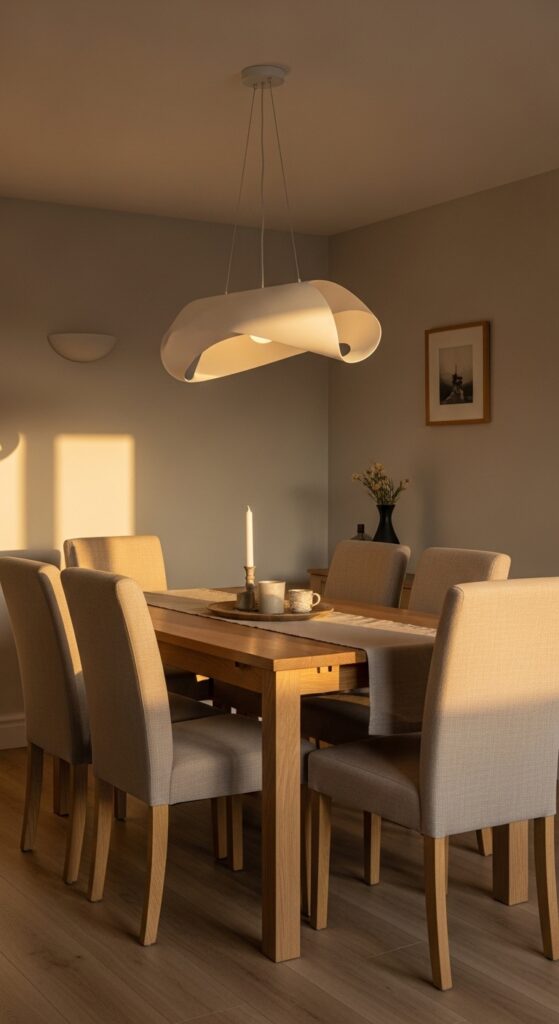
Lighting can either clarify a room or complicate it.
In a clean dining space, let one fixture take the spotlight. A sculptural pendant in matte white, soft brass, or black metal can anchor the table beautifully.
Designer rule: your fixture should be about one-half to two-thirds the width of your table. Too small looks timid. Too large feels chaotic.
Keep other lighting subtle. If you add sconces, choose simple forms without ornate detailing.
Avoid crystal-heavy chandeliers unless the rest of the room is extremely pared back — they demand attention.
One strong lighting moment is enough.
3. Keep the Table Surface Minimal
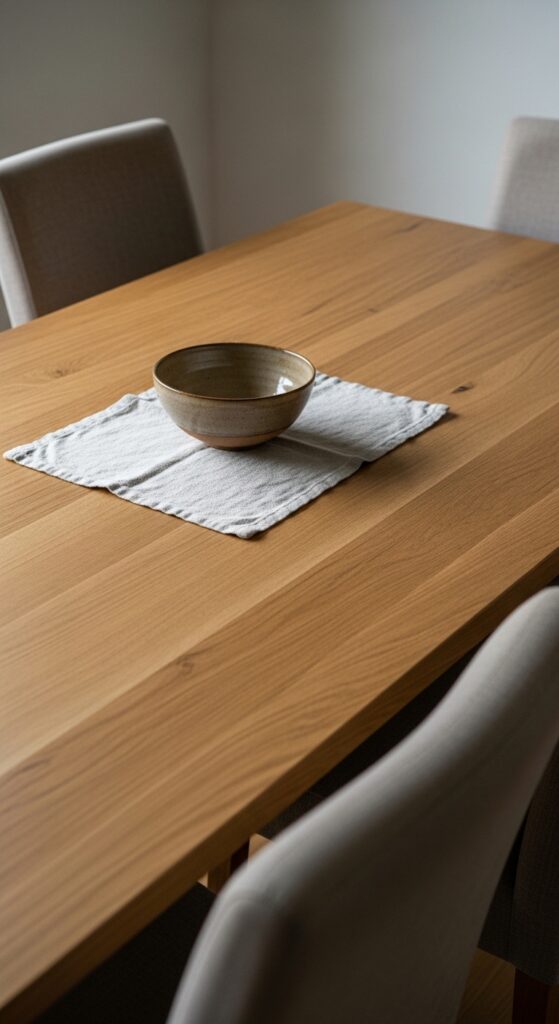
Here’s where most dining rooms lose their clean look: the table.
Resist the urge to permanently display candles, trays, stacked books, and faux florals. Instead, choose one anchor piece. A large ceramic bowl. A low vase with simple branches. Maybe a linen runner if you want softness.
Scale matters. Tiny decor items look scattered. Larger, singular pieces feel intentional.
If you use placemats daily, store them neatly instead of leaving them out. It makes a surprising difference.
One watch-out: don’t choose centerpieces that block conversation. Tall arrangements belong on occasion.
A clean table sets the tone for the whole room.
4. Swap Busy Chairs for Upholstered Simplicity
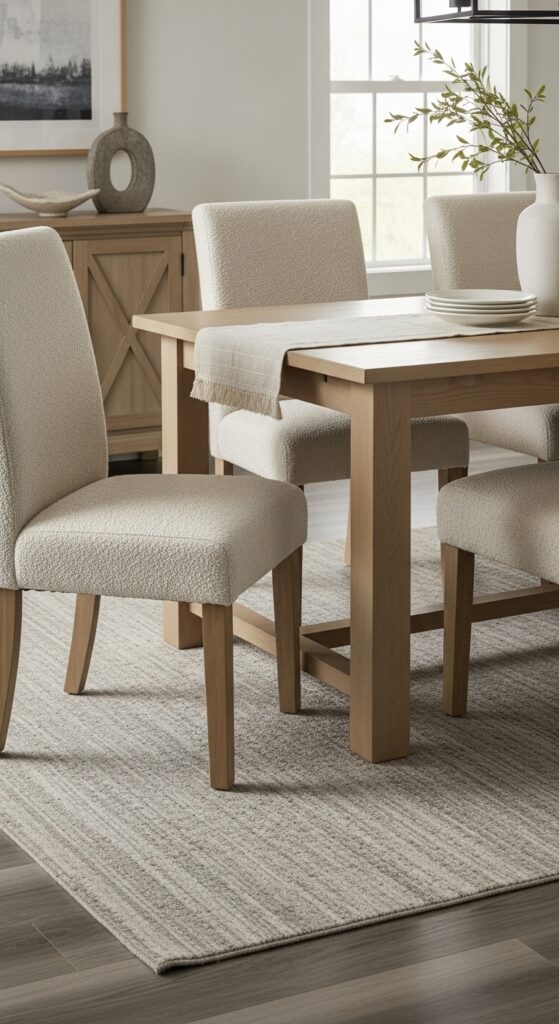
Chairs can quietly clutter a space.
Ornate backs, heavy carvings, and mixed styles compete visually. If you want a clean dining room, opt for chairs with simple lines and upholstered seats in linen, boucle, or soft cotton blends.
Matching chairs create calm. Mixing styles can work, but it requires confidence and restraint. If you’re unsure, keep it consistent.
Upholstery also softens the room acoustically — helpful if your space echoes.
The trade-off? Light fabrics require maintenance. If you have kids or frequent red wine nights, consider performance fabrics in warm neutrals.
Clean lines, soft texture — that’s the balance.
5. Simplify Wall Decor
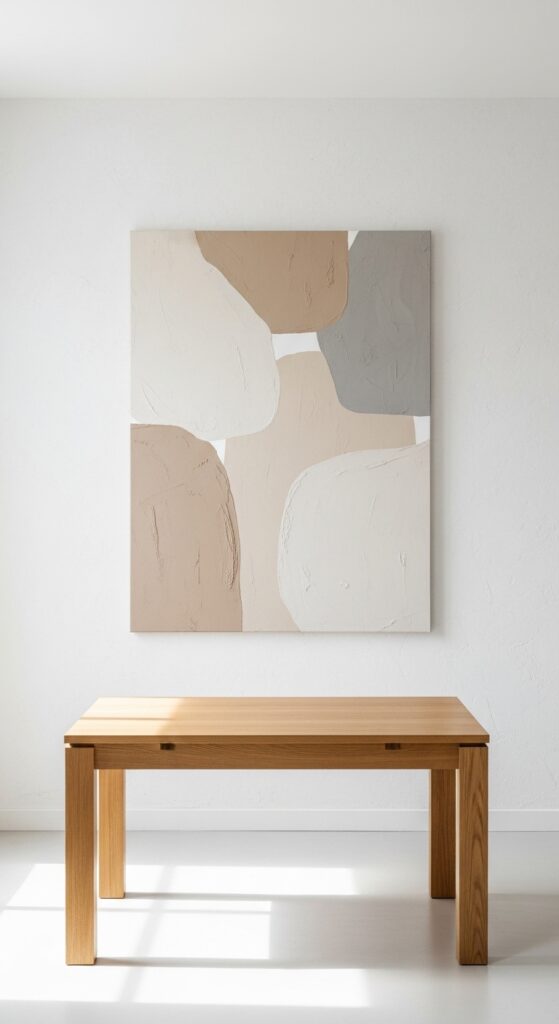
Multiple small frames can quickly feel noisy.
Instead, hang one large piece of art that spans at least two-thirds the width of your table. It grounds the wall and removes visual fragmentation.
Stick to neutral or tonal artwork — abstract forms, soft landscapes, or textured canvas.
If you prefer a gallery wall, keep frames identical and spacing even. Structure is what keeps it clean.
One thing to watch: art hung too high feels disconnected. Aim for eye level or slightly lower above the table.
One wall, one focus, less distraction.
6. Use Texture Instead of Pattern

Pattern can energize a space, but it can also clutter it.
If you’re aiming for clean, lean into texture instead. Plaster walls. Linen drapery. A woven rug. Velvet seat cushions. Texture adds depth without visual busyness.
Stick to solid fabrics in soft tones. Avoid high-contrast stripes or bold florals unless the rest of the room is extremely pared back.
If your space feels flat, add another layer of texture — not another color.
Watch scale: overly chunky rugs in small dining rooms can feel heavy.
Texture keeps simplicity from feeling sterile.
7. Add Subtle Architectural Detail
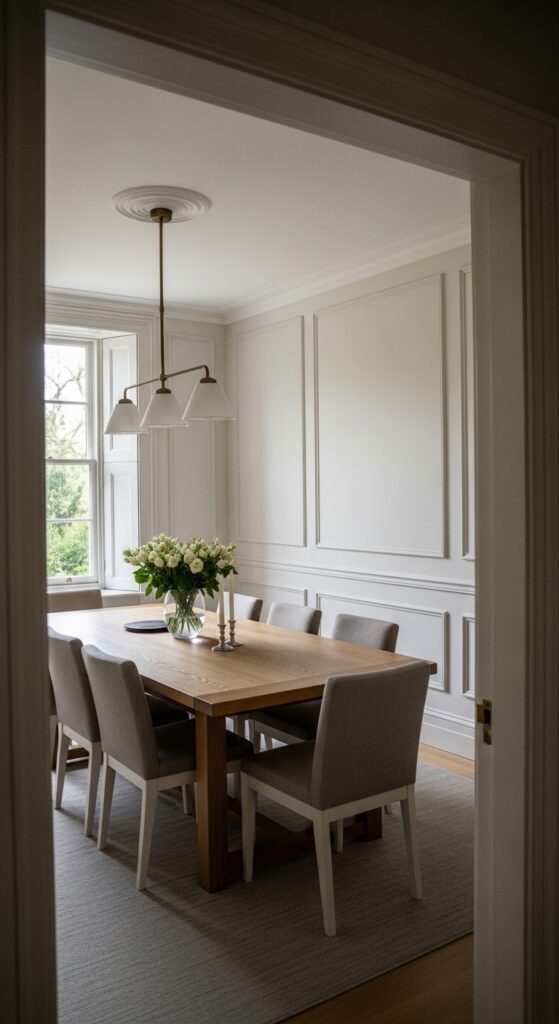
A blank wall doesn’t have to stay blank.
Simple picture frame molding or slim vertical paneling adds interest without adding clutter. Paint it the same color as the wall for subtlety.
Keep proportions balanced — larger panels for taller ceilings, smaller ones for standard height.
Avoid overcomplicated patterns. Clean rectangles always win.
If you rent, removable trim alternatives exist, but make sure they’re properly installed to avoid damage.
Architecture adds elegance quietly.
8. Choose Low-Contrast Flooring
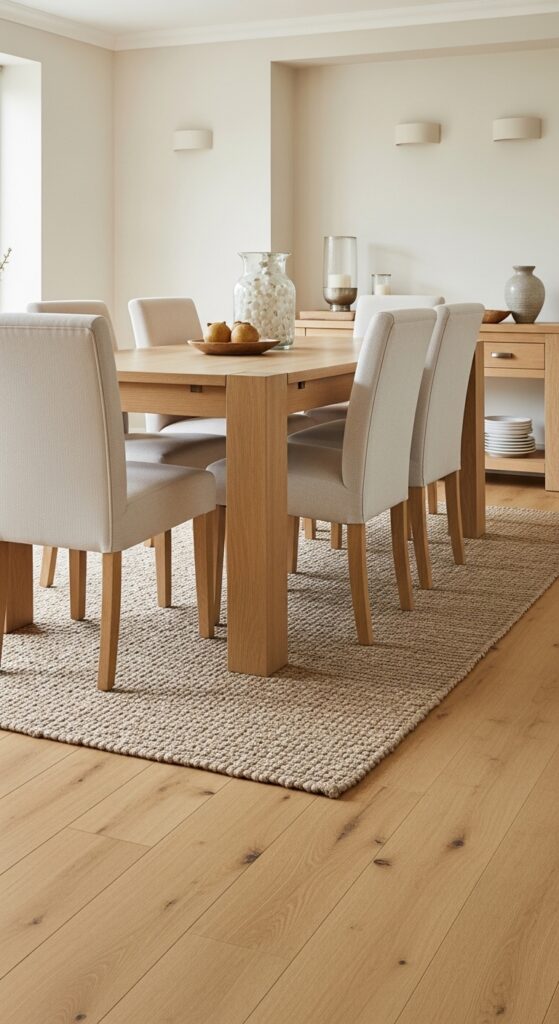
High contrast floors can dominate a room.
If your table is light oak, consider flooring in a similar tone or layer a neutral rug beneath. It creates visual flow rather than abrupt stops.
Choose rugs with subtle texture instead of bold patterns. Jute, flatweave wool, or low-pile neutral rugs keep things grounded.
Size matters. Your rug should extend at least 24 inches beyond the table so chairs stay on it when pulled out.
One watch-out: too-small rugs instantly break the clean illusion.
Seamless floors make the room breathe.
9. Keep Storage Closed and Edited
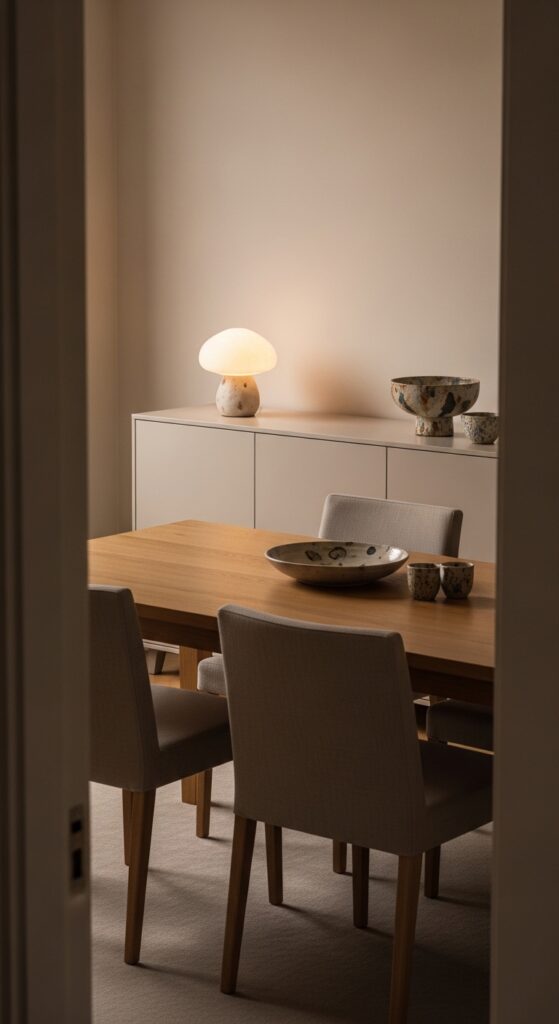
Open shelves are charming — until they’re not.
For a truly clean look, opt for closed storage like a simple sideboard with flat-panel doors. Keep the top styled minimally: one lamp, one tray, maybe a stack of two books.
Store excess dishes, serving platters, and seasonal decor out of sight.
If you love open shelving, edit ruthlessly. Leave breathing space between items.
Clutter isn’t about quantity. It’s about visual density.
Closed storage equals visual calm.
10. Let Curtains Soften the Room
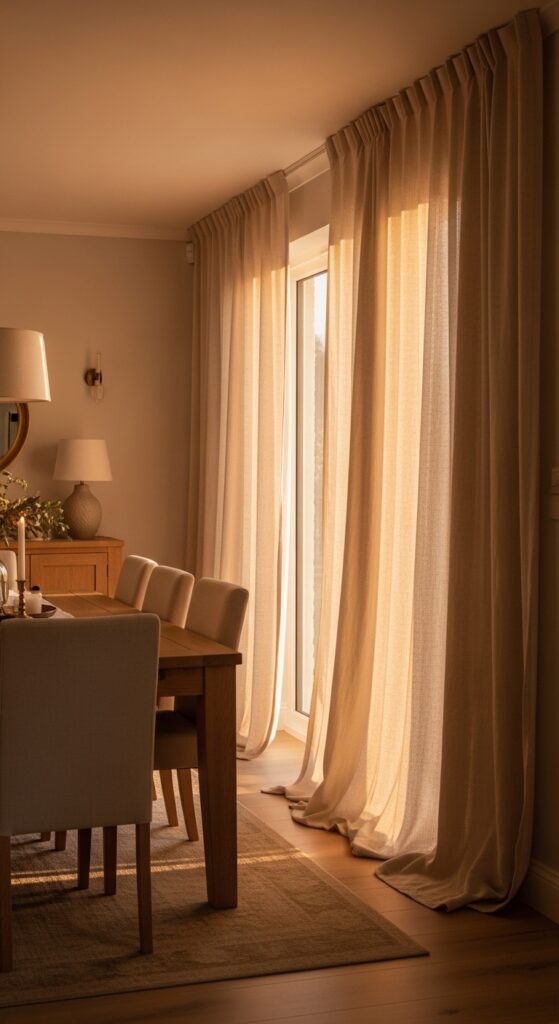
Bare windows can feel sharp.
Full-height linen curtains soften edges and make ceilings appear taller. Hang them close to the ceiling, not just above the window frame.
Choose neutral fabrics with subtle weave. Avoid heavy patterns.
Let them graze the floor for elegance, but not so much that they puddle excessively.
If your room gets little sunlight, sheer layers keep it bright.
Fabric adds warmth without clutter.
11. Incorporate Natural Elements

Greenery always helps — but keep it simple.
One sculptural branch in a ceramic vase feels elegant. Multiple small plants can feel busy unless styled carefully.
Stick to neutral pots — matte ceramic, stone, or terracotta in muted tones.
Avoid artificial florals if possible; they often read cluttered in clean spaces.
If you share the space with pets or kids, choose hardy greenery that won’t shed constantly.
Nature softens minimalism beautifully.
12. Edit Before You Add
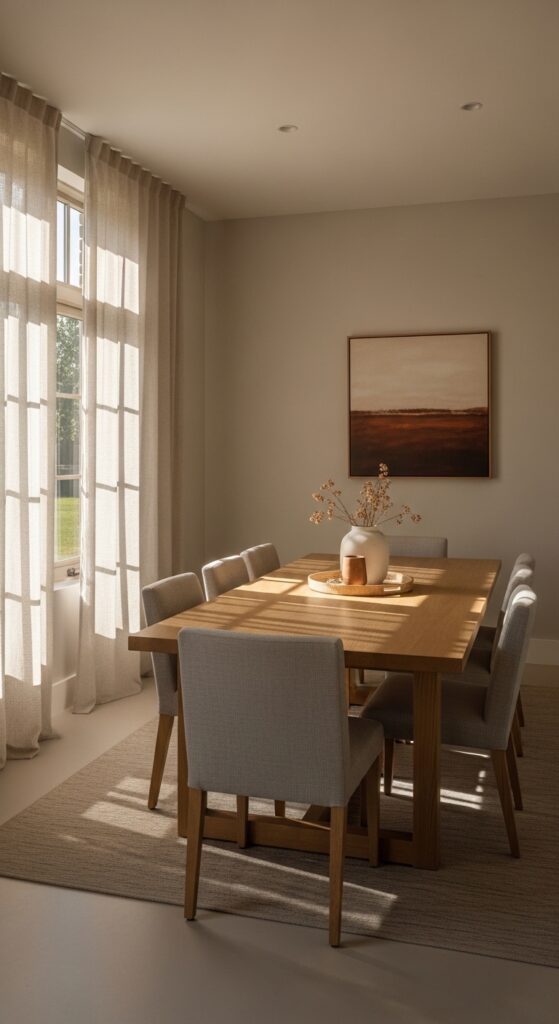
Here’s the truth: most clean dining rooms aren’t designed — they’re edited.
Before buying anything new, remove three items. See how the room feels. Rearrange. Simplify. Sometimes the answer isn’t adding decor but subtracting it.
Ask yourself: does this piece serve the room, or just fill space?
Be especially critical of small decorative objects. They’re the usual suspects.
One watch-out: don’t strip personality entirely. Leave one or two meaningful pieces.
Clean design is confident restraint.
A dining room with a clean look isn’t about perfection. It’s about intention. Calm colors, simple lines, thoughtful texture, and just enough warmth to keep it inviting.