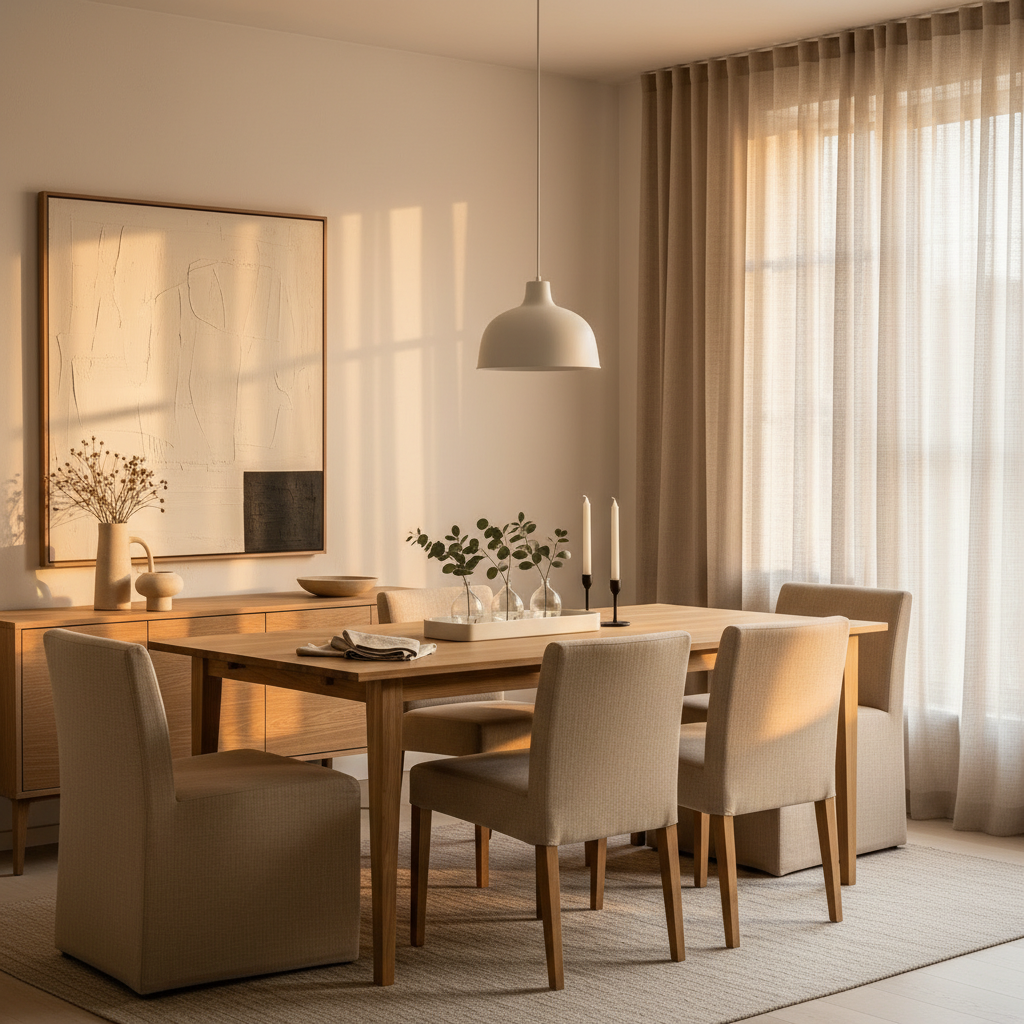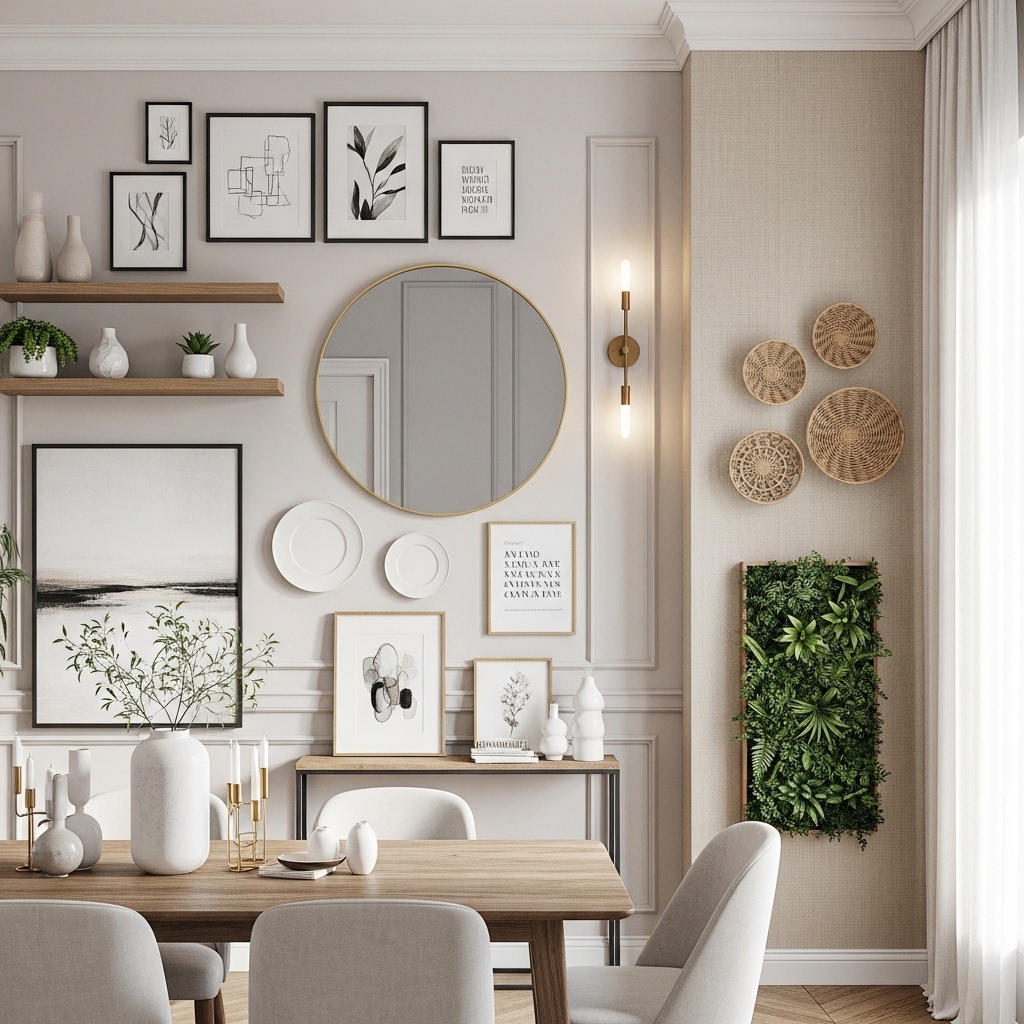
Rustic design gets misunderstood more than almost any other interior style. People hear “rustic” and picture a hunting lodge — antlers on every surface, dark wood everywhere, the general atmosphere of a place where someone is about to skin something. That’s not what we’re talking about. Real rustic dining room design, done well, is about warmth without heaviness, texture without chaos, and a kind of beauty that comes specifically from things that look like they’ve lived a life before arriving in your home.
The best rustic dining rooms feel like they happened organically — like the table was inherited, the bench was salvaged, and the linen tablecloth has been washed so many times it’s achieved a perfect softness. Getting to that feeling intentionally takes more thought than it looks, but the payoff is a dining room that invites people to slow down, pour another glass, and stay longer than they planned. These twelve ideas will help you get there.
1. A Reclaimed Wood Farmhouse Table as the Foundation
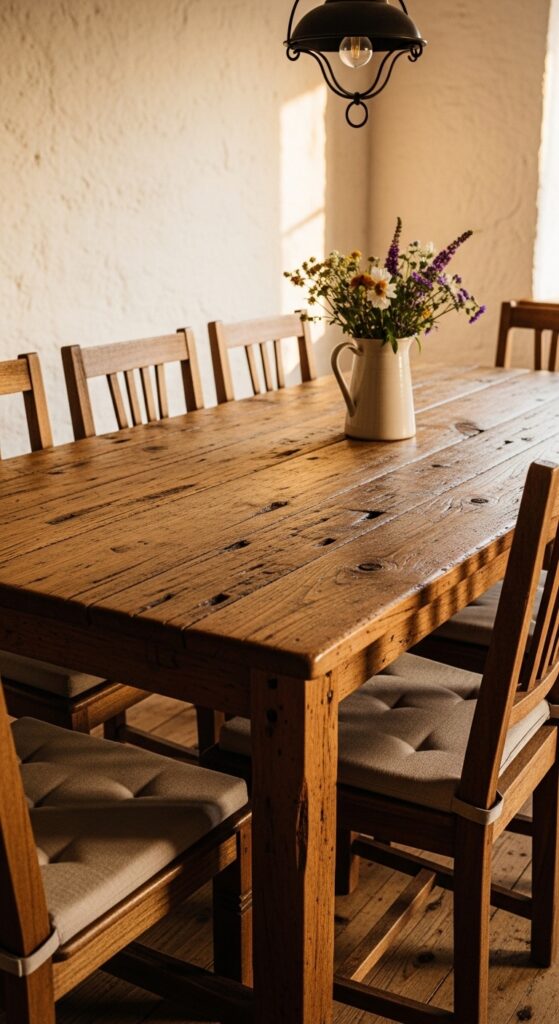
Everything in a rustic dining room radiates outward from the table, which means the table has to be right. And nothing earns that central role more completely than a genuine reclaimed wood farmhouse table — one with enough grain, knot, and character that it tells its own story before a single dish is placed on it.
Reclaimed timber — old barn wood, salvaged factory flooring, decommissioned dock planks — has a depth of color and texture that new wood, even beautifully stained new wood, simply cannot replicate. The variations in tone, the occasional nail hole, the slightly uneven surface: these aren’t flaws. They’re the whole point.
When sourcing, look for tables with a natural oil or wax finish rather than a polyurethane coating. Oil-finished wood feels more tactile and honest, and it can be refreshed easily over time. Polyurethane creates a plastic barrier between you and the wood — fine for a kitchen, wrong for a rustic dining table.
Proportions matter: a proper farmhouse table should be at least 36 inches wide for comfortable dining. Narrower feels more like a work bench than a gathering table.
One watch-out: very dark reclaimed tables in small, low-light rooms can feel heavy and absorb whatever light the room has. Balance with pale walls, light-toned upholstery on chairs, and maximum natural light where possible.
2. Exposed Wood Ceiling Beams for Structural Warmth
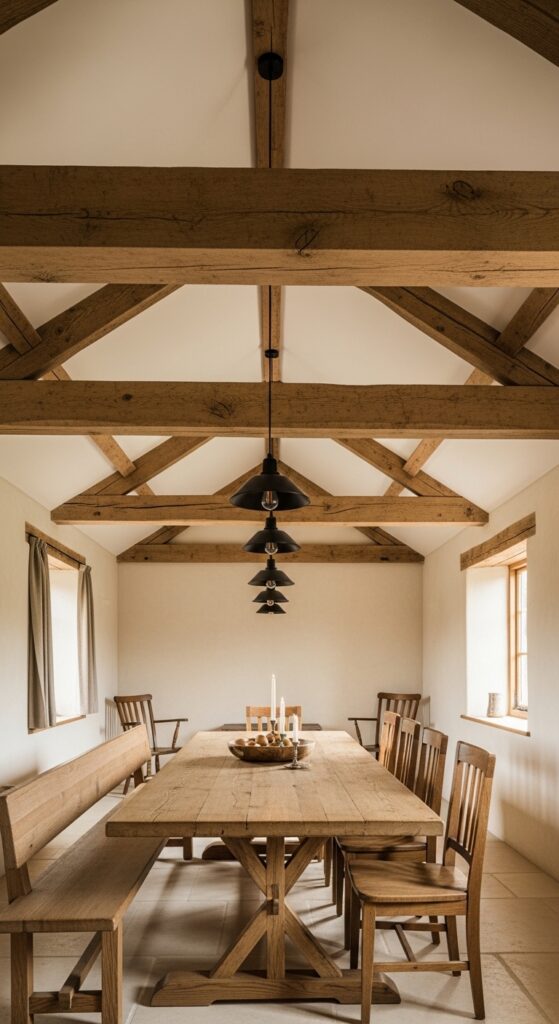
Exposed ceiling beams are the single fastest way to establish a rustic character in a dining room — and the single most permanent, which means you need to get their treatment right.
If your home already has real structural beams, the decision is simple: strip any paint or cladding and let them breathe. Sand lightly rather than aggressively — you want to reveal the wood’s character, not erase it. Finish with a penetrating oil in a warm amber tone, not a dark stain that obscures the grain.
If you’re adding decorative beams, the key is installation depth. Beams that sit visibly proud of the ceiling look tacked on. Beams that are flush-fitted into shallow ceiling channels — or that run from wall to wall as if they’re genuinely structural — look authentic even when they’re not. Go for solid wood or high-quality hollow wood shells over plastic or foam alternatives, which look unconvincing up close.
Beam color should sit within two to three shades of the floor if you have wood floors below. A very dark beam above a very pale floor reads as disconnected; harmonious tones create a sense of the wood wrapping the room in warmth.
One constraint: if your ceiling is below 8.5 feet, even shallow decorative beams can make the room feel compressed. In that case, skip the beams and invest elsewhere — perhaps in a plank wood feature wall instead.
3. Shiplap or Plank Wood Feature Wall in a Warm Tone
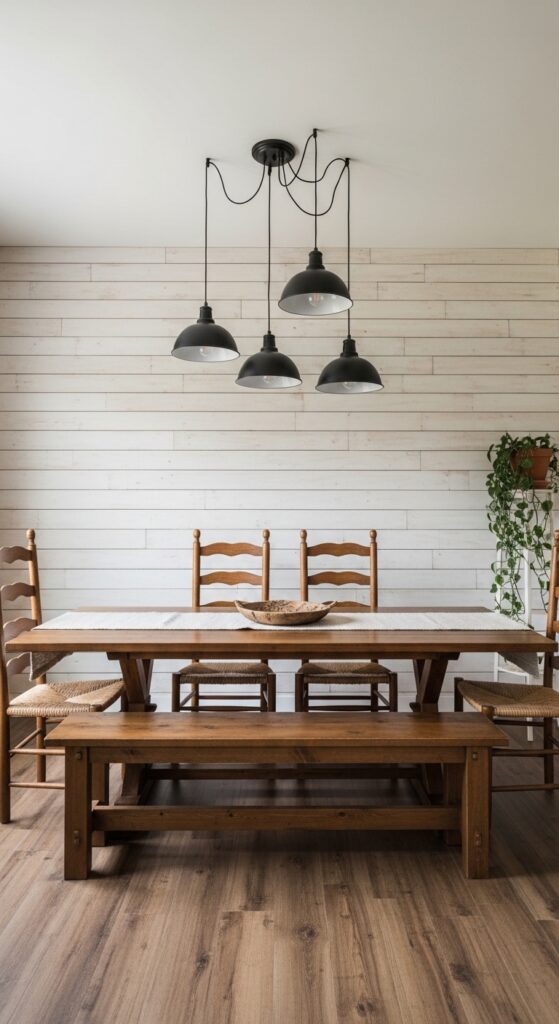
Not every rustic dining room has exposed beams or a stone fireplace — but almost any dining room can accommodate a shiplap feature wall, and the effect on the overall warmth and texture of the space is immediate and significant.
Shiplap installed horizontally is the most traditional, farmhouse-adjacent application. Wide planks — four to six inches — have more visual presence than narrower boards and read as more architectural. The finish is where you make your design decisions: a whitewash preserves the wood grain while lightening the tone (ideal for smaller rooms or those lacking light), a warm grey wash reads more coastal and contemporary, and a natural oil finish produces the richest, most deeply rustic result.
Here’s the practical tip that most people miss: run the planks to the ceiling rather than stopping at chair-rail or picture-rail height. A half-height shiplap treatment can look like an unfinished project. Full-height reads as deliberate and enveloping.
If the room already has rough plaster walls on three sides, a shiplap fourth wall creates a beautiful tension between the two textures — the organic irregularity of plaster against the rhythmic horizontal lines of the planks.
One constraint: shiplap is genuinely permanent. Renters should look at peel-and-stick wood plank options, some of which are quite convincing at room distance though they don’t hold up to close inspection.
4. Wrought Iron Lighting: Chandeliers and Pendants
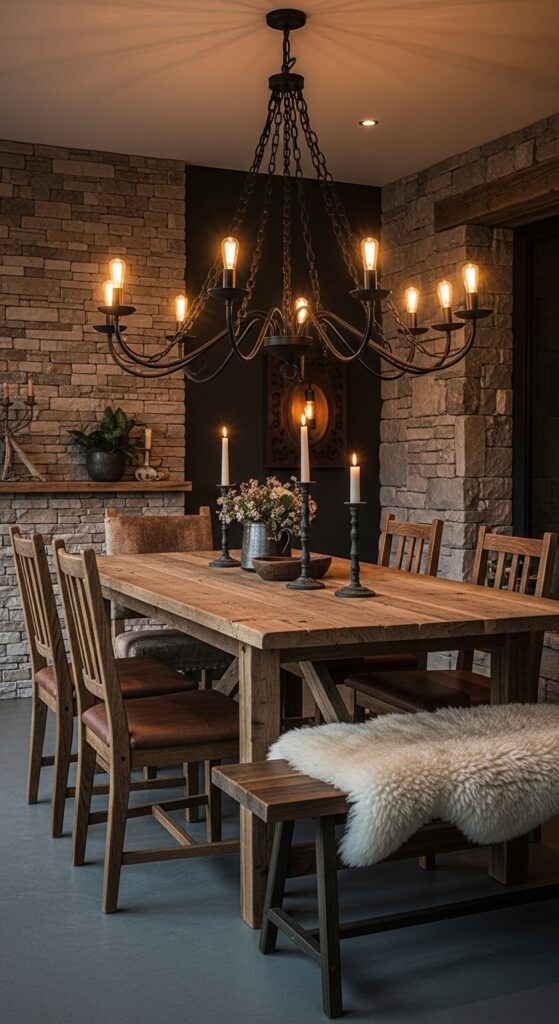
Lighting choice in a rustic dining room carries enormous weight — perhaps more than in any other style. A contemporary brushed nickel fixture will undermine a beautifully assembled rustic room instantly, in the same way that a wrong note ruins an otherwise perfect song.
Wrought iron is the authentic material choice for rustic lighting: its matte black or dark bronze surface absorbs light rather than reflecting it, which is exactly right for a warm, intimate dining atmosphere. A chandelier with multiple arms and exposed Edison or flame-tip bulbs casts the kind of warm, slightly uneven light that makes everyone at the table look their best.
Scale up. A rustic dining room, especially one with high ceilings or exposed beams, can carry a chandelier that would feel overwhelming in a more polished context. A 36- to 42-inch diameter chandelier over a 96-inch table looks exactly right. Smaller, and the fixture gets lost.
For pendant lighting as an alternative to a chandelier, consider a cluster of three to five individual pendants at staggered heights. Matte black metal shades with Edison bulbs have a slightly more modern-rustic quality — good for rooms that blend rustic and contemporary.
Always use warm bulbs — 2200K to 2700K — and put everything on a dimmer. Rustic dining rooms are meant to feel like evening no matter what time of day it actually is.
5. Mixed Seating: Benches and Mismatched Chairs Together
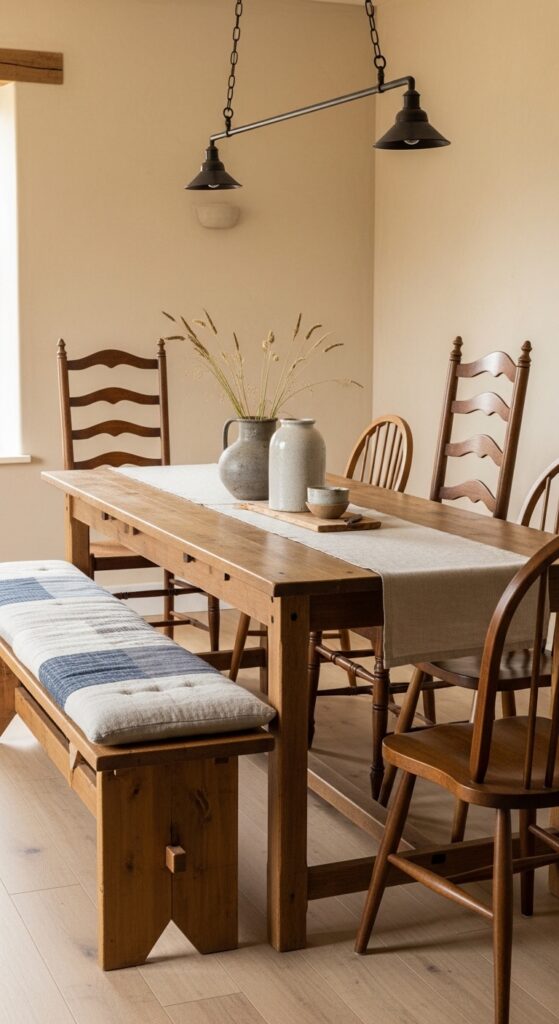
Matching dining chairs are a convention, not a rule — and in a rustic dining room, matching chairs can actually work against you. The slightly collected, slightly imperfect quality that makes a rustic room feel authentic is best expressed at the seating level, where small variations in chair style and finish communicate real life rather than showroom staging.
The most common and most successful approach: a wooden bench on one side of the table, mismatched chairs on the other. The bench is practical (it fits more people per linear foot than individual chairs and can be pushed fully under the table), and the varied chairs on the opposite side keep things from feeling institutional.
For the chairs to read as intentional rather than random, they need to share at least one quality — material, tone, or silhouette. Three wooden chairs in different profiles but similar warm honey tones work beautifully together. Three chairs in radically different materials — one metal, one wicker, one painted wood — start to feel like a garage sale.
Add continuity through cushion fabric: the same linen or ticking stripe in the seat pads of each chair creates visual cohesion without requiring identical furniture.
The constraint: bench seating is less comfortable than chairs for long dinners, especially without a back. A bench cushion helps, but guests at a three-hour dinner party will eventually want a back to lean against. Plan your seating accordingly.
6. Terracotta and Warm Earth Tone Color Palette
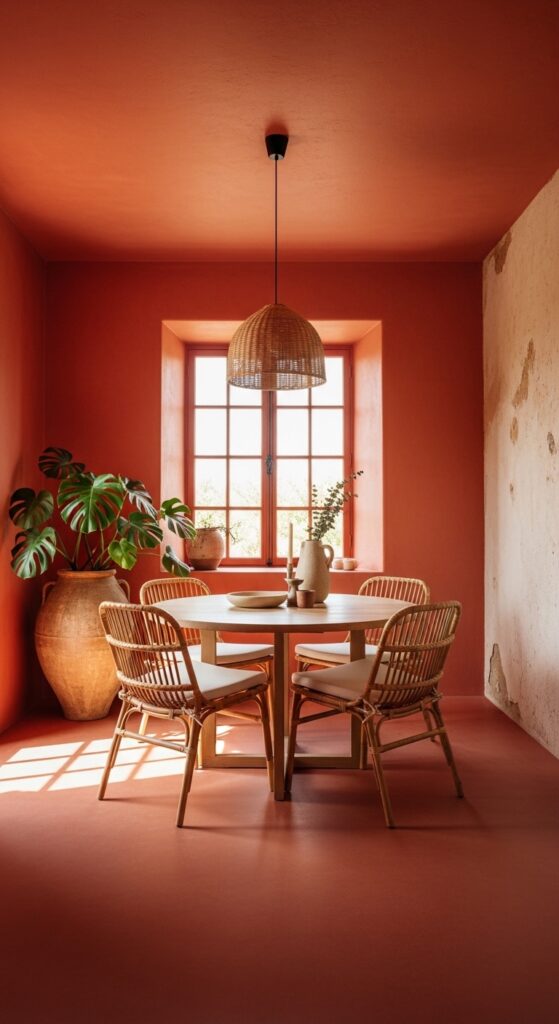
Color is where a rustic dining room either achieves its warmth or falls short of it — and the earth tones that define rustic interiors are more specific than people realize. This isn’t about any brown or any orange. It’s about the particular warmth of terracotta, the depth of ochre, the quiet richness of raw sienna, and the surprising sophistication of dusty clay pink.
Terracotta wall paint is one of the most generous colors in interior design. It shifts from burnt orange to a warm sandy brown depending on the light, which means it looks completely different at 8 a.m. and 8 p.m. — and both versions are beautiful. In matte finish, it has a plaster-like depth that amplifies the rustic character of everything around it.
Pair terracotta walls with natural textures: pale washed oak furniture, cream linen, rattan, raw ceramics, and jute. Avoid introducing cool tones — grey-blues, greens with a blue undertone, or anything with significant white in it — as they will flatten the warmth immediately.
If a full terracotta room feels too committed, paint just the wall behind the dining table or sideboard. Even one wall in this color will transform the room’s warmth and mood.
One watch-out: terracotta can read very orange under certain artificial lights. Test your paint color in the room at night before committing to all four walls.
7. A Stone or Brick Fireplace as the Room’s Anchor
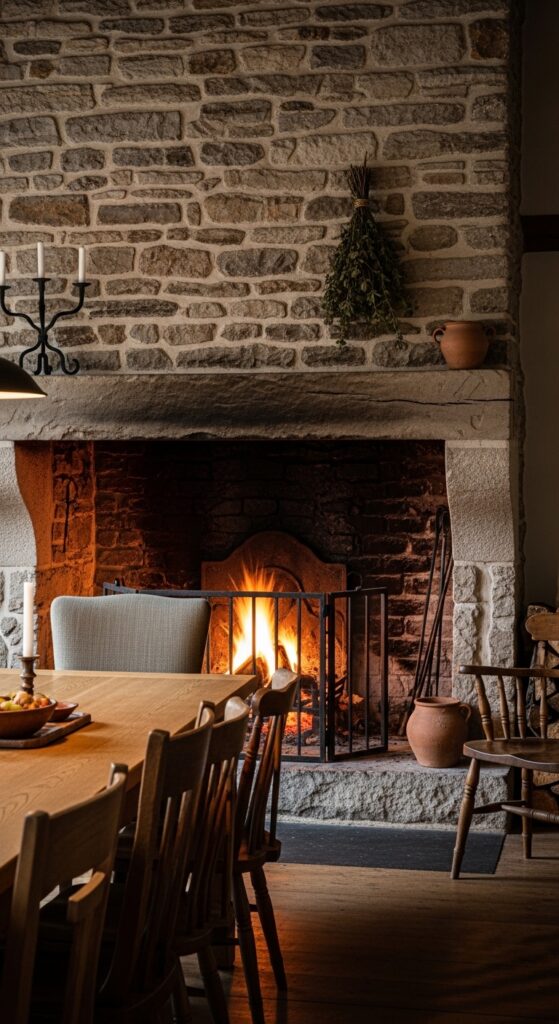
If your dining room has a fireplace — or if you’re considering adding one — organize the entire room around it without hesitation. A stone or brick fireplace in a rustic dining room isn’t just a heat source; it’s the room’s spiritual center, the feature that elevates the space from nicely decorated to genuinely memorable.
Stone fireplaces — rough-cut fieldstone, stacked slate, or mortared river rock — have the most authentically rustic character. Brick is slightly more refined and works beautifully in dining rooms that blend rustic with a more traditional or industrial sensibility. Smooth stucco-finished fireplaces are too polished for a truly rustic room and belong in a more contemporary context.
Mantel styling in a rustic dining room should feel like it evolved rather than being placed. A mix of heights works better than a symmetrical arrangement: one tall candlestick, a small framed piece of botanical art, a ceramic vessel, a bunch of dried lavender tied with linen twine. Odd numbers. Varying textures. Nothing that looks like it was bought as a set.
Table positioning relative to the fireplace is worth thinking about carefully. Diners seated with their backs to the fire will feel the heat most intensely — account for this in summer by ensuring the room has cross ventilation, or by choosing a fireplace that can be switched off.
One constraint: in a rental, you work with what exists. If you have a gas fireplace with an uninspiring surround, consider stone cladding panels that adhere to the existing structure — some products are genuinely convincing and dramatically change the room’s character.
8. Linen and Natural Textile Table Layers
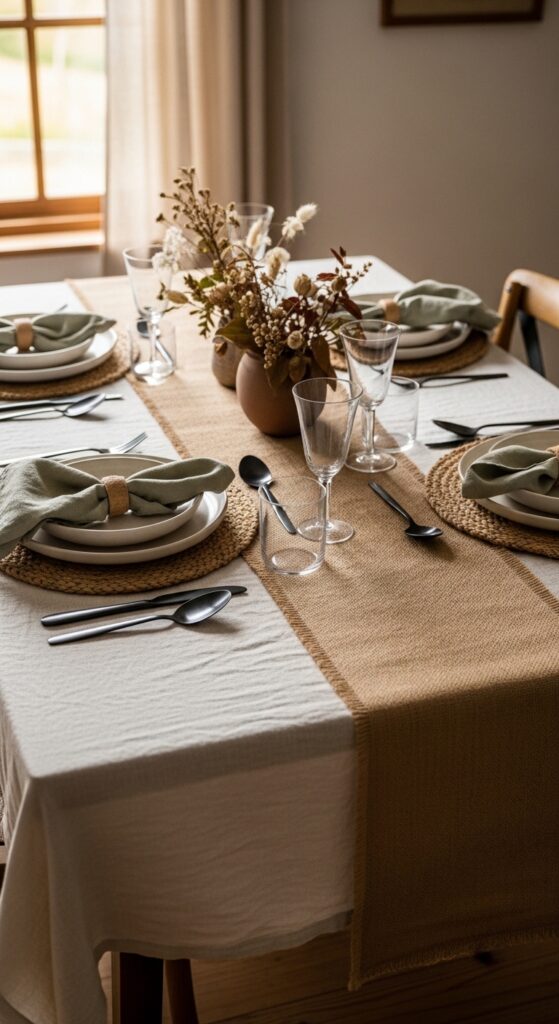
Table styling in a rustic dining room is about layering natural textiles in tones that feel like they came from the same landscape. Linen, burlap, jute, and unbleached cotton are the materials that belong here — and the slightly imperfect quality of these fabrics, their visible weave and natural creasing, is exactly what gives a rustic table setting its honest, unfussy character.
The layering approach works better than a single tablecloth because it introduces texture through dimension. Start with a linen tablecloth in off-white or warm stone, add a narrower burlap or rough-woven runner down the center, and anchor each place setting with an individual woven jute or grass mat. Three layers, three different textures, all within the same warm natural palette.
For napkins, choose linen in a tone that coordinates with rather than matches the tablecloth. Sage, oatmeal, rust, and warm terracotta all work in this palette. Fold them loosely rather than crisply — a perfectly pressed napkin reads as too formal for the rustic context.
One practical note: linen wrinkles. This is part of its charm in a rustic room, but if you genuinely hate ironing, choose a linen-cotton blend, which is more relaxed about creasing without losing the natural woven quality.
Skip synthetic table runners regardless of how convincingly they mimic natural materials — the difference is immediately apparent in person, and in a room built around material authenticity, a fake-jute polyester runner will undermine everything around it.
9. Wicker, Rattan, and Woven Chairs for Organic Texture
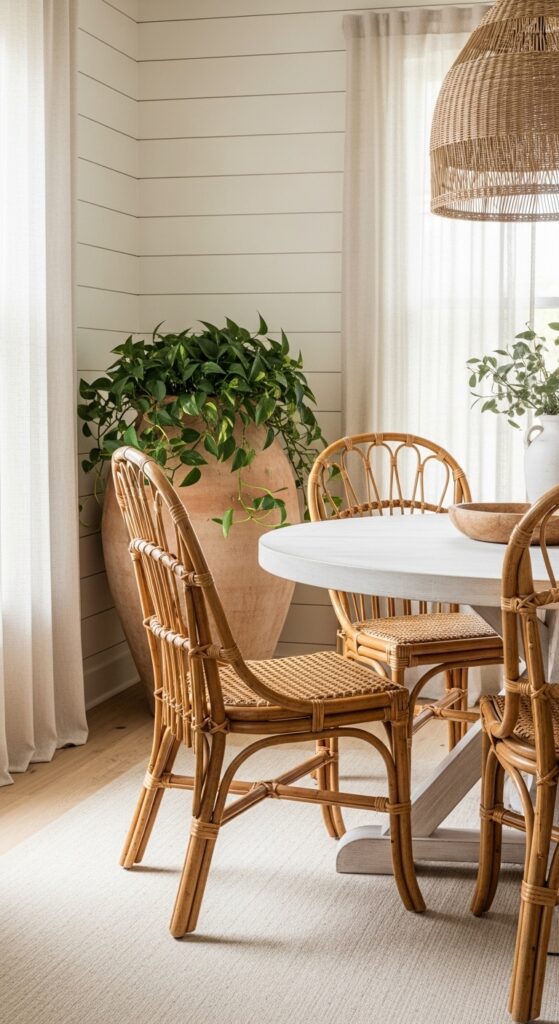
Rattan and woven furniture occupy a specific and important place in rustic interior design — they’re the material bridge between the solidity of wood and the softness of textiles. A room with only hard-wood furniture and bare walls can feel austere even with the right color palette; introduce a rattan chair or two and the whole room relaxes.
Rattan dining chairs work especially well around round or oval tables, where their curved organic forms echo the table’s shape. The woven cane seat introduces another layer of texture — one that’s also breathable and comfortable for long dinners in a way that solid wood seats aren’t.
Natural honey-toned rattan is the most versatile finish for a rustic palette — it reads warm without being orange and coordinates with almost any wood tone. Painted rattan (sage green, cream, terracotta) can be beautiful in the right context but commits you more firmly to a specific palette.
For seating arrangements, consider rattan chairs mixed with one or two wooden chairs at the table heads. The variety reinforces the collected, non-matching quality that makes rustic rooms feel genuinely lived in.
The practical constraint: rattan requires care. It dries out and becomes brittle if the room is very dry — particularly in winter with central heating running full-time. Treat rattan furniture with a light application of linseed oil or furniture oil once a year to maintain flexibility. And keep it away from direct sun exposure, which fades and weakens the natural fiber over time.
10. Open Shelving With Rustic Kitchen and Dining Display
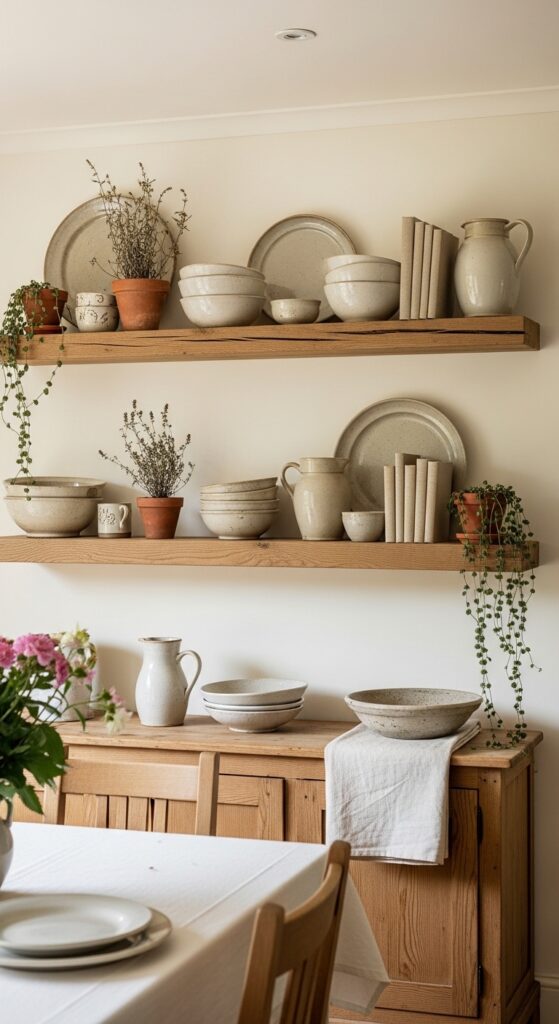
Open shelving in a rustic dining room does something no other element can: it makes the room feel inhabited and real. Closed cabinetry, for all its practicality, hides everything that signals daily life. Open shelves display it — and in a rustic room, the objects of daily life (the mismatched ceramics, the ceramic jug, the well-read cookbook) are genuinely beautiful.
The key is treating the shelves as a composition rather than storage. Group objects by height, tone, and material: all the stoneware together but in varying sizes, a cluster of small terracotta pots with herbs near one end, a few linen-bound books stacked horizontally to vary the rhythm. The rule of odd numbers applies — three objects of varying heights read as more interesting than two or four.
Rough-sawn oak or pine shelves with a natural oil finish are the right material for rustic display. Avoid glass shelves (too contemporary), painted MDF (too suburban), or anything with a visible bracket that looks too industrial for a warm rustic aesthetic. Simple forged iron shelf supports — the kind with a hand-hammered quality — complete the look without drawing attention.
One honest constraint: open shelving in a dining room attracts grease and dust because it sits in proximity to food. Plan to wipe down objects monthly if the room connects to a kitchen, and consider whether you’re genuinely prepared for the maintenance that comes with displaying things rather than hiding them.
11. Dried Botanicals and Natural Seasonal Decor
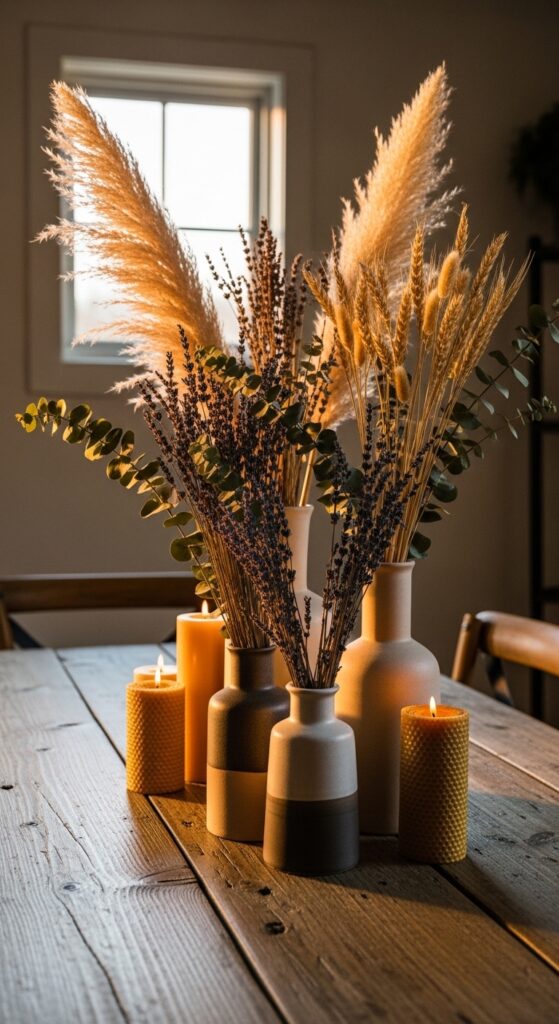
Fresh flowers are wonderful, but in a rustic dining room, dried botanicals have a particular rightness — they’re honest about what they are, they look beautiful at every stage of drying, and they require nothing from you after the initial arrangement. They also last for months rather than days, which matters if you want a centerpiece that holds up between dinner parties.
The vocabulary of dried botanicals that works in rustic interiors is specific: pampas grass (in its natural cream or warm beige form, not dyed), dried lavender, preserved eucalyptus, dried wheat, bundles of dried herbs, seed pods, and cotton stems. Each of these materials has texture and structural interest that continues to reward close looking.
Arrange dried botanicals in mismatched ceramic or terracotta vessels rather than identical vases. A cluster of four or five different vessels at varying heights, each holding a different botanical, reads as more organic and considered than a single uniform arrangement.
That said, dried pampas grass in particular has had a moment — several moments — in recent years and is starting to read as a trend marker rather than a timeless choice in some contexts. If you want longevity over trendiness, lean toward dried herbs, eucalyptus, and wheat for your primary materials, with pampas as a supporting texture rather than the headline.
One watch-out: dried botanicals are genuinely flammable. Keep arrangements well away from candles and open flames, especially in a dining room where candles are a regular presence.
12. Layered Rugs and Natural Floor Coverings
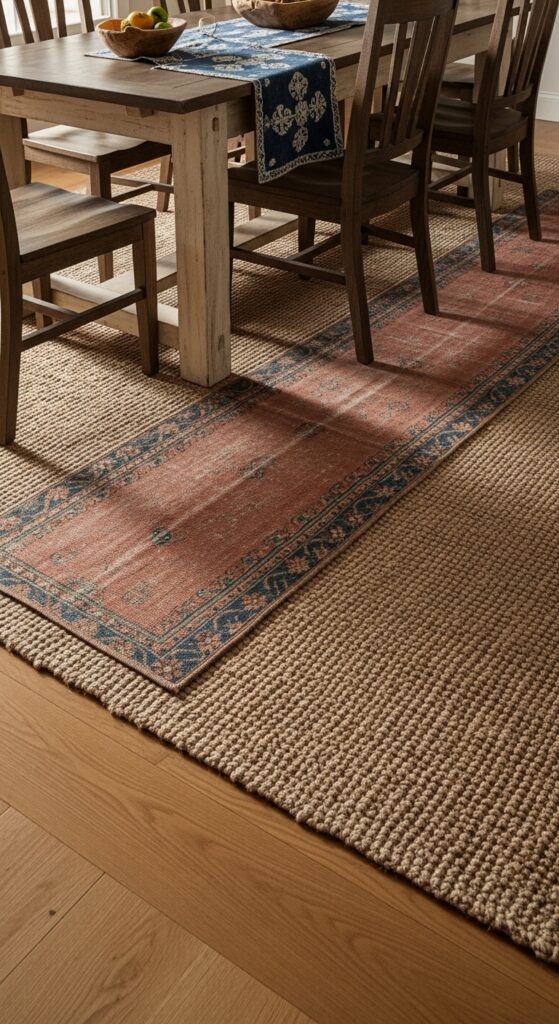
The floor in a rustic dining room is often the last thing people think about and the first thing that makes or breaks the overall warmth of the space. Bare hardwood floors, however beautiful, can feel cold and hard in a rustic context — a rug is what turns a dining area into a room.
Jute is the foundational material for rustic area rugs: it’s completely natural, it has a warm honey tone that complements every wood finish, and its tight weave is relatively easy to clean compared to wool pile. A large jute rug in a natural or slightly bleached tone anchors the dining table without competing with any other element in the room.
Layering a smaller vintage-style textile rug on top of the jute creates the kind of casual, collected depth that defines a truly warm rustic interior. The layered rug doesn’t need to center under the table — it can sit to one side or at an angle, visible at the edges of the dining footprint.
For sizing, follow the same rule that applies to all dining rugs: the rug must extend a minimum of 24 inches beyond the table edge on all sides so chair legs remain on the rug when pulled out. For a rustic farmhouse table, that typically means an 8-by-10-foot rug at minimum, and a 9-by-12 is better.
One constraint: jute gets damaged by prolonged moisture exposure. It’s not the right choice for dining rooms adjacent to kitchens with significant splash potential or for households with very young children who spill frequently. In those cases, a washable cotton flatweave in a natural tone gives you similar visual warmth with far more forgiveness.
The Best Rustic Dining Rooms Look Like They Grew That Way
If you’ve been reading closely, you may have noticed that the common thread running through every idea in this article isn’t any specific material or color — it’s intentionality masquerading as accident. The collected chairs, the layered textiles, the mismatched ceramics on open shelves: none of these things happen by chance. They happen because someone made specific, considered choices and then had the confidence to stop before the room became overly styled.
The most important thing you can take away from this article is the difference between rustic and rough. Rustic means warm, textural, honest, and human. It doesn’t mean unfinished, cluttered, or dark. Every rustic dining room worth admiring has restraint somewhere in it — a calm wall color, a simple table, an unfussy lighting fixture — that gives the more characterful elements room to breathe.
Start with the table. Get the lighting right. Add texture through seating and textiles. And then wait and see what the room tells you it needs next. The best interiors always take a little time.