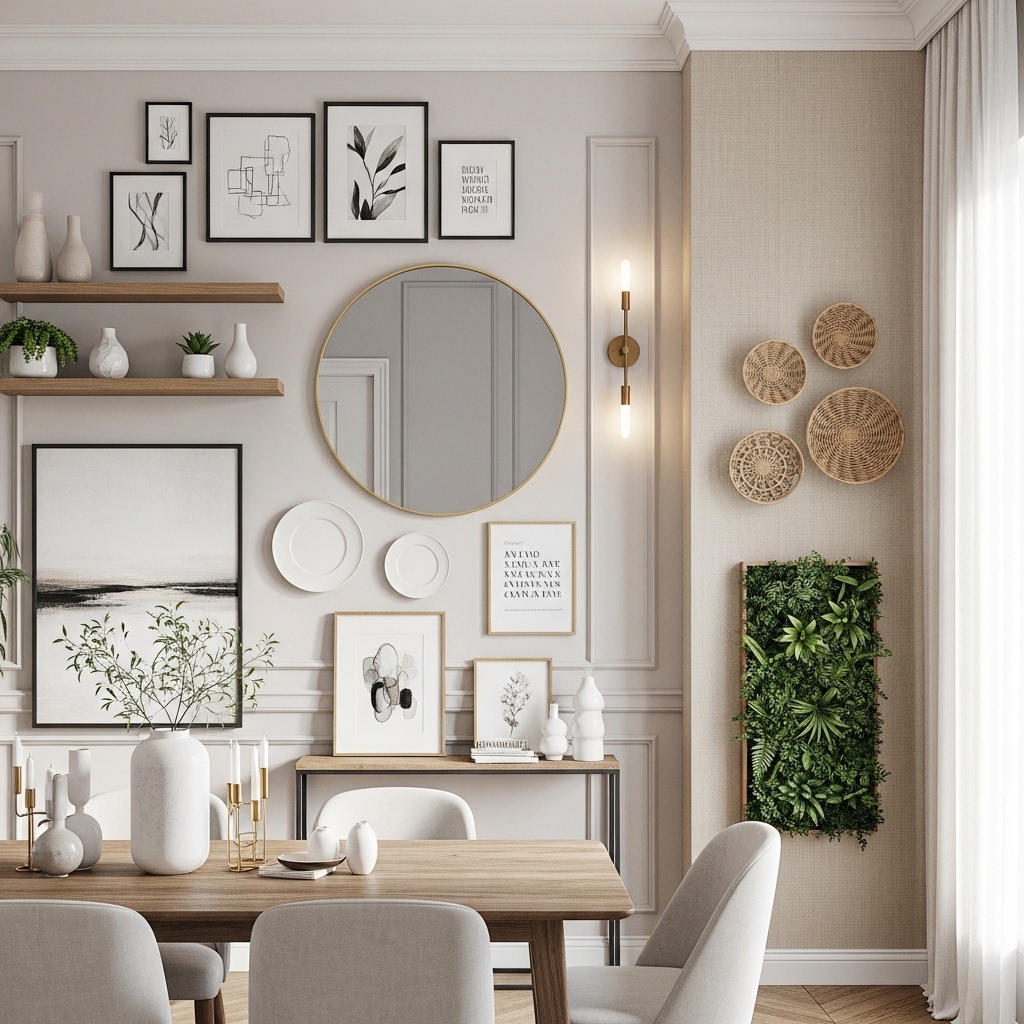
A clean dining table is one of those small things that changes how your whole home feels. You walk past it a dozen times a day; if it’s chaotic, your brain registers it as unfinished business. But “clean” doesn’t mean empty like a staged apartment where nobody’s allowed to drink water. The best modern tables have a quiet rhythm: a few intentional pieces, some breathing room, and enough practicality that you’re not constantly moving decor aside just to eat.
Think of this as styling that supports real life. If you share your dining space with homework, laptops, deliveries, or the inevitable random pile of “I’ll deal with this later,” you need decor moves that are quick, forgiving, and repeatable. The following ideas are distinct on purpose—different materials, lighting, textures, and layouts—so you can pick the ones that match your table, your room’s light, and your tolerance for fuss.
1. The Low Bowl Centerpiece (Because Tall Stuff Is Annoying)
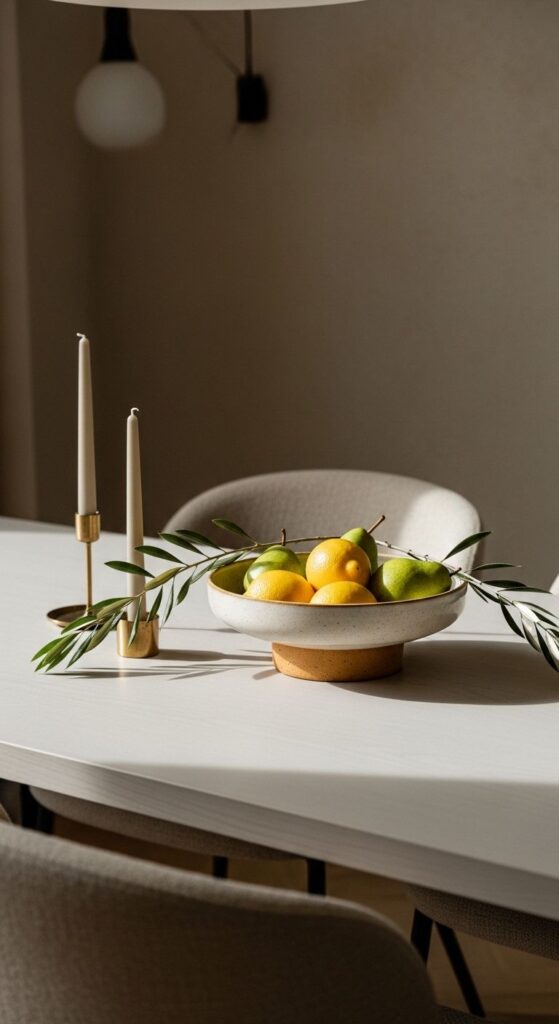
If you want “clean” without “bare,” go low and grounded. A shallow bowl centerpiece reads modern because it respects sightlines—people can actually see each other without peeking around a bouquet like it’s an obstacle course. It also feels calmer than a bunch of small objects scattered like you’re trying to fill space.
- Choose the right scale. On a long rectangular table, the bowl should feel substantial—wide, not tall. A tiny bowl in the middle looks apologetic.
- Keep the contents edited. Five pieces of fruit beats a full grocery-store display. Citrus is great because it looks fresh longer and adds a subtle glow.
- Let the bowl do the work. Matte ceramic, stone, or brushed metal feels current. Glossy glass can look sharp, but it also shows every smudge and watermark.
Watch out: if your table is narrow, a wide bowl can crowd place settings. In that case, pick a lower oval shape and push it slightly off-center.
Takeaway: A low bowl gives you “styled” and “usable” at the same time.
2. A Linen Runner That Doesn’t Scream “Holiday”

A runner is the fastest way to give a table shape and intention, but the wrong runner can feel like you’re permanently hosting a formal dinner. The modern version is relaxed linen—soft edges, subtle texture, no shiny embroidery.
- Pick “soft white,” not bright white. Warm ivory or oatmeal looks expensive and forgiving, especially if your light runs cool.
- Go wider than you think. Skinny runners feel outdated; aim for something that visually anchors the center without turning into a full tablecloth.
- Let it be a little imperfect. Linen looks better with gentle rumples. If you hate wrinkles, choose a linen blend or a heavier weave that behaves.
Watch out: a runner can become a magnet for crumbs and stains if you eat messy foods often. If that’s your life (no shame), keep it washable and rotate two runners so one is always clean.
Takeaway: Linen adds calm texture, not drama—exactly what a clean table wants.
3. The “One Vase” Rule for Modern Calm
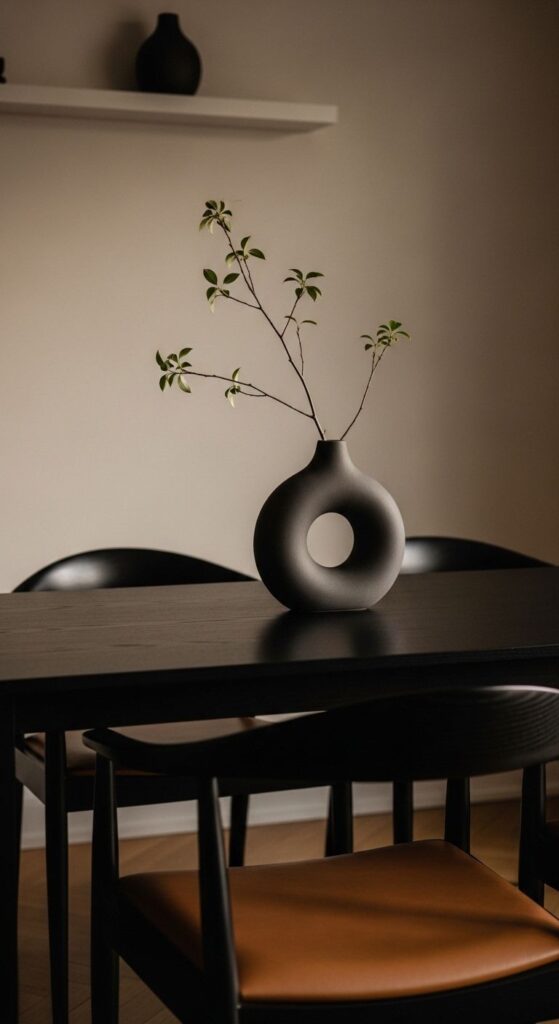
Here’s a truth I’ll say with love: three tiny vases rarely look “styled.” They usually look like you couldn’t commit. One vase with a strong silhouette is cleaner, more modern, and easier to maintain. It’s a single visual sentence instead of a paragraph.
- Choose a vase with shape, not pattern. Sculptural curves, a soft cylinder, a handmade irregular rim—these details carry the look without needing loud color.
- Use one branch or a few stems max. The negative space is what reads modern. Think olive branch, eucalyptus, or something airy rather than a dense bouquet.
- Place it with intention. Dead-center can feel formal. Slightly off-center feels lived-in, like you actually use the table.
Watch out: delicate flowers shed, and petals on a dining table read “mess,” not “romantic.” If you want low effort, stick to branches, hardy greens, or dried stems that don’t crumble.
Takeaway: One confident piece beats a collection of “maybe” objects.
4. Two Candles, Not Six (Soft Light Without the Chaos)
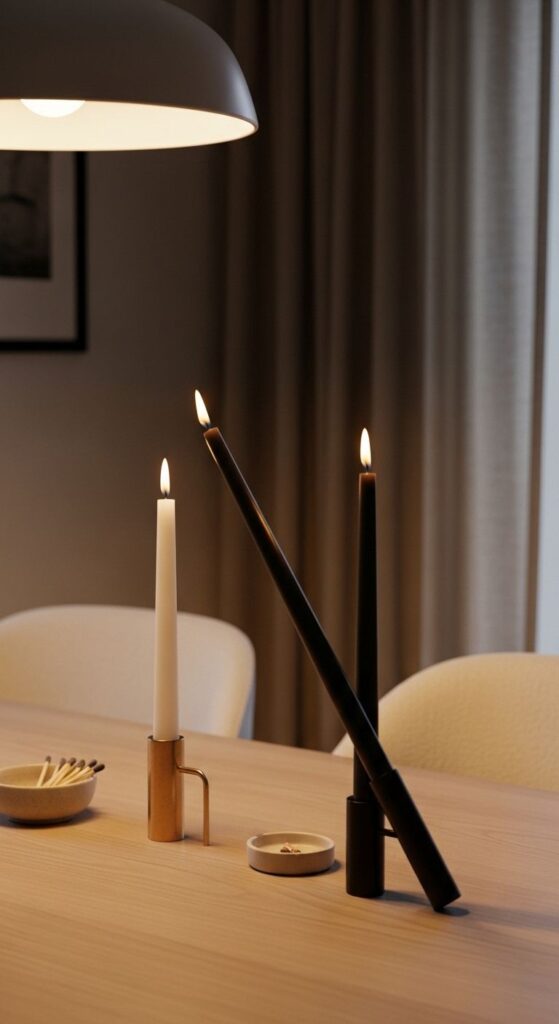
Candles are the cheat code for atmosphere, but too many candles start to look like you’re decorating at the table instead of for the table. Two taper candles in clean holders feel intentional and modern—and they leave room for real life.
- Choose tall, slim tapers. They add vertical elegance without taking up footprint.
- Keep holders simple and weighty. Brass, matte black, brushed nickel, or stone—avoid overly ornate shapes if you’re going for clean.
- Use asymmetry on purpose. Place one candle closer to the centerpiece and one a bit farther. It feels designed, not “set.”
Watch out: scented candles can clash with food in a way that’s honestly tragic. If you’re eating anything flavorful, go unscented and let dinner be the scent.
Takeaway: Warm light is enough—don’t turn the table into a candle store.
5. A Wood Tray “Landing Strip” for Real Life

If your dining table does double duty—mail station, laptop zone, kid art gallery—a tray is your best friend. A tray isn’t just decor; it’s a boundary. It tells your stuff where to go so the rest of the table can stay clean.
- Pick a tray that matches your table’s “temperature.” Warm wood plays nicely with oak and walnut. Matte black or stone looks sharp on white tables.
- Limit the tray to essentials. Coasters, a small catchall, maybe a match dish or tiny vase. If it holds five categories of clutter, it’s not doing its job.
- Place it deliberately. I like one end of the table or along one side, especially if you often use the center for meals.
Watch out: bigger trays encourage bigger messes. A smaller tray forces editing, which is the whole clean-look game.
Takeaway: A tray makes “lived-in” look organized instead of chaotic.
6. Sculptural Fruit, But Make It Minimal
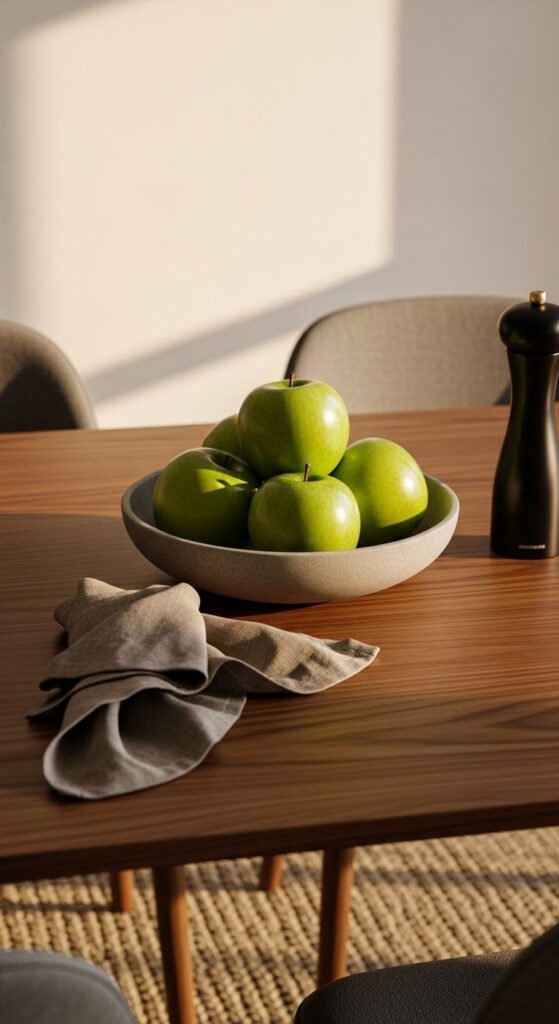
Fruit is one of the most underrated modern decor tools because it’s inherently sculptural—and it’s allowed to be there. The secret is restraint: one type of fruit, a small quantity, and a container that feels intentional.
- Choose a single color story. Green apples, lemons, blood oranges—pick one and commit. A mixed fruit bowl can look busy fast.
- Keep the count low. Three to seven pieces is usually enough. When it’s overflowing, it starts reading kitchen storage.
- Use a bowl that contrasts subtly. Matte stone with glossy fruit is a satisfying texture combo, and it reads high-end without trying.
Watch out: bananas (and anything that bruises quickly) can turn from “styled” to “sad” in a day. If you want low maintenance, go citrus or apples.
Takeaway: Edited fruit looks like design, not groceries.
7. The Monochrome Place-Setting Hack (For Instant Order)

Even if you’re not hosting, a simple monochrome table setup makes the whole dining area feel calmer. It’s like making your bed—pure psychological benefit. And monochrome works because the eye doesn’t bounce around collecting visual “noise.”
- Pick plates in a soft neutral. Warm gray, sand, creamy white, stone. Matte finishes feel modern and hide scratches better.
- Match napkins loosely. They don’t need to be identical—just in the same family. Linen in taupe with stoneware in warm gray looks effortless.
- Keep glassware simple. Clear or faintly tinted. Heavy pattern fights the clean look.
Watch out: if you use very dark plates, crumbs and water spots show more than you’d expect. Dark can be stunning, but it’s less forgiving day-to-day.
Takeaway: Monochrome is the fastest route to “clean” that still feels warm.
8. Mix One Texture In: Boucle, Cane, or Leather
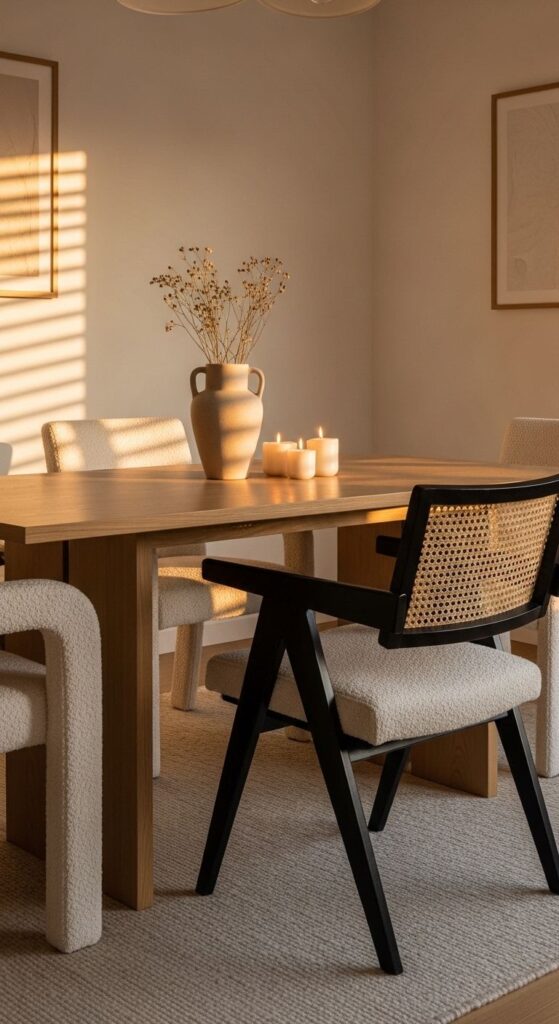
Clean tables sometimes go wrong because the room gets too smooth: glossy table, sleek chairs, shiny light—everything looks a bit cold. Texture is what makes modern decor feel human. The trick is using one noticeable texture and letting it carry the softness.
- Boucle chairs instantly add warmth and look elevated, especially with a simple oak table.
- Cane backs bring airy texture without bulk and look great if your space needs visual lightness.
- Leather seats (especially in warm camel or tan) add richness while staying clean-lined.
Watch out: too many textures at once can look “styled” in the exhausting way. If you already have a textured rug, keep chairs simpler—or vice versa.
Takeaway: One strong texture makes a minimal table feel inviting, not sterile.
9. A Statement Pendant That Doesn’t Overpower the Table
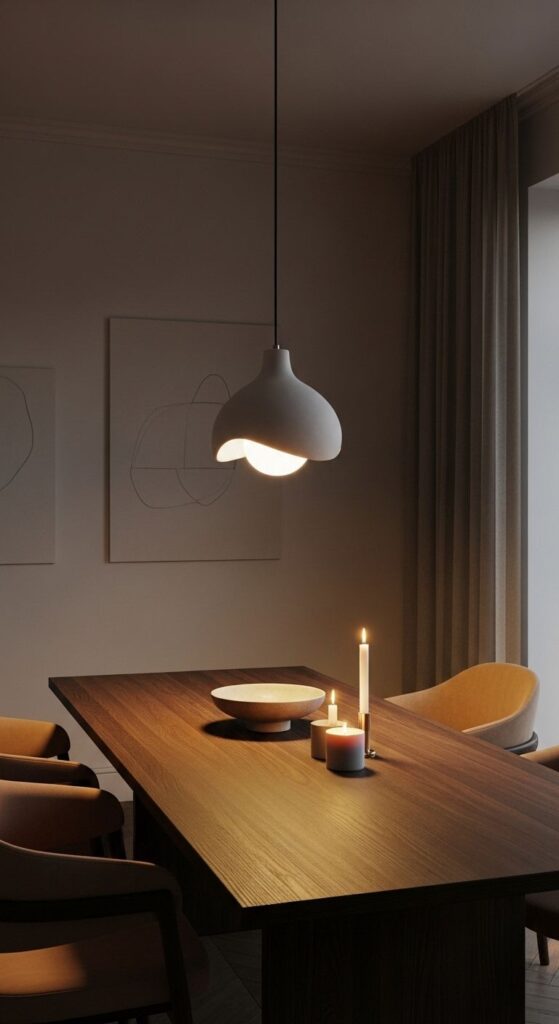
If your table always looks like it needs “something,” it might be because the lighting isn’t doing its job. A strong pendant creates a focal point above the table, so you don’t feel pressured to pile decor on the surface.
- Choose a soft material. Milky glass, matte metal, plaster-like finishes—these diffuse light and feel calm.
- Mind the scale. Too small looks timid; too big feels heavy. The fixture should relate to the table width without swallowing it.
- Use warm bulbs and dimming if possible. Warm light makes neutrals richer and helps a clean table feel cozy at night.
Watch out: highly detailed or sparkly fixtures can visually “busy up” the whole area, even if your table is minimal. Keep the silhouette simple.
Takeaway: When the overhead anchor is right, the tabletop can stay beautifully restrained.
10. A Quiet Color Palette (Warm Neutrals Beat Stark White)
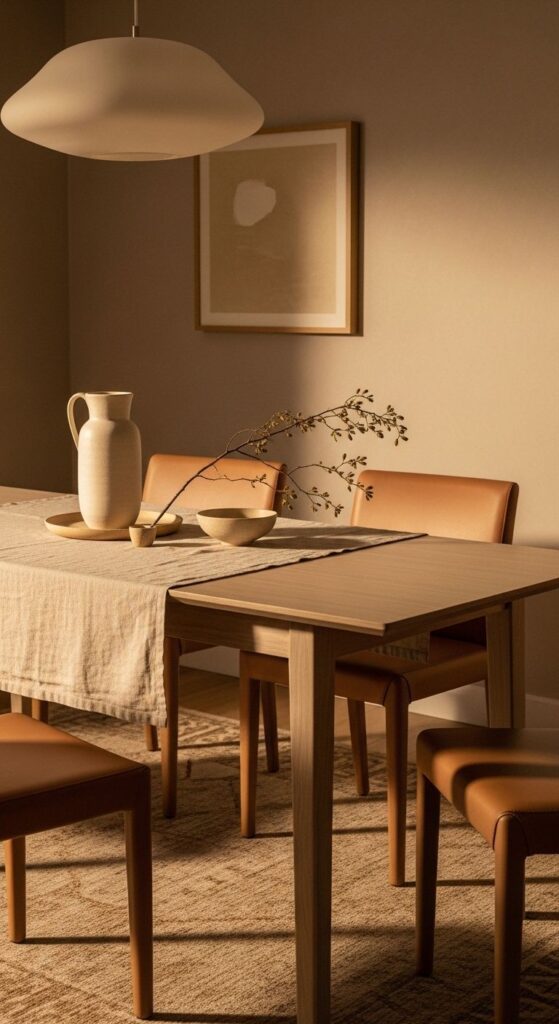
The cleanest modern dining rooms aren’t all bright white. Stark white can look sharp, but it can also feel chilly and unforgiving. Warm neutrals give you that clean look plus softness—the kind that makes people actually want to sit down.
- Build a palette with gentle contrast. Ivory, sand, warm gray, camel, soft black—think “stone and sun,” not “black and white.”
- Use matte finishes where possible. Matte paint, matte ceramics, satin wood—gloss tends to highlight every imperfection.
- Add one darker note for depth. A charcoal vase, a walnut tray, black candle holders. Just one or two, not a full dark takeover.
Watch out: in north-facing rooms, neutrals can skew gray fast. Choose warmer undertones and use warmer bulbs so the table doesn’t look flat.
Takeaway: Warm neutrals keep things clean without feeling cold or severe.
11. The Renter-Friendly Wall Backdrop Trick
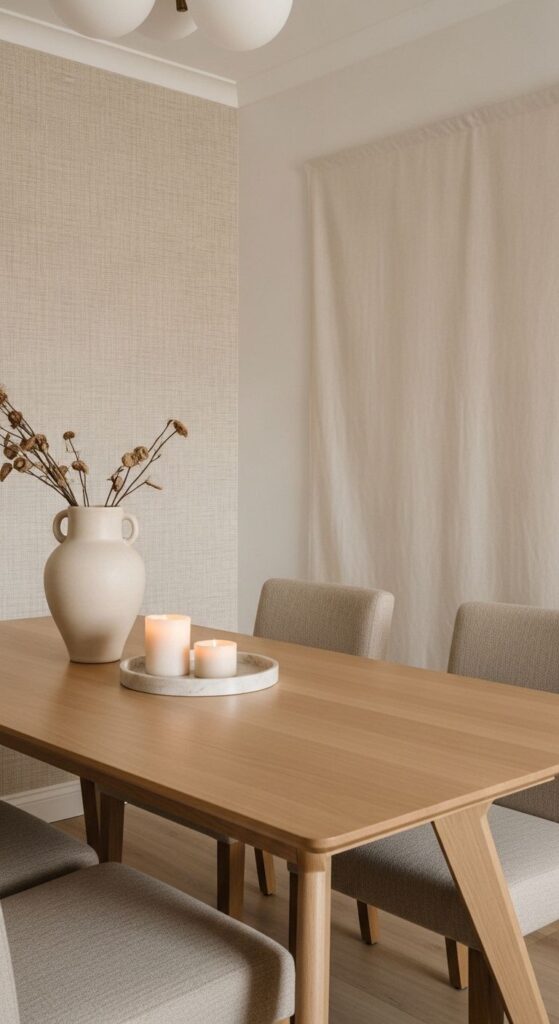
Sometimes the tabletop looks cluttered because the background is blank in a depressing way. You try to compensate by adding more stuff to the table, and suddenly it’s crowded. A subtle wall treatment fixes that imbalance and lets your table breathe.
- Removable wallpaper in a low-contrast texture (linen-like, plaster-like) gives depth without screaming pattern.
- A fabric panel—heavy linen or a neutral woven textile—can be hung neatly and instantly softens the dining zone.
- Lean into calm art. One oversized piece with lots of negative space reads cleaner than a gallery wall if you’re going modern.
Watch out: bold patterns behind a dining table can make even minimal styling feel busy. If you hate visual noise, keep the wall treatment subtle and textural.
Takeaway: When the wall carries some design weight, the table can stay simple.
12. The “Clear the Ends” Rule for a Cleaner Silhouette

If you want your dining table to look instantly cleaner—without buying anything—clear the ends. The ends are what your eye reads first as you walk by. When they’re empty, the table looks longer, sleeker, and more modern, even if the center has a small vignette.
- Concentrate decor in the middle third. That’s your “styled zone.” Everything else stays open for living.
- Avoid corner clutter. Placemats stacked at one end, a permanent mail pile, spare candles—these little edge objects create visual stress.
- Use a single low vignette. Bowl + two tapers, or tray + vase. Keep it low and compact so the silhouette stays clean.
Watch out: on a small table, the “middle third” is basically the whole table. Scale down to one object or a very slim runner, or it’ll feel crowded.
Takeaway: Empty ends create clean lines—and clean lines are the whole modern vibe.
A clean dining table isn’t about having less personality—it’s about having fewer, better choices. If you’re stuck, start with the easiest win: one low bowl or one strong vase, then add either a runner or a tray depending on whether you need softness or organization. Keep the rest of the surface honest and usable. The point is to make the table feel like a calm landing spot in your home, not another project you have to maintain.
If you tell me your table material and your room’s lighting (bright, dim, north-facing, etc.), I can point you to the 2–3 ideas that will look best without extra effort.