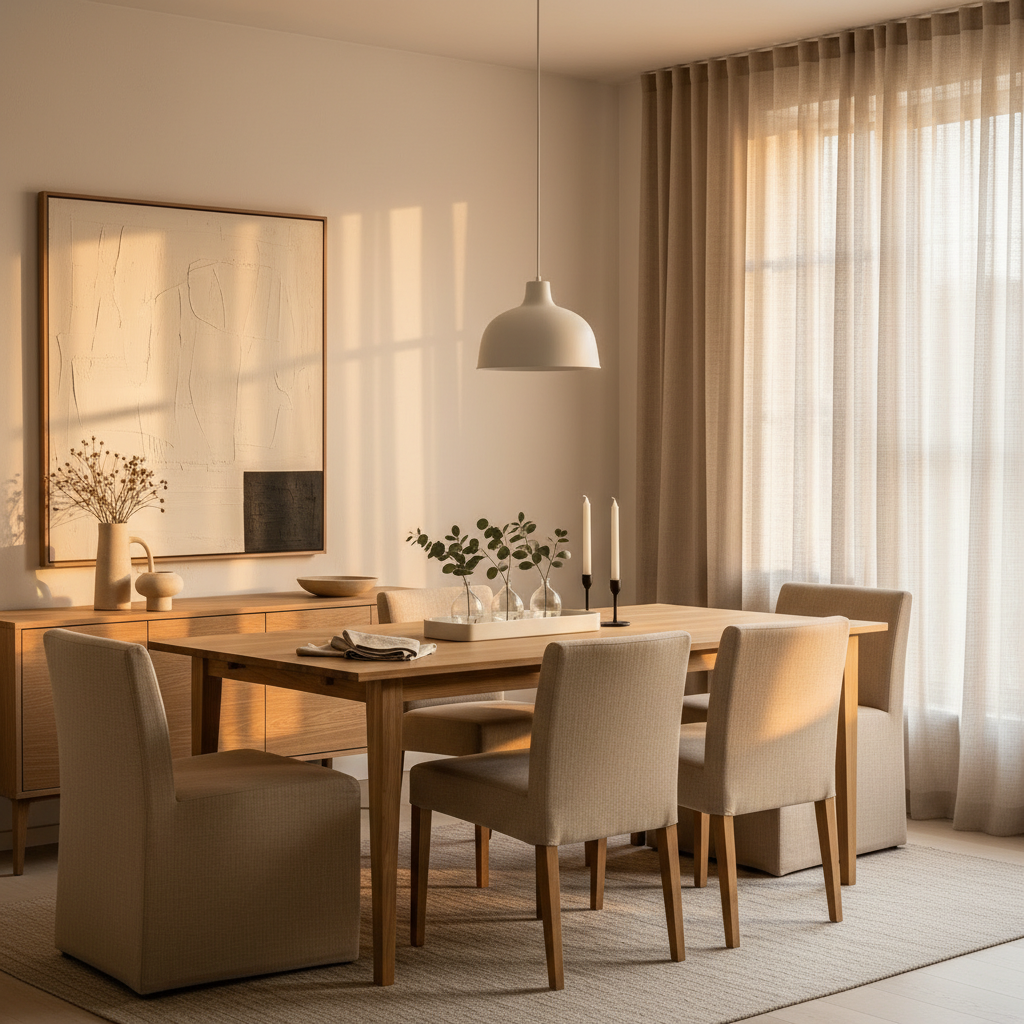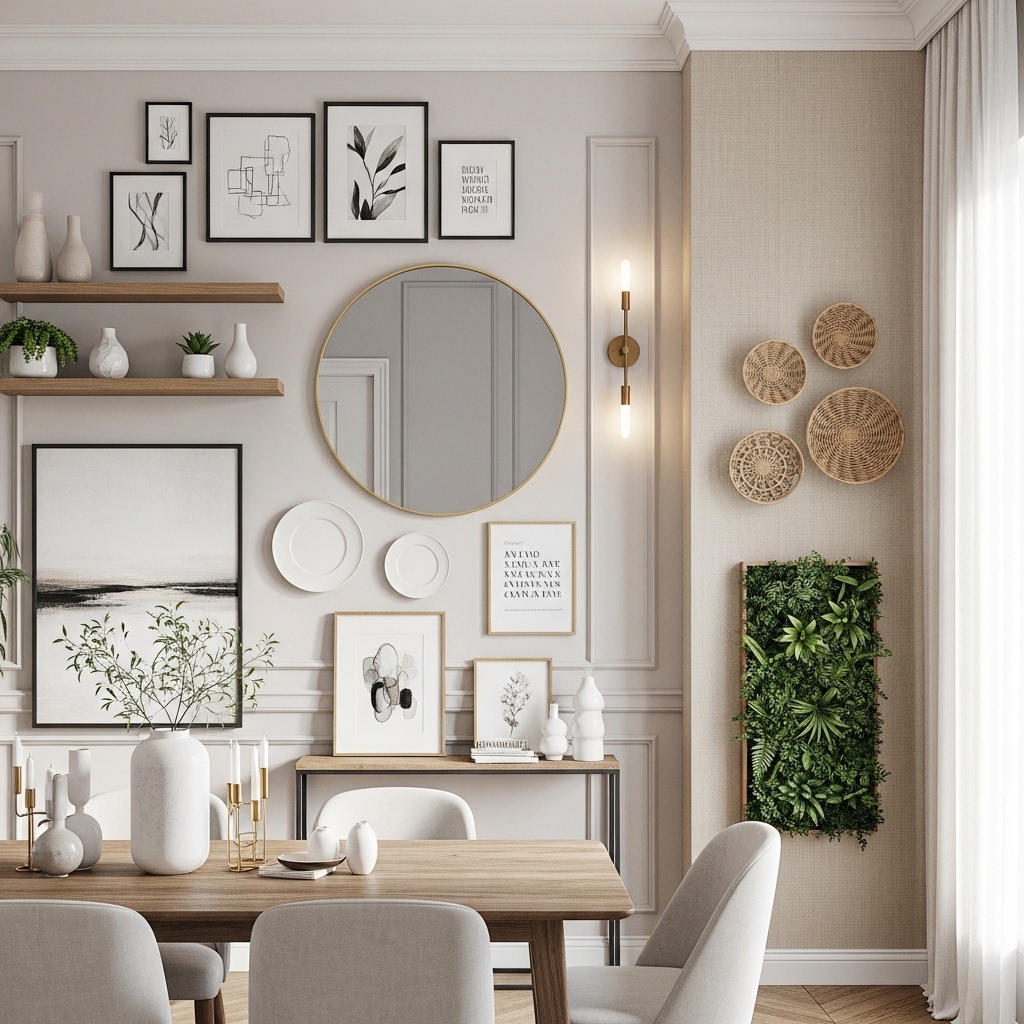
Buffets are the unsung heroes of dining rooms. They store the extra platters, hold the wine during dinner parties, and quietly anchor one entire wall. But styling them? That’s where most people hesitate. Too empty and it looks unfinished. Too decorated and it feels like a home goods aisle.
Modern buffet decor is about balance. Clean lines. Thoughtful layering. Just enough texture to feel warm, but not so much that it competes with the rest of the room. A buffet should complement your dining table — not try to outshine it.
If you’ve ever stared at your buffet wondering what belongs on it (and what doesn’t), this is for you. These twelve modern dining room buffet decor ideas are polished, practical, and designed for real life — not just photos.
1. Anchor It With Oversized Art
If you want instant modern impact, go big.
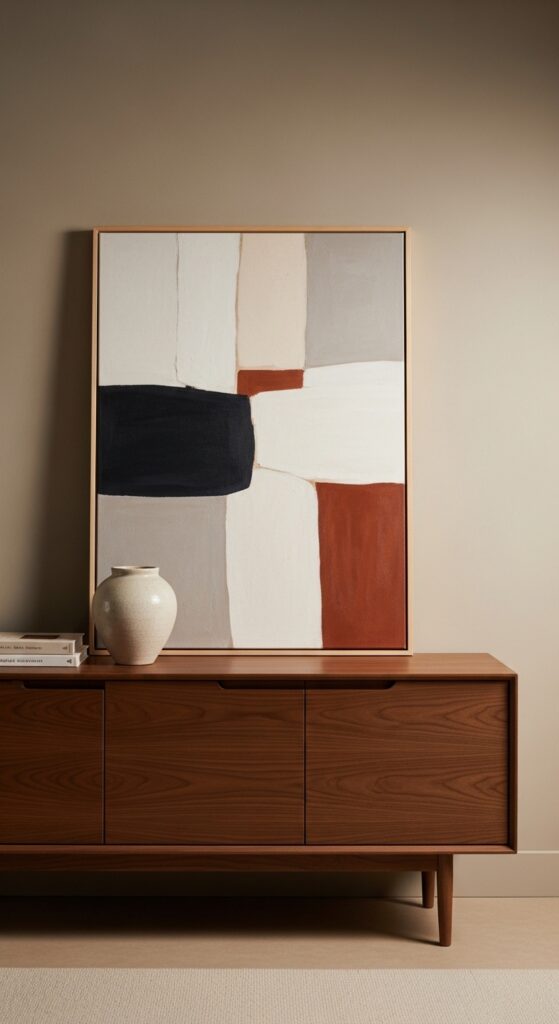
Oversized art above (or leaning on) your buffet grounds the entire wall. It creates scale and prevents the piece from looking like an afterthought.
Aim for artwork that spans at least two-thirds the width of the buffet. Anything smaller risks feeling disconnected. Abstract art works beautifully in modern spaces because it adds interest without dictating a theme.
Leaning art instead of hanging it gives a relaxed edge — perfect if you’re renting or hate measuring.
One watch-out: avoid overly busy prints if your dining chairs or rug already have pattern. Keep the palette cohesive.
A large statement piece makes the buffet feel intentional instead of decorative.
2. Add a Sculptural Table Lamp
Modern doesn’t mean stark.
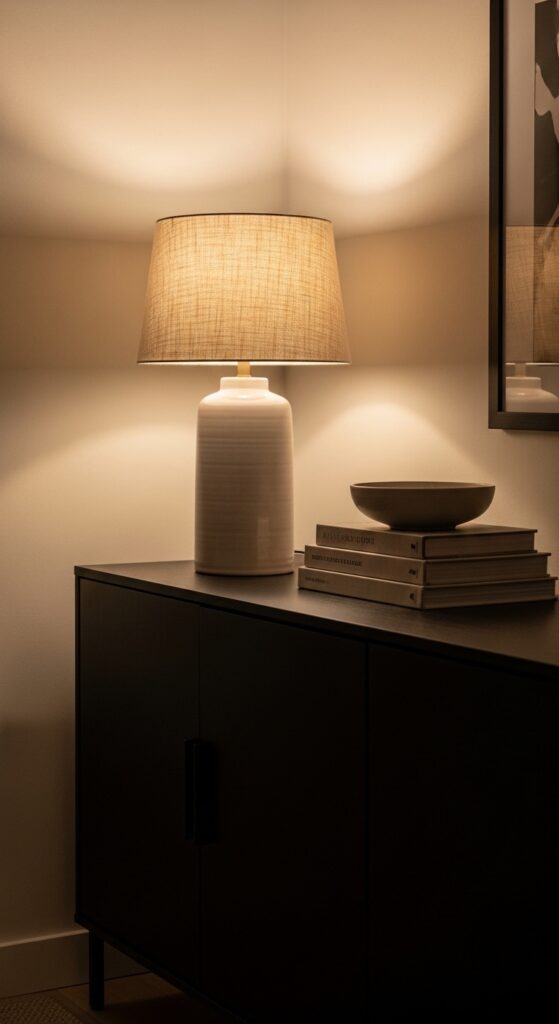
A sculptural table lamp softens the buffet and adds layered lighting — which dining rooms desperately need. Choose lamps with interesting shapes: curved ceramic bases, matte finishes, or stone textures.
Keep the shade simple. Linen or off-white diffuses light warmly and avoids harsh glare.
Balance the lamp with lower objects on the opposite side — stacked books or a tray.
One thing to watch: mismatched light temperatures can ruin the mood. Use warm bulbs that complement your chandelier.
Lighting turns a flat surface into a layered vignette.
3. Incorporate a Round Mirror
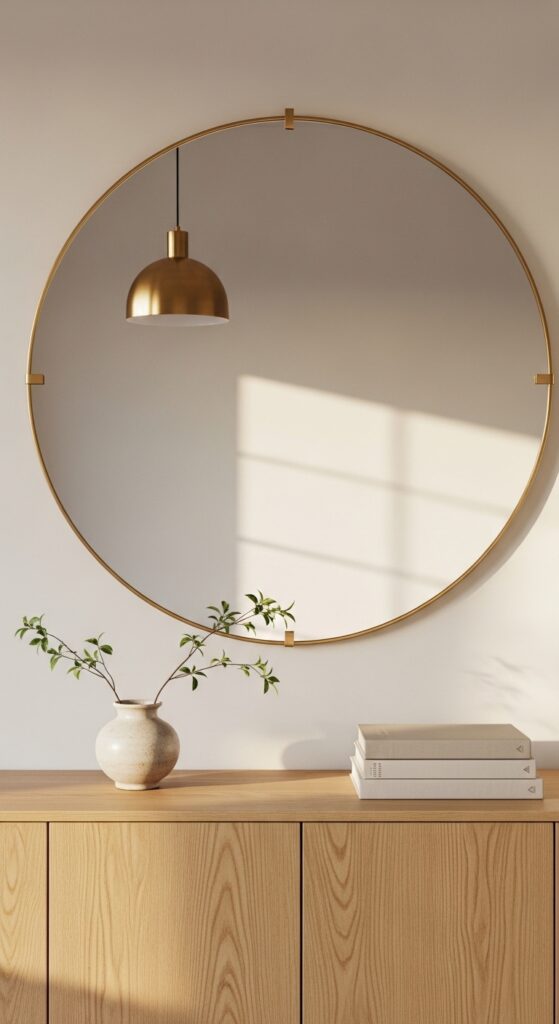
Modern dining rooms thrive on contrast — and curves.
A round mirror above a linear buffet adds softness and visual rhythm. It breaks up hard lines and reflects light around the room.
Choose thin metal frames in black or brass for a contemporary feel. Thick ornate frames lean traditional.
Make sure the mirror’s diameter feels substantial — too small and it disappears.
And always check the reflection. Mirrors double what they face.
A well-placed mirror feels effortless and polished.
4. Style With the Rule of Three

Scattered objects rarely look modern.
Group decor into three intentional clusters. Vary height — tall, medium, low — to create movement.
For example: a tall vase with greenery on one end, books with a sculptural object in the center, and a tray with candles on the opposite side.
Leave space between groupings. Negative space is part of modern design.
Skip tiny trinkets. They quickly make a buffet look cluttered.
Three strong groupings feel curated instead of chaotic.
5. Layer Texture, Not Color
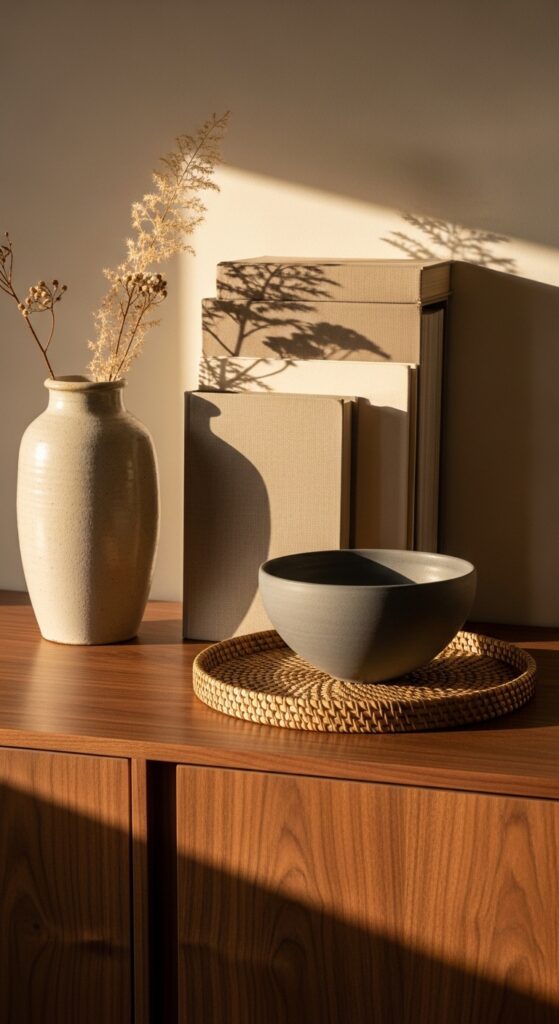
Modern decor doesn’t need a rainbow.
Stick to a restrained color palette — warm wood, soft cream, charcoal, brushed brass. Then layer texture for depth.
Combine matte ceramics, linen-bound books, woven trays, and stone accents. Texture keeps things interesting without visual noise.
If your dining chairs are velvet or patterned, keep buffet decor simple.
One watch-out: too many metallic finishes compete. Pick one and repeat it subtly.
Texture over color creates quiet sophistication.
6. Add Greenery for Life
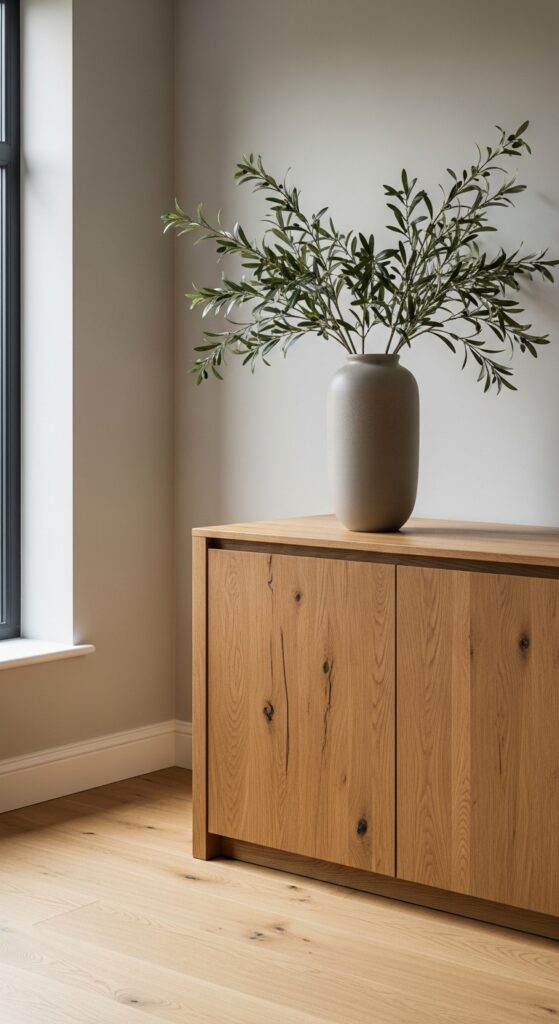
A buffet without greenery can feel static.
One tall branch arrangement adds height and movement. Keep it sculptural rather than fluffy.
Olive branches, eucalyptus, or simple stems work best. Avoid overfilled bouquets unless it’s a special occasion.
If you prefer potted plants, choose structured varieties in matte planters.
One thing to consider: maintenance. Dried branches are lower effort but collect dust.
Greenery breathes life into clean lines.
7. Introduce Under-Buffet Styling
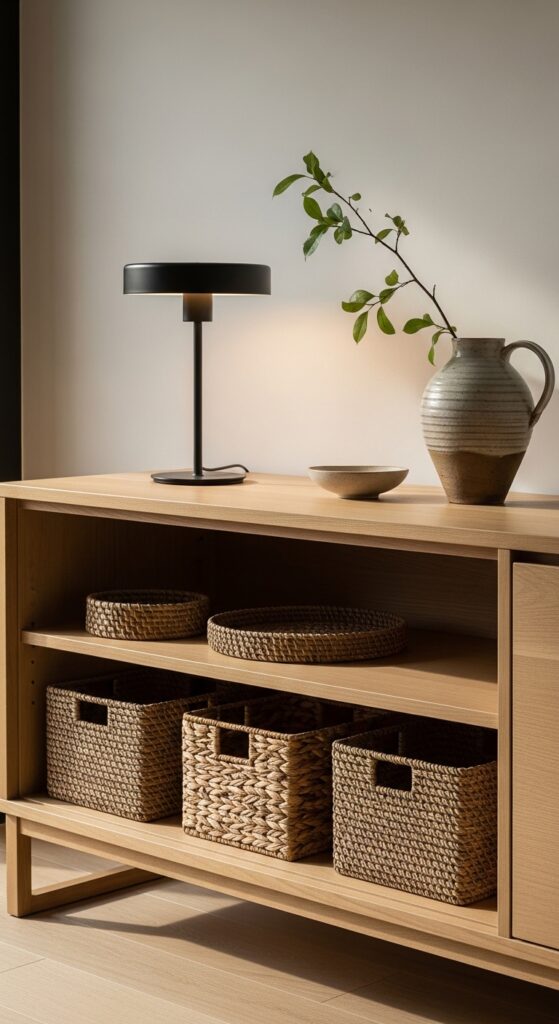
Don’t ignore what’s below.
If your buffet has open shelving, add baskets or low ceramic pieces underneath. It visually anchors the piece.
Choose natural materials like rattan or soft fabric bins.
Avoid visible clutter. Under-shelf chaos defeats the modern look.
Grounding the buffet makes it feel complete.
8. Keep It Symmetrical
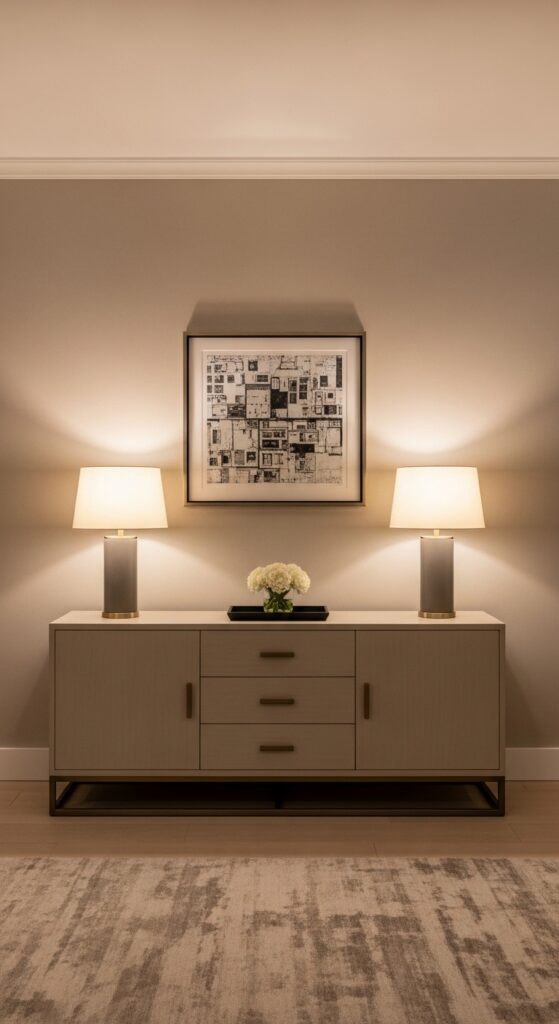
Symmetry feels modern when done cleanly.
Matching lamps or vases on each end create structure. Center a mirror or artwork above for balance.
This approach works beautifully in formal dining rooms.
That said, symmetry can feel rigid in very small spaces. Loosen it slightly if the room is tight.
Structured balance always reads polished.
9. Incorporate a Decorative Tray
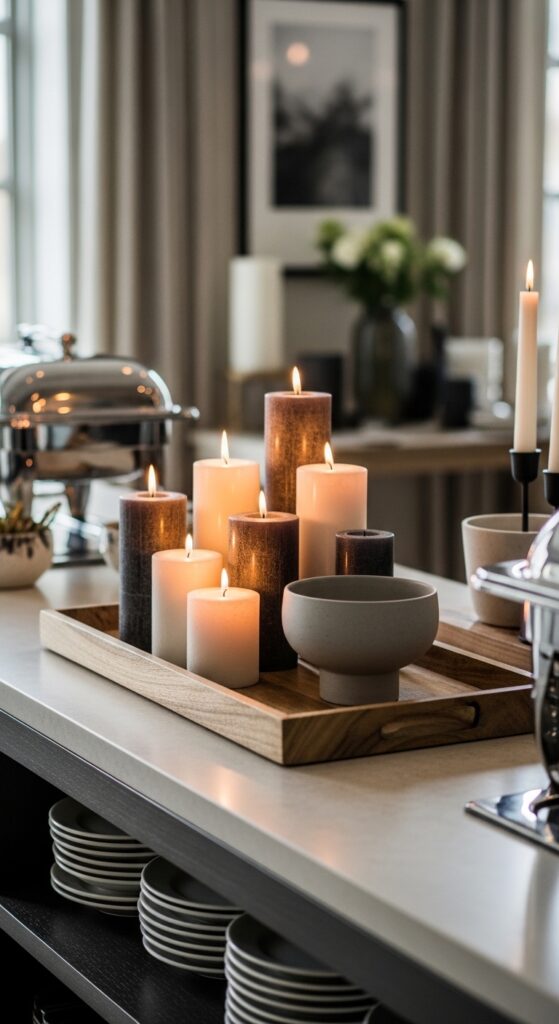
Trays are modern lifesavers.
They contain small objects and create a visual boundary. Use them for candles, barware, or decorative accents.
Choose trays in wood, metal, or woven materials.
Avoid overloading them — negative space is key.
Containment equals clarity.
10. Lean Into Minimalism
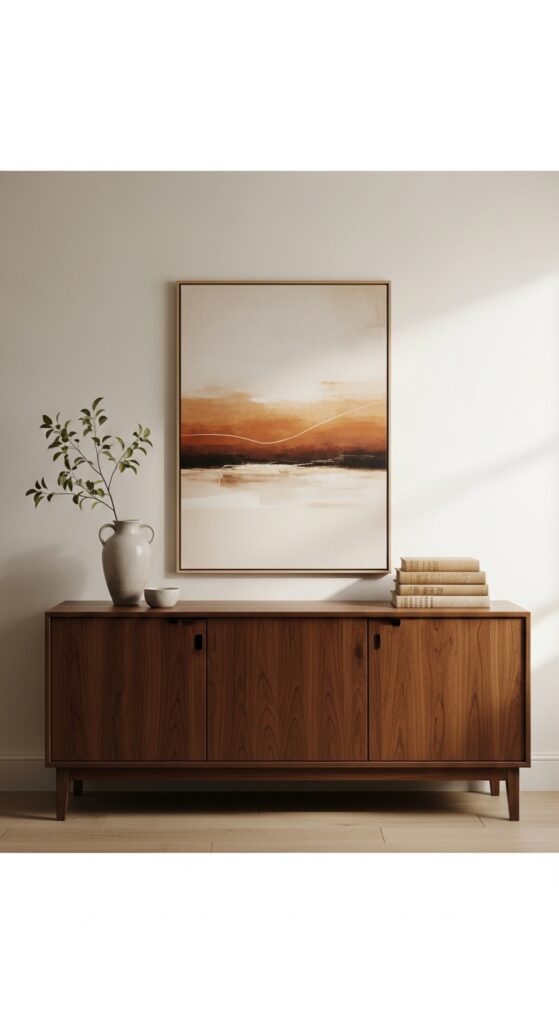
Sometimes less truly is more.
If you hate dusting or crave calm, keep the buffet nearly bare. One statement piece and one supporting object is enough.
This works best in dining rooms with architectural interest — molding, textured walls, or bold lighting.
The risk? Too sparse can feel unfinished. Make sure scale is right.
Minimalism demands confidence — but it’s beautifully modern.
11. Add a Bar Setup Corner
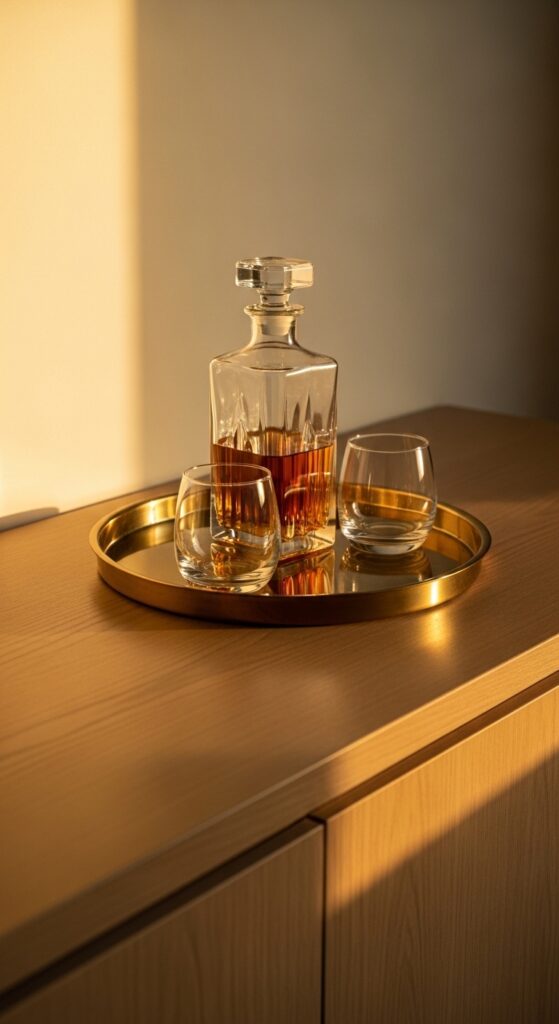
Buffets are natural bar stations.
Create a small, contained bar corner with a tray, decanter, and two glasses. Keep it simple — not a full liquor display.
Balance it with decor on the opposite side.
Skip overstocking bottles; that can feel cluttered quickly.
A functional vignette adds personality without chaos.
12. Edit Ruthlessly

Here’s the secret most polished rooms share: editing.
Before adding more decor, remove something. Then step back. Does the buffet breathe?
Modern style thrives on restraint. Clutter collects quickly on horizontal surfaces.
If you share the space with kids or pets, choose fewer but sturdier pieces.
Polish often comes from subtraction.