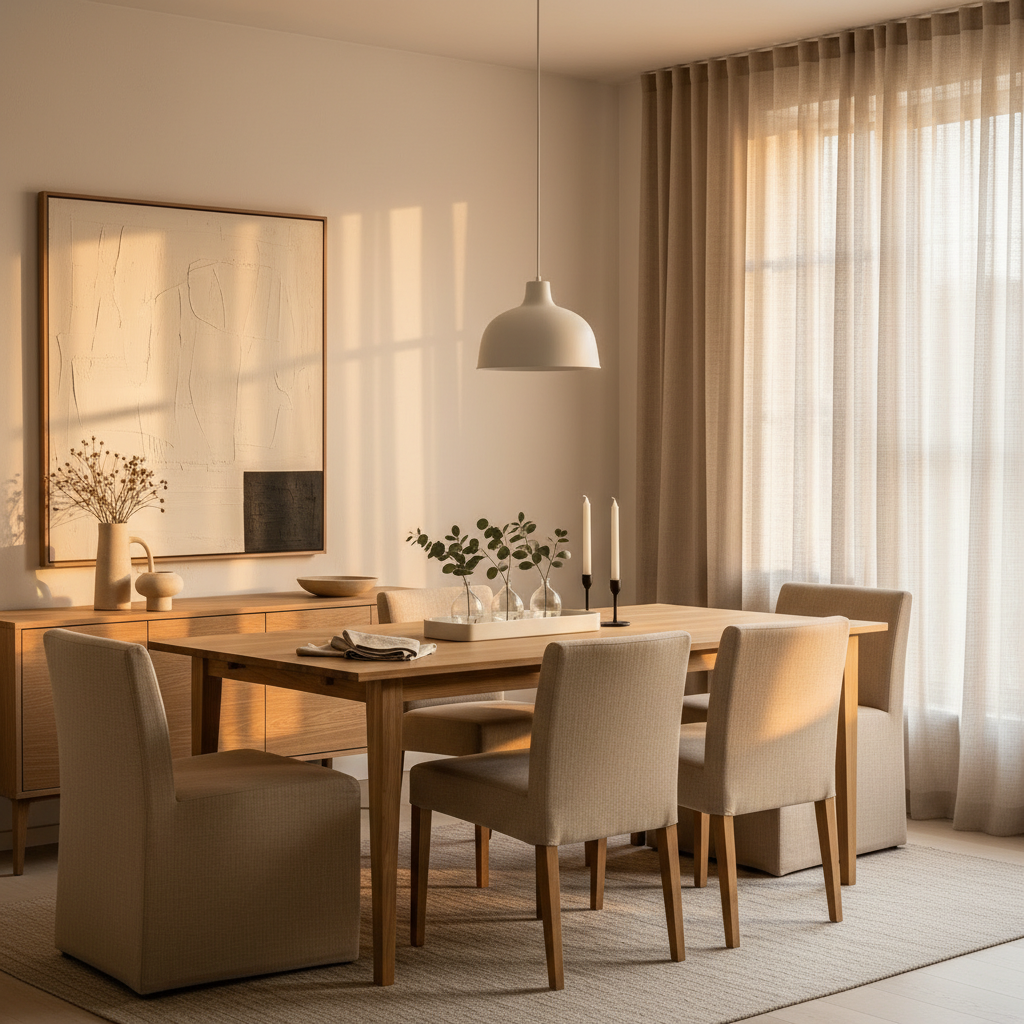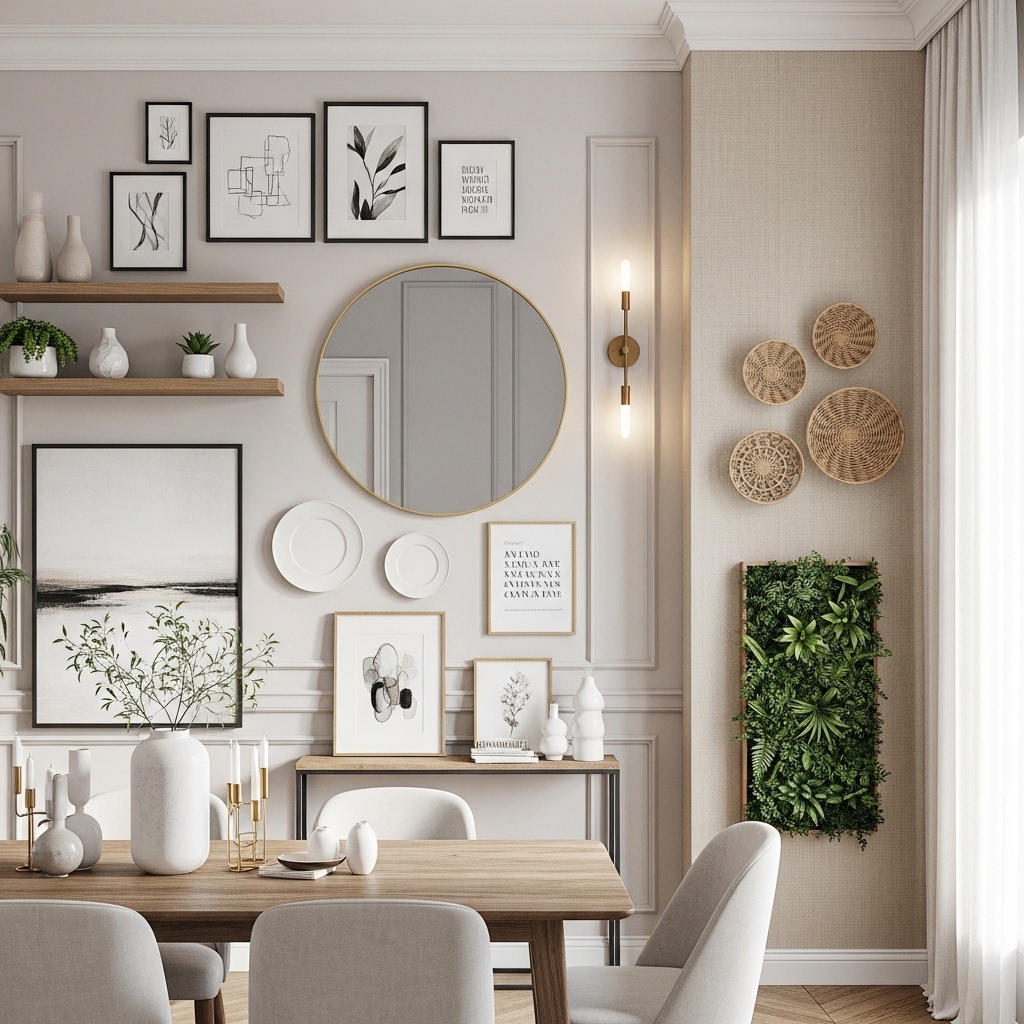
The living-dining combo is the defining spatial challenge of modern home design. It’s where most of us actually live — not in separate formal rooms assigned to single activities, but in one continuous space that has to handle dinner and movie nights and working from home and hosting friends all without falling apart at the seams. Done poorly, it reads as a floor plan that couldn’t afford walls. Done well, it’s one of the most sociable, flexible, and genuinely pleasant ways to inhabit a home.
The difficulty isn’t finding furniture that fits. It’s making two distinct zones feel purposeful and coherent at the same time — different enough that each area feels like it has an identity, unified enough that the whole room makes sense as a single space. That balance is harder to achieve than it sounds, and it requires decisions that go beyond just placing a sofa here and a table there. These twelve ideas address the real design challenges, with specific, actionable advice for getting the combo right.
1. Use a Single Continuous Color Palette to Unify Both Zones
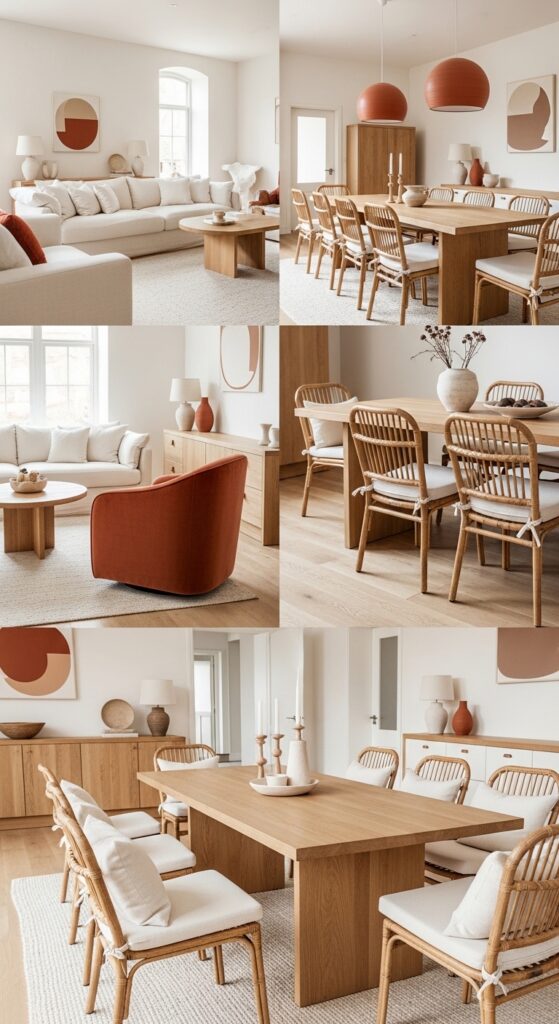
The most common mistake in a living-dining combo is treating each zone as a separate design project — choosing the living room furniture in one palette and the dining room in another — and then wondering why the combined space looks disconnected. The solution is deceptively simple: commit to a single color family and let it run through every surface in both zones.
This doesn’t mean everything has to match. It means the tones should share a temperature and feel like they exist in the same world. Warm cream, natural oak, and soft terracotta in the living zone; the same oak in the dining table, the same cream in chair cushions, and the terracotta repeated in a ceramic pendant — the palette connects the zones without making them identical.
The practical rule: choose three anchor tones before buying anything. Apply all three to both zones. Vary proportions — one tone might dominate the living area while another leads in the dining area — but keep all three present in both.
One watch-out: a monochromatic approach across a very large open-plan space can read as flat if there’s no tonal variation at all. Introduce depth through texture — linen versus velvet versus oak versus rattan — rather than through color contrast.
2. Define Each Zone With a Dedicated Area Rug
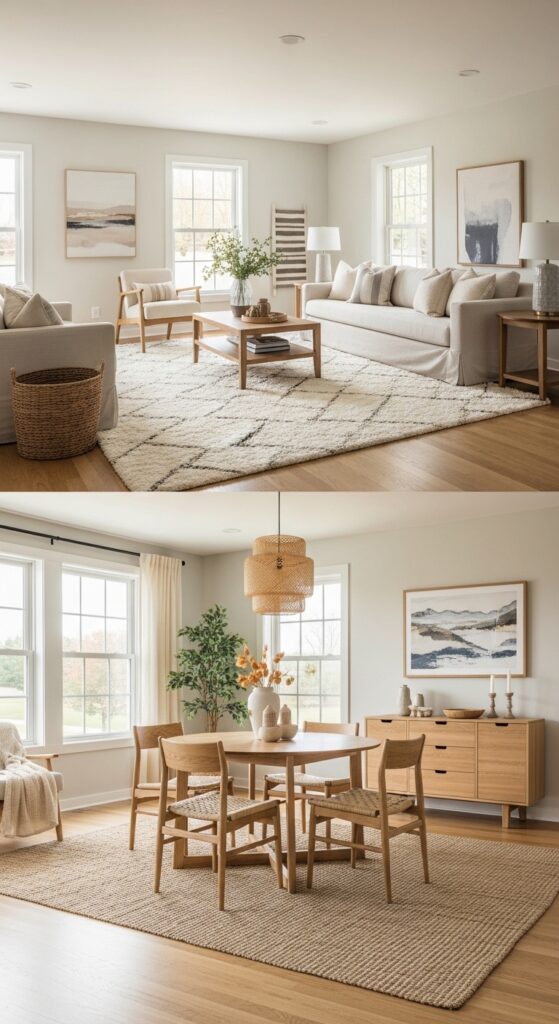
In an open-plan space without walls, rugs do the architectural work. They define boundaries, anchor furniture groupings, and signal to anyone entering the room that these are two distinct places with distinct purposes — even when they share the same floor, ceiling, and air.
Two rugs of different texture but the same tonal family is the approach that works best. A patterned wool rug under the sofa arrangement and a plain jute or flatweave under the dining table — both in warm neutrals — creates variety without visual competition. The texture difference is enough to differentiate the zones; the color relationship is enough to unify them.
Sizing is non-negotiable in both zones. The living room rug must be large enough for all front sofa legs to rest on it. The dining rug must extend 24 inches beyond the table on all sides. Undersized rugs make furniture look like it’s floating rather than grounded.
One very common mistake: choosing rugs that are too similar in pattern and exactly the same tone. They start to look like one continuous rug cut into two pieces, which reads as odd rather than unified. The rugs should feel related, not identical.
Here’s the subtlety that makes this work: the gap between the two rugs — the bare floor visible between the living and dining zones — is the visual boundary. Keep that gap consistent: 18 to 24 inches reads as intentional. Two inches looks like the rugs nearly met but didn’t quite.
3. A Sofa Back as the Natural Room Divider
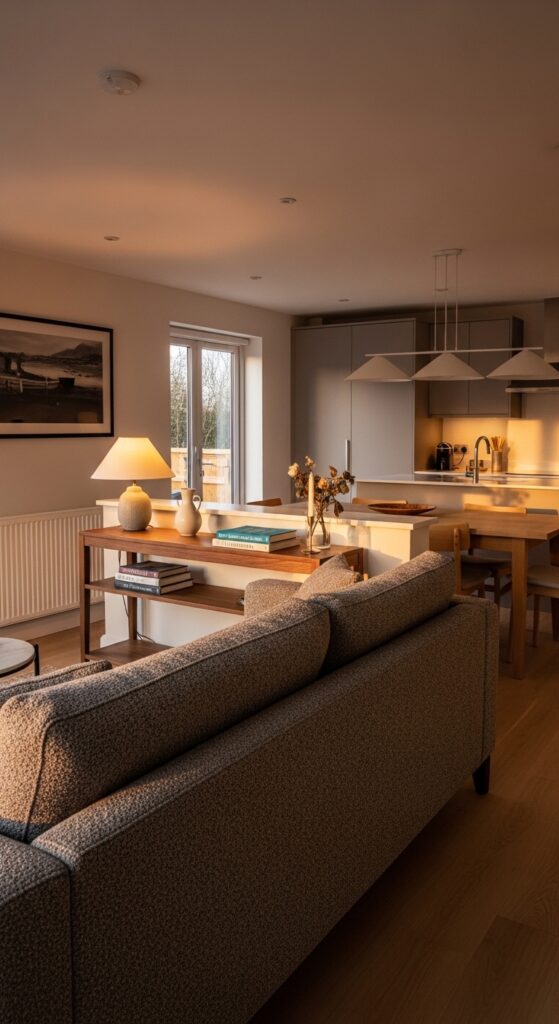
The sofa back is one of the most underutilized spatial dividers in open-plan decorating. When a sofa is floated — pulled away from the wall and positioned with its back facing the dining zone — it creates a soft, furnishing-based boundary that divides the space without blocking sight lines or light.
This only works when the sofa back is something worth looking at from the dining area. A sofa with a clean, upholstered back — boucle, linen, velvet — faces outward without any visible structural frame or raw fabric. A sofa with a low tufted back is even better for this arrangement since it reads well from both sides.
Add a narrow console table immediately behind the sofa — 10 to 12 inches deep is enough — to give the dining side of the divide something useful and visually complete. Style it with a lamp, a plant, and a few objects. This creates a lighted zone between the two areas that prevents the sofa back from reading as just the back of furniture.
The lamp on the console does double duty: it lights the dining area from an ambient side angle during dinner while also making the sofa-back zone feel furnished and intentional from the living side.
One constraint: this arrangement requires the room to be deep enough to accommodate the sofa pulled from the wall without making the living zone feel cramped. You need at least 5 feet between the sofa back and the dining table for comfortable movement between zones.
4. Consistent Lighting Language Across Both Zones

Lighting is the invisible design element that ties a living-dining combo together — or exposes its failure to cohere. Different fixture metals, different bulb temperatures, different lighting heights across the two zones will make a room that’s otherwise well-furnished look like it was assembled without a plan.
The rule is simple: share at least one lighting material across both zones. If your dining pendant is brass, bring brass into the living zone through a floor lamp or table lamps. If the living zone has a matte black arc floor lamp, the dining zone should have a matte black pendant. The material echo creates a visual thread that stitches the two zones into one considered space.
Bulb temperature must be identical throughout: 2700K warm white for both zones, no exceptions. A warm pendant over the dining table and a cooler task light in the living zone will create a jarring tonal split that no amount of careful furniture selection will resolve.
Zone lighting separately. The dining pendant should be on a dimmer independent from the living zone lamps — this allows you to bring the dining area up to full presence during dinner while keeping the living zone at a lower ambient level, which defines the occasion without requiring physical barriers.
One practical note: in a long, narrow combined room, a single overhead ceiling fixture will light neither zone properly. Always layer sources — pendant plus floor lamp plus table lamps — across the full length of the space.
5. An Open Bookshelf as a Partial Room Divider
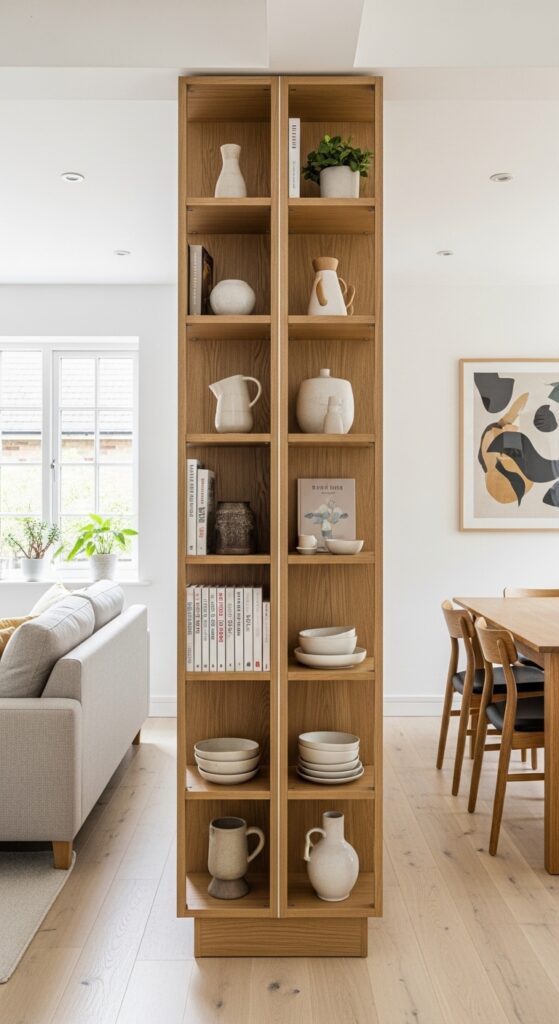
An open bookshelf used as a partial divider between zones is one of the smartest structural moves available in an open-plan living-dining space. Unlike a solid partition, it divides without blocking — light passes through the open shelves, sight lines maintain continuity, and the conversation between rooms stays open while the functions are visually separated.
The key is that both sides of the shelf must be considered as display surfaces. If you can see the back of books and disorganized objects from the dining table, the shelf reads as a storage unit positioned in the middle of the room. Style both faces — books and ceramics on the living side, a more curated arrangement of ceramics, art books, and plants on the dining side.
A shelf that doesn’t reach the ceiling maintains openness and avoids the feeling of a permanent wall. A height of 70 to 80 inches is enough to create visual division while keeping the room feeling like one continuous space above.
Position the shelf perpendicular to the main wall rather than parallel to it, so it extends into the room as a true divider rather than sitting flat against a wall as storage.
One constraint: a bookshelf divider collects dust on both exposed sides and requires styling maintenance. In households where the open-plan space sees heavy daily use, a more solid divider with closed backs might be more practical long-term.
6. Pendant Lighting Over the Dining Table as a Zone Anchor
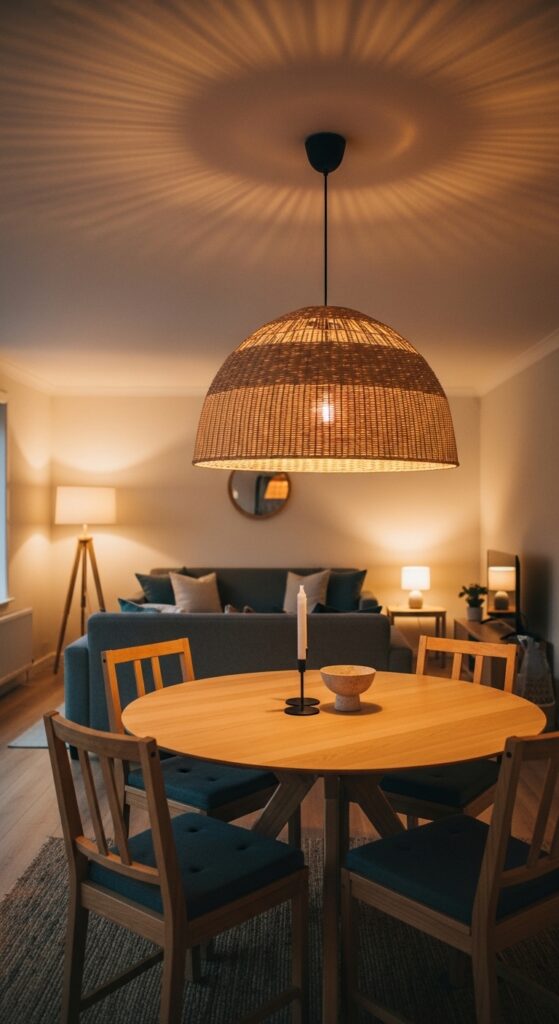
In a combined living-dining space, the dining table pendant does more spatial work than any piece of furniture. It defines the dining zone from above — visually claiming the space beneath it and separating it from everything around it — without requiring any physical barrier whatsoever.
This is why pendant choice in a combo space matters even more than in a dedicated dining room. The pendant needs to be scaled generously enough to establish a clear zone of influence. A pendant with a diameter of at least one-third to one-half the table’s width reads as intentional and commanding. Smaller, and the fixture looks like it was selected for a smaller room and placed hopefully.
Hanging height is critical: the bottom of the fixture should sit 30 to 34 inches above the table surface. This creates an intimate, defined zone of light that reinforces the sense of separation from the living area without physically enclosing the space.
Material choice should be considered in the context of both zones. A dramatic woven rattan dome that reads as bold over a dining table might overwhelm a living zone that’s styled in a more minimal way. The pendant’s character should complement the living zone furniture, not compete with it from across the room.
One watch-out: a very opaque pendant shade creates a defined pool of light beneath it but leaves the surrounding dining space relatively dark. If the dining zone needs ambient light beyond the pendant, supplement with a wall sconce or a tall floor lamp positioned nearby.
7. Cohesive Wood Tones Throughout Both Zones
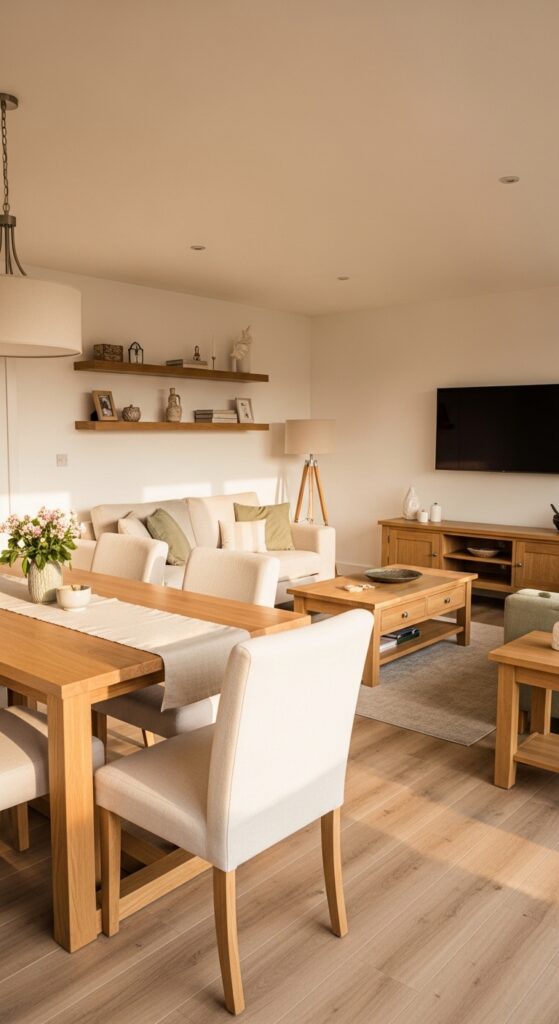
Wood tone consistency is the quiet backbone of a well-designed living-dining combo, and it’s the thing that most distinguishes a room that feels designed from one that feels assembled. When dining table, coffee table, side tables, and shelving all share the same wood tonal family — even with natural variation between pieces — the room reads as unified in a way that no amount of careful color coordination can replicate if the woods are fighting each other.
The rule isn’t that every wood piece must be identical — that would look like a furniture set, which is the opposite of interesting. The rule is that all wood tones should share the same warmth or coolness. All warm honeys, warm ambers, and warm chestnuts belong together. All cooler greys, ashens, and pale bleached tones belong together. Mixing a warm amber dining table with a cool grey-washed coffee table creates a dissonance that’s immediately felt even by people who can’t articulate why.
For a combined space, making this commitment across both zones prevents the room from fracturing into two distinct wood-tone stories that look like they belong to different apartments.
One practical note: natural wood has undertones that shift significantly depending on the light in your specific room. Always bring samples of wood-toned furniture together under your actual room lighting before purchasing — what looks cohesive in a store under commercial lighting can look very different in your home under warm residential bulbs.
8. A Gallery Wall That Spans Both Zones
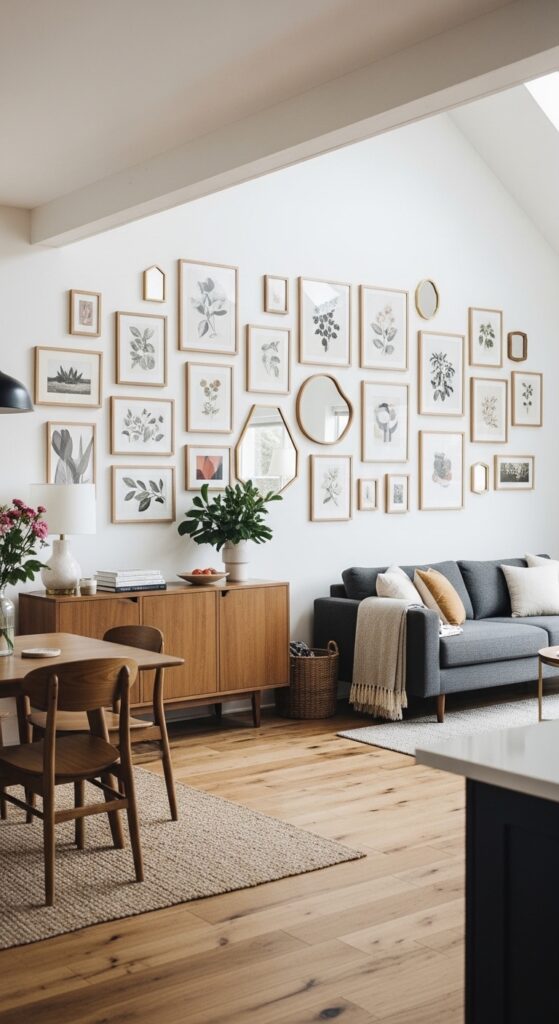
A gallery wall that deliberately crosses the boundary between the living and dining zones is one of the most elegant solutions to the visual fragmentation problem in open-plan spaces. By treating the shared wall as a single compositional surface — one continuous arrangement of art that runs from dining area to living area — you create a visual thread that physically connects the two zones and gives the combined space a sense of unified intention.
The arrangement should be designed as a whole composition rather than two separate gallery walls placed adjacent to each other. This means the art pieces near the zone boundary should be chosen to work visually with pieces on both sides — creating a transition rather than a meeting point.
Frame consistency is more important here than anywhere else, because inconsistency is amplified at the length of a full combined room. Choose one or two frame finishes and hold to them for the entire arrangement, regardless of zone.
Art content can shift between zones — perhaps more graphic abstract works in the living area, more botanical or figurative pieces in the dining area — as long as the tonal palette remains cohesive. The shift in subject matter signals the zone transition gently without breaking the compositional unity of the wall.
One constraint: a gallery wall of this scale requires very careful planning and a significant time investment in installation. A wall 18 to 24 feet long with art covering the full run is genuinely ambitious. Plan the composition digitally or on paper, make paper templates of each frame, and do a full dry run on the floor before touching the wall.
9. A Dining Banquette That Backs Against a Half-Wall or Console

A low half-wall — around 36 to 42 inches tall — is one of the most spatially intelligent zone dividers for a living-dining combo because it provides a physical boundary without closing off the room. It’s enough enclosure to give the dining zone a sense of separation and intimacy, while low enough to preserve the open-plan quality and sight lines that make the combined space feel generous.
Building a banquette against the dining side of the half-wall turns a structural divider into furniture — the banquette requires no clearance behind it (the half-wall acts as its back support), which means you can push the dining table remarkably close to the boundary and reclaim floor space in both zones simultaneously.
The half-wall’s top surface becomes a design opportunity: a shelf for plants, a runner of objects, or a small lamp that lights both zones. Think of the top as a very long console surface — style it the same way you would any narrow shelf, with vertical variation and restrained object selection.
For the banquette fabric, choose something that reads well from the living zone since it’s visible from that side constantly. Deep velvet in a rich tone — sage, navy, terracotta — looks beautiful from both the dining and living vantage points and adds material richness to the boundary element.
One constraint: this is a structural and carpentry project that’s not reversible without effort. Renters are out. But for homeowners wanting to define their combined space permanently and beautifully, it’s among the most resolved solutions available.
10. Mixing Dining and Living Textiles in the Same Family

Textiles are the most underrated unifying element in a living-dining combo — and also the most forgiving, since cushions, throws, and seat pads can be changed without any structural commitment. A deliberate textile strategy that runs the same palette through both zones does more to make a combined space feel designed than almost any furniture decision.
The approach: identify three fabric tones and deliberately place all three in both zones. If your living sofa is in oatmeal linen with sage cushions, your dining chairs should have sage seat cushions. If your living zone throw is terracotta, your dining zone rug should carry terracotta. The same tones appearing in both areas creates a visual rhythm that the eye recognizes and reads as unified.
Vary the fabric types across zones to maintain distinction: linen and boucle in the living zone, performance velvet and woven cotton in the dining zone. The texture difference signals different zones while the color connection maintains overall coherence.
Window treatments are the most powerful textile unifier in a combined space, because curtains visible from both zones create an instant tonal reference that everything else can relate to. A single fabric choice for all curtains in the combined space — regardless of which zone each window sits in — is one of the most effective ways to make the room read as one.
One watch-out: mixing too many fabric patterns across the two zones creates visual noise that no amount of color coordination will resolve. In a combined space, limit patterned textiles to one or two pieces maximum and keep the rest in solids or very subtle textures.
11. Double-Duty Furniture That Serves Both Zones
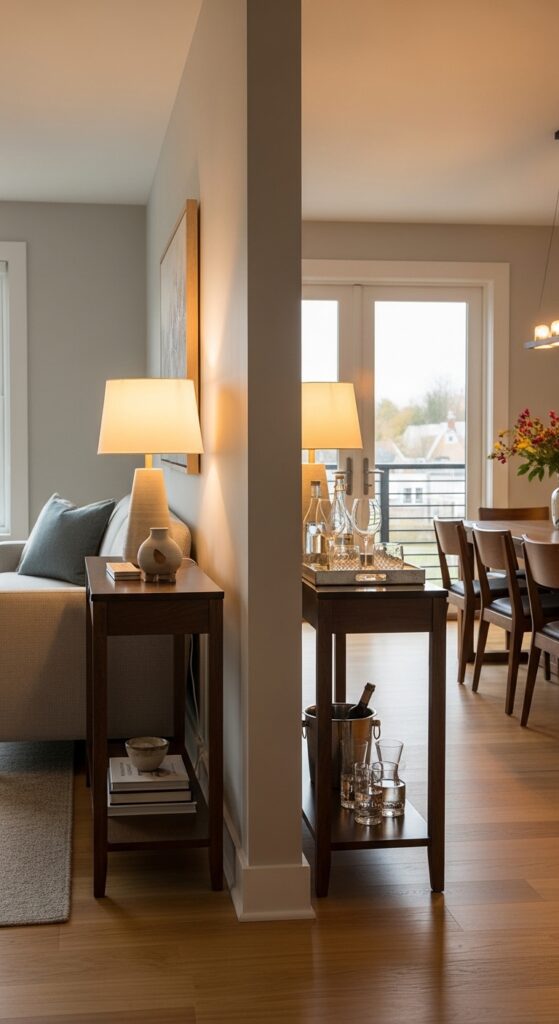
Furniture in a combined living-dining space has to work harder than in a dedicated room — and the pieces that earn their place most completely are the ones that serve both zones simultaneously. Double-duty furniture isn’t about compromise; it’s about finding pieces whose function is genuinely flexible depending on which side of the room you approach from.
The console table positioned at the zone boundary is the clearest example: from the living side, it’s a sofa table — a surface for lamps, objects, and display. From the dining side, it’s a serving station — a surface for wine, extra plates, or buffet-style dishes during dinner parties. The same piece, accessed from two directions, performs two completely different functions without any physical reconfiguration.
A bar cart positioned at the zone boundary works similarly: during the day it’s a decorative object with displayed bottles and glassware; during dinner it becomes an active drinks station that serves the dining table.
Ottomans in the living zone that can pull to the dining table for overflow seating during larger gatherings are another version of this flexibility — not a true dining chair, but functional for a casual dinner when you need one more seat.
One constraint: double-duty furniture only works when it’s genuinely accessible from both sides. A console table pushed flush against the back of the sofa with no room to approach from the dining side doesn’t function as a serving surface no matter how intentionally it was positioned.
12. Matching Curtains Wall-to-Wall for Seamless Visual Flow
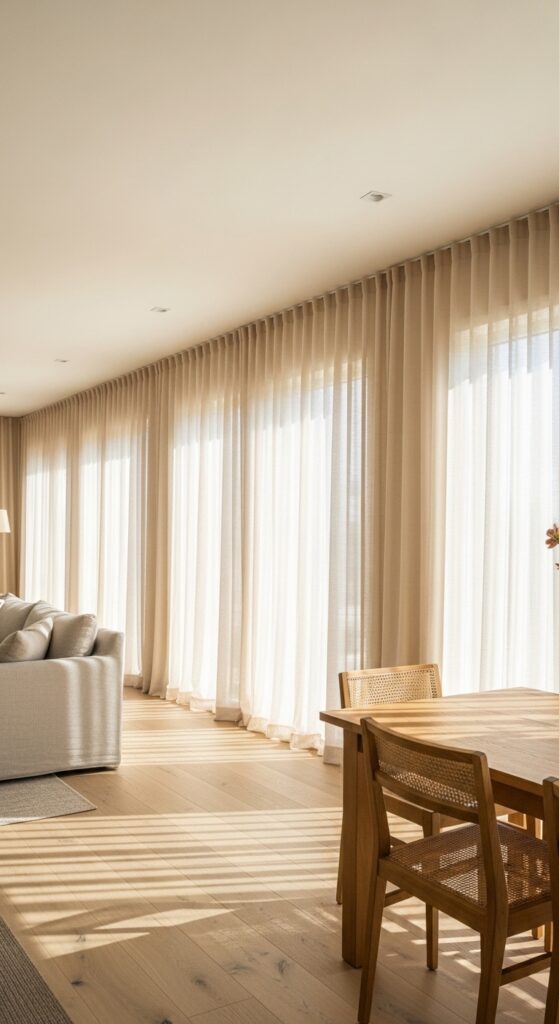
If there’s one single change that does the most to make a living-dining combo feel intentional and cohesive rather than improvised, it might be this: running identical floor-to-ceiling curtains continuously along the full window wall of the combined space, covering all windows in both zones without interruption or variation.
The continuous curtain wall creates a unifying backdrop that visually extends the length of the room, makes ceilings read as higher, and gives the eye a single, consistent surface to rest against regardless of which zone it’s looking into. Even when the furniture, rugs, and lighting of the two zones differ, a shared curtain wall holds everything together with quiet authority.
Sheer linen in warm ivory or a soft stone tone is the most versatile choice — it diffuses light beautifully in both zones throughout the day, allows natural light to remain generous, and relates to almost every palette without drawing too much attention to itself. Save heavier, more opaque fabrics for rooms that need privacy blocking; in an open-plan space, the priority is usually light management and visual unity rather than darkness.
Mounting matters enormously: hang the rod within two to three inches of the ceiling and let the curtains fall all the way to the floor, pooling by one to two inches. This height creates the maximum ceiling-lift effect and ensures the curtains feel like a deliberate architectural feature rather than a functional window covering.
One constraint: continuous curtains across the full combined room require a significant quantity of fabric — often three to four times more than standard window treatment calculations suggest, because full-width fullness across multiple windows adds up quickly. Budget accordingly and order fabric samples to assess how the chosen material reads across the full expanse before committing.
The Combo Room Is an Opportunity, Not a Compromise
Here’s the perspective shift that makes living-dining combos genuinely enjoyable to design in: stop thinking about the combined space as a limitation — two rooms that couldn’t have walls — and start thinking about it as a specific and interesting design brief that separate rooms don’t have.
A combined living-dining room asks you to make decisions about flow, zone identity, and furniture flexibility that single-function rooms never require. Those decisions, made well, produce spaces that are more sociable, more adaptable, and often more visually interesting than two rooms separated by a door that stays closed most of the time anyway.
The ideas in this article are tools, not rules. Mix the rug strategy with the curtain continuity. Use the palette unity alongside the console table divider. The goal is a space where a guest moving from the sofa to the dinner table doesn’t feel like they’ve left one room and entered another — they feel like they’ve shifted naturally within a single, coherent home. That feeling, when you get it right, is worth every decision it took to achieve it.