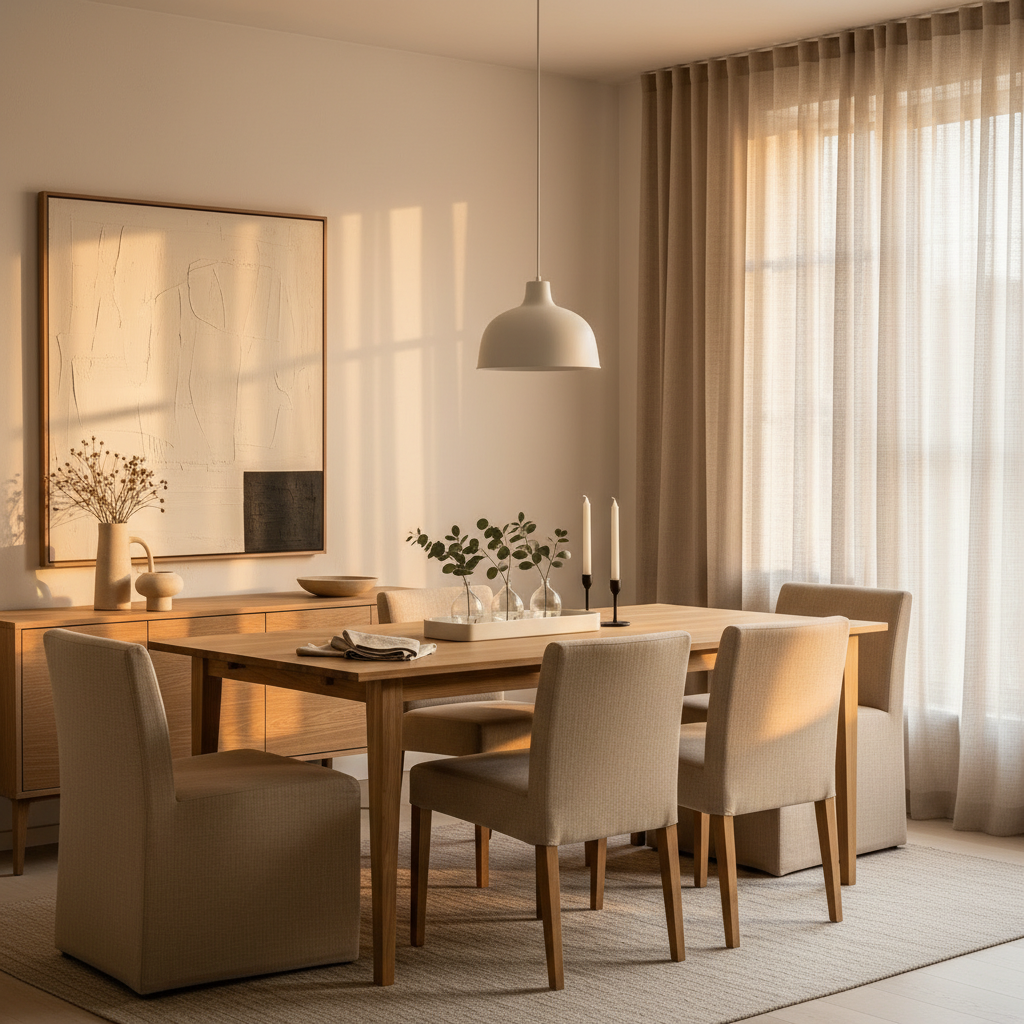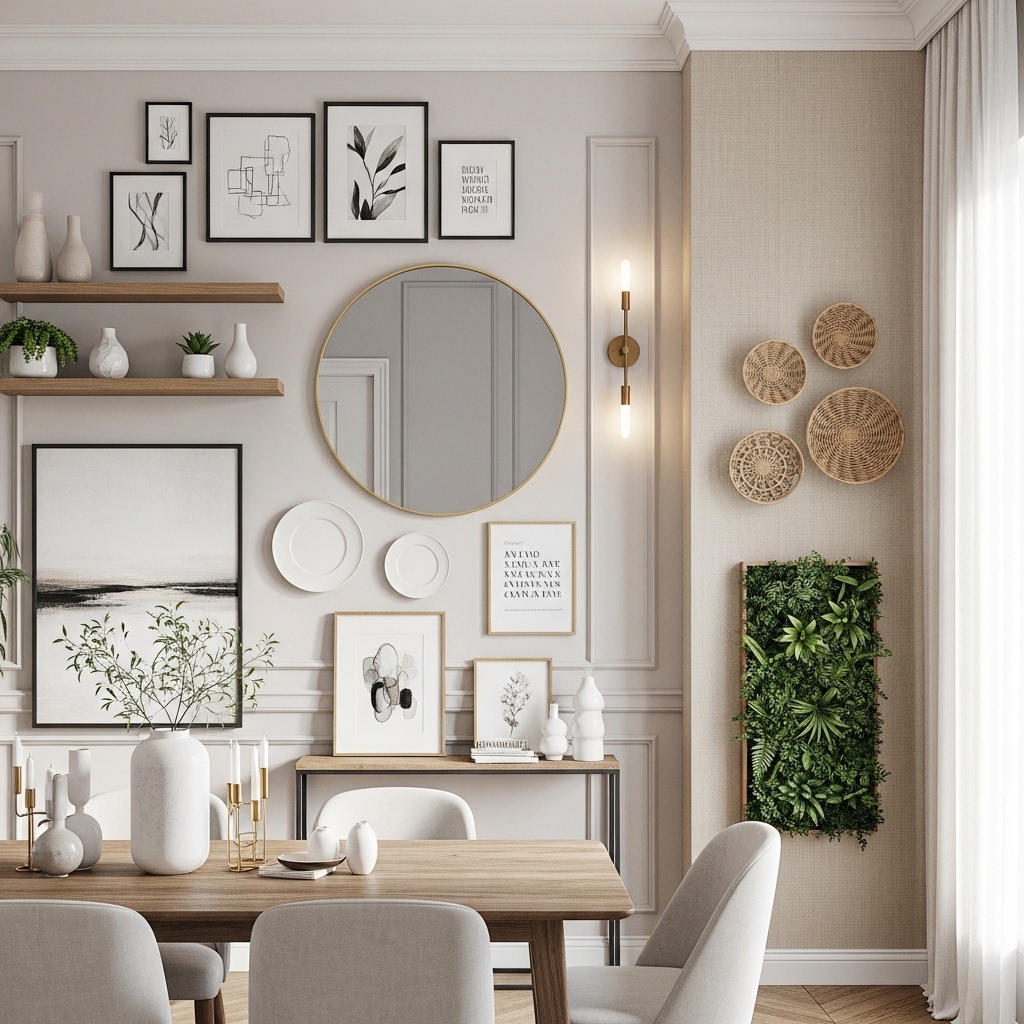
Formal dining rooms have had a complicated decade. For a while, everyone was knocking down the walls, declaring the dedicated dining room dead, and replacing it with open-plan everything. And then — gradually, then all at once — people started to miss them. They missed the ceremony of a room that existed for a single purpose. They missed sitting down at a table that wasn’t also a homework surface or a laptop station. They missed the feeling that dinner, when it happened in that room, was an occasion.
Classic formal dining room design is about exactly that: creating a space that elevates the act of gathering. It doesn’t have to be stuffy or untouchable. The best formal dining rooms feel layered and warm, full of material richness and considered detail that makes guests feel genuinely cared for. These twelve ideas are for anyone ready to take the formal dining room seriously again — and have a little fun doing it.
1. Deep Jewel-Toned Walls With White Wainscoting
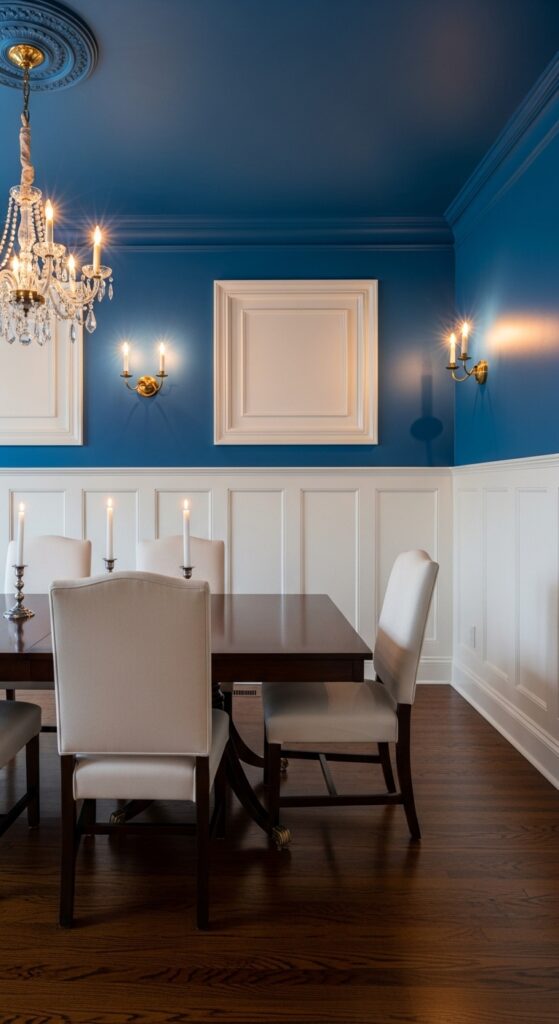
Wainscoting with a contrasting upper wall color is one of the oldest tricks in classical interior design — and it still works better than almost anything else for giving a dining room genuine architectural weight.
The combination that performs most consistently: white or bone-colored panelling below the chair rail (typically 32 to 36 inches from the floor), with a deeply saturated color above. Sapphire blue, bottle green, oxblood red, and deep plum all work beautifully in this format. The white grounding prevents the dark color from feeling oppressive, while the dark upper wall makes ceilings feel farther away rather than closer.
For the panelling itself, raised-panel profiles read as more traditionally formal than flat shaker-style panels. If you’re starting from scratch, hire a carpenter — the proportions matter enormously and off-the-shelf beadboard rarely achieves the same effect.
One watch-out: this combination requires crown moulding at the ceiling junction to complete the picture. Without it, the transition between dark wall and ceiling looks unfinished. The crown doesn’t have to be enormous — a three-and-a-half inch profile is plenty for most rooms.
The wall color should also extend to the ceiling if you want maximum drama. It sounds intimidating, but a dark ceiling in a formal dining room feels more like a canopy than a cave.
2. A Crystal Chandelier as the Room’s Centerpiece
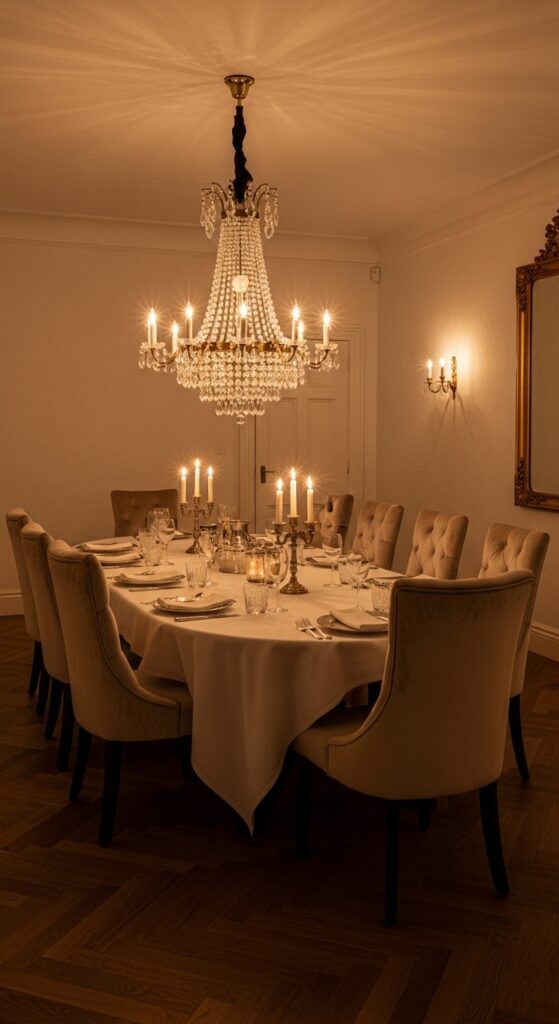
In a formal dining room, the chandelier isn’t just lighting — it’s the first thing the eye goes to when someone walks into the space, and it sets the entire tone of everything beneath it.
Crystal is the canonical choice for classic dining rooms, and for good reason: the way it scatters and multiplies candlelight (or warm-toned bulb light) is genuinely unmatched by any other material. A well-chosen crystal chandelier at dinner creates the kind of atmosphere that makes food taste better and conversation flow more easily.
Scale is the most common mistake. Most people hang chandeliers that are far too small. A general rule: the diameter of the chandelier in inches should roughly equal the sum of the room’s length and width in feet. For a 14-by-18-foot room, that suggests a chandelier of around 32 inches in diameter. It will look enormous in the store and exactly right in the room.
Hang it low. The bottom of the fixture should sit 30 to 34 inches above the table surface for dining. This is lower than most people’s instinct, but it creates intimacy and focuses the light where it matters.
Use warm bulbs — 2200K to 2700K — at a dimmable setting. A crystal chandelier at full brightness is a hospital; at 40 percent, it’s a dinner party.
3. A Damask or Toile Wallpaper Above the Chair Rail
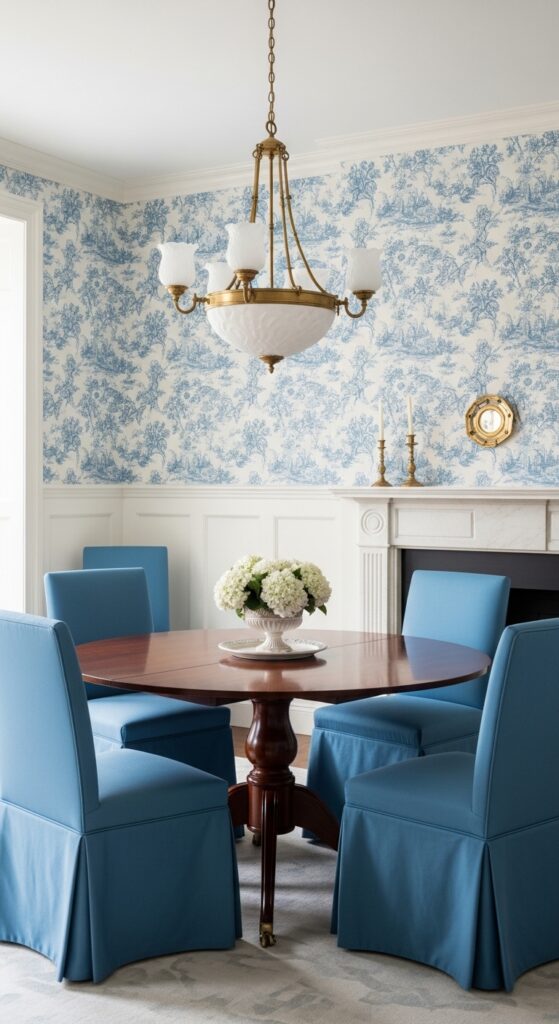
Pattern in a formal dining room is one of those things that separates a room that feels considered from one that feels merely expensive. And in classical interior design, the two patterns with the longest and most distinguished history in the dining room are damask and toile.
Damask — a woven or printed pattern with symmetrical floral or botanical motifs — works especially well above wainscoting because its inherent formality matches the architecture. Toile de jouy, with its narrative pastoral scenes in a single color on white or cream, brings a slightly more relaxed but still unmistakably traditional character.
The trick with patterned wallpaper in a dining room is restraint everywhere else. If the wallpaper is doing the work, the furniture should be relatively calm in silhouette, the upholstery should pull from one of the wallpaper’s colors, and the window treatments should be simple and uncompetitive.
For color selection, think about what the room will look like at night. Toile in a soft blue and white reads as fresh and light by day but cools considerably under evening artificial light. Warmer colorways — terracotta, gold, burgundy — hold their richness after dark in a way that blue-toned patterns sometimes don’t.
One constraint: avoid damask or toile in very small dining rooms with low ceilings. A busy pattern overhead or on all four walls of a compact space creates visual anxiety rather than elegance. In that case, paper only the wall facing the table end — one statement wall is enough.
4. Upholstered High-Back Dining Chairs in Velvet

Chair selection in a formal dining room is where people either commit to the aesthetic or lose their nerve. High-back chairs in a richly textured upholstery are the defining furniture decision of a classically styled dining room — they communicate that the room is for staying, not just eating and leaving.
Velvet is the fabric of choice for traditional formal dining chairs, and it earns that status. It photographs beautifully, catches light in a way that makes color deeper and more saturated, and has a tactile quality that linen or cotton can’t match in a formal context. Forest green, deep burgundy, midnight blue, and warm cognac all work exceptionally well.
Nail-head trim along the seat cushion edge adds a tailored, finished quality that elevates even a mid-range chair to something that looks genuinely considered. Brass nail-heads are the most classic choice; black iron reads more contemporary and slightly military.
Chair height: look for backs that reach at least 40 inches from the floor. Anything shorter starts to read as a standard dining chair rather than a proper formal seat.
The practical constraint: velvet requires maintenance. It shows indentations from sitting and should be brushed back regularly. For a room that gets frequent casual use — daily family dinners — consider a performance velvet, which has a velvet-like hand but is far more forgiving of spills and friction. For a room used primarily for entertaining, true velvet is the right call.
5. A Marble-Topped Sideboard With Brass Hardware
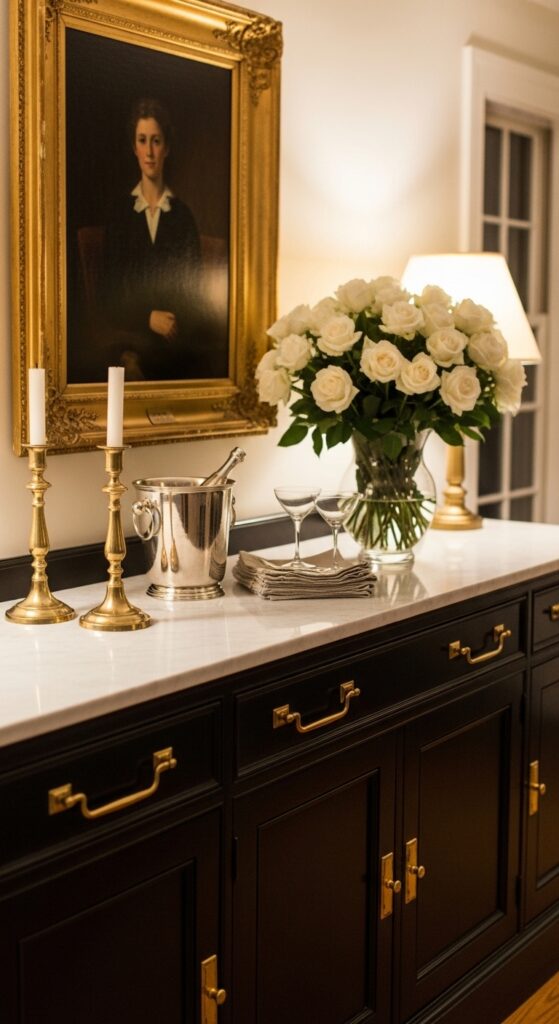
Every formal dining room needs a sideboard — a piece that does real functional work while anchoring the wall it occupies. And no sideboard finish combination communicates classic formality more effectively than dark painted wood with a marble top and brass hardware.
The marble top is essential to the equation, not decorative. It creates an impervious surface for setting down hot dishes, condensation-covered wine bottles, and serving pieces during a dinner party. Functionally, it’s the most hardworking surface in the room; aesthetically, it adds a layer of architectural permanence that wood-only tops simply don’t have.
For the cabinet finish, dark navy, forest green, or a deep charcoal work better than brown stain in a contemporary-leaning formal room. Traditional rooms can carry a warm walnut or mahogany finish. The key is that the sideboard reads as furniture of substance — not something assembled from flat-pack.
What you put on top matters as much as the piece itself. A pair of tall brass candlesticks, one generous floral arrangement in a crystal vase, and a few functional objects (a silver tray, a stack of napkins) creates a vignette that feels both elegant and genuinely in use. Avoid filling every inch of surface — marble needs negative space to read as luxurious.
One thing to watch: if your dining table is also dark wood, painting the sideboard in a contrasting color prevents the room from reading as too heavy on one tone.
6. Crown Moulding and Ceiling Medallions for Architectural Detail
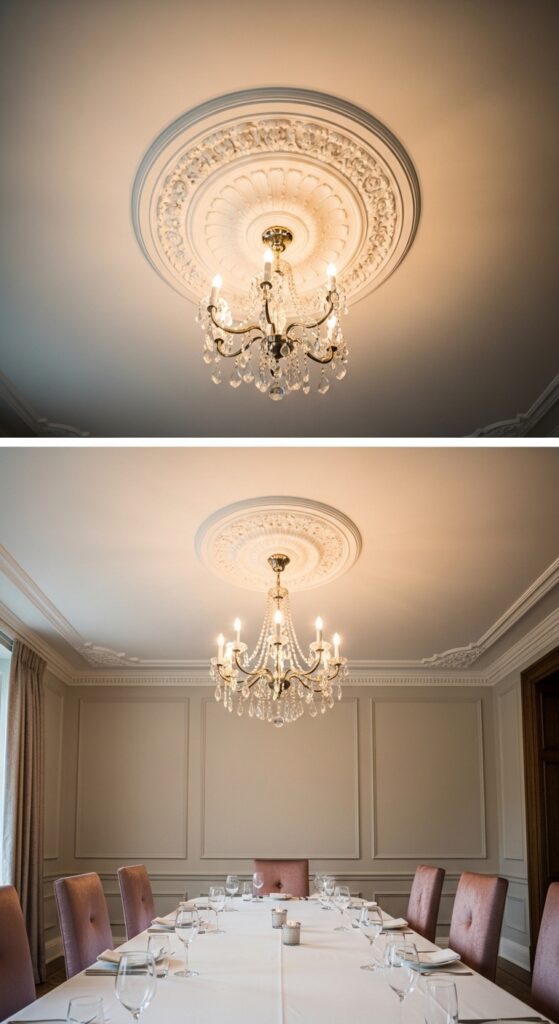
If you want a dining room to feel like it was built with intention — rather than assembled with furniture and accessories — ceiling detail is the place to invest. Crown moulding and ceiling medallions are the architectural equivalent of tailoring: invisible when done well, but instantly noticeable in their absence.
Crown moulding at the junction of wall and ceiling defines the room’s proportions and gives the eye a natural resting point above the furniture. For a formal dining room, the profile should be substantial — a minimum of four inches, ideally five to seven inches in rooms with ceilings above nine feet. A meagre two-inch crown in a high-ceilinged formal room looks like an afterthought.
A ceiling medallion — the decorative plaster disc centered around the chandelier’s canopy — adds a layer of detail that reads as genuinely classical without requiring any other ceiling work. In a room with simple flat walls, even a modest medallion communicates that the space was designed rather than decorated.
Paint both moulding and medallion the same color as the ceiling — bright white if your walls are off-white or colored, or a warm ivory if the whole room is in warm tones. A contrasting white moulding on a colored wall is valid and graphic; matching tones are softer and more traditional.
This is a permanent change — not for renters. But for homeowners committing to a proper formal dining room, it’s one of the most transformative investments per dollar in the space.
7. Classic Oil Paintings or Gilt-Framed Art on Dining Room Walls
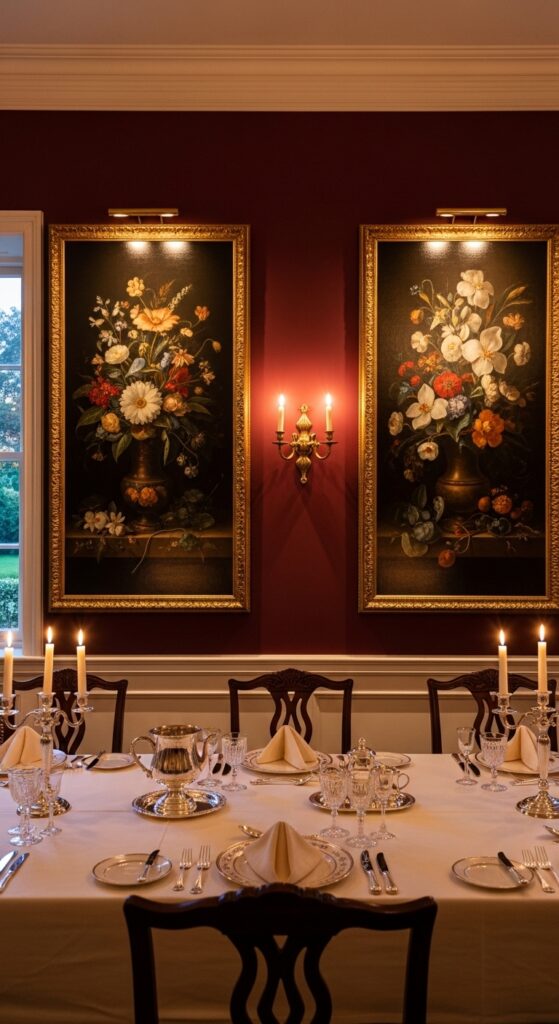
Art selection in a formal dining room is one of those decisions people overthink, then under-execute — ending up with small prints in thin frames that disappear against a dark wall. Classic style demands scale and substance in its artwork, and that means either genuinely large pieces or pairs of medium-sized works that read as a unified statement.
Traditional subjects for dining room art include botanical illustrations, landscapes, still lifes with food and wine, and portraiture. These aren’t arbitrary conventions — they connect visually and thematically to the act of dining, making the room feel coherent in a way that abstract art sometimes doesn’t in a traditional context. That said, a well-chosen abstract in the right scale can absolutely work if the rest of the room is confidently classical.
The frame matters as much as the image. Gilt frames — whether antique or reproduction — are the standard-bearer for formal dining rooms because they reflect candlelight and warm bulb light in a way that elevates the whole wall. A beautiful painting in the wrong frame can look like it wandered in from a different room.
For arrangement, two matching frames symmetrically placed flank a window or a sideboard with quiet authority. A single oversized piece centered above the sideboard is bolder and more dramatic. A salon-style grouping of five or more smaller pieces in coordinated gilt frames is the most maximalist approach — and the most rewarding when done with consistent frame profiles and generous wall space.
8. Formal Window Treatments: Silk Drapes With Contrast Lining
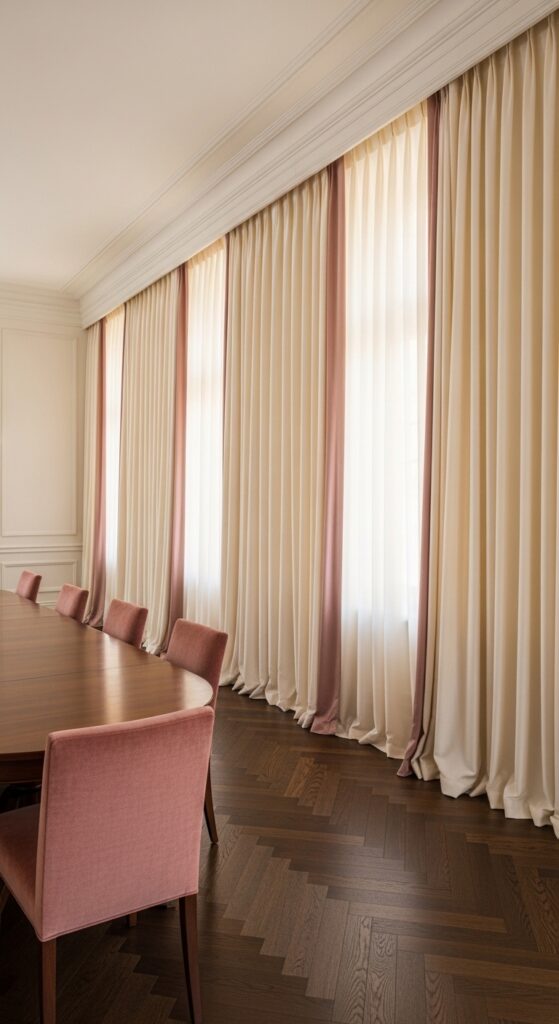
Window treatments are where formal dining room design either achieves its fullest expression or collapses into something generic. Roman blinds, casual linen panels, or — worst of all — nothing at all communicate that the room’s formal ambitions stopped somewhere short of the windows. Proper silk drapes, floor to ceiling, tell a completely different story.
Silk — or a quality faux silk with similar drape and sheen — is the appropriate fabric for genuinely formal window treatments. It catches light differently at different times of day, shifting from cool and luminous in morning light to warmly lustrous under evening fixtures. Linen and cotton, for all their charm elsewhere in the home, read as too casual in a properly formal dining room.
Contrast lining — a different fabric or color visible at the leading edge and hem of the drape — is a detail borrowed from tailoring and it has the same effect as a suit lining: it signals quality and intention to anyone who notices it. Dusty rose lining in an ivory drape, sage lining in a cream drape, or burgundy lining in a forest green drape all add depth without complication.
The practical instructions: mount the rod directly below the crown moulding (or as close to the ceiling as possible), and allow the drapes to pool by one to three inches on the floor. The pool is not optional in a truly formal room — it’s part of what makes the window treatment feel generous and considered rather than functional and bare.
One constraint: silk is notoriously sun-sensitive and will fade and degrade with direct UV exposure over time. If your dining room windows receive intense afternoon sun, consider a quality faux silk with UV protection, or add a sheer lining to protect the face fabric.
9. A Persian or Antique-Style Area Rug in Rich Tones
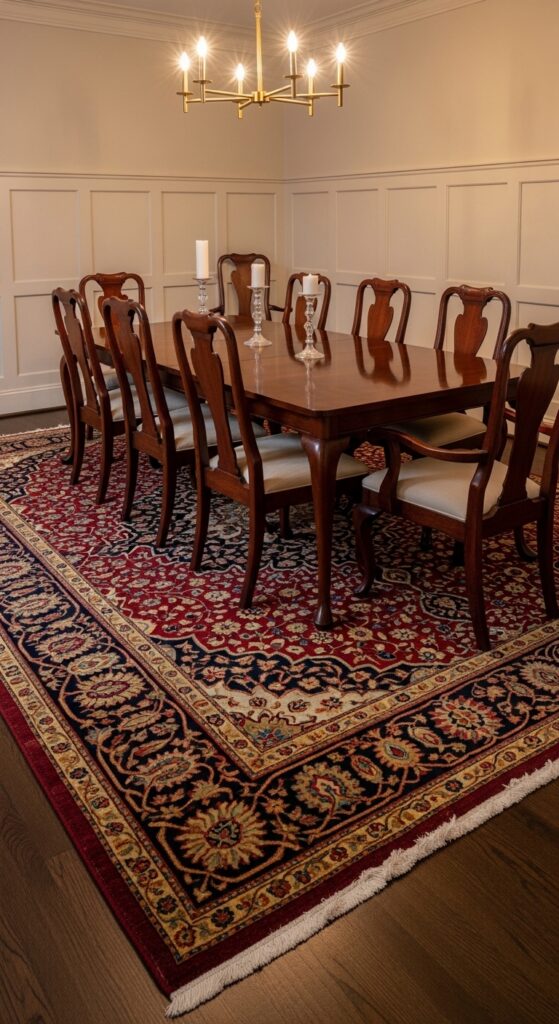
The rug beneath a formal dining table is doing more structural work than almost anything else in the room — it defines the dining zone, grounds the furniture, introduces pattern and color, and protects the floor all at once. Getting it wrong affects everything above it.
For classic formal style, a Persian or antique-style rug with a botanical, medallion, or geometric traditional pattern in deep, saturated tones is the defining choice. Ruby red, navy, forest green, and warm gold are the colors that have appeared in these rugs for centuries because they work under warm artificial light in a way that cooler or lighter tones do not.
Sizing rule: the rug must extend at least 24 inches beyond the table on all sides. When chairs are pulled out, all four legs should remain on the rug — a chair leg catching the rug edge at every meal is both annoying and a tripping hazard. For a standard 8-foot dining table, a 10-by-14-foot rug is the minimum. Many formal dining rooms look best on a 12-by-16.
The pile height matters too. A flat-weave kilim in a traditional pattern reads as more casual than a medium-pile wool rug with depth and texture. For a truly formal room, wool pile is the right call.
One constraint: wool Oriental rugs require professional cleaning and should not be steam-cleaned at home. Factor that into the decision if the room gets regular, daily use with children or messy eaters.
10. Formal Place Settings and Table Styling as Decor
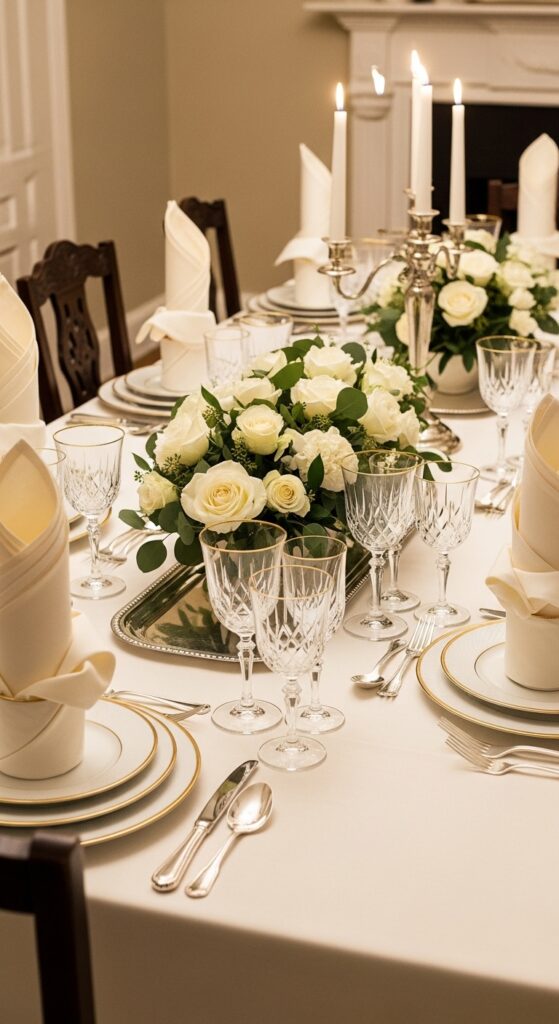
This might be the most underappreciated element of formal dining room decor: the table itself, when properly set, functions as the room’s primary decorative object. An empty mahogany table is handsome. The same table set for eight with proper china, crystal, and silver becomes the entire point of the room.
Classic formal place settings follow a logic developed over centuries of entertaining, and learning the basics is genuinely worthwhile if you’re investing in a formal dining room. Cutlery placed in order of use from outside in, water glass at the tip of the dinner knife, wine glasses to the right and slightly forward, bread plate with butter knife to the left — these aren’t arbitrary rules, they’re a visual grammar that reads as polished and considered even to guests who can’t articulate why.
China selection: bone china with a simple gold or platinum rim is the most versatile formal choice. It works for both grand dinner parties and slightly more relaxed occasions without reading as overdressed.
For centerpieces, the rule is either low enough to see over (under 14 inches) or tall enough to see through. The no-man’s-land in between — a 20-inch arrangement at eye level — blocks conversation and visually divides the table. White flowers in silver or crystal vessels are the formal classic for good reason: they’re timeless, they photograph well, and they don’t clash with anything.
The constraint here: a beautifully set table in an otherwise underdressed room highlights what’s missing around it. The table styling and the room design need to meet each other at the same level of intention.
11. Wall Sconces as Supplementary Lighting for Warmth and Drama
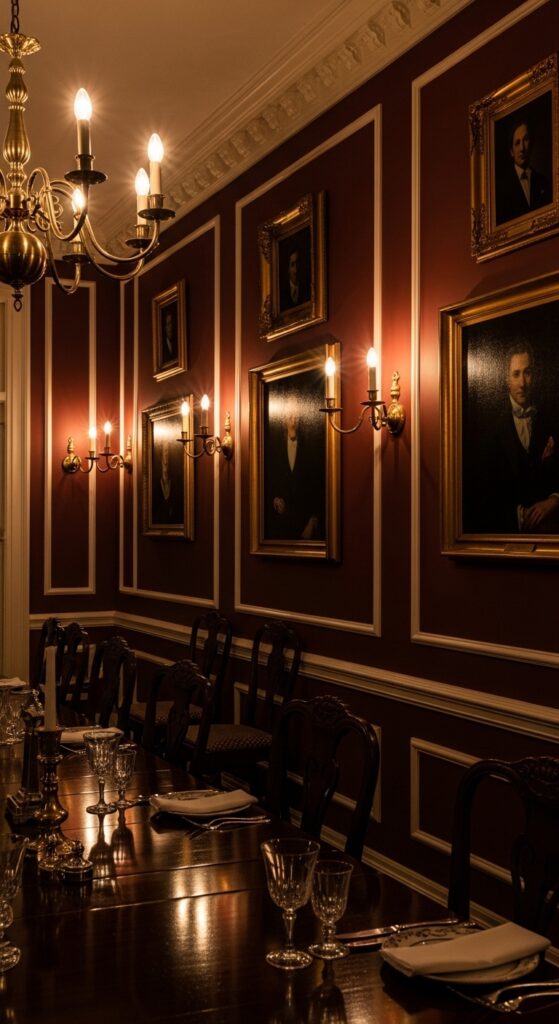
Chandeliers get all the attention in formal dining room lighting, and rightly so — but wall sconces are the unsung element that takes a dining room from nicely lit to genuinely atmospheric. The difference between a chandelier alone and a chandelier plus sconces is the difference between one instrument and an orchestra.
Wall sconces in a formal dining room should be mounted at approximately 60 to 66 inches from the floor — roughly eye level when seated — and spaced evenly along the longer walls of the room. Candle-style sconces in brass or gilded bronze are the traditional choice; their vertical orientation and small individual bulbs create a warm, flickering quality that overhead fixtures rarely achieve.
The key is that sconces should be on a separate dimmer circuit from the chandelier. This allows you to set the chandelier at a low ambient level and the sconces independently, giving you full control over the room’s atmosphere. At full sconce, dimmed chandelier, the room feels like a candlelit European restaurant. It’s exactly the right mood for a dinner party.
One practical note: if your dining room walls already have art or mirrors mounted at intervals, sconces need to be incorporated into the arrangement thoughtfully — centered between pieces, not competing with them for wall space. Plan the entire wall composition before making any electrical decisions.
This is an electrical project requiring professional installation in most cases. The investment is worth it — good dining room lighting is something you’ll notice and appreciate at every meal for years.
12. A Formal Floral Centerpiece With Candelabras
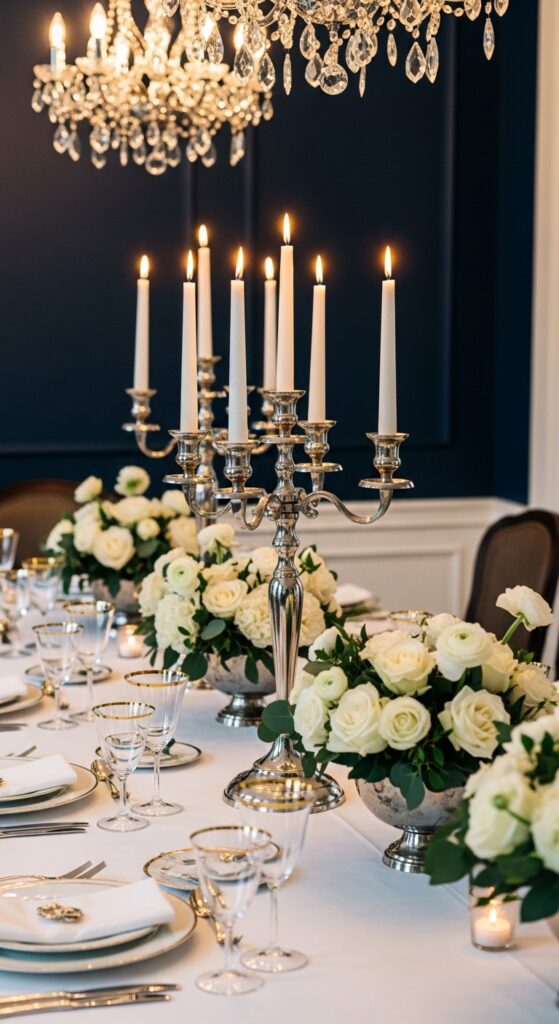
Nothing signals that a formal dining room is working at full capacity like a centerpiece arrangement that has clearly been thought about. And nothing in the dining room captures the spirit of classical entertaining more completely than the combination of a silver candelabra and fresh flowers.
The candelabra is important because candlelight at table level — not just from above — changes the entire quality of the dining experience. Faces become warmer, reflections multiply in crystal and silverware, and the room acquires a depth and dimensionality that overhead lighting alone can never achieve. Even battery-operated taper candles in a good candelabra produce some of this effect if open flames aren’t practical.
For the floral element, pair the candelabra with low arrangements in silver, crystal, or ceramic vessels at either end or in the center between multiple candelabras. White flowers almost always work in a formal setting — garden roses, ranunculus, white peonies, and white hydrangea all have the right presence and scale. Deep jewel-toned flowers (burgundy dahlias, plum ranunculus) read beautifully against a dark wall.
The constraint: fresh flowers require maintenance and replacement. If the room is used weekly for entertaining, this is a genuine ongoing cost. For rooms used less frequently, consider high-quality faux botanicals in a formal arrangement — the best silk peonies and garden roses are genuinely convincing at candlelit dinner distances.
For everyday display, a single silver urn with dried botanicals — preserved eucalyptus, dried white pampas, bleached seed pods — holds the visual weight of a fresh arrangement without requiring any upkeep. Save the fresh flowers for the occasions when the room is actually in use.
The Formal Dining Room Is Worth the Effort
Here’s what people often discover once they properly commit to a formal dining room: it changes how they use it. When a room is beautiful enough to deserve real dinners, real dinners start happening in it. The round table with a proper cloth and real candles replaces the kitchen counter on a Saturday night. The heirloom china comes out of the cabinet. People sit down and stay.
Classic formal style isn’t about recreating a museum or performing a version of elegance that doesn’t belong to you. It’s about choosing materials and furniture and details that reward attention — velvet that changes shade as you move past it, crystal that multiplies candlelight, moulding that makes a ceiling look like it was designed rather than default. These are pleasures that compound over time, in a room that gets better the more you use it.
Every idea in this article is a starting point, not a prescription. Take the wall color and leave the wallpaper. Keep the chandelier and skip the sconces for now. The room will tell you what it needs next. That’s how the best formal dining rooms come together — not all at once, but with intention, over time.