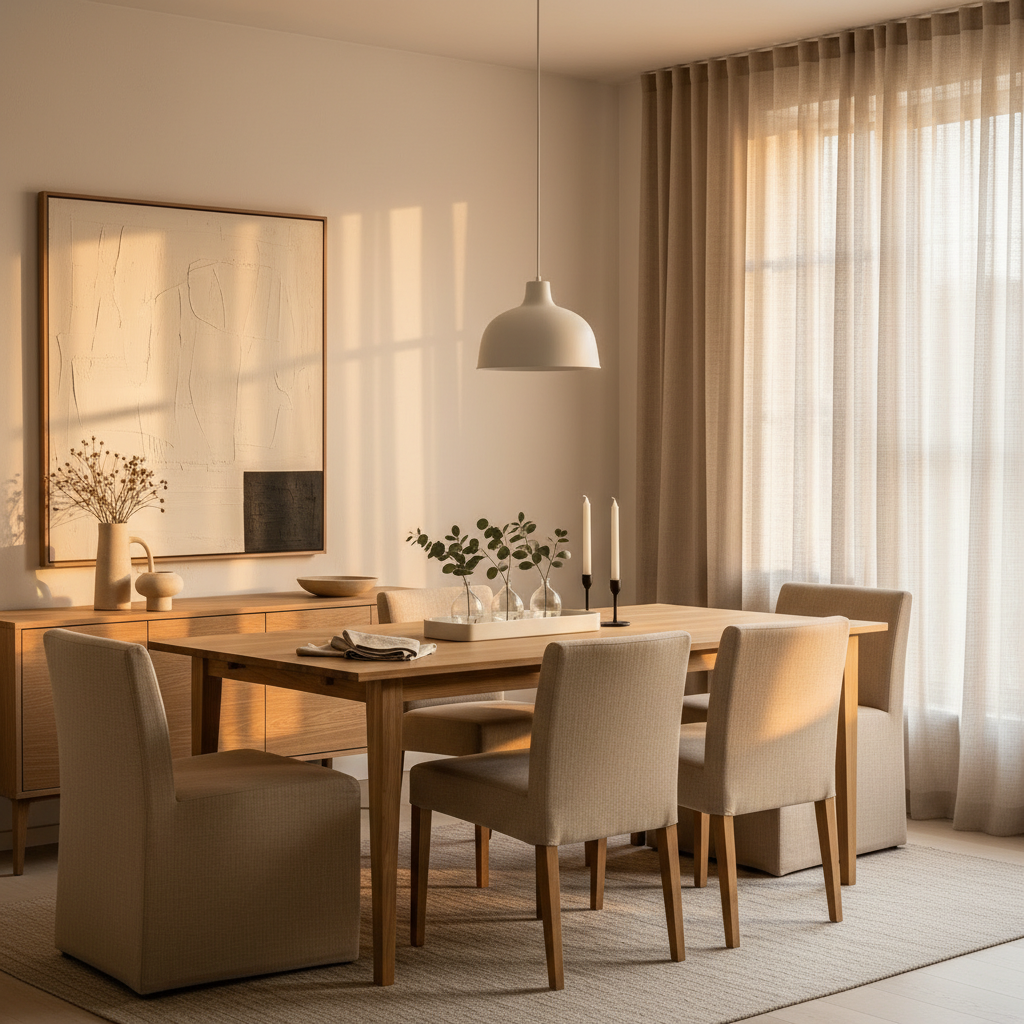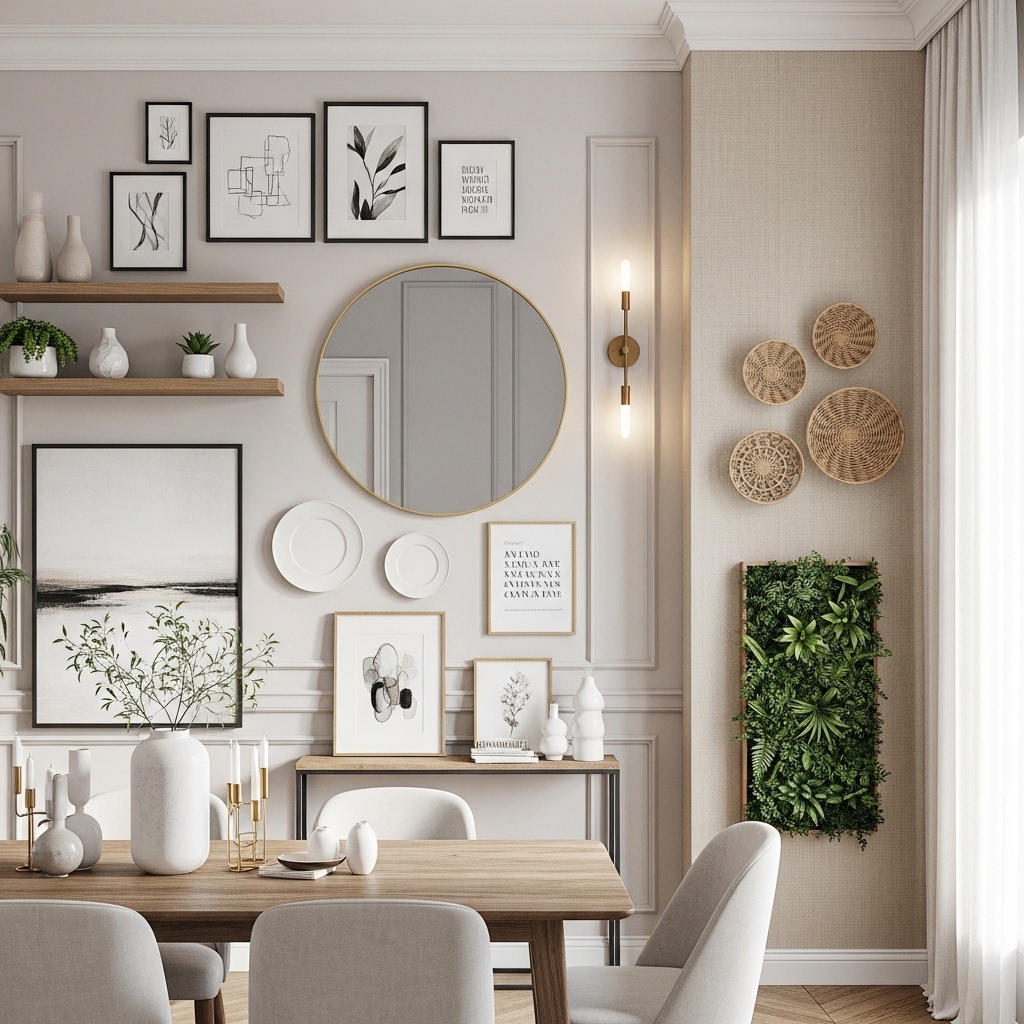
The centerpiece is the punctuation mark of the dining room. Everything else — the chairs, the lighting, the wall color — sets the stage, but the centerpiece is what people actually see when they sit down. It’s what gets noticed in the first three seconds, what photographs in every dinner party picture, and what quietly communicates whether the room was styled with intention or just assembled with whatever was on sale.
Here’s the thing about centerpieces that most decor advice gets wrong: they don’t need to be expensive, elaborate, or changed every season. What they need to be is specific. A single beautiful object, placed with care, will always outperform a cluttered arrangement of mediocre pieces. The ideas in this guide range from simple and budget-friendly to more considered investment pieces, but every one of them is built around specificity — particular materials, particular proportions, particular moods. Find the one that matches how you actually use your dining table, and commit to it fully.
1. The Low Brass Bowl With Fresh Flowers
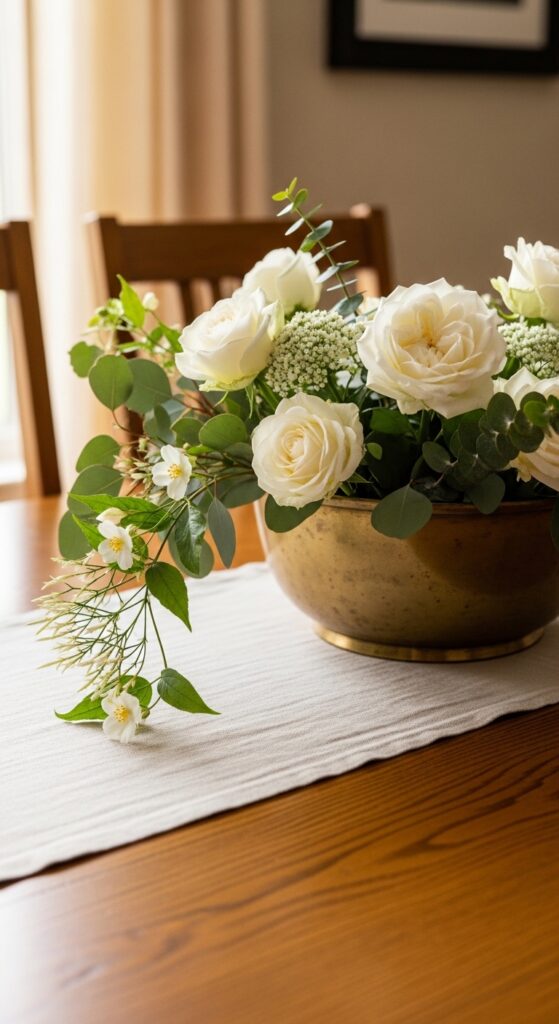
A low bowl centerpiece is the most universally functional option on this list, and I mean that as a genuine compliment. The low profile keeps sightlines clear across the table so guests can actually see each other during dinner — something a tall vase arrangement consistently fails to do — and a wide brass bowl has enough visual weight to anchor the table without demanding attention.
The brass finish is worth specifying because it matters more than people realize. Unlacquered or lightly antiqued brass develops a natural patina over time that warm-toned flowers — white, cream, pale blush, soft yellow — photograph against beautifully. Shiny lacquered brass is too reflective and too formal; matte or satin brass hits the sweet spot between warmth and polish.
For the flower selection: stay low and full rather than tall and spiky. Garden roses, ranunculus, anemones, and small dahlia varieties all work beautifully in a low bowl. Tuck in a few stems of eucalyptus or trailing jasmine for organic looseness.
One constraint: fresh flowers require maintenance. If you’re styling the table for display rather than daily use, dried or preserved alternatives in the same bowl give you the same visual impact without the mid-week wilting.
The bowl stays; only the flowers need to change seasonally.
2. The Tall Single-Stem Vase Statement
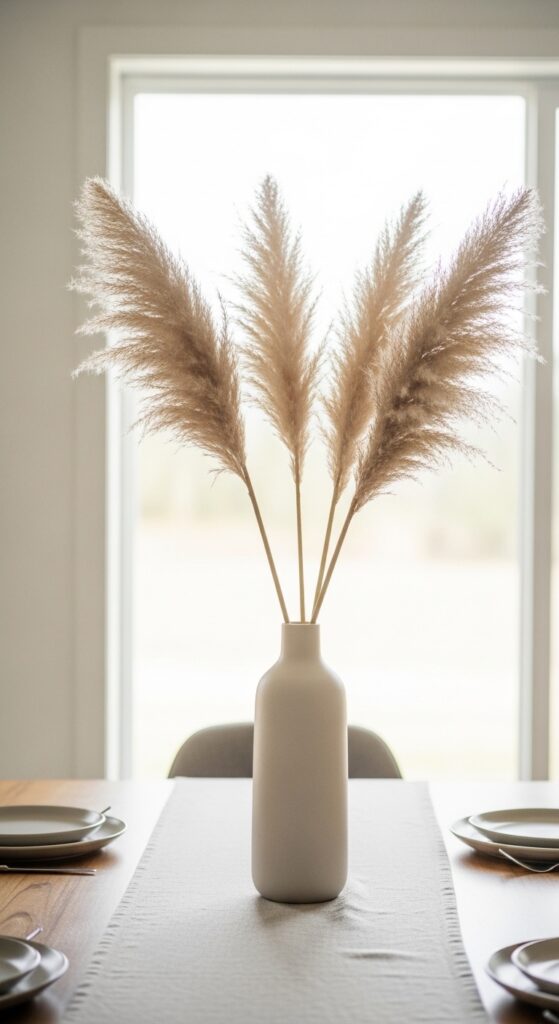
Restraint is an undervalued decorating skill, and nothing demonstrates it more confidently than a single tall vase with a handful of carefully chosen stems as the entire centerpiece. This approach works best in dining rooms that already have strong visual elements — an interesting light fixture, a gallery wall, bold chairs — and don’t need the table to do additional heavy lifting.
The vase itself carries enormous responsibility in this setup. Choose a vessel with genuine character: a hand-thrown ceramic in a matte glaze with slight surface variation, a simple glass cylinder with visible imperfections, or a tall terracotta form with an unglazed exterior. The material should be interesting enough to read well when the stems are minimal.
Dried pampas grass is the most architecturally dramatic choice for a tall single-vase arrangement. Three to five plumes in a slender-necked vase is all you need. Alternatively, dried bleached branches, oversized eucalyptus stems, or a few long-stem dried wheat bundles all create similar graphic impact.
One honest watch-out: this look can feel underdressed to guests who associate “centerpiece” with floral abundance. If you share the space with someone who equates sparse with uncared-for, add a single low pillar candle beside the vase to complete the vignette.
Tall and single is a confidence move. Commit to it.
3. The Candle Cluster Centerpiece
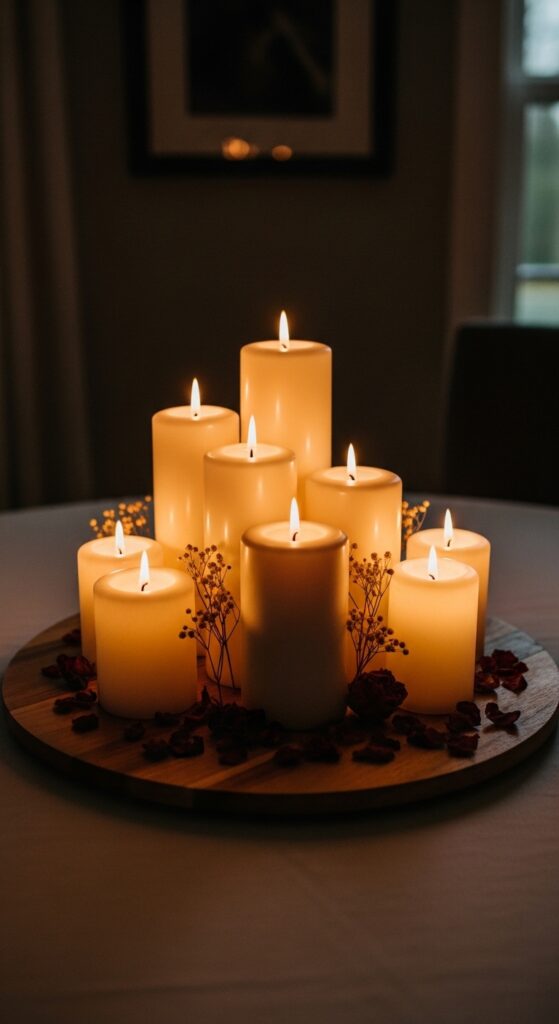
If there is one centerpiece idea that works across every season, every table style, and virtually every budget, it’s a well-executed candle cluster. Not a single candleholder, not a matched pair — a genuine cluster of pillar candles in varying heights, grouped on a simple tray or wooden board so they read as a single cohesive arrangement.
The height variation is what makes this work. Use at least three different heights: a short wide pillar, a medium standard pillar, and a tall narrow column. Adding a fourth or fifth candle in intermediate heights fills the arrangement and creates genuine visual density. Keep all candles in the same color family — ivory, warm cream, unbleached white — so the variation in form reads clearly without color competing for attention.
The base surface matters too. A round wooden board, a simple marble slab, a galvanized metal tray — any of these grounds the cluster and prevents it from looking like you just placed candles directly on the tablecloth. Scatter dried rose petals, small pine cones, or a few fresh herb sprigs around the candle bases to soften the arrangement’s edges.
One safety note that’s worth stating plainly: never leave pillar candles burning unattended on a dining table, and keep them a minimum of three inches apart to prevent heat transfer between the flames.
Candle clusters are the most mood-transforming centerpiece you can build for under thirty dollars.
4. A Wooden Dough Bowl Filled With Seasonal Objects
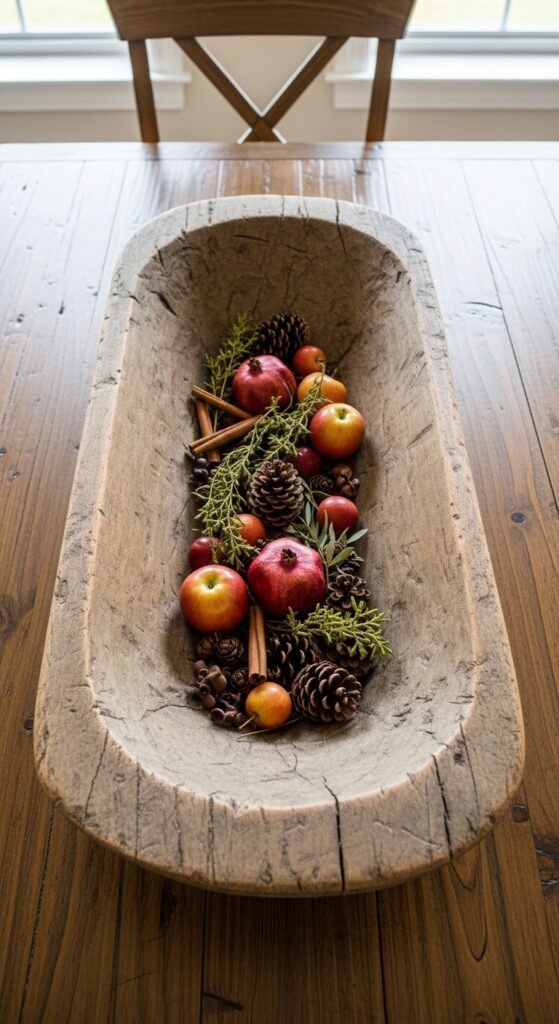
A wooden dough bowl might be the most versatile centerpiece vessel in existence. The form — wide, low, slightly irregular, clearly hand-carved — carries so much warmth on its own that it barely needs anything in it to read as a finished centerpiece. But what you fill it with is where the real creativity happens.
The dough bowl centerpiece is seasonal by nature. In spring, fill it with moss, small potted succulents, or fresh citrus cut in halves. In summer, lemons and limes with a few garden herb cuttings. In fall, mini heirloom apples, dried pomegranates, cinnamon sticks, and pine cones. In winter, evergreen branches, dried orange slices, and a cluster of cream pillar candles nestled among the greenery.
The vessel itself stays year-round; the contents change with the season, which means you’re essentially buying one object that transforms your table four times a year.
When buying a dough bowl, prioritize genuine hand-carved wood over the mass-produced turned versions. The tool marks, the slight asymmetry, the color variation in the wood grain — these are what make the bowl feel authentic rather than purchased-at-a-chain-store.
One sizing note: measure your table before committing. Dough bowls come in a range of sizes, and a bowl that’s too small disappears on a large dining table. For a table that seats six or more, you want a bowl at least eighteen inches in its longest dimension.
5. A Linear Botanical Runner Arrangement
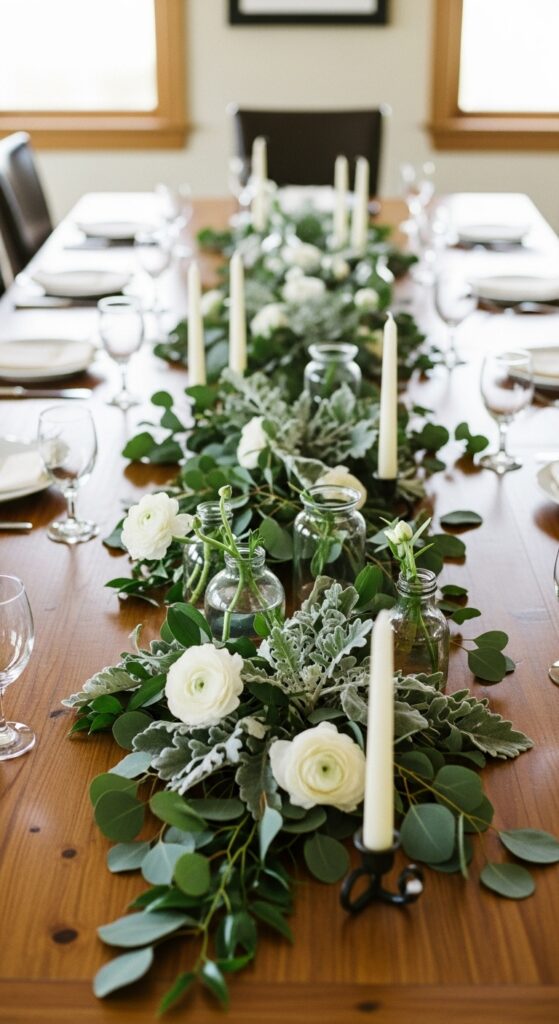
A linear botanical runner — a continuous arrangement that runs the full length of the table rather than sitting in a single central point — is one of the most impactful table styling techniques that home decorators consistently underuse. Interior designers use this approach for every important table: it works with the table’s natural shape rather than against it, and it makes a dining table of any size look intentional and abundant.
The key principle is keeping everything low. The entire arrangement should stay under eight to ten inches in height so the sightlines across the table remain completely clear. Use small bud vases, short iron candle holders, and clusters of cut stems laid directly on the runner surface rather than in tall vessels.
Work in a limited palette: two or three botanical types, one candle color, one metal tone for any holders or vases. The restraint in material variety allows the linear form of the arrangement itself to read clearly. Too many different elements across a long arrangement becomes visual noise.
A practical approach: start with a linen runner as the foundation, then place your bud vases at roughly equal intervals, fill in between with loose botanical clusters, and dot small candle holders throughout the gaps. The whole thing can be assembled in twenty minutes and looks like it took considerably longer.
One constraint: this style works beautifully for dinner parties but is impractical for daily family meals where the table center is constantly used. Have a plan for where the arrangement goes between uses.
6. The Sculptural Branch and Twig Arrangement
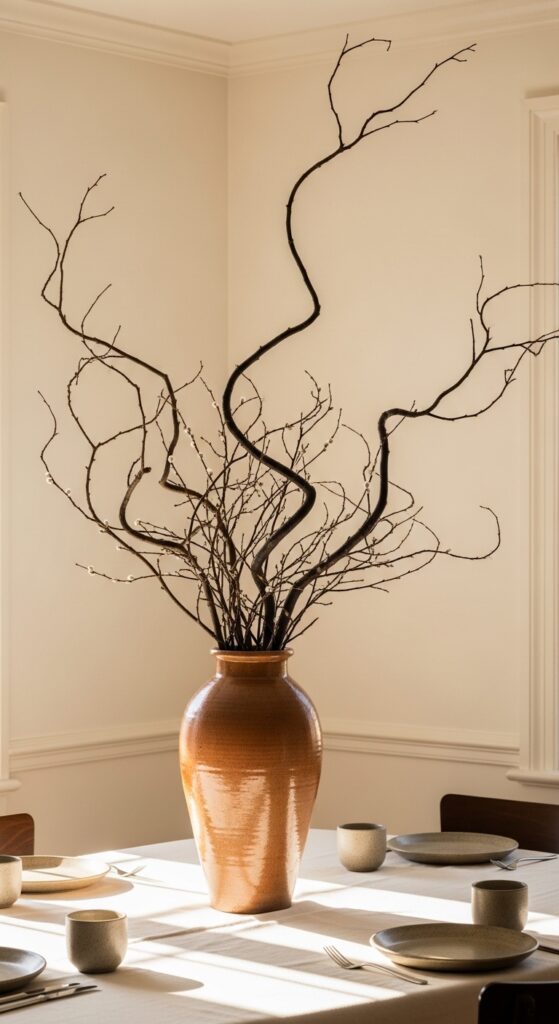
Bare branches are one of those centerpiece materials that people either completely overlook or use brilliantly. When they’re used well, a sculptural branch arrangement does something that flowers and botanicals don’t — it introduces genuine architecture into the table’s vertical space, casting interesting shadows and creating a sense of height without visual density.
Twisted willow is the most expressive option: the spiral of the branches creates natural movement and visual interest that reads well from multiple angles. Dark birch or bleached manzanita are quieter alternatives with a cleaner, more graphic quality. Any of these, placed in a wide-mouthed ceramic or terracotta vessel with enough weight to anchor the branches, creates a centerpiece that lasts indefinitely and costs almost nothing if you have outdoor access to the materials.
The vessel needs to be substantial. A light, small vase will look overwhelmed by even a modest branch arrangement. Choose a heavy ceramic urn, a wide stoneware crock, or a galvanized metal container with enough visual weight to balance the branches above it.
For winter specifically, adding a few strings of warm micro LED lights woven through the branches transforms this from a daytime sculptural arrangement into an evening piece of genuine beauty.
One watch-out: this reads modern-rustic rather than traditional. It’s not the right choice for a very formal or classic dining room aesthetic.
7. Fresh Herb Pots as a Functional Centerpiece
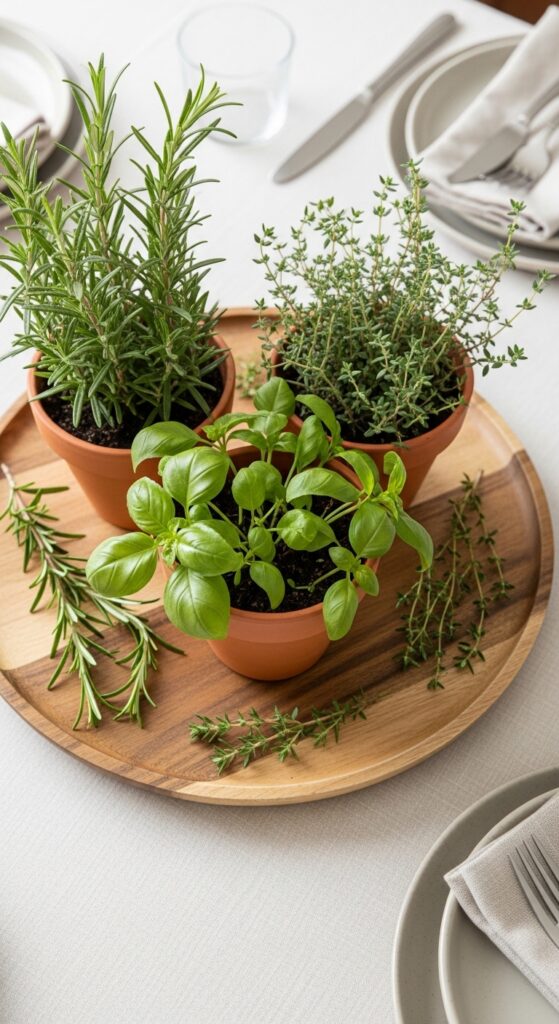
A cluster of fresh herb pots is the most genuinely useful centerpiece on this list, and usefulness in a dining room centerpiece is an underrated quality. Rosemary, thyme, sage, and basil in small terracotta pots look beautiful on a table, smell incredible at close range, and can be clipped directly into whatever you’re cooking or serving. Form and function at the same address.
Group three to five small pots on a wooden board or round tray to unify them visually. Terracotta is the right pot material here — plastic nursery pots don’t have the visual weight or the warmth. The slightly uneven color of fired terracotta and the white mineral deposits that form on older pots are beautiful details that fit naturally into a casual dining aesthetic.
Choose herbs that vary in height and texture for visual interest. Rosemary grows tall and structural. Thyme stays low and spreading. Basil has large, lush leaves that contrast beautifully with the fine texture of the others. The variety makes the grouping feel more like a garden and less like a display.
That said, this centerpiece only works if you’re actually willing to water the herbs. A half-dead basil plant on a dining table is worse than no centerpiece at all. If low maintenance is genuinely your priority, swap to dried herb bundles in small vases — the visual effect is similar, and nothing wilts.
Fresh herbs as a centerpiece is the kind of practical-beautiful idea that makes people say “I never thought of that” when they see it.
8. A Marble or Travertine Tray Vignette
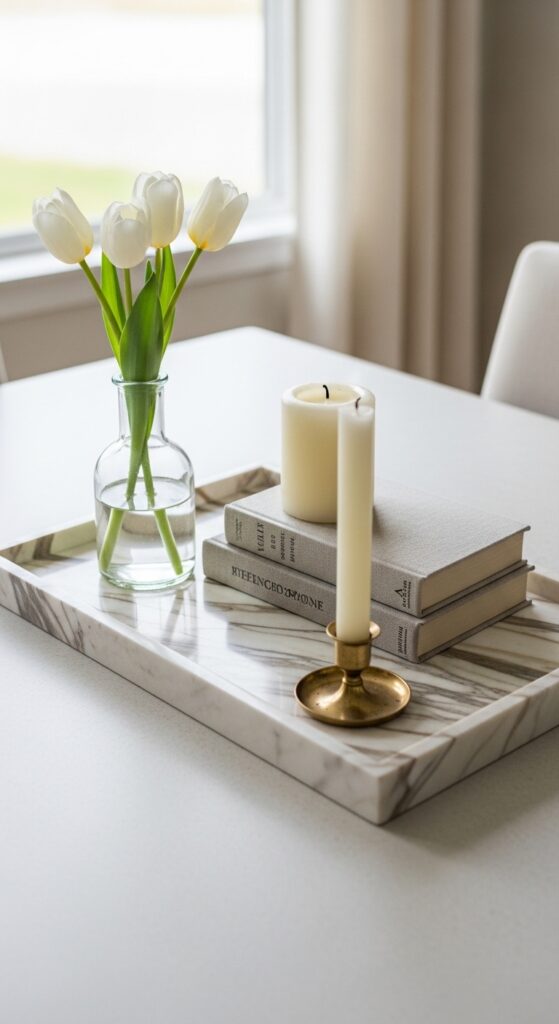
A marble or travertine tray used as the organizing base for a centerpiece vignette is one of those decorating techniques that adds an immediate layer of sophistication without requiring any particular skill to execute. The tray does the design work for you — it contains the objects, unifies them visually, and makes even a simple three-piece arrangement look considered and deliberate.
The objects on the tray are a short edit: a bud vase with two or three stems, a candle in a beautiful holder, and one additional object with personal meaning — a small sculptural piece, a favorite book with an interesting spine, a geode or stone object, a small ceramic bowl. That’s the entire formula. Three objects, one tray, done.
Marble is the most classic tray material for this application and it works in virtually any dining room aesthetic from traditional to contemporary. Travertine has a warmer, more textured surface that suits farmhouse and Mediterranean-adjacent rooms better. Alabaster, if you can find it, has a translucence when backlit that is genuinely beautiful.
The tray size matters: choose one that feels slightly too large for the objects you’re placing on it. Negative space on the tray surface reads as confidence and restraint; a tray crowded to its edges reads as anxiety about empty space.
One thing to watch: marble trays are heavy. On tables with delicate or painted finishes, place felt pads on the tray’s underside.
9. A Vintage Lantern Centerpiece
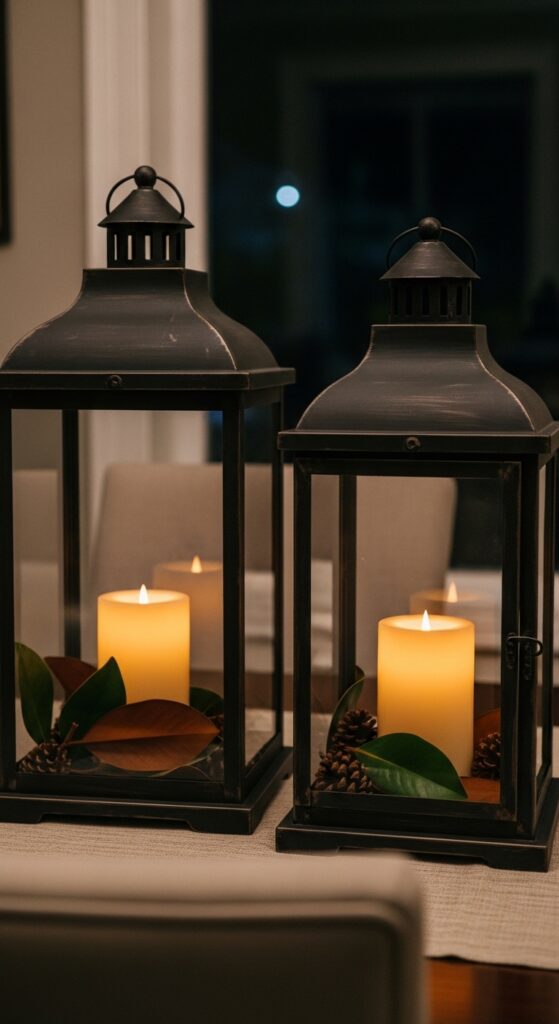
Lanterns as dining table centerpieces have an enduring appeal that trends don’t seem to touch, and for good reason. They solve a specific problem that most other candle-based centerpieces don’t: they contain the flame, protect it from drafts, and create a defined pool of amber light that makes the table’s atmosphere genuinely intimate without any fire safety anxiety.
Use a pair of lanterns rather than a single one. Two lanterns of slightly different heights read as a vignette; one lantern reads as forgotten. The height difference doesn’t need to be dramatic — two or three inches is enough to create visual interest and prevent the pair from looking too matchy.
Matte black iron is the most versatile finish for lanterns in a dining room context. It works with wood tones, with warm whites, with bold paint colors. Brass or gold lanterns are beautiful but more specific — they need the right room to carry them properly.
Add low-profile organic elements around the lantern bases to connect them to the table surface: dried magnolia leaves, a few pine cones, a small scatter of dried berries. This grounds the lanterns and prevents them from looking like they’ve simply been placed on the table rather than styled onto it.
One constraint: lanterns only work as centerpieces if you actually light the candles inside. Unlit lanterns on a table look like someone forgot to finish setting up. Commit to the atmosphere.
10. A Sculptural Fruit Bowl as a Design Object
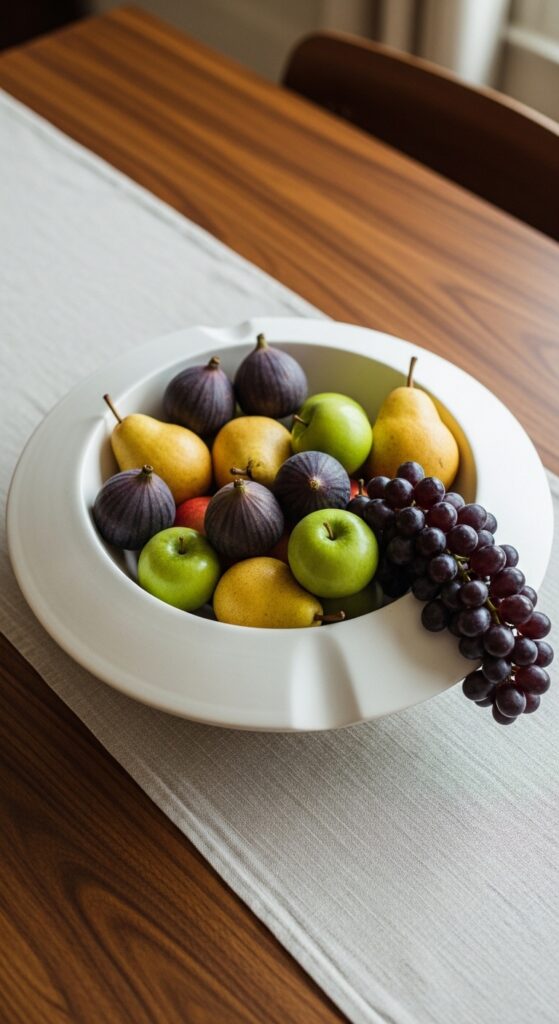
Food as decor is a tradition that predates every interior design trend, and a beautiful bowl of seasonal fruit is one of the oldest and most reliable centerpiece approaches in existence. The secret to making it feel designed rather than functional is treating the bowl and its contents as a single composition — choosing fruit that varies in color, size, and form, and arranging it with the same intentionality you’d bring to a flower arrangement.
The bowl is a design object in this context. Choose a vessel with genuine sculptural presence: a wide, shallow ceramic in a matte glaze, a turned wooden bowl with visible grain and depth, or an alabaster bowl if your budget allows. The fruit inside should be beautiful enough on its own, but the bowl is what elevates the arrangement to centerpiece status.
Seasonality is the guiding principle for the fruit selection. Late summer: peaches, plums, and small green grapes. Autumn: figs, pears, quinces, and dark grapes. Winter: citrus — blood oranges, clementines with their leaves still attached, large navel oranges with a few green branches. Spring: early strawberries, green apples, loquats.
Vary the scale within the bowl. A few large anchor pieces — a pear, a quince — surrounded by smaller elements creates proportion. A bowl of uniformly sized objects, like a bowl of apples all the same size, reads as a grocery display rather than a centerpiece.
One honest note: this requires restocking. Fruit centerpieces are living displays that need attention every few days. If your life doesn’t accommodate that rhythm, a ceramic or wax fruit alternative is a legitimate substitute.
11. A Terrarium or Cloche Centerpiece
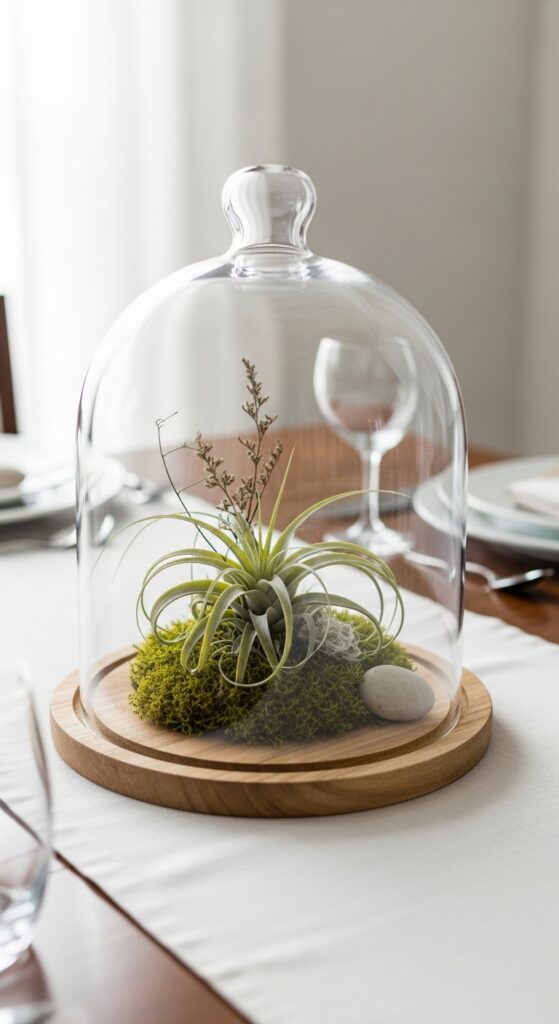
A glass cloche or small terrarium as a dining table centerpiece is genuinely underused outside of highly curated interior design contexts, which means it reads as original and considered in a way that flowers and candles sometimes don’t anymore. The glass dome creates a self-contained world on the table — a small landscape with its own logic — and that sense of a miniature scene is oddly compelling to guests.
The key to making a cloche centerpiece work on a dining table is keeping the interior simple. The instinct is to fill every inch of the glass with botanical material, but restraint is the right call here. A piece of preserved sheet moss as the base, a single air plant or small fern, one dried stem, and a smooth stone or two — that’s enough. The negative space inside the glass is part of the composition.
The base of the cloche matters as much as the interior. A round wooden board gives warmth. A marble slab adds formality. A slate tile gives the arrangement a more graphic, modern quality. Match the base material to the broader aesthetic of your dining room.
One practical note: air plants inside a closed cloche need occasional airing out to prevent moisture buildup. Either choose a cloche with an open bottom or vent it regularly. Preserved moss and dried botanicals require no maintenance at all and are the better choice for people who want a truly zero-effort centerpiece.
A glass cloche is a genuine conversation piece — guests will lean in to look.
12. An Oversized Ceramic Vase With Dried Botanicals
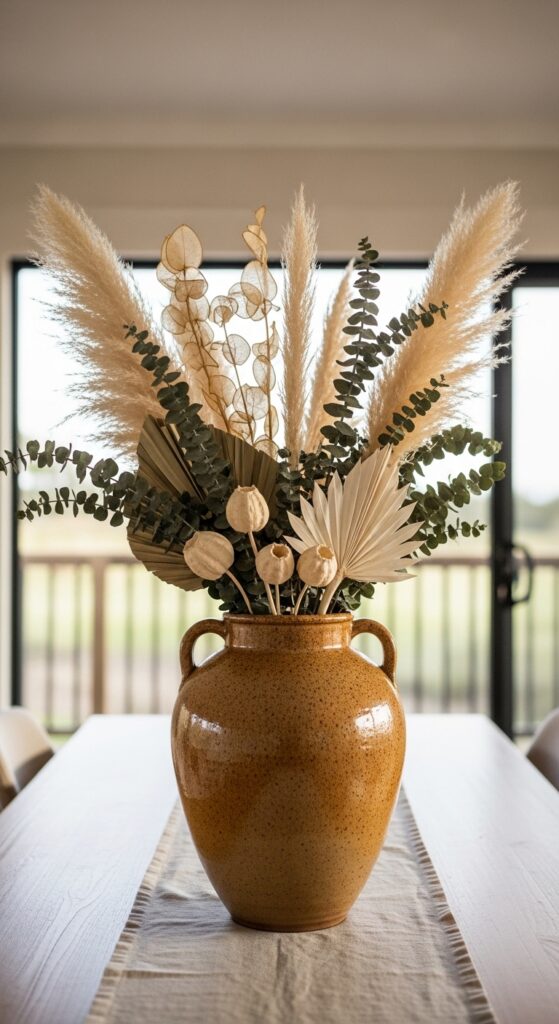
A large, genuinely statement-scale ceramic vase with a full dried botanical arrangement is the centerpiece equivalent of a great piece of art — it doesn’t just decorate the table, it defines the room. This approach requires committing to scale, which is where most people hesitate and where the biggest visual payoff lives.
The vase should be large enough that it’s slightly surprising. Something in the forty to fifty centimeter range — taller and wider than what’s typically shelved or used as a standard table vessel. The generous scale of the piece is what makes it read as a centerpiece rather than a decoration placed on a table.
For the botanical arrangement, mix heights and textures deliberately. Tall pampas plumes provide the top layer. Medium-height eucalyptus or olive branches fill the middle. Lower elements — dried lunaria seed pods, bunches of dried lavender, bleached palm leaf sections — fill the base and add textural variety. The arrangement should feel abundant but not chaotic.
The ceramic itself is as important as what’s in it. A hand-thrown or artisan vase with a matte, slightly imperfect glaze in a warm earthy tone — clay, ochre, slate, warm white — will age beautifully and carry the arrangement with genuine visual authority. A mass-produced smooth vase undercuts the whole effect.
One constraint: this is a permanent-ish centerpiece. Dried botanicals last months to years, but they’re fragile and difficult to rearrange once they’re in place. Get the arrangement right the first time, and then leave it alone.
Scale and commitment, rewarded.
What Your Centerpiece Is Actually Saying
The most useful thing this guide can leave you with is a simple idea: your centerpiece communicates how you feel about the table before a single person sits down. A carefully chosen centerpiece — even a humble one, even an inexpensive one — says that someone was paying attention. That the meal matters. That the room was prepared for the people who are about to enter it.
You don’t need to change your centerpiece every season, and you don’t need to spend significantly to achieve something beautiful. What you need is specificity: one clear idea, executed with the right materials, at the right scale. The twelve ideas in this guide are genuinely distinct — different moods, different budgets, different maintenance requirements — because different dining rooms and different lives call for different solutions.
Come back to this guide when the seasons shift or when your table needs a reset. The best centerpieces are the ones that feel right for your room, your rhythm, and the people you feed at that table.