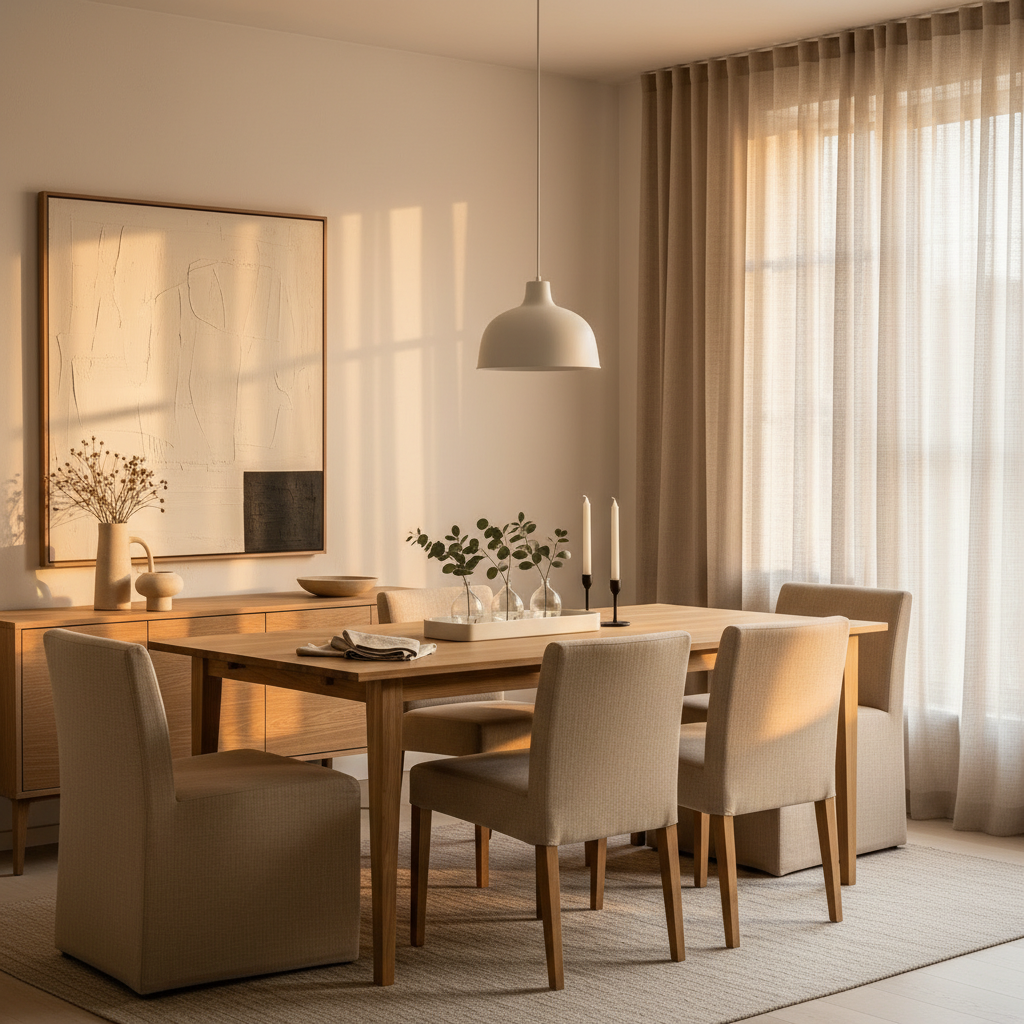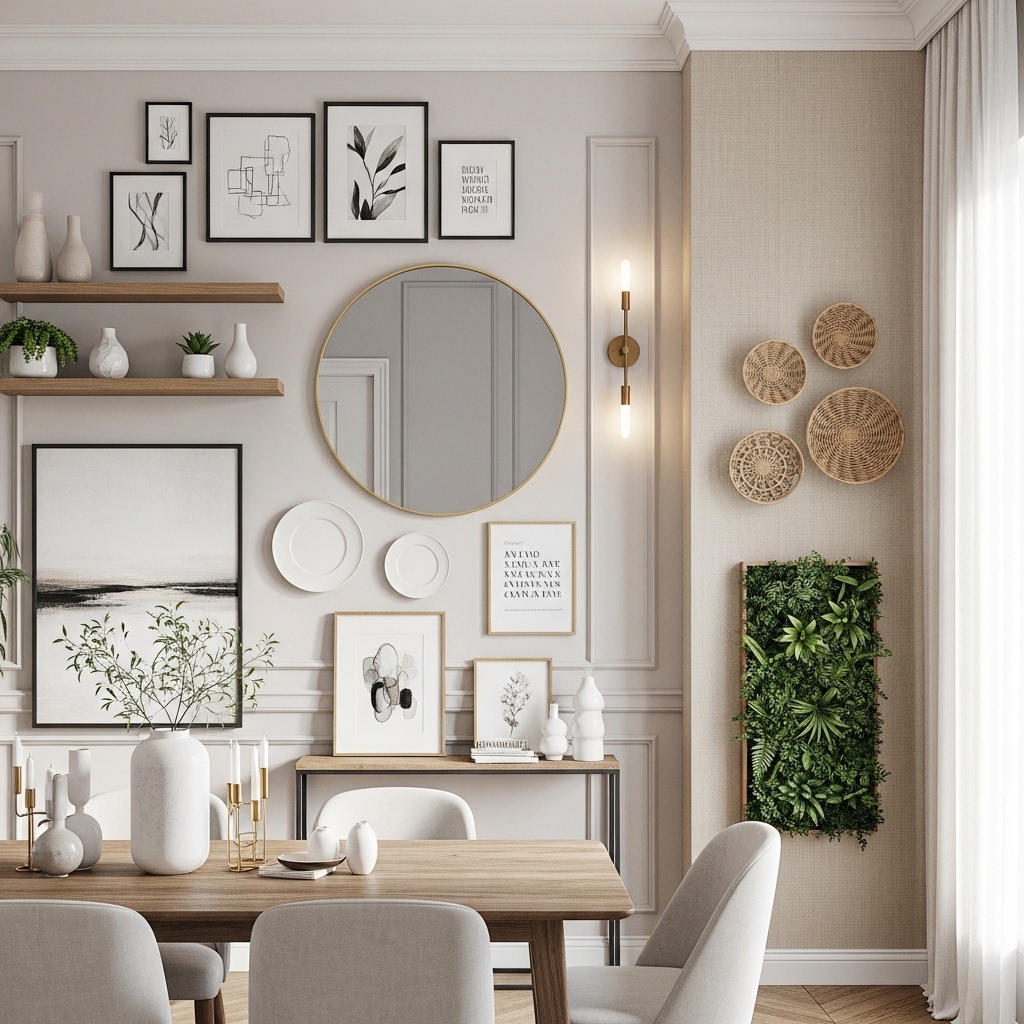
The dining room hutch is one of those pieces of furniture that people either love deeply or inherit reluctantly. If you grew up in a house where the hutch held the good china and a collection of ceramic owls that no one was allowed to touch, you might have complicated feelings about bringing one into your own home. Fair enough. But the hutch — properly styled and thoughtfully chosen — is genuinely one of the most functional and visually rich pieces of furniture a dining room can have.
A good hutch does something that almost no other furniture piece manages: it combines serious storage with a dedicated display surface in a format that reads as architectural rather than just functional. It becomes part of the room’s structure. The question isn’t really whether a hutch is worth having — it almost always is — but how to style it so it looks like yours, not like something left behind by someone else’s grandmother. These twelve ideas will help you figure that out.
1. The All-White Hutch With Collected Ceramic Display
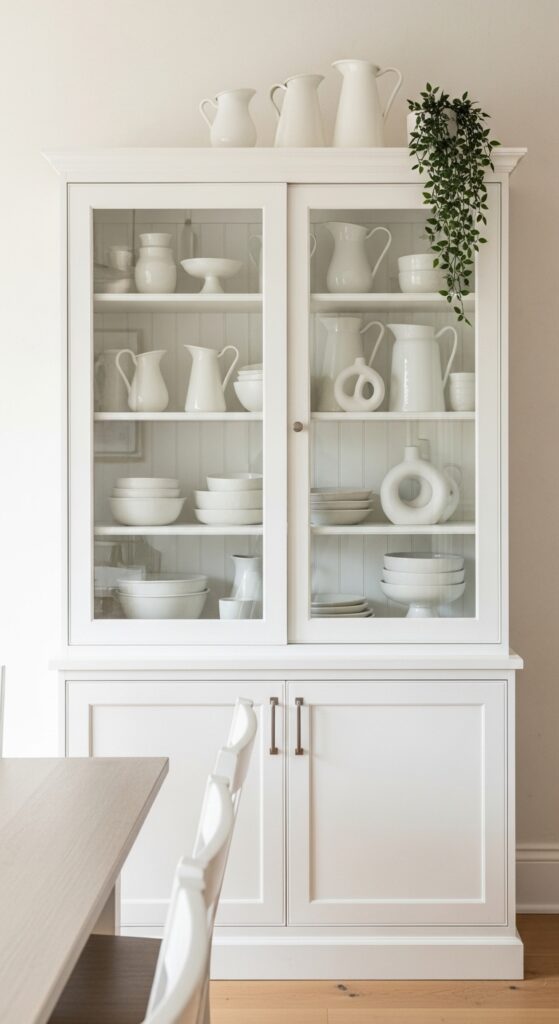
An all-white hutch is the most versatile canvas you can start with — it works in nearly every dining room palette and lets the display do all the talking. But “white hutch with white dishes” can tip from serene into institutional if you’re not careful about introducing texture and height variation in what you put inside it.
The key is working in tonal layers rather than true whites. Mix bright white porcelain with warm cream stoneware, matte unglazed pieces with subtly glazed surfaces, and thrown-on-the-wheel irregular shapes with cleaner more precise ones. The variation in texture and tone is what keeps the arrangement from looking like a store display.
Height matters enormously in hutch styling. Place your tallest pieces — a ceramic pitcher, a vase, a tall canister — at the outer edges or center of each shelf to create visual rhythm. Low, flat objects like stacked plates should anchor the base of the arrangement with taller items rising around them.
Add one living element per shelf: a small trailing pothos, a succulent, or a few sprigs of dried eucalyptus in a small vessel. It signals that the hutch is cared for and evolving rather than static.
One watch-out: an entirely white hutch display in a room that’s also predominantly white can vanish into the wall. Introduce warmth through a painted hutch interior in a contrasting tone — even a soft warm greige behind the shelves makes the white pieces pop without disrupting the calm palette.
2. A Painted Hutch in a Deep Jewel Tone
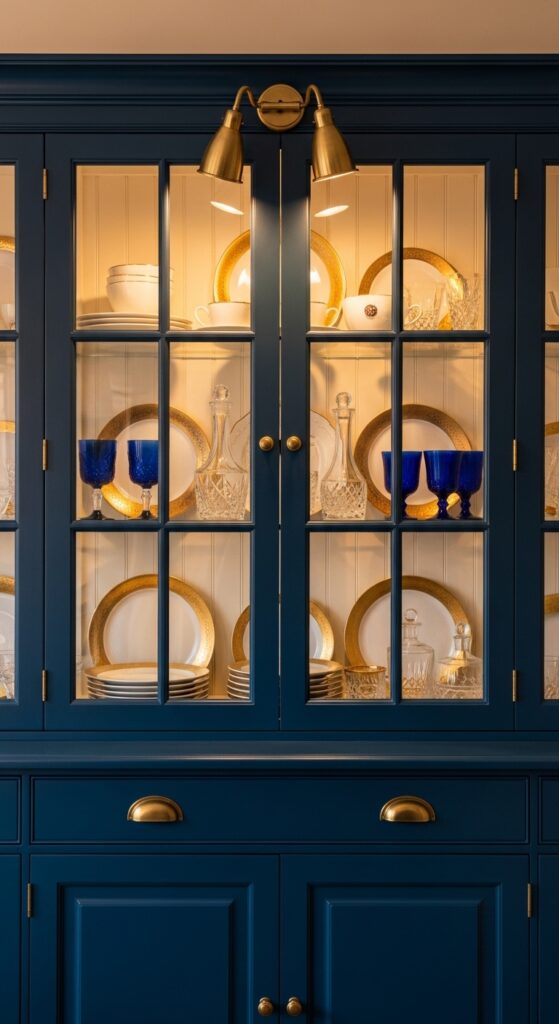
Painting a hutch is the single fastest transformation available for a piece that feels dated or too heavy in its natural wood finish. And in a dining room, a hutch in a deep jewel tone — peacock blue, forest green, oxblood, aubergine — becomes a genuine statement piece that anchors the entire room.
The technique that elevates a painted hutch from craft project to furniture-quality finish is prep and paint selection. Strip any existing varnish or gloss, prime with a bonding primer, and finish with a furniture-specific paint in a matte or eggshell sheen. Chalk-based paints are popular for a reason — they adhere well to wood furniture, dry quickly, and produce a matte finish with the kind of depth that factory lacquer rarely achieves.
Paint the interior back panel a contrasting tone — warm cream, soft ivory, or even a pale warm pink against a deep blue — so that the objects displayed inside are silhouetted against a light surface. This makes the display easier to read and gives the hutch a jewel-box quality that a single-color interior doesn’t.
Hardware upgrade is non-negotiable when repainting. Original builder-grade hardware in silver or aged bronze will clash with a freshly painted surface. Brass cup pulls or bar handles are the most consistent choice across jewel-tone palettes and they add a warmth that the paint alone can’t provide.
One constraint: very dark paint on a large hutch in a small dining room can dominate the space in a way that feels oppressive rather than dramatic. If the room is under 150 square feet, consider painting only the lower cabinet section and leaving the upper glass section in a lighter tone.
3. Displaying Heirloom China and Crystal Together

There’s a real and underrated pleasure in displaying the things your family has eaten from for decades — and a properly styled hutch is the right home for inherited china and crystal that would otherwise be boxed in a cabinet, unseen between holidays.
The styling challenge with heirloom china is that pattern and color vary so much between pieces. If you’ve inherited multiple patterns — which is common when china comes from different sides of a family — the trick is to use crystal as the visual mediator. Crystal is essentially transparent and neutral; it sits between patterned china pieces without adding another competing visual element.
Use plate stands to display pieces vertically rather than stacking everything flat. A plate displayed upright shows the pattern in full and adds height variation to the shelf, whereas a stack of plates reads as storage rather than display.
Mix in one or two contemporary pieces — a simple white ceramic pitcher, a modern vase — to prevent the display from feeling museum-like. The contrast between old and new makes both look more interesting.
One watch-out: crystal and china shelved near windows are vulnerable to direct sun over time. UV exposure fades the colored trim on china and can cause leaded crystal to develop a yellow tint. If your hutch is in a sunny position, consider UV-filtering window film on nearby windows.
4. The Modern Farmhouse Hutch With Shiplap Back Panel

The modern farmhouse hutch is distinct from a traditional hutch in a few key ways: lighter wood tones, open upper shelving rather than glass-fronted cabinets, black iron hardware instead of brass, and a generally more casual, lived-in styling philosophy. And the addition of a shiplap back panel inside the upper shelving section is the detail that pulls it all together.
A shiplap-backed hutch — whether the shiplap is original to the piece or a DIY addition — gives the interior a textural background that makes objects displayed against it look intentional even when the arrangement is relatively simple. The horizontal planks create their own rhythm that supports rather than competes with the objects in front.
For styling, lean into the farmhouse’s casual character: cookbooks with their spines showing, a few woven baskets, a ceramic crock holding wooden spoons, a small labeled glass jar or two. These everyday objects, given proper placement and sufficient breathing room on the shelf, read as warmly stylized rather than cluttered.
The open shelving that defines this hutch style means dust is a genuine factor. Objects need wiping down monthly if the room sees regular cooking activity nearby. This isn’t a dealbreaker — it just means keeping the display relatively simple so maintenance is manageable.
One honest constraint: open shelving hutches look worst when overloaded. The natural instinct is to fill every inch; the right instinct is to leave at least a third of each shelf visually open.
5. Hutch Interior Lighting for Dramatic Display Effect
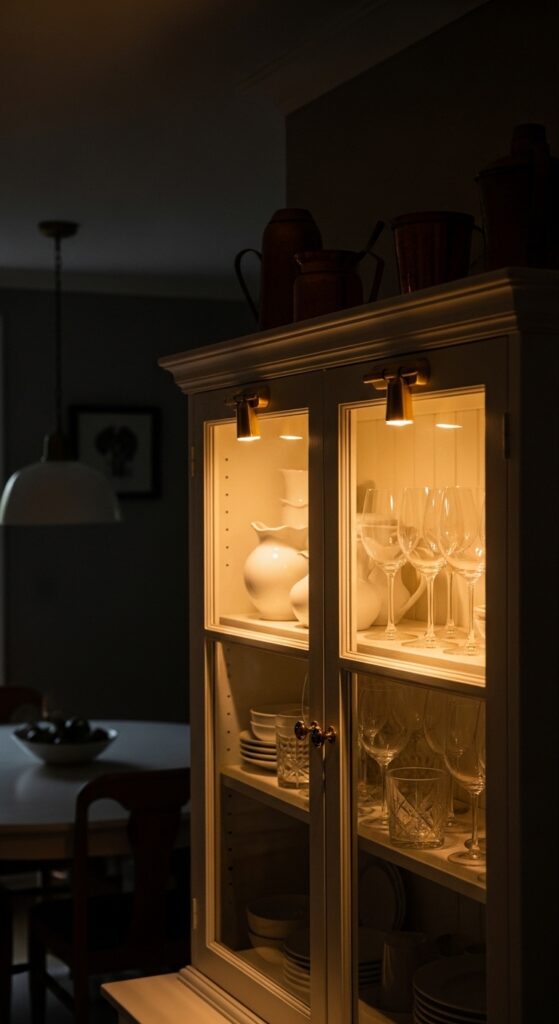
Interior lighting inside a hutch is one of those details that most people never think about — and the ones who do install it wonder how they ever lived without it. A lit hutch at dinner functions like a softly glowing piece of architecture, adding warmth and depth to the entire dining room at the time of day the room is most in use.
The most discreet and effective option is a continuous LED strip in warm white (2700K maximum, 2200K is even better) mounted along the interior top edge of the upper cabinet section. The strip is essentially invisible by day but casts an even, flattering wash of light downward across everything displayed below. Pair with a simple switch or smart plug so the hutch lighting can be controlled independently from the room’s main circuit.
Picture lights — small, canopy-mounted fixtures in brass or bronze that clip or mount to the hutch frame — are a more traditional option that adds the charm of individual fixtures. Two or three positioned symmetrically across the upper section are period-appropriate for traditional or classical hutches.
For the display itself, warm lighting is most flattering to crystal, which catches and multiplies the warm tones, and to white and cream ceramics, which glow softly rather than appearing cold under cool-toned light.
One watch-out: LED strip lighting in cool white (4000K or above) turns a hutch display into something resembling a commercial refrigerator case. Only ever use warm white inside a hutch. No exceptions.
6. Mixing Books, Ceramics, and Plants for a Layered Shelf Look
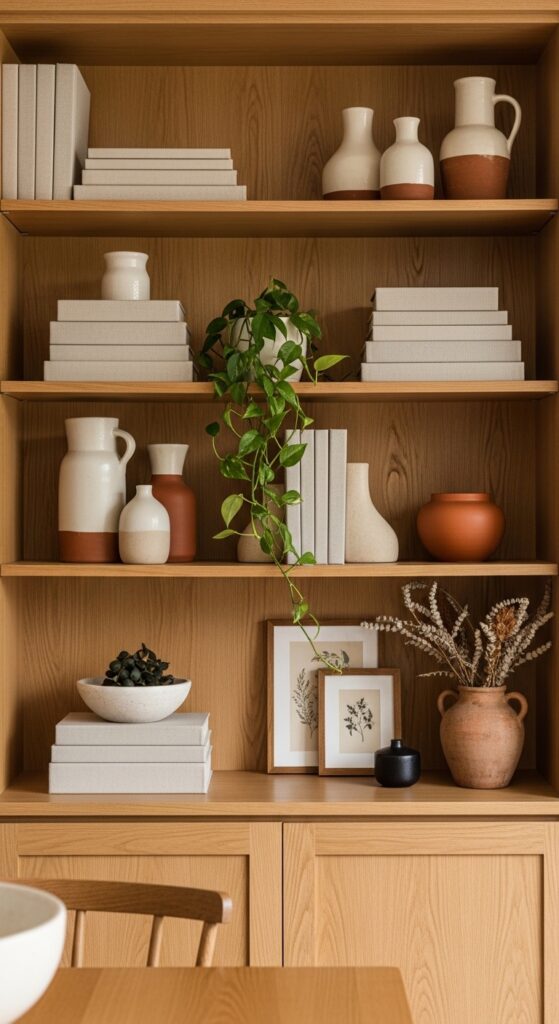
The hutch that only holds dishes is leaving most of its potential untapped. The most visually interesting hutch displays treat the shelves the way a bookseller or stylist would — layering objects of different categories, materials, and scales into a composition that rewards looking at from different distances.
Books are the secret ingredient that most hutch styling guides ignore. A few linen-covered hardbacks stacked horizontally create a platform for a smaller object on top — a small ceramic, a candle, a miniature framed print — which adds height and an extra display surface without adding shelf depth. Books also soften the visual composition in a way that all-ceramic arrangements sometimes lack, giving the eye a more varied textural journey.
The layering formula that works consistently: anchor each shelf section with one tall vertical object, add one mid-height object beside it, stack two to three books horizontally nearby, and finish with one small object on top of the stack. Repeat with variation across the full shelf width.
Living plants are essential to this look. Even a single trailing pothos whose vines drape over a shelf edge introduces movement and organic life that no ceramic or book can replicate.
One constraint: this layered, eclectic approach requires periodic editing. Objects accumulate, shelves get crowded, and the carefully considered composition becomes a catch-all within a few months if not actively maintained. Plan to re-style the hutch every season.
7. A Dark-Painted Hutch Interior for Display Contrast
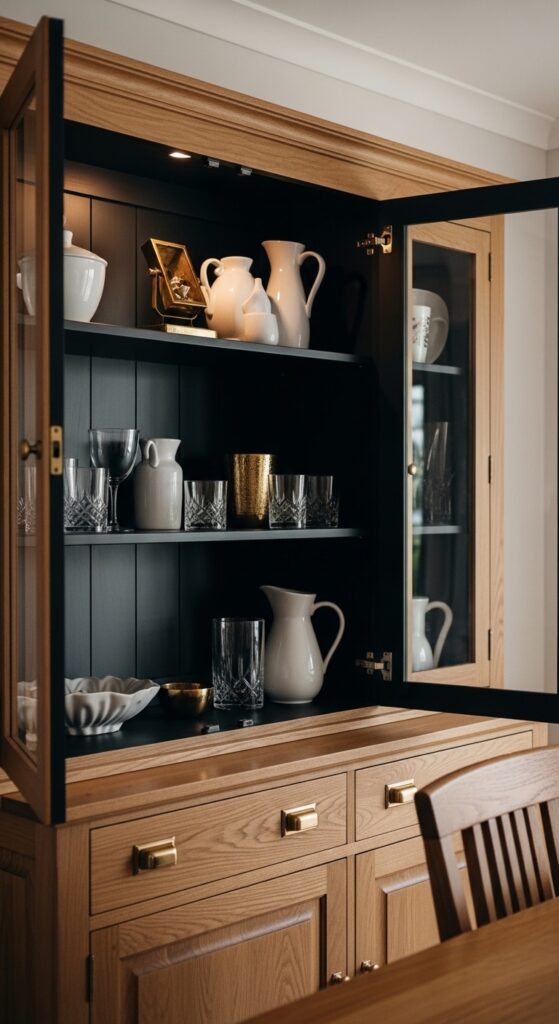
Painting the interior of a hutch — specifically the back panel and interior side walls — a deeply contrasting tone is one of the most high-impact, low-cost transformations available to anyone who finds their hutch display looking flat and forgettable. The exterior remains in its original finish; only the inside changes. The effect is immediate and dramatic.
Deep charcoal, navy, forest green, and black all work as interior colors for this technique. Against any of these dark backgrounds, white ceramics appear luminous, crystal develops sharp visual definition, and gold or brass objects take on a warmth that they simply don’t have when displayed against a pale interior.
The painting process is straightforward: remove all shelves and hardware from the interior, clean thoroughly, apply a primer if going from light to dark, and use two coats of a satin or eggshell furniture paint in your chosen tone. Satin holds up better to cleaning than matte in an enclosed space where objects are regularly moved in and out.
This approach works especially well with hutches that have glass-fronted upper cabinets — the glass acts as a frame for the dark interior, making the whole display read as a deliberate jewel-box effect rather than a painted accident.
One watch-out: if the hutch’s exterior is a warm honey oak, a cool-toned dark interior (blue-black or cool charcoal) can create a jarring material mismatch. Stay in the warm family — warm black, dark espresso, or deep warm navy — to keep interior and exterior in the same tonal conversation.
8. Seasonal Hutch Styling: Changing the Display With the Year
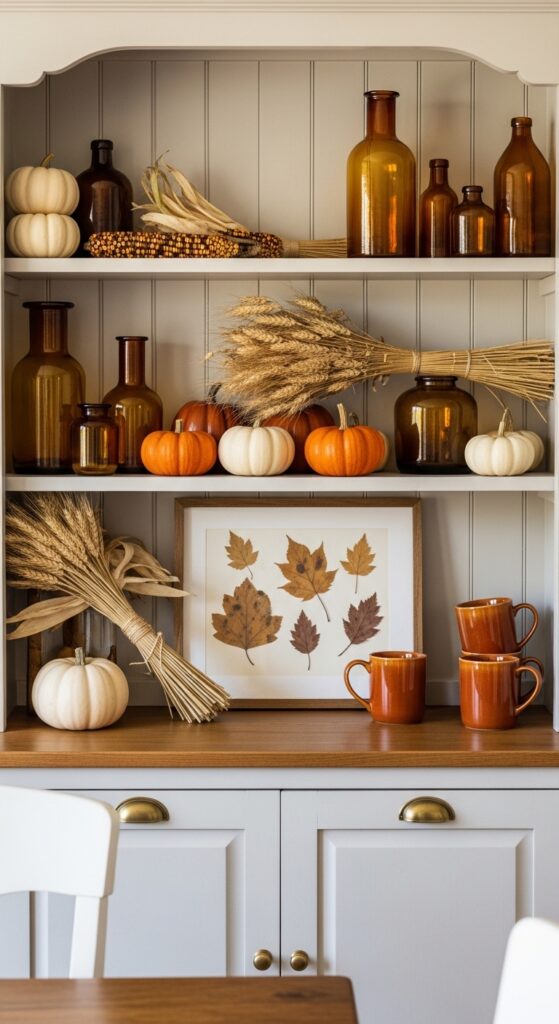
One of the most underused possibilities of a dining room hutch is its capacity to change — to reflect the season, the upcoming holiday, or simply the shift in light and mood that happens throughout the year. A hutch styled the same way in January and July is missing the point of having a display surface that’s visible every day.
Seasonal hutch styling doesn’t require buying new objects for every season. The approach is to maintain a core of permanent pieces — your everyday china, a few ceramic vessels, some crystal — and rotate a small number of seasonal elements around them. For autumn: dried botanicals, small pumpkins in cream and terracotta, amber glass. For winter holidays: taper candles, pine cones, simple ornamental objects in silver or gold. For spring: fresh flowers in bud vases, lighter textiles, pale green ceramics.
The practical key is storage. Designate the lower closed cabinets as seasonal storage — rotating objects in and out as they come off the shelves above. This keeps the seasonal inventory manageable and means you always know exactly where everything is.
For transitions, avoid going too theme-heavy. A hutch that looks overtly Halloween or Christmas-specific in its styling can feel more like a department store display than a home interior. The best seasonal hutch styling suggests the season without announcing it loudly — dried wheat for autumn is more elegant than plastic fall foliage.
One constraint: if you hate the maintenance this approach implies, a more permanent, neutral display is the better choice. Seasonal styling rewards people who enjoy the process of decorating; for everyone else, it’s just more work.
9. A Hutch as a Bar and Drinks Display Station
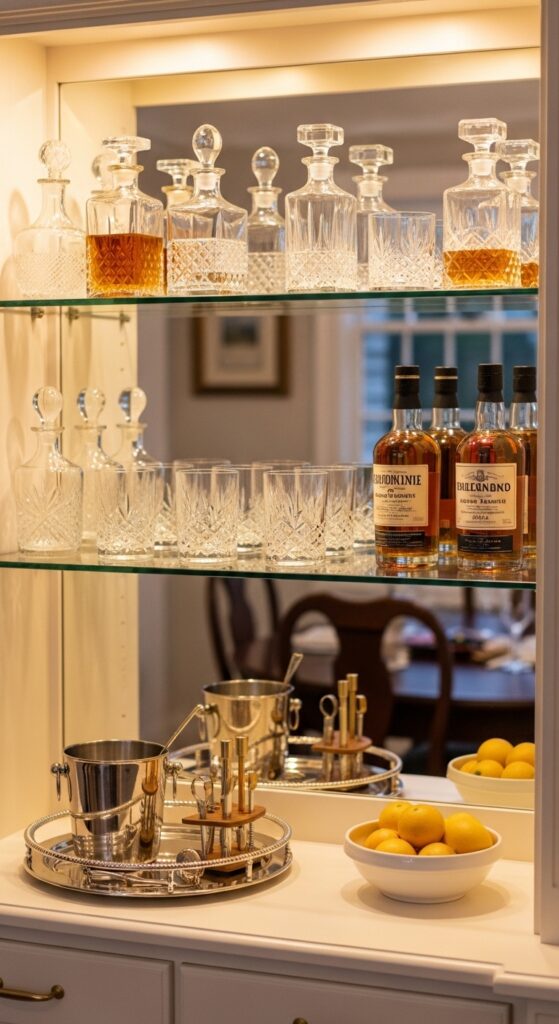
A hutch doesn’t have to be about dishes. In fact, some of the most compelling hutch repurposing happens when the piece is reimagined entirely as a drinks station — a bar setup that’s both fully functional and genuinely beautiful as a room feature.
The bar hutch works because the hutch’s natural architecture — glass-fronted upper display space with closed storage below — is perfectly suited to a drinks display. Crystal decanters and glassware in the upper section look spectacular behind glass and benefit from the enclosed display environment that protects them from dust. The lower cabinet holds everything else: bottles in bulk, cocktail equipment, extra glassware, linen cocktail napkins.
For the display itself, a curated edit is essential. Four crystal decanters of varying shapes and heights, filled with different spirits, are more beautiful than twenty bottles. Six matching crystal highball glasses and four coupes are a display; thirty mismatched glasses are a stockroom. Edit ruthlessly.
The surface of the lower cabinet becomes the working bar: a silver or brass tray corrals the active tools — jigger, strainer, bar spoon — and prevents the surface from looking like a cluttered counter. A small vase of fresh herbs (rosemary, thyme) or a bowl of lemons introduces color and the suggestion of fresh cocktails.
One watch-out: the glass fronts of the upper cabinet will show fingerprints at every gathering. Wipe down before and after entertaining rather than allowing prints to accumulate — a smudged display case undermines the whole effect.
10. Styling a Hutch With Art, Frames, and Small Mirrors
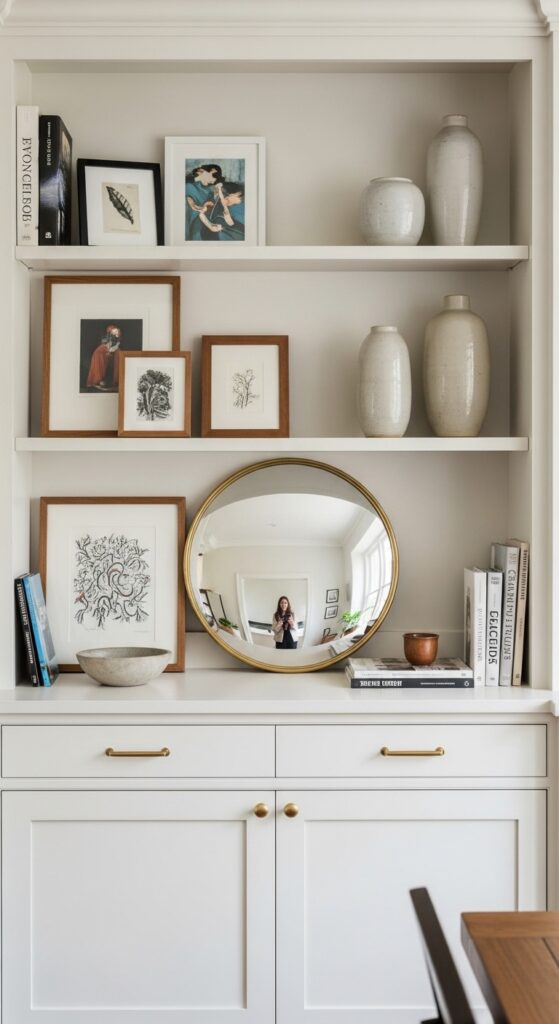
Most hutch styling defaults entirely to ceramics, dishes, and glassware — which makes perfect sense but leaves out an entire category of objects that can dramatically elevate the display. Framed art prints, small mirrors, and miniature paintings leaned casually against the hutch’s back panel introduce a gallery quality that ceramic arrangements alone rarely achieve.
The key word is “leaned.” Propping small framed pieces rather than hanging them gives the hutch display its casual, collected feeling — as if the art lives in the hutch between rotations to other walls rather than being permanently stationed there. A small botanical print in a thin brass frame, leaned against the back of a shelf with a ceramic vessel beside it, looks more considered than either object would on its own.
Small convex mirrors — the kind traditionally used as decorative objects rather than functional mirrors — are particularly good hutch companions. Their reflective surfaces catch the room’s light and bounce it around the shelf, adding depth and luminosity without taking up the visual space of a solid object.
For the arrangement, treat frames and mirrors as anchors that other objects cluster around. One framed print per shelf run, with ceramics and books composing around it, gives each shelf a clear focal point while maintaining the layered quality that makes hutch styling interesting.
One constraint: frames and art leaned on shelves can be knocked over easily when reaching for objects stored nearby. Reserve this approach for the shelves where you’re displaying rather than actively accessing things — and be thoughtful about what’s stored within arm’s reach of propped pieces.
11. The Minimalist Hutch: Less Really Is More
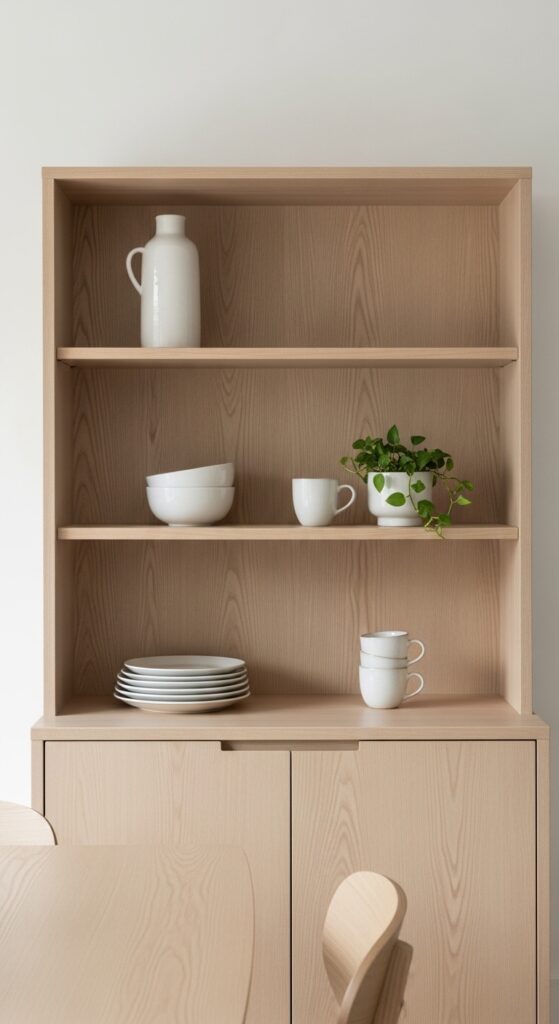
There is a version of hutch styling that is the opposite of everything else in this article — no layering, no mixing, no seasonal rotations — and it’s one of the most quietly powerful approaches available. The minimalist hutch, where each shelf holds only two or three objects with significant empty space around them, makes a different kind of statement: that everything on display was chosen specifically, and everything else was deliberately left out.
This approach requires the objects you do display to be genuinely beautiful on their own terms. A single tall ceramic vase needs to be a vase worth looking at. Three stacked plates need to be plates with a glaze or form that rewards attention. The minimalist hutch has no supporting cast — each object is the protagonist of its own shelf.
Negative space is the actual design element in a minimalist hutch arrangement. The empty shelf around each object makes that object feel more considered and more precious than it would surrounded by other pieces. This is the same principle that governs gallery display and museum curation.
The practical benefit, which shouldn’t be underestimated: a minimalist hutch is extremely easy to maintain. Dust settles on only a few surfaces, there’s nothing to reorganize, and the display stays consistent without active curation.
One constraint: a nearly empty hutch in a dining room that’s otherwise full and layered can look unfinished rather than intentional. The minimalist hutch works best as part of a broader design sensibility — if the rest of the room is also calm and spare, the hutch reads as designed. In a maximalist room, it reads as incomplete.
12. The Hutch as a Collected and Personalized Family Display
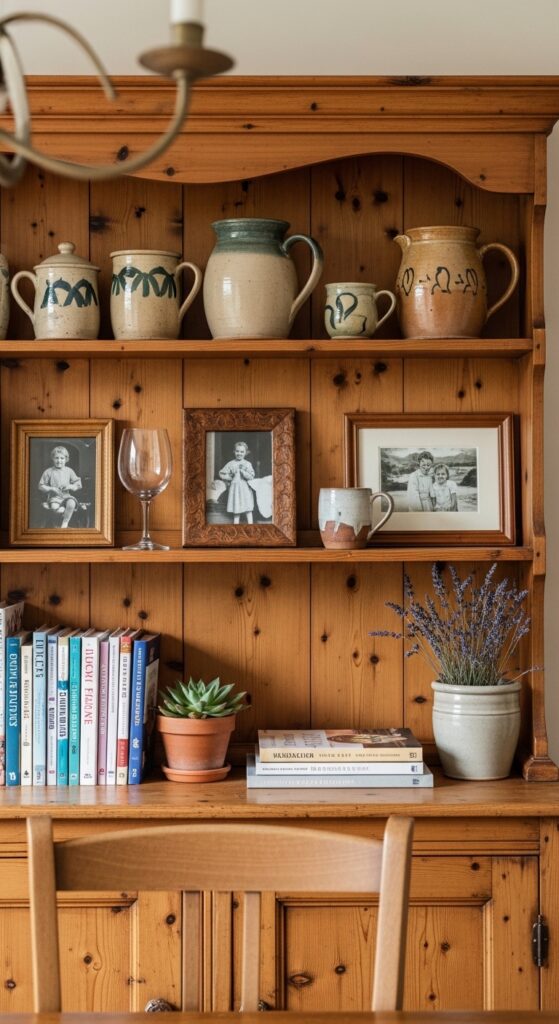
Every other idea in this article assumes you’re starting from scratch or working toward a specific aesthetic. This one acknowledges that the most meaningful hutch displays aren’t the most perfectly styled — they’re the ones that actually reflect the people who live in the house.
A hutch that holds a piece of pottery your daughter made in art class alongside a crystal decanter inherited from a grandparent, a cookbook with a broken spine because it’s actually used, and a few framed photographs of people you love — that hutch tells a story that no perfectly curated ceramic collection ever will. And in a dining room, where the whole point is gathering people around a table, that story matters.
The key to making a personally meaningful display look intentional rather than random is editing by quality rather than category. Not every family photo belongs on the hutch — choose one or two that are beautifully framed or have genuine visual appeal on their own terms. Not every craft project or inherited piece earns display space — choose the ones that have real character, and store the rest.
For the arrangement, personal pieces mix more easily when they share at least one common quality: a warm material palette, a similar scale, or a connecting tone. A child’s pottery bowl in terracotta alongside a handmade ceramic pitcher in a similar clay tone — suddenly they’re a collection.
One final thought: a hutch that evolves as your family does, gaining and losing objects as life changes, is a living piece of your home in a way that a perfectly styled static display never will be. Let it grow.
Your Hutch, Your Rules
Here’s what I hope you’re taking away from this article: the dining room hutch is one of the most flexible pieces of furniture you can own, and the only wrong way to style it is to not style it at all — to leave it as a default china cabinet that holds things out of obligation rather than intention.
Whether you paint it a jewel tone, light it from the inside, fill it with books and ceramics and family photographs, or convert it into a bar that makes your dinner parties more fun — every one of those choices is more interesting than the alternative of leaving it alone and hoping no one looks too closely.
The best thing about hutch styling, which this article has hopefully made clear, is that it’s entirely reversible. You can restyle a hutch in an afternoon. You can repaint it over a weekend. You can change the display with every season. It’s a piece of furniture that rewards the attention you give it, and it gives back in warmth, function, and character every single day it lives in your dining room. Start somewhere, and let the rest follow.