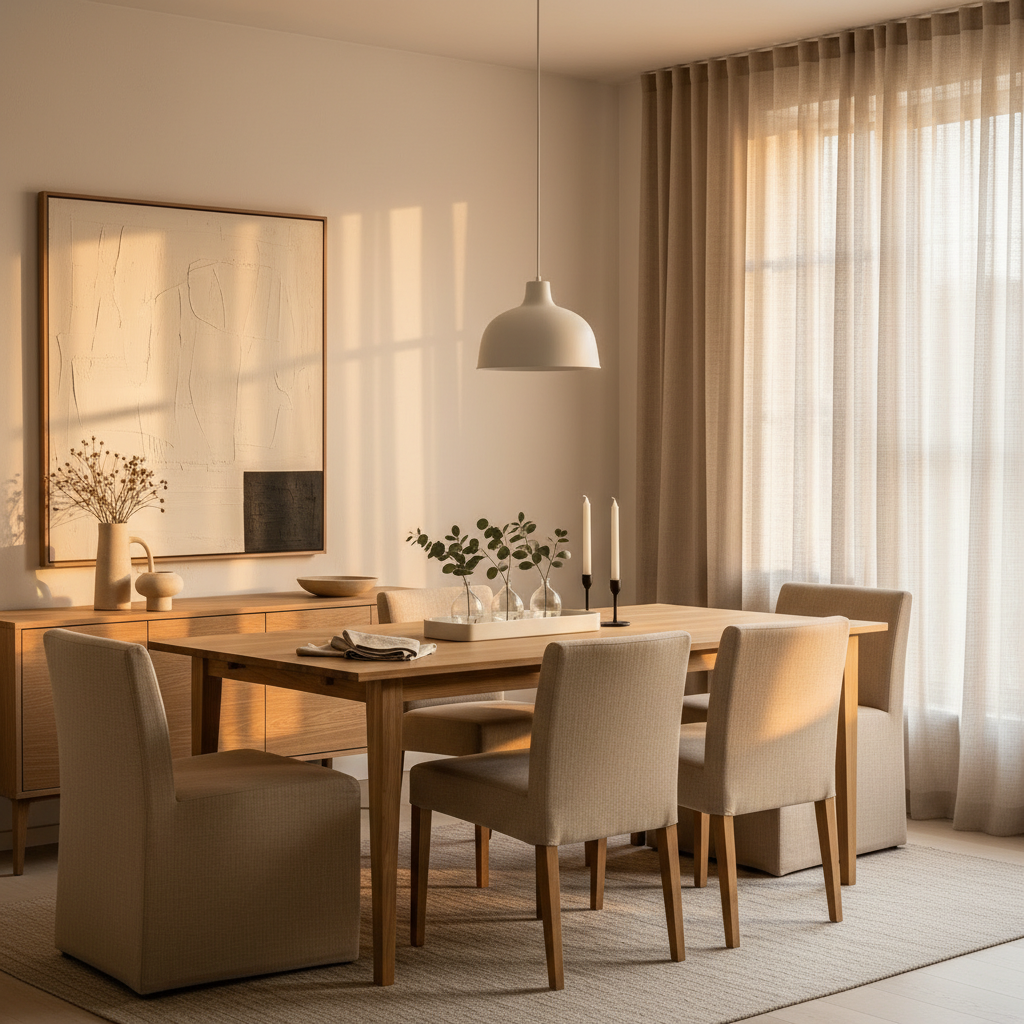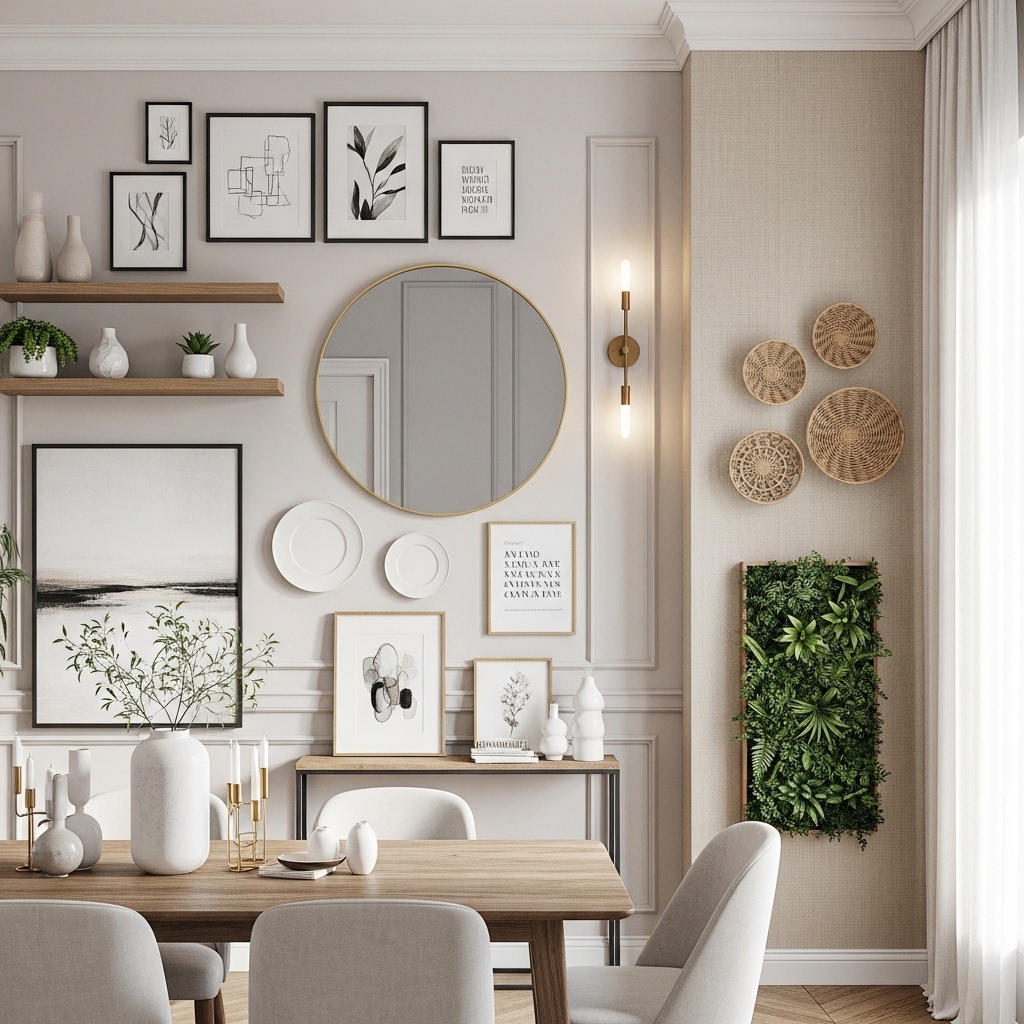
The dining room might be the most emotionally significant room in a house. It’s where the important conversations happen, where celebrations unfold, where ordinary Tuesday evenings become memorable with the right light and the right people around a table. And yet it’s often the room that gets the least attention — furnished quickly with whatever seemed practical and then left unchanged for a decade while every other room gets refreshed and reconsidered.
This article is for everyone who has sat in their dining room and felt that something was missing — not sure what, exactly, but aware that the room isn’t quite doing what a dining room should do. These twelve ideas span a wide range of styles, budgets, and spatial situations because dining rooms come in every size and live in every kind of home. What they share is a belief that the room where you gather to eat deserves the same level of care and intention as any other space in your life. Let’s get into it.
1. Let the Lighting Set the Entire Mood
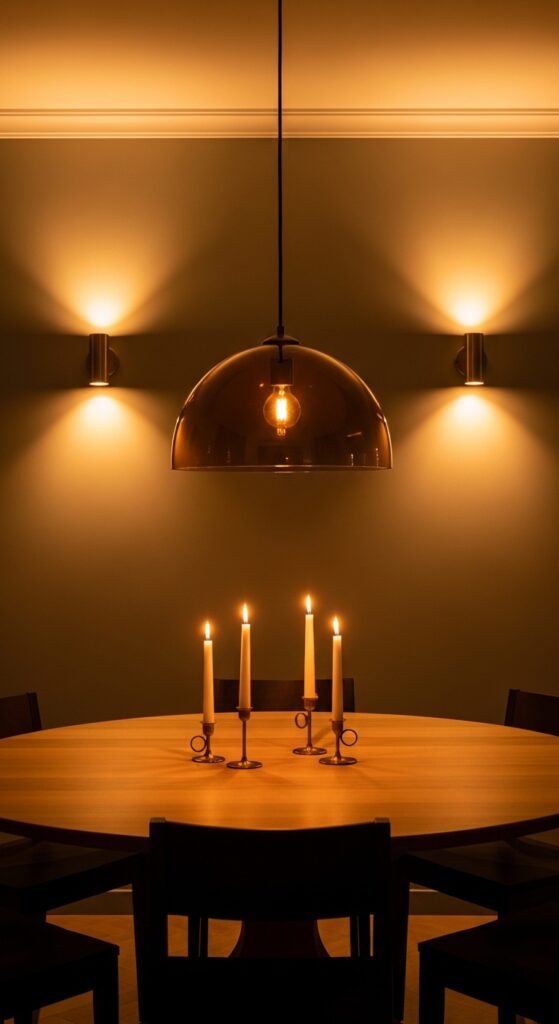
Most dining rooms are lit like they’re being audited. A single overhead fixture at full brightness illuminates everything equally and creates an atmosphere roughly as inviting as a dentist’s waiting room. The transformation available through lighting is dramatic, immediate, and doesn’t require touching a single piece of furniture.
The principle is simple: layer your light sources and keep everything on dimmers. A pendant over the table creates the primary dining zone. Wall sconces add depth and warmth from the sides. Candles on the table introduce the most intimate light source of all — genuinely flickering, genuinely warm, genuinely irreplaceable by any electrical alternative.
The pendant should hang 30 to 34 inches above the table surface. Lower than your instinct tells you. This creates a pool of light that encloses the dining zone rather than washing the whole room.
For bulb temperature, 2700K is the maximum for a warm dining room. 2200K is even better — it’s essentially the color of candlelight.
One constraint: if your dining room also functions as a daytime homework space or workspace, you need task lighting capability. Install dimmer switches with a full brightness option rather than permanently low-wattage fixtures, so the room can serve both functions.
Good lighting in a dining room is the single highest-return investment you can make, per dollar and per hour of effort.
2. Paint the Room in a Color You’d Never Normally Choose
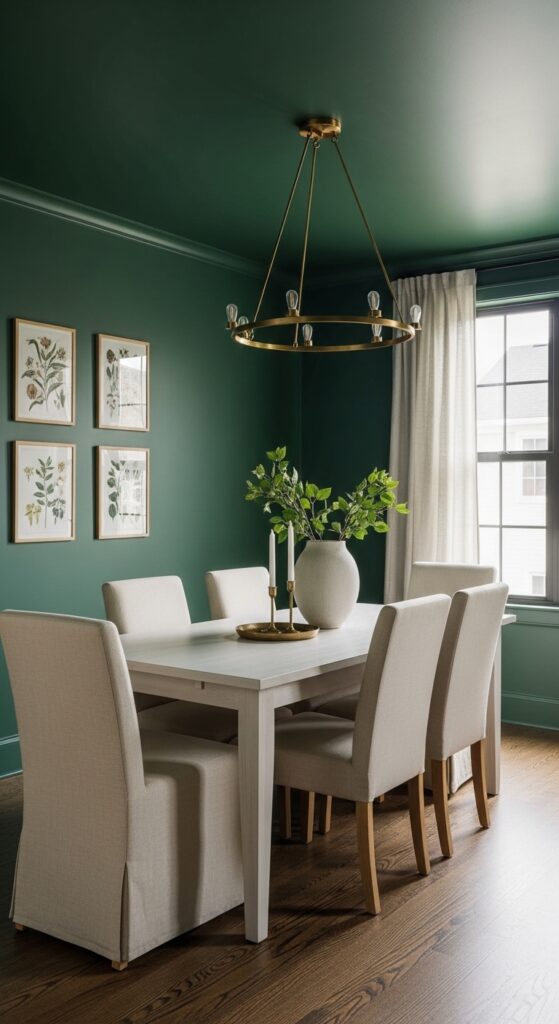
The dining room is statistically the room most people are willing to paint a bold color — and the room where that decision most consistently pays off. You spend less time in it than the living room, you’re always in good company when you’re in it, and the right saturated wall color at dinner, under warm lighting, is one of the most reliably beautiful things a room can do.
Deep forest green is the current standard-bearer, and it earns the reputation. It works with almost every wood tone, every metal finish, and every textile palette. Matte finish only — no eggshell, no satin. The light-absorbing quality of matte green paint creates a depth that reads as genuinely sophisticated.
Other colors worth committing to: oxblood red (the true burgundy-brown version, not tomato red), dusty terracotta, deep inky navy, and matte charcoal with warm undertones.
The rule for a bold wall color: keep everything else calmer. Pale furniture upholstery, simple curtains, minimal pattern. The wall is the statement; everything else is the context.
One watch-out: if your dining room flows directly into a very bright, white-walled hallway or living room, a deep dining room color can create a jarring contrast at the threshold. Consider painting the connecting wall or door surround in a transitional tone to ease the shift between spaces.
3. Invest in the Dining Table First, Furniture Second
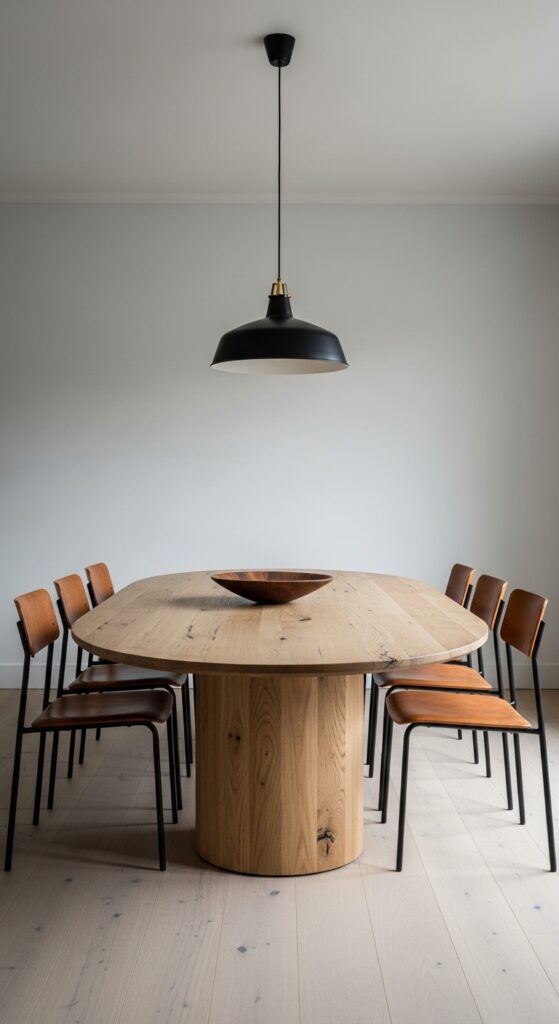
Here’s a piece of practical advice that most dining room decorating articles never make explicit: the table is the room. Everything else — the chairs, the rug, the pendant, the wall color — exists in relation to the table. Get the table right and the rest follows. Get it wrong and no amount of beautiful surrounding decor will compensate.
What “right” means varies by room. In a formal dining room, a long rectangular table with traditional legs and a rich wood finish. In a smaller, more casual space, a round or oval pedestal that allows flexible seating from every angle. In a contemporary room, a table with a sculptural base and a natural material surface that reads as both functional and artistic.
Budget accordingly. A beautiful table that will last twenty years is worth prioritizing over a budget table surrounded by expensive chairs. The furniture pecking order in a dining room is: table first, chairs second, lighting third, everything else after.
One practical constraint: measure your room before falling in love with any table. The rule is 36 inches of clearance on all sides for comfortable chair movement. Many people buy tables that technically fit the room but leave insufficient circulation space for actual use.
The table you choose now is the one your family will remember in twenty years. Make it count.
4. Build a Vignette on the Dining Sideboard
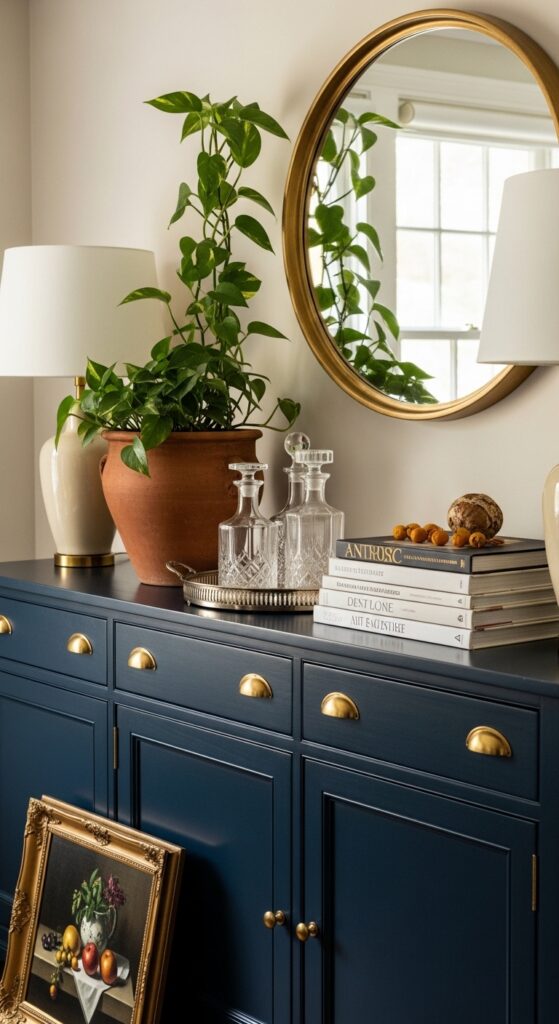
A sideboard without a vignette is furniture. A sideboard with a well-composed vignette is design. The distinction matters because the sideboard surface in a dining room is one of the most visible display surfaces in the home — it’s at eye level, it’s seen from the table during every meal, and it has the proportions (wide, relatively low) that reward considered styling rather than accidental accumulation.
The vignette formula that works reliably: one tall element, one medium element, one low element, and one living element. A tall ceramic lamp, a medium-height decanter on a tray, a stack of books creating a low platform, and a trailing plant. Vary the materials — glass, ceramic, metal, wood, natural fiber — and you have something that rewards looking at from multiple distances.
The object on top of a book stack is a designer trick worth knowing. A few horizontally stacked hardbacks create a miniature platform that elevates a smaller object to display height without any additional furniture. It also makes the stack itself a textural and literary element of the composition.
Leave breathing room. Roughly 40 percent of the sideboard surface should remain visually empty. The objects need negative space around them to read as chosen rather than accumulated.
One watch-out: resist the temptation to use the sideboard as a catch-all between dinner parties. Keys, mail, and charging cables will undermine even the most carefully styled vignette instantly. Assign those objects a different home.
5. Mix Chair Styles Around a Single Table
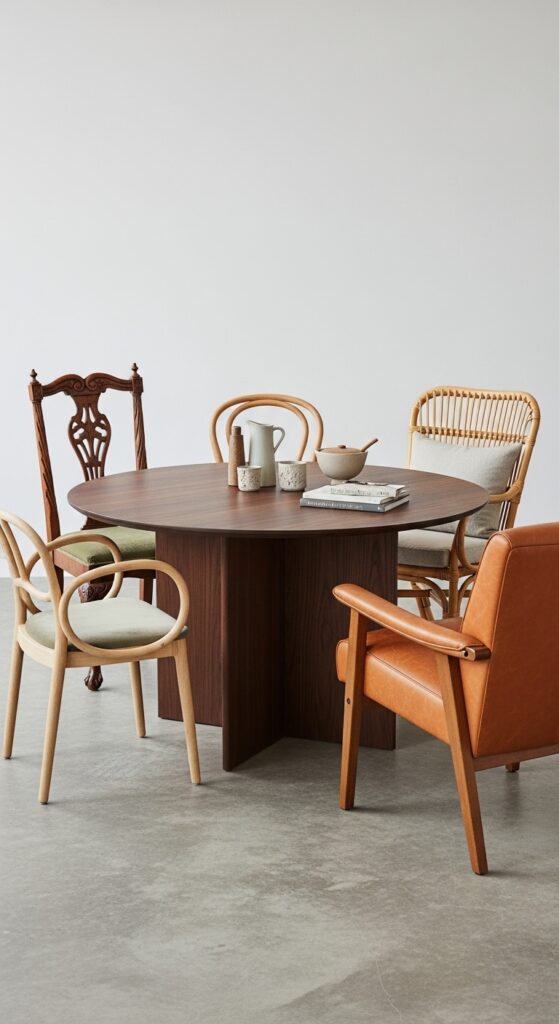
Matching dining chairs are a convention, not a rule — and breaking it with intention produces dining rooms that feel genuinely personal rather than assembled from a catalogue. The trick, as always, is the difference between deliberate eclecticism and chaotic improvisation.
The organizing principle for mixed dining chairs is always material temperature. All warm tones (honey oak, cognac leather, warm rattan, dusty velvet) belong together even when the chair forms are completely different. All cool tones (grey upholstery, pale ash, chrome) belong together. Mixing warm and cool within a single table setting is where the arrangement starts to look accidental.
The practical approach: anchor with two or three of one chair that you genuinely love, then add one or two accent chairs in complementary materials. An armchair at the head of the table is one of the easiest mixed-chair moves — it reads as deliberate and generous rather than improvised.
For renter-friendly dining rooms where buying multiple chair styles feels risky, start with four matching chairs and replace them one by one as better pieces present themselves. The room improves with each substitution.
One constraint: mixed chairs with significantly different seat heights will make the table feel unbalanced. When combining styles, check that seat heights all fall within the 17- to 19-inch range. Bring a tape measure shopping.
6. Bring Plants Into the Dining Room Properly
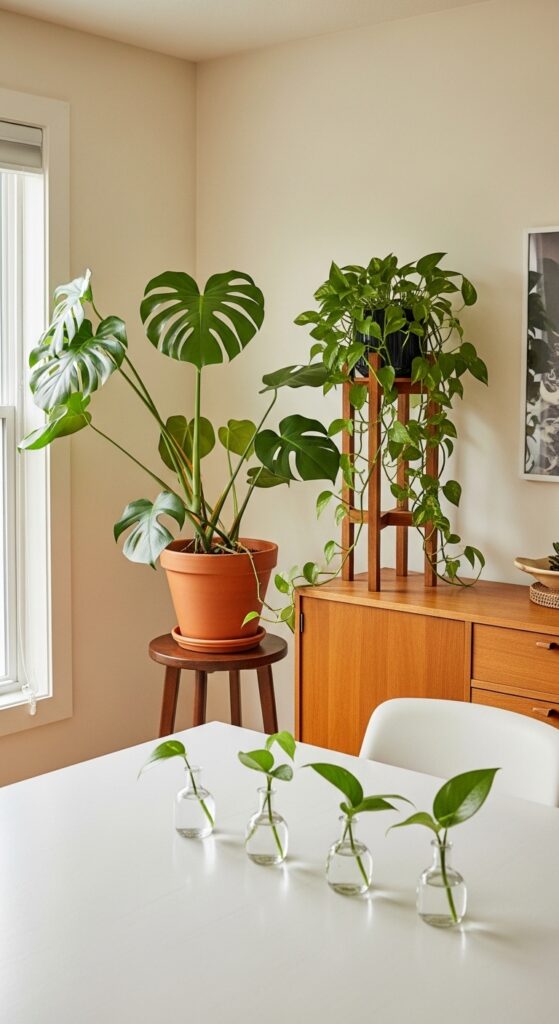
Plants in a dining room are almost universally good — they introduce color, softness, and organic movement that no furniture or accessory can replicate — but most people place them thoughtlessly: one small succulent on the table and nothing else, or a single large plant crammed into the corner with no relationship to the rest of the room.
The better approach is to think in scales and positions. One large plant — a monstera, fiddle leaf fig, or large pothos in a generous pot — at floor level in a corner or beside a sideboard provides the vertical element. One medium plant on a stand or sideboard shelf provides the middle register. One or two very small plants or single stems in bud vases on the table provide the intimate, close-range element.
Three scales, three positions, one coherent green thread running through the room from corner to table.
Pot selection is as important as plant selection. Terracotta works with virtually every dining room palette and has a warmth and material honesty that glazed ceramic or plastic can’t match. Matte black or dark ceramic pots have a more contemporary quality. Woven baskets as pot covers add texture and warmth.
One constraint: the dining table is not the right home for large plants. Anything that interferes with sight lines across the table — above 10 to 12 inches in height — disrupts conversation. Keep table plants small and let the floor plants do the large-scale work.
7. Use Curtains to Completely Transform the Room
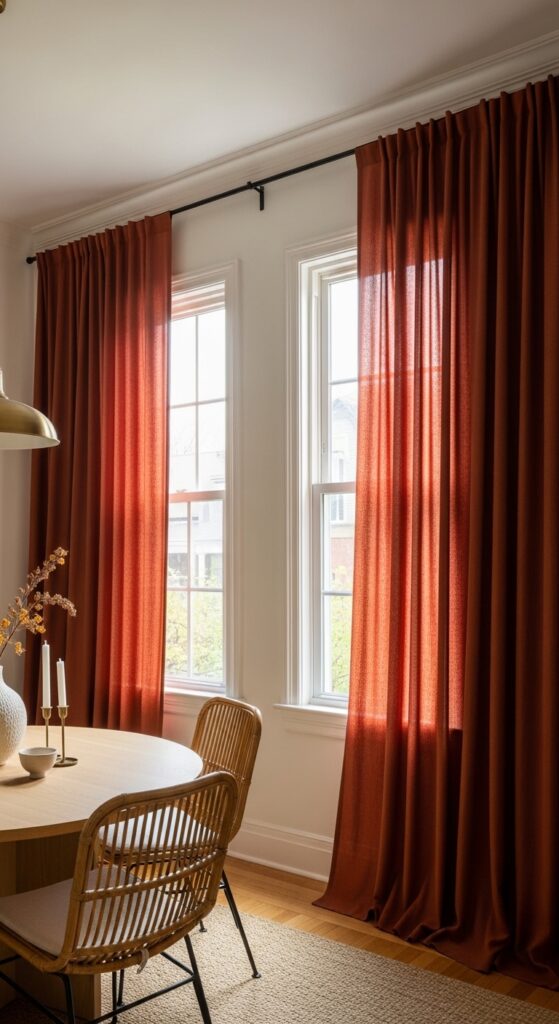
Curtains are one of the most transformative interventions available in a dining room — and one of the most consistently underexecuted. Most people hang curtains that are too short, too narrow, and on rods mounted too low, and then wonder why the room doesn’t feel finished. The curtain is doing the work of a window treatment; it should be doing the work of a design decision.
Three rules that together change everything: mount the rod within three inches of the ceiling, let the curtain extend at least 12 inches beyond the window on each side, and let the hem pool by one to three inches on the floor. These three adjustments — regardless of the fabric — make windows look significantly larger, ceilings feel significantly higher, and the room feel significantly more considered.
Fabric choice: linen in a medium weight is the most versatile dining room curtain fabric. It softens in daylight, holds its drape, and wrinkles in a way that reads as casual and lived-in rather than unkempt. Velvet is the choice for a more formal or dramatic effect. Sheers work beautifully as a base layer if you want to diffuse strong light without blocking it entirely.
For color, within two tones of the wall color creates a harmonious, enveloping effect. A contrasting curtain color is a bolder statement that can work beautifully when the color is deeply considered.
One constraint: linen curtains at pool length will collect dust at the hem in a dining room near a kitchen. Build in a semi-annual wash into your maintenance routine.
8. Create a Gallery Moment Above the Dining Table
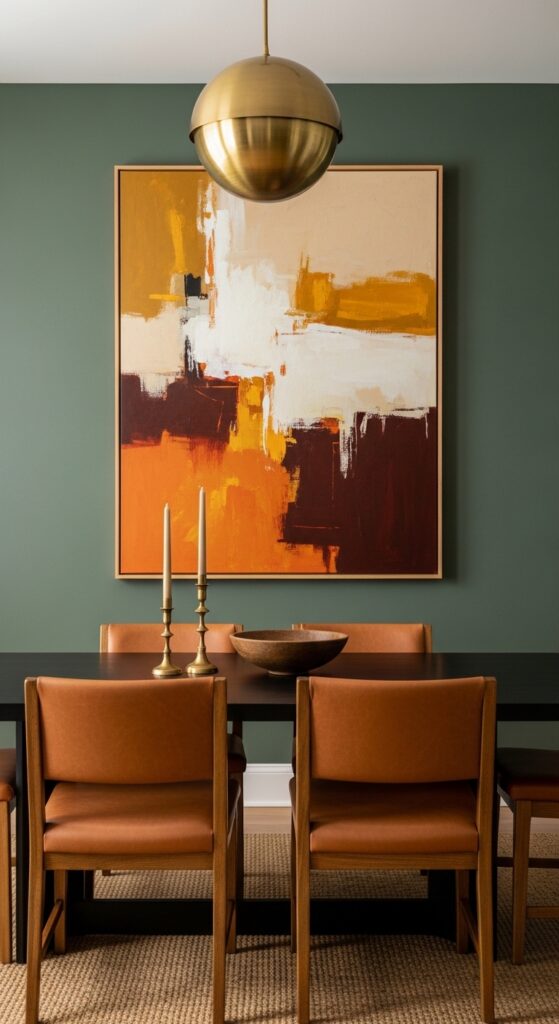
Most dining rooms have a wall behind or beside the dining table that functions as the room’s primary visual plane — the surface guests look at most during a meal. Treating that wall as a gallery moment rather than a backdrop fundamentally changes what the room offers to the people in it.
A single large piece of art hung above a dining table — centered on the wall, properly scaled, and connected to the room’s color palette — is the simplest and most impactful version of this idea. The piece should be at least 60 to 70 percent of the table’s width in horizontal dimension, which usually means going larger than instinct suggests.
Connection to the room’s palette is what distinguishes art that looks collected from art that looks purchased. A painting with warm amber and ochre tones in a dining room with cognac leather chairs and brass lighting creates a conversation between the objects. The same painting in a grey and chrome room looks imported from a different house.
For renters who can’t make large holes in walls, picture rail hanging systems and adhesive strip hardware for gallery-weight frames have both improved substantially. Large-format prints in lightweight frames are genuinely achievable in rental spaces.
One watch-out: art hung too high above a dining table disappears into the ceiling. Center the piece at approximately 57 to 60 inches from the floor — which is standard gallery hang height — not higher, even if the table and chairs create a temptation to go above them.
9. Dress the Table for Daily Life, Not Just Guests
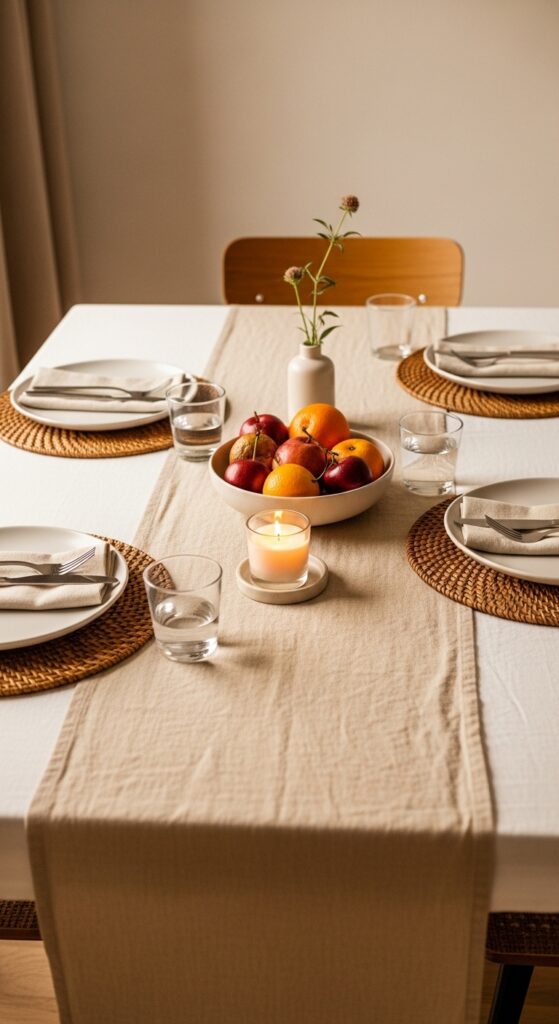
One of the biggest missed opportunities in dining room decor is treating the table as something to set up for company and clear down immediately after — leaving it bare and purposeless for the 90 percent of the time when guests aren’t present. A well-dressed dining table for daily life is one of the simplest and most effective ways to make the whole room feel considered.
The daily table set doesn’t need to be elaborate. A linen runner centered on the table, placemats at each usual seat position, a low centerpiece of two or three elements — a small plant, a candle, a ceramic object — and the table feels set and ready rather than abandoned.
The practical rule for centerpieces at a functional dining table: keep everything below 10 inches so it doesn’t interfere with conversation or sight lines. A low ceramic bowl, a short candle grouping, or a wide shallow vessel with a few stems works far better than a tall vase that divides the table.
Placemats do more than protect the surface — they create individual place positions that signal the table is a prepared space even when no one is sitting at it. Woven rattan, linen, or slate all have the right quality for daily use in a dining room that takes itself seriously.
One watch-out: elaborate daily table settings that require complete clearing for actual meals will be abandoned within a week. The daily set should take two minutes to move aside and two minutes to restore. Keep it simple enough that you’ll actually maintain it.
10. Embrace Texture Over Color as the Primary Design Tool
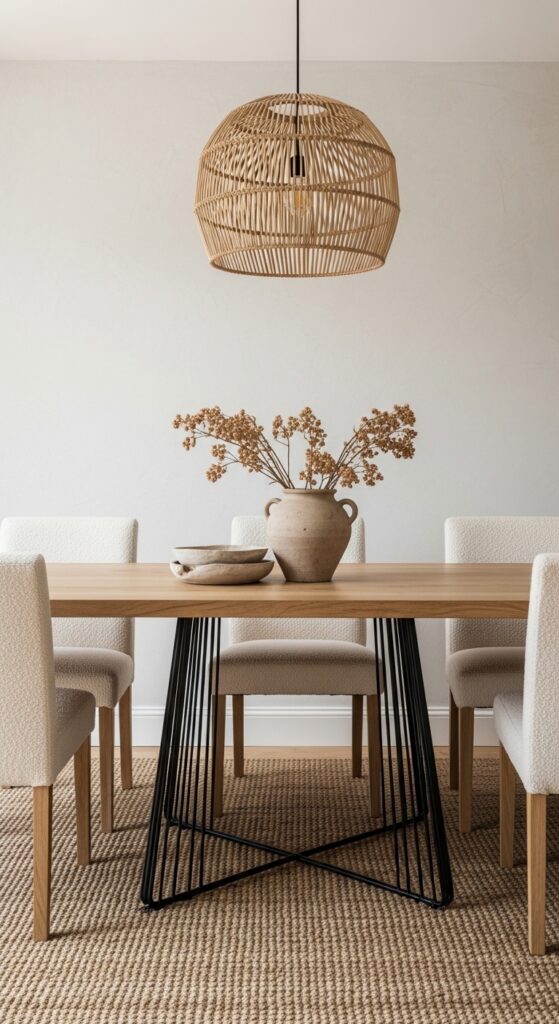
If committing to a bold color feels like too much, texture is the alternative that delivers equal visual richness without any chromatic risk. A dining room that works entirely in warm neutrals — cream, white, oatmeal, natural wood — but varies the texture aggressively at every surface reads as more interesting and more considered than a colorful room with flat, undifferentiated surfaces.
The material vocabulary of a texture-first dining room: rough matte plaster walls versus smooth ceramic vessels, wire-brushed oak table versus boucle upholstered chairs, woven jute rug versus polished brass pendant, raw clay vase versus glass candleholder. Every surface contrasts with the one next to it in tactile quality, while all remaining within the same tonal family.
This approach is particularly effective in rooms with good natural light, which reveals texture more dramatically than artificial light. A rough plaster wall in afternoon sun shows depth and shadow that painted smooth drywall never achieves. A wire-brushed wood table in daylight shows its grain in a way that only reveals itself with raking light.
For rooms that face north and receive limited direct light, supplement with warm-toned artificial lighting at lower heights — the raking angle of a table lamp or sideboard lamp reveals surface texture as effectively as window light.
One constraint: an entirely neutral, texture-first dining room can read as cold or unfinished without one warm accent to anchor it. A single terracotta pot, a rust-toned cushion, or a warm wood tone that’s slightly deeper than the others gives the eye a point of arrival without disrupting the tonal restraint.
11. Create an Accent Wall Behind the Sideboard
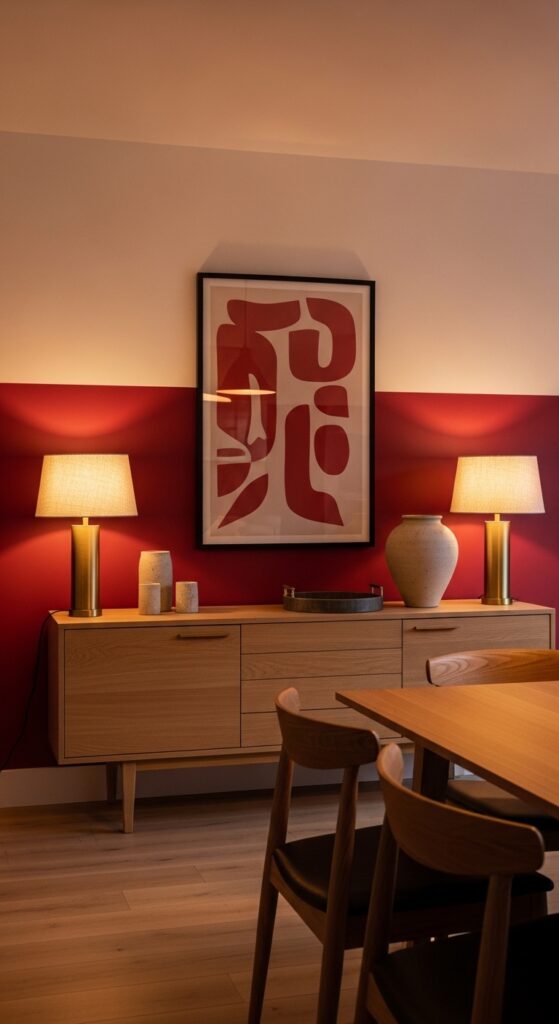
The accent wall is a concept that’s been somewhat derided in contemporary design discourse — often associated with a single arbitrarily painted wall that looks more like an unfinished project than a decision. But in a dining room, an accent wall behind the sideboard is genuinely one of the most effective ways to create a focal point, and when executed properly, it reads as fully resolved rather than half-committed.
The key is that the accent wall must have furniture in front of it that anchors it to the room. A deep color on a bare wall looks like a painting mistake. The same color behind a sideboard with a styled vignette, lamps, and artwork above it looks like a designed moment.
The practical execution: paint the wall behind the sideboard only — from corner to corner, baseboard to crown moulding. Paint the adjacent walls, ceiling, and trim in the lightest tone from your chosen palette. The contrast should be decided and intentional, not tentative.
For color selection on the accent wall, go at least two to three shades deeper than your instinct in the paint store. Colors lighten significantly on a large surface and under your specific room’s lighting. Oxblood, deep sage, dark navy, and forest green are all colors that consistently perform better on a dining room accent wall than they look on a paint chip.
One constraint: if you have art or a mirror you want to hang above the sideboard, ensure the accent wall color creates sufficient contrast with the frame. A dark painting in a dark frame on a very dark wall will disappear regardless of how beautiful each element is individually.
12. Make the Dining Room Feel Like a Room, Not a Passageway
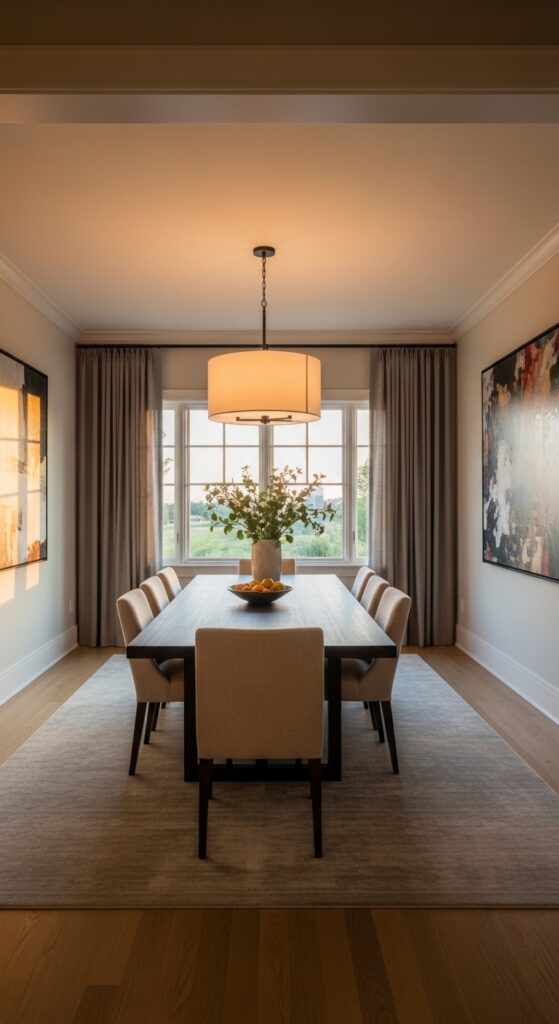
This is the meta-idea that underlies every other suggestion in this article: a dining room has to feel like a destination, not a corridor between other rooms. When a dining room reads as a pass-through, people don’t linger in it. The table gets used for folding laundry. The space never quite becomes what it should be.
Enclosure is the quality that makes a room feel like a room. You create it through a combination of decisions: the table centered in the space with adequate clearance on all sides (not pushed to one wall), a rug that defines the dining footprint, a pendant that claims the space from above, curtains or art that anchor the walls. Together, these elements create what designers call “completion” — the sense that every surface of the room has been considered and resolved.
Traffic flow matters significantly here. If the primary route between the kitchen and the living room runs through the dining zone, the dining table will always feel like furniture placed in a corridor. Where possible, route traffic around the dining zone rather than through it — even a small adjustment to furniture layout can shift whether the table reads as the room’s center or as an obstacle in a path.
One constraint that’s worth sitting with: some floor plans make genuine dining room enclosure difficult without structural changes. In those cases, the rug and the lighting do the most work — a defined rug footprint and a low-hanging pendant create psychological enclosure even when physical walls are absent.
The dining room is worth fighting for. The rooms where we gather to eat are the rooms where life actually happens — and they deserve the same level of care, intention, and beauty as any other space in the home. These twelve ideas are a starting point. The room you end up with should be entirely, specifically yours.
Every Dining Room Has a Better Version of Itself
If there’s one thing I hope you’re taking away from this article, it’s that dining room transformation doesn’t require a renovation, a large budget, or starting from scratch. The most impactful changes — getting the lighting right, painting with confidence, building a proper sideboard vignette, dressing the table for daily life — are within reach of almost any home and any budget.
The dining room is also the space that rewards small improvements most immediately. Lower the pendant by six inches and the whole room changes at dinner. Add a pair of sideboard lamps and you have atmosphere you didn’t have before. Swap your curtain rod to just below the ceiling line and your windows suddenly look twice the size.
Each time you visit this site, our goal is that you leave having learned something specific — not a vague mood board of aspirations, but a practical, applicable idea that makes your home better tonight. That’s what good decor writing should do. Come back whenever your room needs its next chapter.