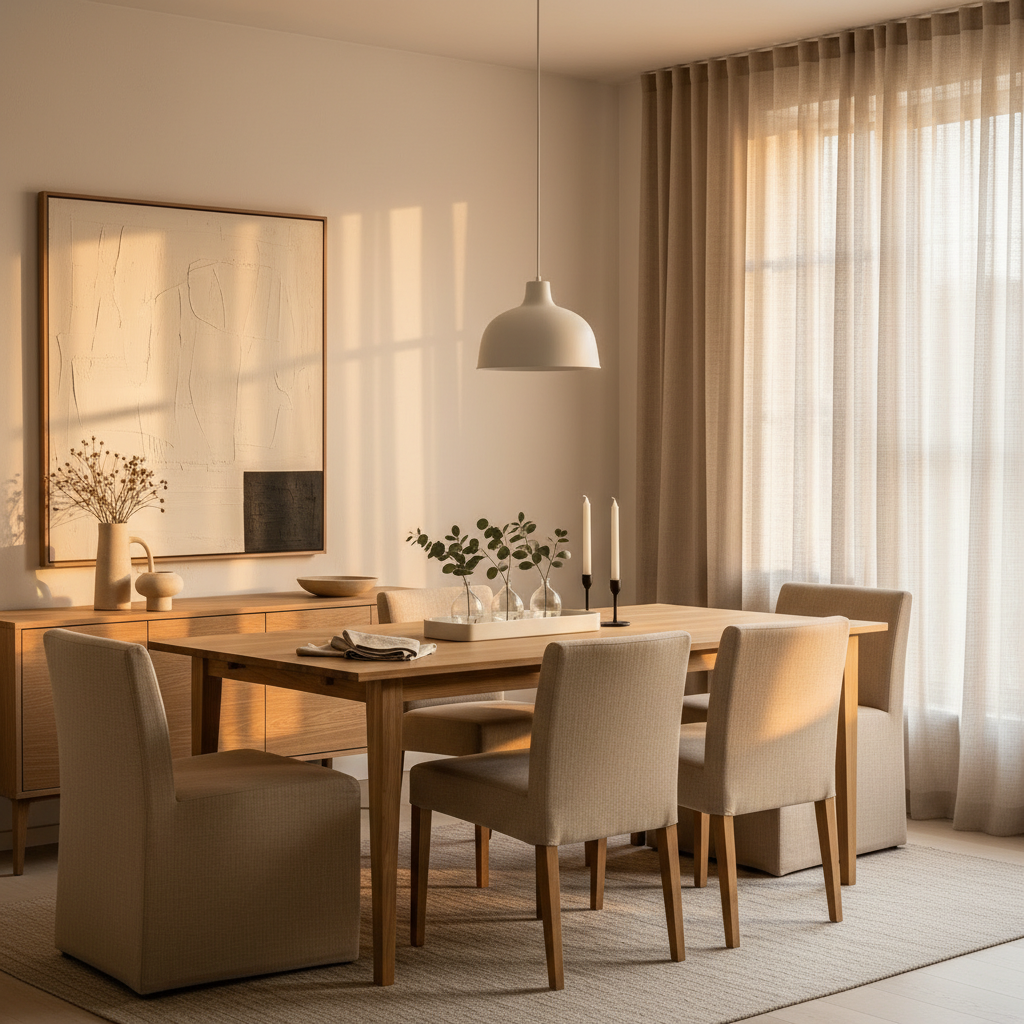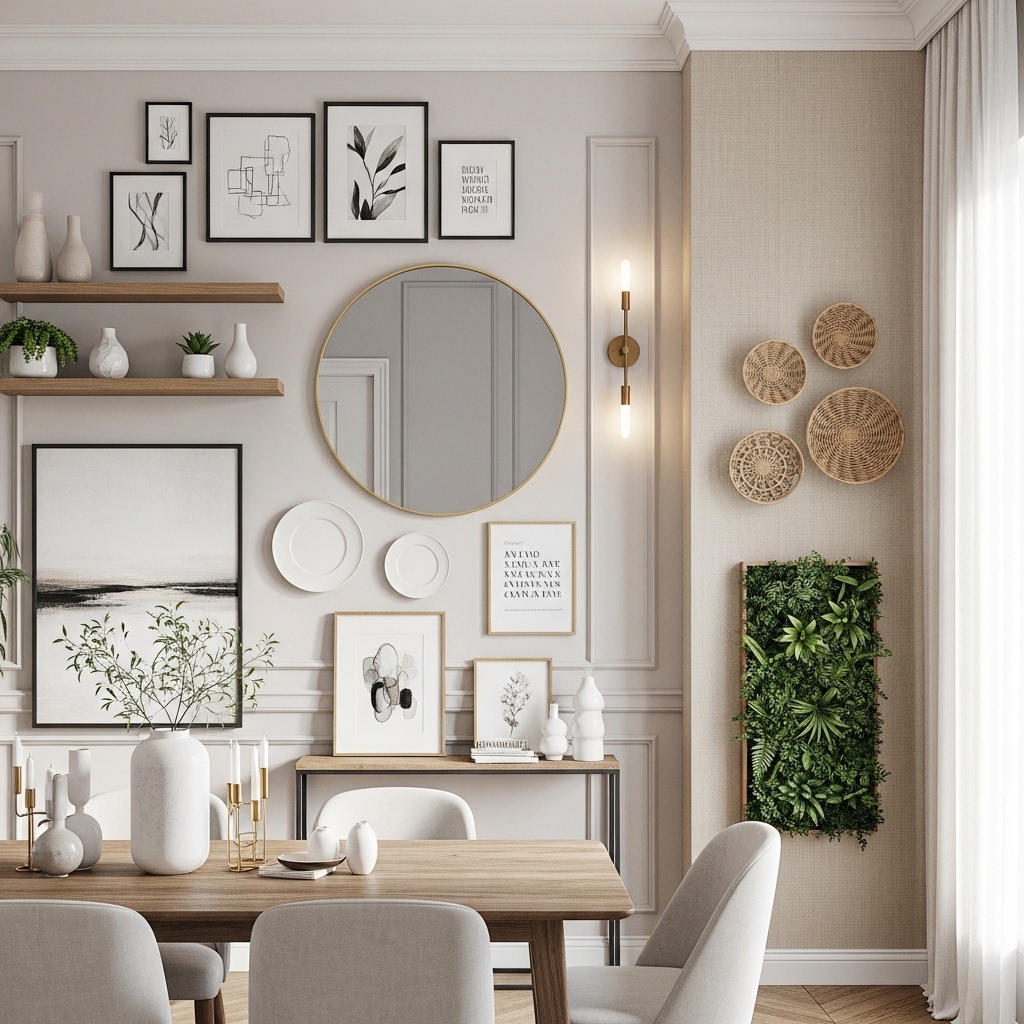
Dining rooms are funny: they’re either the heart of the house or the room you walk past on the way to the kitchen. But even if you don’t host full dinner parties every weekend, you still deserve a space that feels considered—somewhere you want to linger over tea, do a puzzle, or actually sit down for a weekday meal without the TV blaring in the background. The good news is you don’t need a renovation to make it feel new. The fastest refresh usually comes from a handful of high-impact swaps: lighting, textiles, a stronger wall moment, and a few “grown-up” styling choices that make the room feel intentional instead of accidental. Below are 12 ideas I genuinely lean on as a decorator—practical, slightly opinionated, and flexible for different budgets, room sizes, and renter realities.
1. Make the Table the Anchor (Not Just a Surface)
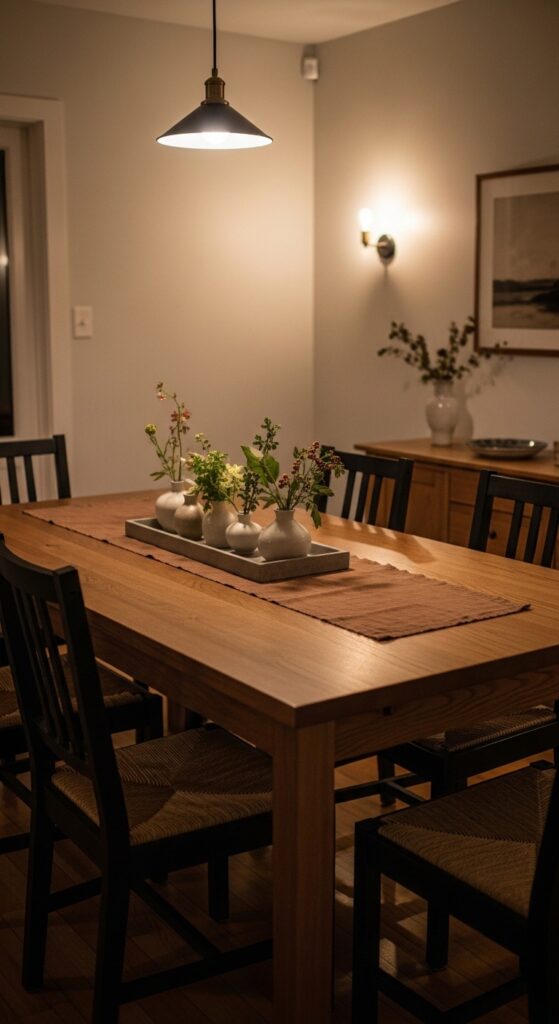
Most dining rooms look “fine” until you realize the table feels like it’s floating. A refresh starts by treating it like the anchor—visually and physically.
- Center it properly: Aim for similar clearance on all sides. If one side is tight, commit—push the table toward the wall and style it like a banquette moment instead of pretending it’s symmetrical.
- Ground it with a runner or low centerpiece: A linen runner (not shiny satin—please) adds softness and makes the table feel finished even on random Tuesdays.
- Edit the tabletop: Keep the centerpiece low so you can see people’s faces. Think stone bowl, small ceramics, taper candles—nothing tall and fussy.
Watch out: Overstyling can feel precious fast. If you eat here daily, leave breathing room.
A dining table should read “ready,” not “museum display.”
2. Swap the Overhead Light for Something With Presence
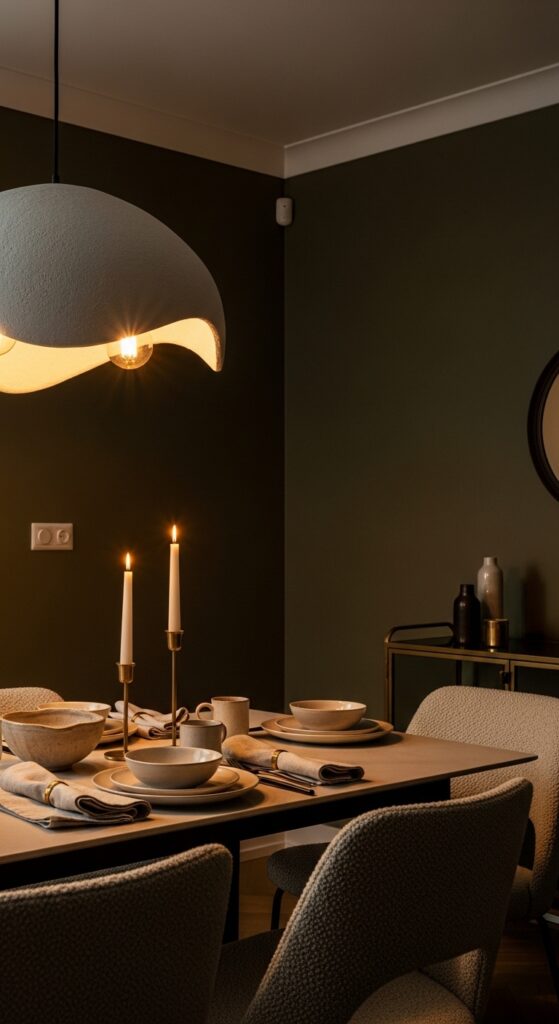
Lighting is the quickest way to make a dining room feel intentional. And yes, the builder-grade “boob light” has to go if you want the room to look like anyone tried.
- Go a little bigger than you think: Dining rooms can handle scale. A too-small fixture looks apologetic.
- Hang it lower: Rough rule—about 30–36 inches above the tabletop (adjust for ceiling height). Lower light feels intimate; high light feels like a waiting room.
- Put it on a dimmer: Non-negotiable. Your food, your faces, your whole mood will look better.
Watch out: Clear glass shades can glare if the bulbs are exposed. Choose soft, frosted, or shaded designs for comfort.
Good lighting turns “a room” into “a scene.”
3. Paint One Thing a Real Color (Walls, Ceiling, or Trim)
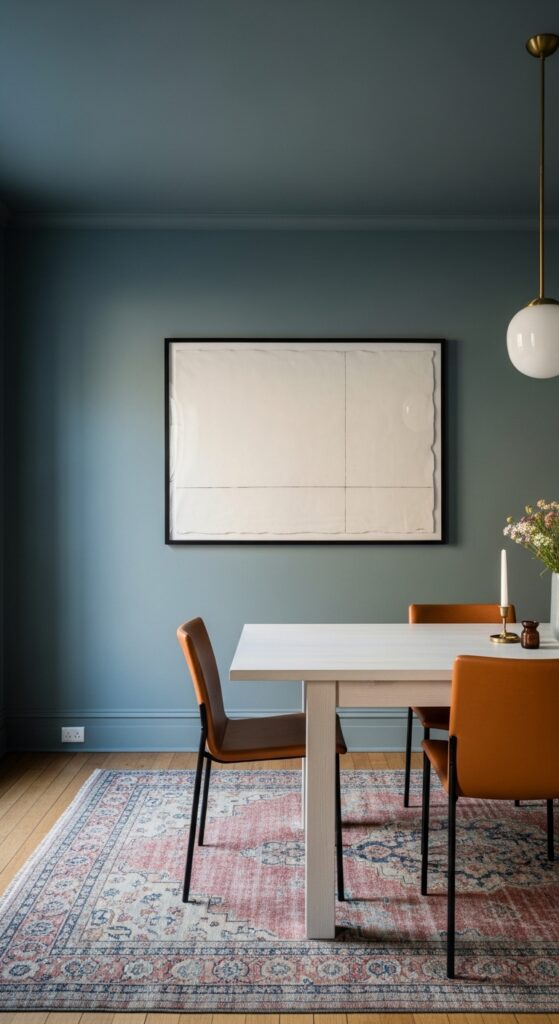
If your dining room feels bland, it probably is. The fix is often one brave decision: paint.
- Choose a “quietly saturated” shade: Think dusty olive, inky blue, warm clay, mushroom. These feel rich without screaming.
- Consider painting the ceiling: It’s surprisingly chic and hides awkward angles. Especially good if the room is boxy.
- Trim as contrast: If you love crispness, keep trim lighter. If you want mood, paint trim the same color for a seamless look.
Watch out: North-facing rooms can make cool colors feel chilly. Warm them with brass, oak, and creamy textiles.
Paint is the cheapest luxury upgrade you can buy.
4. Add a Rug That’s Big Enough to Be Serious
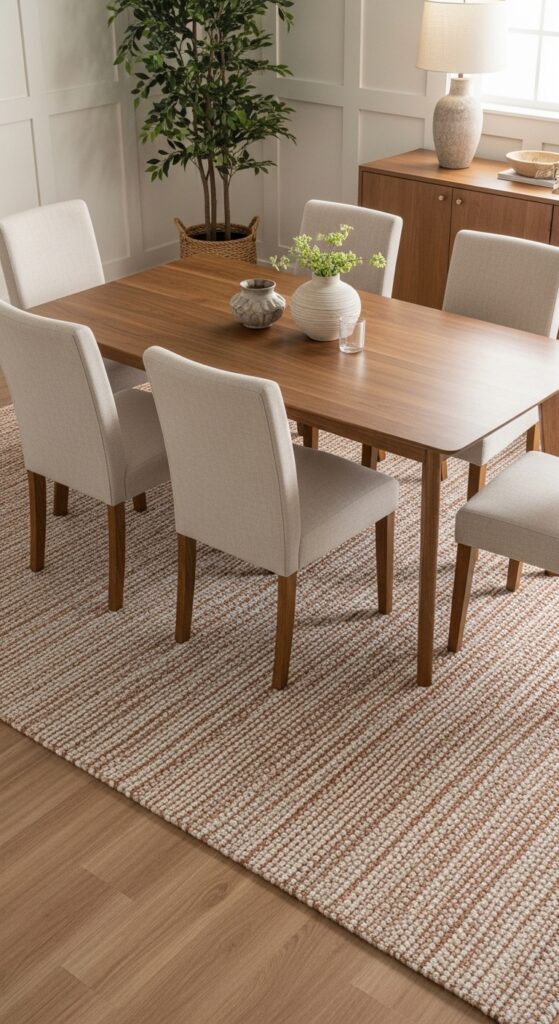
A rug in a dining room is controversial only if you pick the wrong one. The right rug makes the room feel finished and absorbs that echoey clatter.
- Size rule: Chairs should stay on the rug when pulled out. That usually means at least 24 inches of rug beyond the table on all sides.
- Go low-pile or flatweave: It’s easier to clean and chairs slide better.
- Color as camouflage: A little pattern hides crumbs and life. Solid ivory is gorgeous… if you don’t actually eat.
Watch out: Super plush rugs make chairs wobble and drive people insane. Save the shag for bedrooms.
A proper rug instantly makes the dining room feel “done.”
5. Mix Your Chairs (Yes, On Purpose)
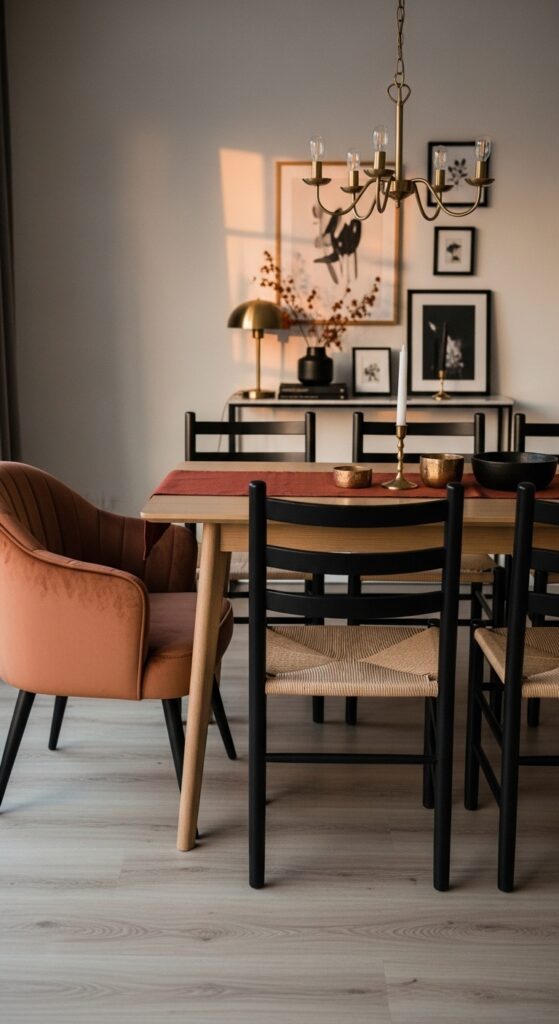
Matching chair sets can feel stiff, like you bought the whole room in one click. Mixing chairs adds personality fast.
- Start with two “end” chairs: Upholstered or slightly larger chairs at the heads of the table create structure.
- Repeat a material: If you mix wood and upholstery, repeat the wood tone somewhere else (frames, sideboard, light fixture).
- Keep silhouettes in the same family: Different chairs, similar visual weight. A delicate spindle chair next to a bulky barrel chair can look accidental.
Watch out: Too many styles reads chaotic. Keep it to two, maybe three chair types max.
A good mix looks collected, not confused.
6. Create a Sideboard Moment That Actually Works
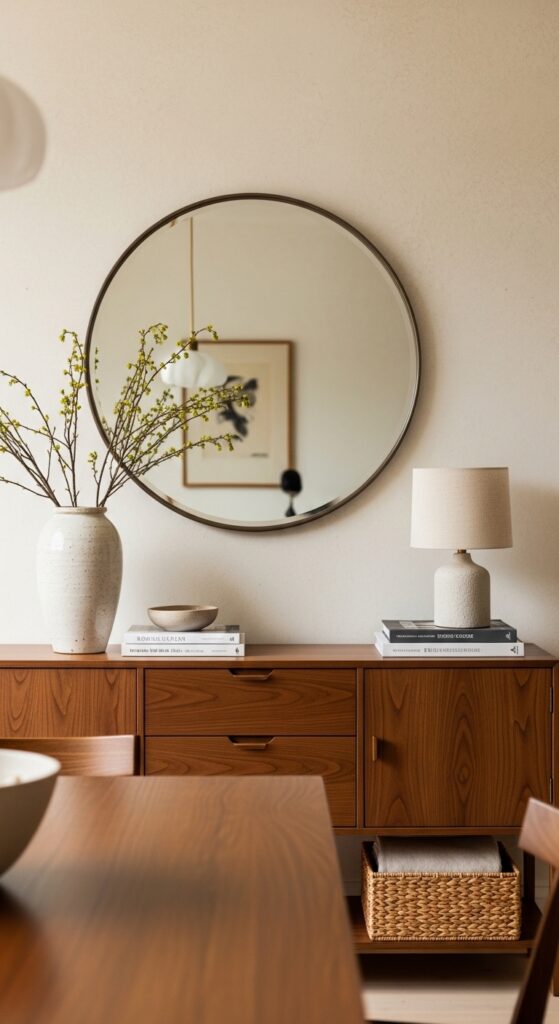
Sideboards are the unsung heroes of dining rooms—storage, serving, styling, and a place to dump keys (let’s be honest).
- Go longer than you think: A too-small sideboard looks lost. Ideally it’s at least two-thirds the width of the wall it sits on.
- Layer height: Lamp + art/mirror + one sculptural object gives balance without clutter.
- Make it useful: Store placemats, candles, extra cutlery, napkins. Pretty is nice; practical is better.
Watch out: Tiny decor objects scattered across the top look fussy. Group items in threes, and leave negative space.
A sideboard should feel like a grown-up landing pad.
7. Hang Art Lower (And Go Bigger)
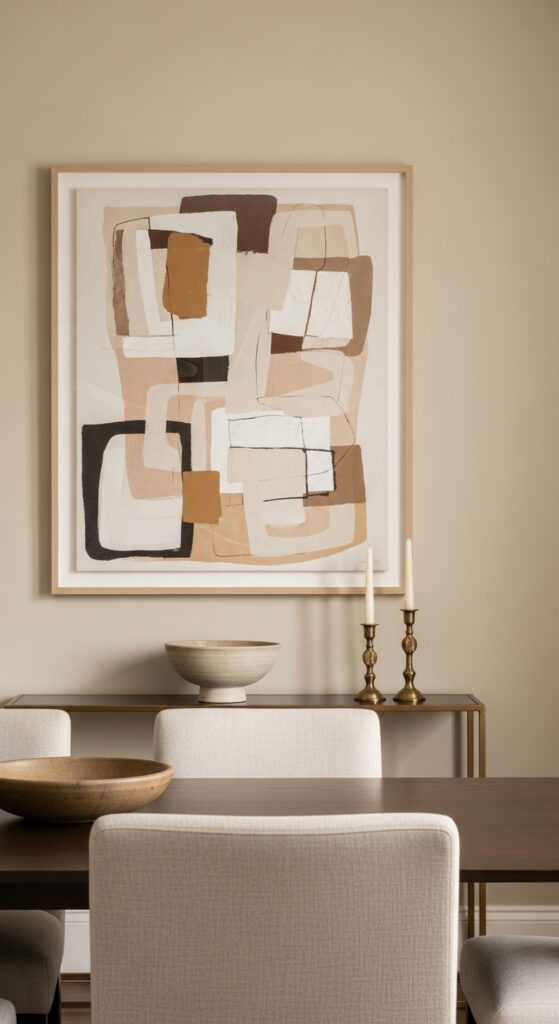
Here’s my mildly bossy rule: most people hang art too high. Your dining room will feel instantly more polished if you correct that one thing.
- Use the 57-inch rule: Center of the artwork around 57 inches from the floor (a museum guideline that usually works).
- Scale up: One large piece beats three tiny ones nine times out of ten.
- Frame matters: Thin black, warm oak, or soft brass frames read modern. Chunky ornate frames can work—but commit to the vibe.
Watch out: If you have kids or tight chairs, don’t hang precious art where it will get bumped constantly. Choose wipeable frames or prints.
Bigger, lower art makes the room feel designed, not decorated.
8. Add Wall Texture Without “Renovation Energy”
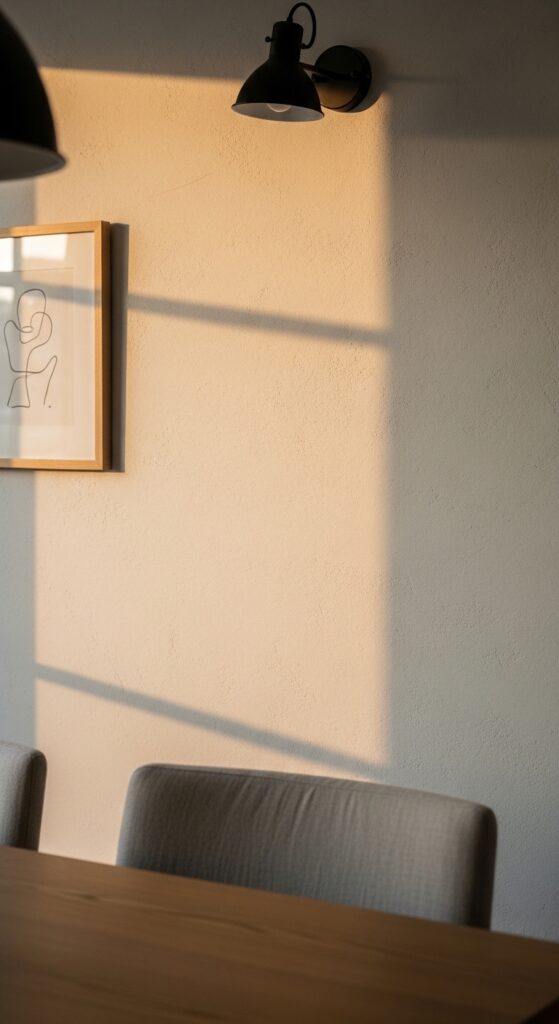
Not every dining room needs bold color. Sometimes it needs texture—the kind that makes light interesting.
- Try limewash or mineral paint: It adds depth without busy pattern. It’s especially good if you’re tired of flat walls.
- Wallpaper, but restrained: Think grasscloth look (even faux), soft geometrics, or tiny prints.
- Renter option: Peel-and-stick wallpaper can work if your walls are smooth and you’re patient.
Watch out: Strong texture plus strong pattern can feel loud. If you do textured walls, keep textiles simpler.
Texture is the quiet flex that makes a room feel expensive.
9. Style the Table Like You Live There (Not Like a Catalog)
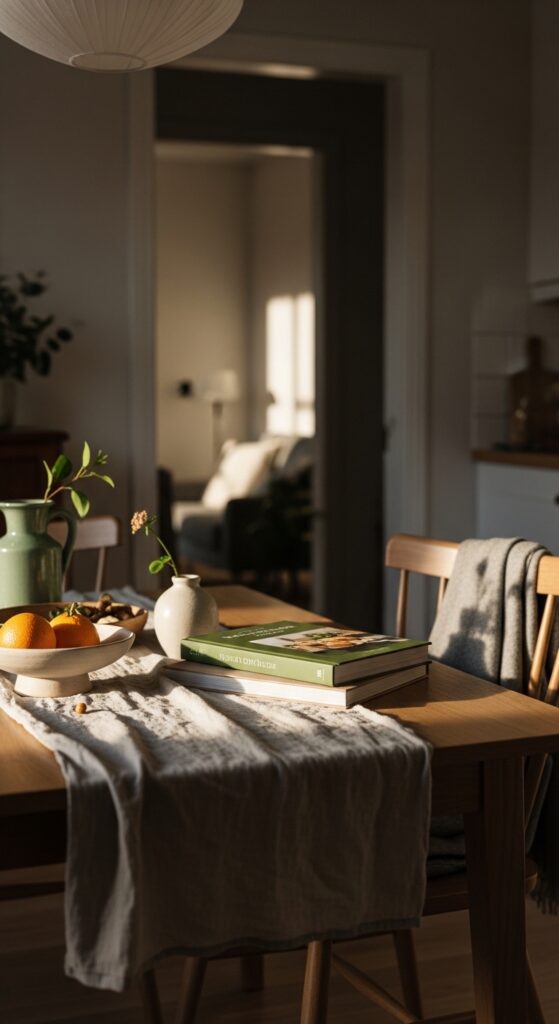
I love a styled dining table, but I hate when it feels like you’re not allowed to touch it. The best refresh is learning to style it like a human.
- Keep it low and movable: One tray or shallow bowl you can lift off when you eat.
- Use textiles casually: Linen napkins in a bowl, a runner that’s a bit rumpled—perfection is the enemy of cozy.
- Add one “living” element: Branches, herbs, or a bowl of fruit beats fake flowers every time.
Watch out: Too many small items collect dust and stress. Edit down until it feels calm.
Your table should invite life, not prevent it.
10. Bring in Two Layers of Light (Not Just the Ceiling)
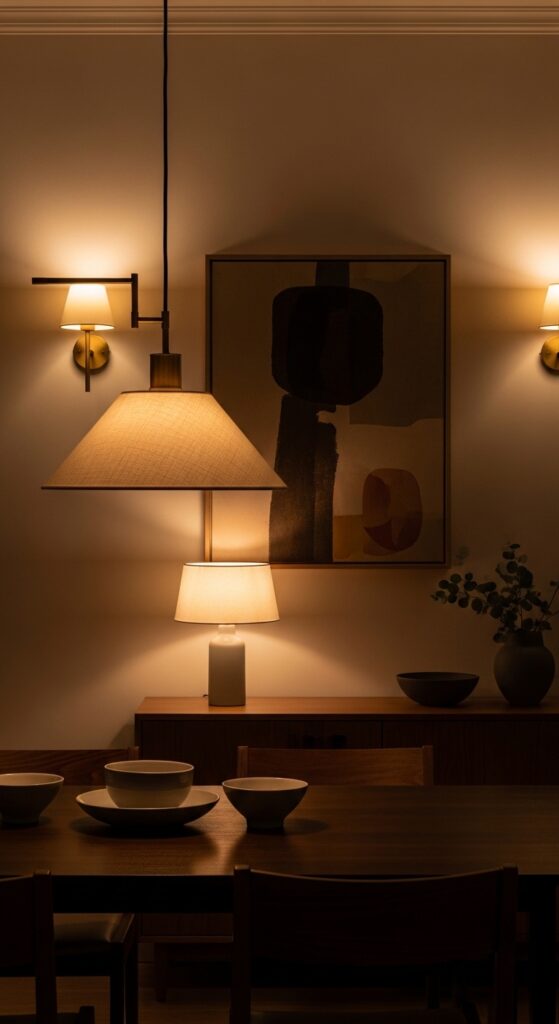
If you want your dining room to feel good at night, you need layers. Overhead-only lighting is the fastest way to make dinner feel like a meeting.
- Add a lamp on the sideboard: Yes, a lamp in a dining room. It’s cozy and makes the room feel residential.
- Consider sconces: Plug-in sconces are renter-friendly and surprisingly easy.
- Choose warm bulbs: Aim for warm color temperature so faces look flattering and food looks appetizing.
Watch out: Mixed bulb temperatures look weird. Keep bulbs consistently warm across fixtures.
Layered light is the secret sauce for atmosphere.
11. Shift the Layout by Six Inches (Sometimes That’s the Whole Fix)
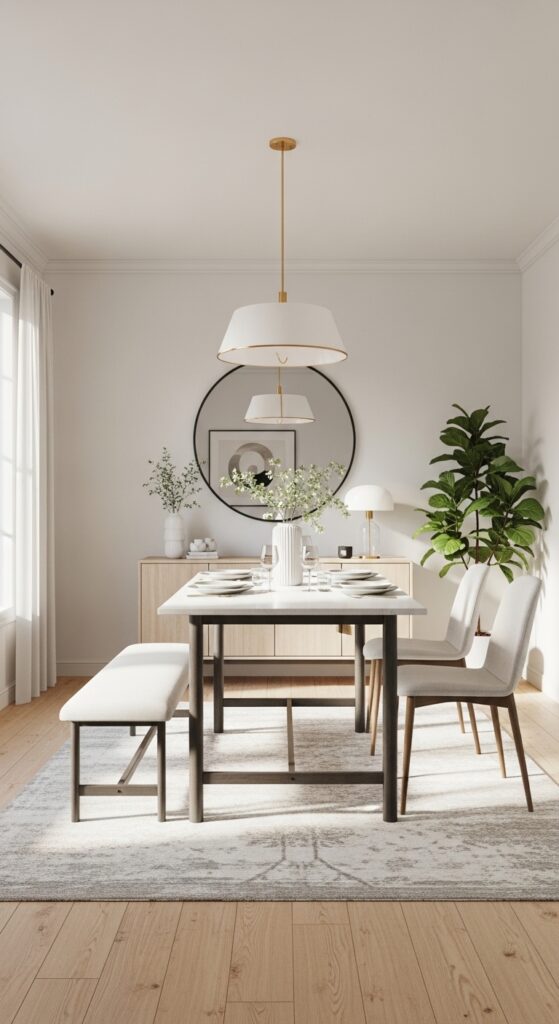
People assume a refresh means buying things. Sometimes it’s just moving them correctly.
- Create a clear path: If people have to squeeze sideways to pass, the room will always feel cramped.
- Try a bench: On the wall side, a bench saves space and looks modern. Add a cushion in linen or leather.
- Angle one piece: A slightly angled side chair or a corner plant can break the “grid” feeling.
Watch out: Don’t sacrifice comfort for layout. If your bench is only used for storage or looks, it’ll become a clutter magnet.
A small shift can make the room feel twice as calm.
12. Add a “Conversation” Element: Bar Cart, Built-In, or Bold Centerpiece
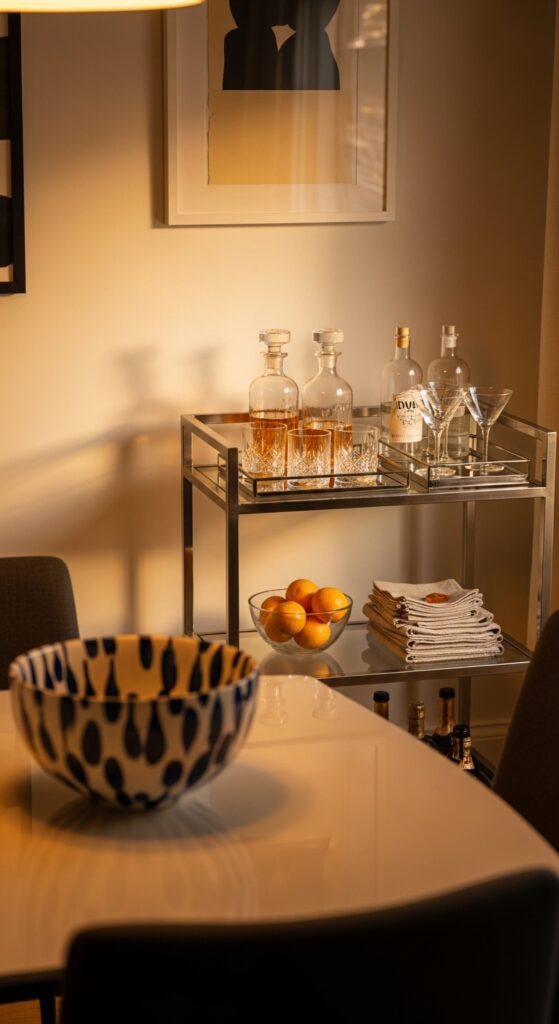
Every great dining room has one thing that makes people pause. Not in a “what is that?” way—more like, “Oh, this is nice.”
- Add a bar cart or drink station: Even if it’s just sparkling water and pretty glasses, it signals hospitality.
- Go bold with one sculptural piece: A statement bowl, a dramatic branch arrangement, a ceramic lamp—one hero item can carry the room.
- Use scent subtly: A candle on the sideboard (not the table while eating) makes the room feel cared for.
Watch out: Skip this if you hate visual clutter. Keep it edited so it feels curated, not busy.
One standout element gives the room personality—and makes it memorable.
Conclusion
Refreshing your dining room isn’t about chasing a perfect “look.” It’s about making the space feel like it belongs to you—your habits, your light, your level of mess tolerance, your idea of comfort. If you only do three things, do the ones that change the room’s bones: a better light fixture (with a dimmer), a rug that actually fits, and one confident wall decision—color, texture, or art with real scale. Then layer in the softer details: linen, warm wood, brass, ceramics, and lighting that flatters people at night. The best dining rooms aren’t the fanciest ones; they’re the ones that make you want to sit down, pour something, and stay a little longer. If you learned anything today, let it be this: small choices, made with intention, add up to a room that feels fresh—without starting over.