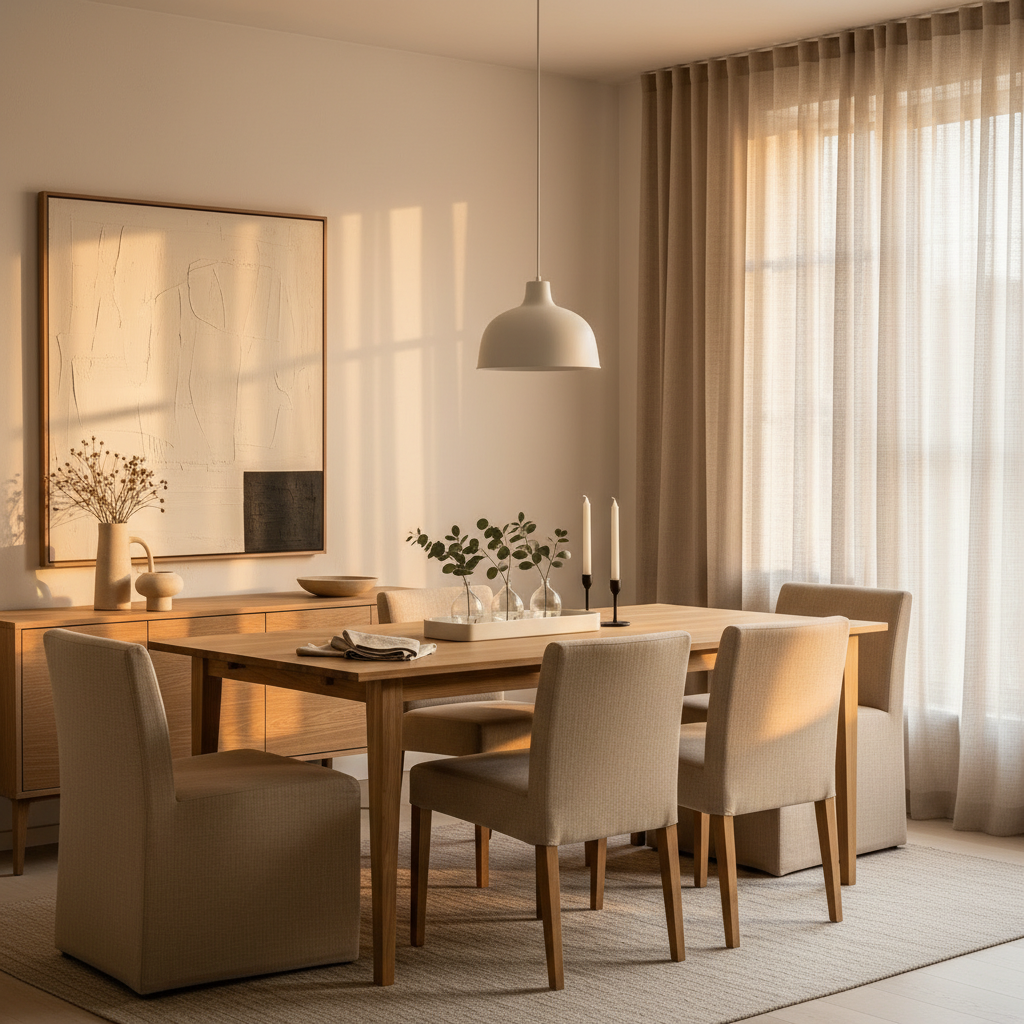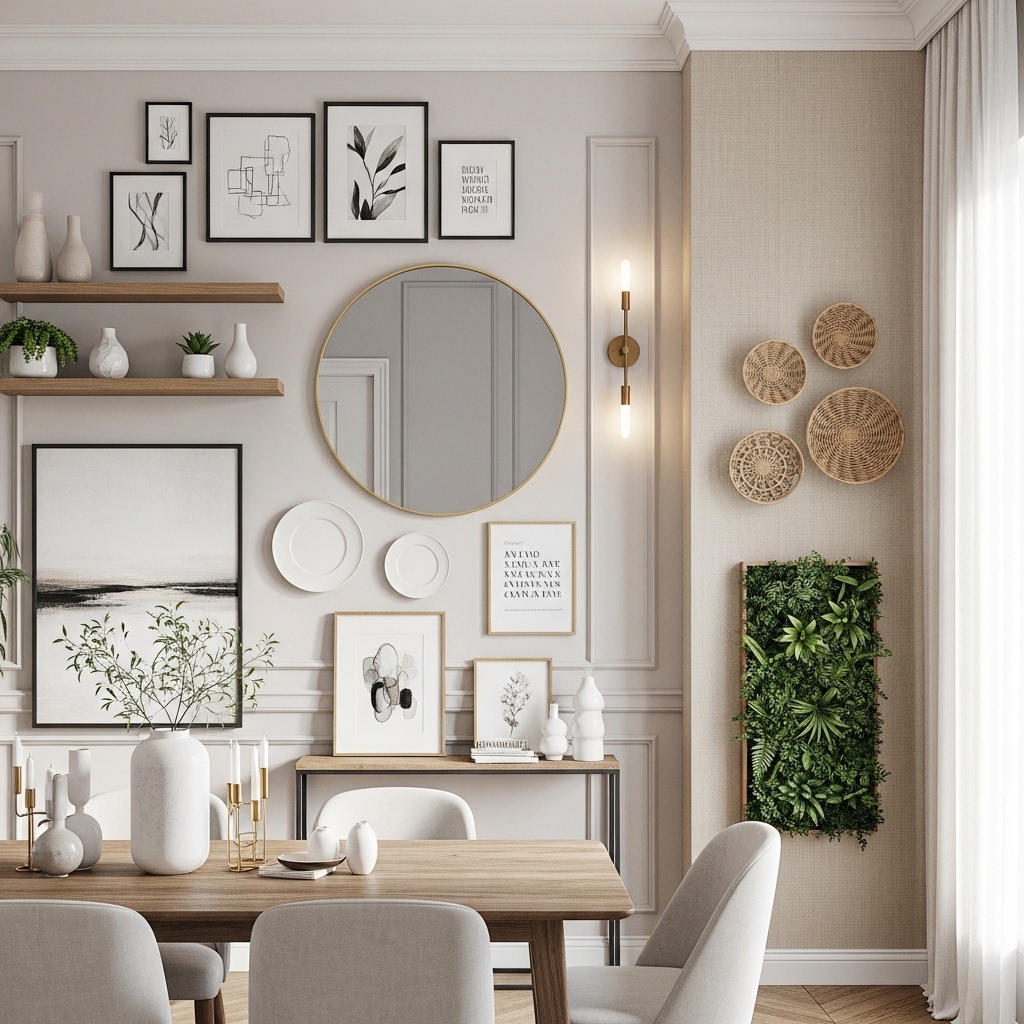
There’s a particular kind of satisfaction that comes from a buffet that actually works — one that holds your extra table linens, the serving platters you only use at holidays, and the bottle of good olive oil you keep forgetting to move to the kitchen, while somehow still looking like something out of a design magazine. The dining room buffet (also called a sideboard) is one of those rare pieces of furniture that is both relentlessly practical and endlessly styleable. And yet, so many people either ignore it entirely or treat it as a flat surface to dump mail on.
That’s a missed opportunity. A well-dressed buffet grounds the dining room, adds rhythm to the space, and gives you a place to actually put things — wine, candles, napkins, the good china — without resorting to a cluttered China cabinet or an overloaded kitchen shelf. Whether you’re working with a narrow rental apartment or a generous formal dining room, there are ways to make this piece sing. Here are twelve ideas worth stealing.
1. The Warm Neutral Foundation
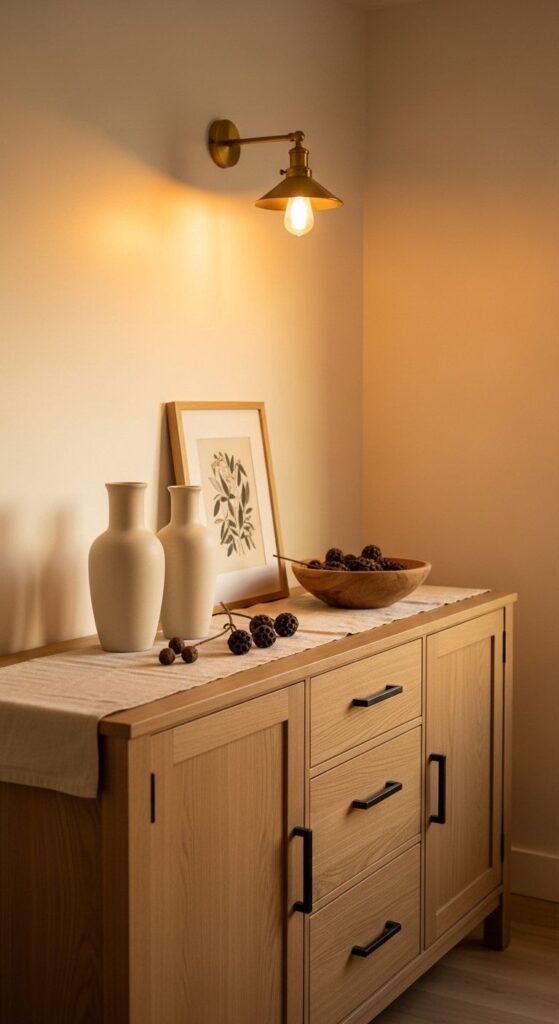
If you’re not sure where to start, start here. A warm neutral palette — creamy whites, oatmeal linens, soft biscuit tones — is the most forgiving foundation you can build a buffet vignette on, and it works in almost any dining room regardless of paint color or flooring. The trick is to avoid going so matchy-matchy that it reads as a showroom display. You want variation in texture, not in color.
Layer your neutrals deliberately: a woven linen runner underneath everything, matte ceramic vessels in slightly different creamy tones, a wooden bowl or tray to introduce some organic warmth. Vary the heights of your objects so there’s visual movement — not just left, center, right symmetry. Lean a small framed print against the wall instead of hanging it if you’re renting or don’t want to commit to hardware.
One constraint worth naming: this palette can read as flat or lifeless if your lighting is cool or your room faces north. Warm it up with a brass pendant overhead or a small lamp on the sideboard itself.
Simple, considered, and deeply liveable.
2. The Jewel-Tone Maximalist
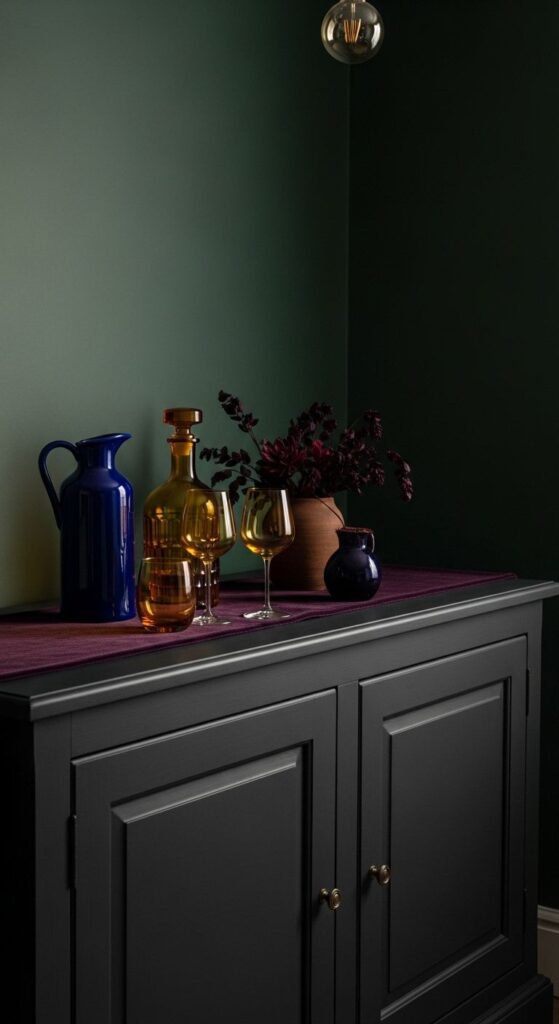
Some rooms were built to be dramatic, and if yours is one of them, lean in rather than apologize for it. Jewel tones on a buffet — deep sapphire, forest green, amber, plum — feel sophisticated without being fussy, especially when you work with the colors already present in your dining room rather than fighting them.
The secret here is to anchor the whole arrangement with one hero piece — an amber glass decanter, a cobalt ceramic vase, a deep green sculptural bowl — and then let everything else quietly support it. Don’t try to feature everything at once. A velvet runner or a rich plum table scarf adds tactile depth without adding visual noise.
That said, this look can feel overwhelming in a small dining room, especially one with low ceilings or limited natural light. If that’s your situation, scale back to two jewel-toned accents against a neutral backdrop and call it a day. You still get the drama without the claustrophobia.
Evening lighting makes everything here look better — factor that in.
3. The Renter-Friendly Refresh
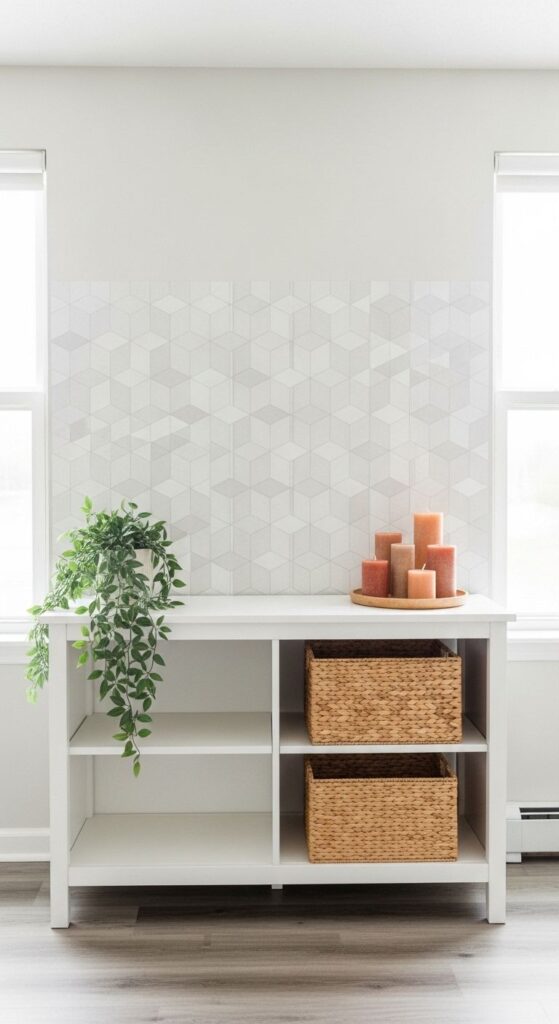
Not everyone has a gorgeous antique oak sideboard to work with. If you’re renting or working with a budget flat-pack piece, there are ways to make it look intentional without spending a fortune or violating your lease.
The single most effective upgrade: create a feature wall moment directly behind the buffet using peel-and-stick wallpaper panels. You don’t need to paper the whole wall — even a 60cm panel centered behind the sideboard creates a focal point that makes the whole arrangement feel planned. Geometric patterns or subtle textured prints work best because they read as sophisticated rather than trendy.
On the buffet itself, rattan baskets on open shelves do serious heavy lifting — they hide the stuff you don’t want to look at (candles, napkin rings, extra batteries) while adding that organic, handcrafted texture that elevates a cheap piece. A trailing pothos or philodendron softens the edges and makes the space feel alive.
Skip this if you hate plant maintenance, but honestly — just get a pothos.
4. The Art-Led Statement
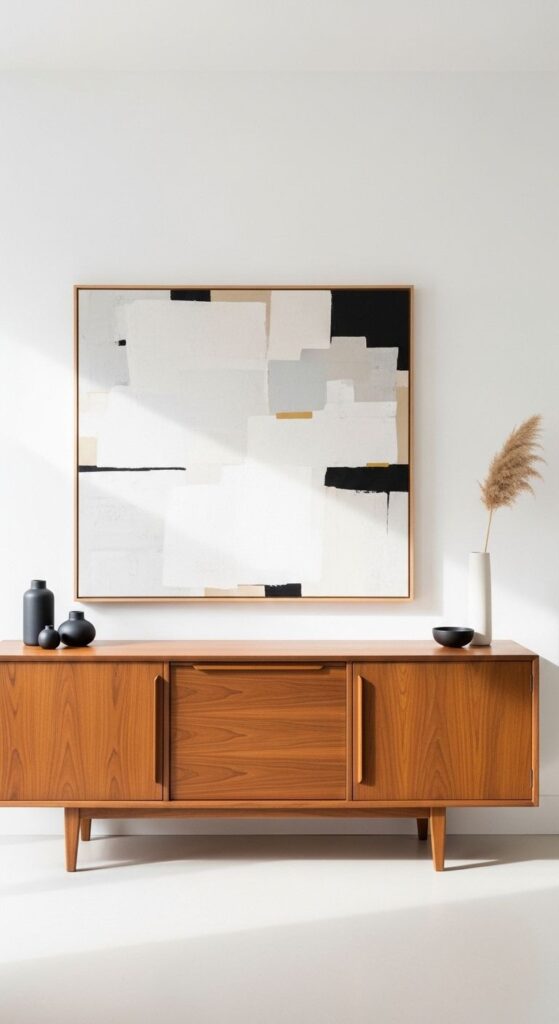
If you’ve got a piece of art you love — or you’re willing to invest in one — build the entire buffet vignette around it. An oversized abstract canvas hung directly above the sideboard, sized to almost match its width, instantly transforms the wall into a gallery moment. Everything else on the buffet surface should be secondary to that painting.
This is where a lot of people get tripped up: they hang the art and then crowd the buffet surface with too many objects, which competes with the painting visually. The rule of thumb for this look is fewer than four objects on the surface, and at least one of them should be negative space — an empty tray, a single stem, a stack of books with nothing on top.
Mid-century modern sideboards in walnut or teak are particularly well-suited to this treatment because their clean lines don’t compete with the art. That said, even a painted white sideboard works beautifully if the art is strong enough.
Let the art do the talking. Your job is just to not interrupt.
5. The Layered Candle Arrangement
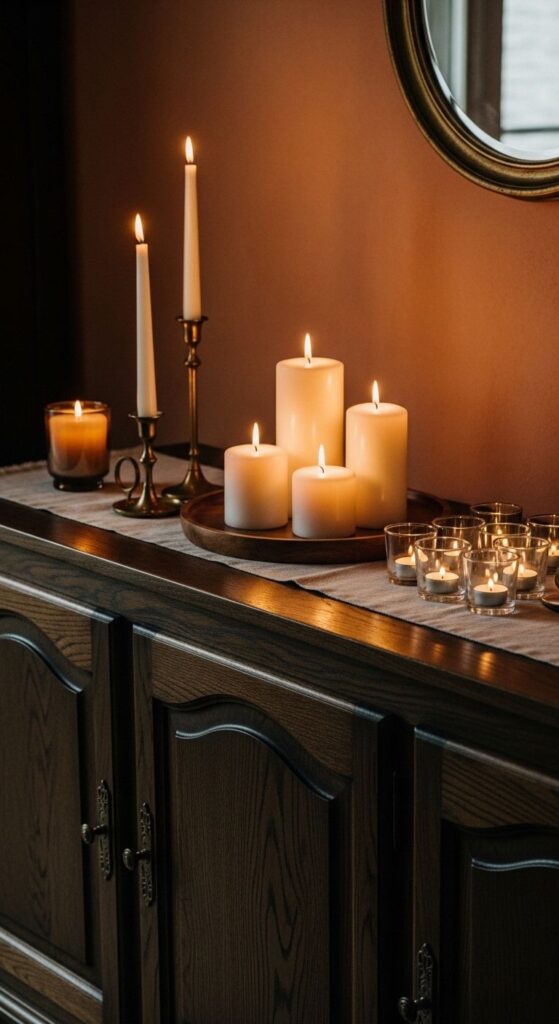
Candles are the cheat code of dining room styling. A well-executed candle arrangement on a buffet creates instant ambiance for dinner parties and looks deliberately curated even when it’s actually just candlesticks you bought over the course of two years.
The formula that works every time: one anchor element (a round tray or a flat piece of slate or marble), a mix of candle heights and formats (tall tapers, medium pillars, small votives), and a unifying material thread — all brass, all terracotta, all black matte — that ties the different holders together. Never cluster everything in one spot; let the arrangement breathe across the buffet surface.
One practical note: if you use real candles regularly, think about surface protection. A linen or leather runner underneath your tray will save you from wax drips on your sideboard finish, which is the kind of thing you only learn the hard way.
This look rewards imperfection. A slightly melted candle, an asymmetrical cluster — it all adds character.
6. The Curated Book Stack
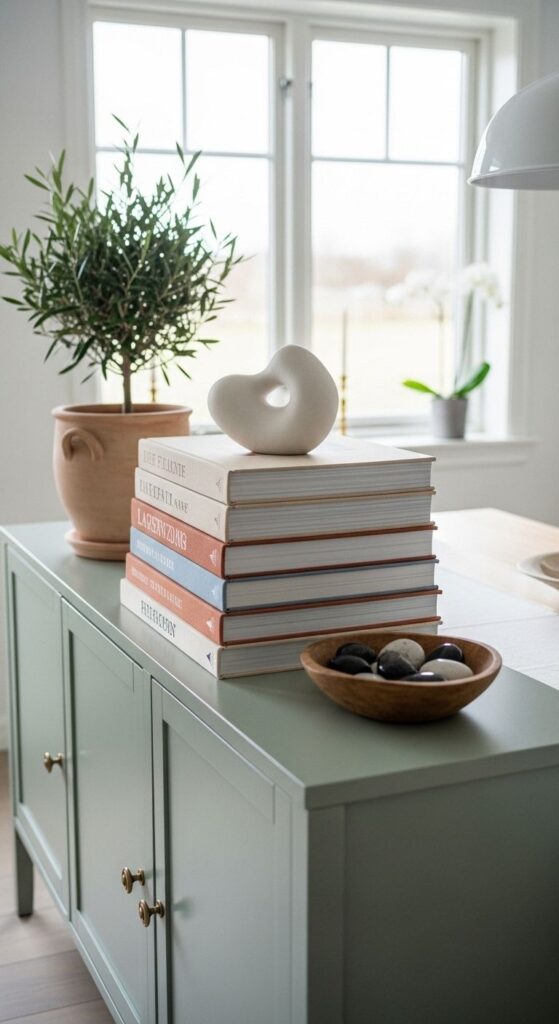
Books belong in every room of the house, including the dining room — especially on a buffet where a well-edited stack instantly communicates personality without being loud about it. The key word is curated. You’re not doing a yard sale pile; you’re choosing books for their covers, their colors, and their thickness, and arranging them with intention.
Two or three oversized hardcovers — art books, architecture books, cookbooks with beautiful design — stacked horizontally become a plinth for a small sculpture or ceramic object. This gives the arrangement height variation without needing a tall vase. Choose books whose spine colors play into your room’s palette.
If you share the space with someone who finds this too precious, let the books actually be useful. Stack your actual cookbooks here. Keep the dining room ones for the table. The point is choosing them deliberately rather than letting whatever you finished last month land on the buffet.
Sage or muted green sideboards particularly love this treatment — the quietness of the color makes the objects pop.
7. The Nature-Inspired Tablescape
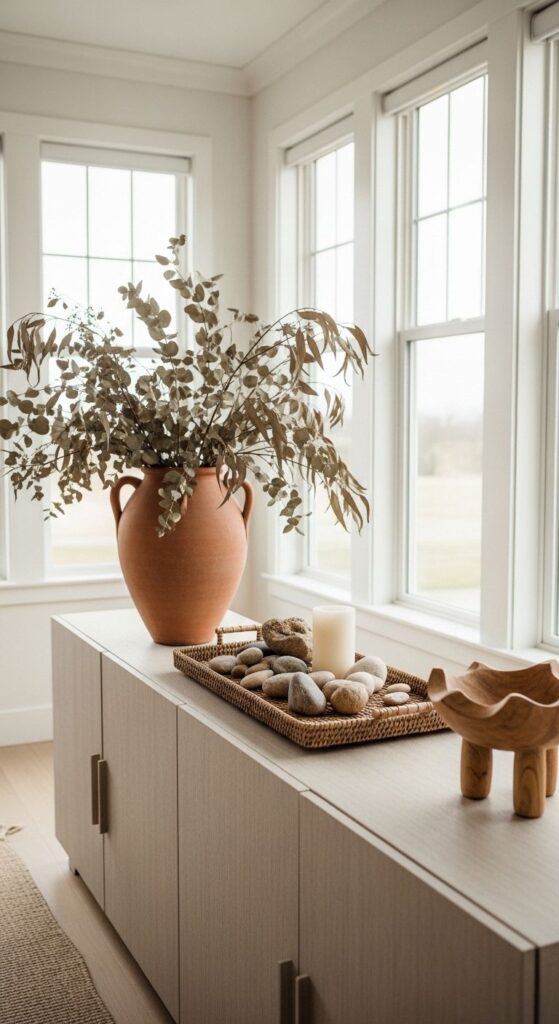
There’s a reason “bringing the outside in” has been a design mantra for decades — natural elements in a room genuinely change how a space feels. On a buffet, this translates to eucalyptus branches, dried botanicals, stones, raw wood, woven seagrass, unglazed terracotta. The texture vocabulary of the natural world is endlessly varied and endlessly beautiful.
The trick with organic arrangements is restraint in geometry. Don’t overthink the symmetry. A single tall branch in a wide-mouthed vase, a flat tray with a candle and a few stones, a sculptural wooden bowl at the end — that’s enough. The randomness of natural materials creates its own visual interest.
Seasonal swapping is where this concept really earns its keep: dried pampas and wheat for autumn, simple greenery and white blooms in spring, bare branches and dark stones in winter. The buffet becomes a living installation that marks the passage of time without requiring you to redecorate the whole room.
If you’re allergic to dried florals, fresh eucalyptus from the grocery store lasts surprisingly long.
8. The Mixed Metals Moment
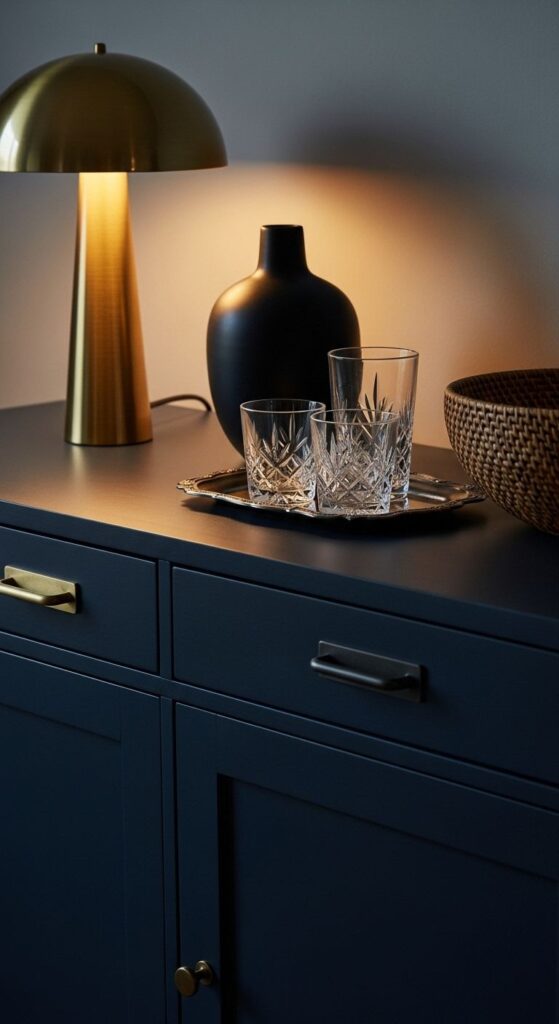
The old rule about matching all your metals is well and truly retired. Mixed metals in a dining room — brass with matte black, antique silver with warm bronze — feel current, layered, and personal in a way that a monolithic all-gold or all-chrome scheme simply doesn’t.
On a buffet, this translates beautifully. A brass table lamp on one end, a matte black vase in the middle, a small silver tray for drinks or glasses — these different finishes create a collected, over-time quality that suggests good taste rather than a bulk order from a home store.
The constraint: you do need one unifying thread, otherwise it just looks confused. Usually that thread is finish quality — keep all your metals in similar value territory, whether that’s polished, brushed, or matte. Mixing ultra-shiny chrome with antique brass typically reads as accident, not intention.
A navy or deep charcoal painted sideboard is the perfect backdrop for this play on metals — it lets every finish catch the light.
9. The Practical Bar Station
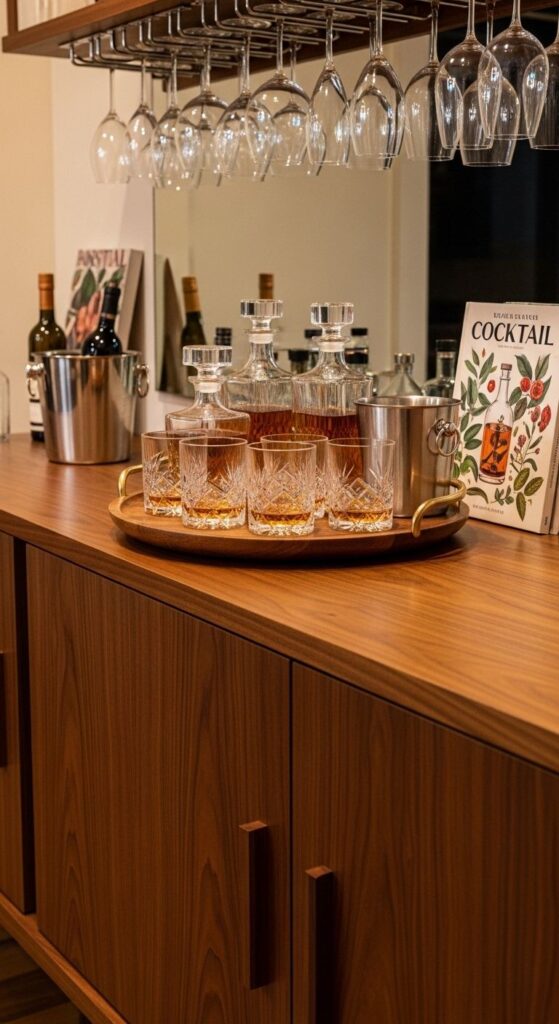
Here’s a practical truth: if you entertain with any regularity, the most useful thing you can do with your buffet is commit to using part of it as a dedicated bar station. Not the whole surface — just one organized zone that holds your decanters, glasses, and bar tools so you’re not running to the kitchen every five minutes during a dinner party.
A round wooden tray anchors the bar zone visually and keeps things contained. Two or three cut crystal decanters filled with your most-used spirits look genuinely beautiful and are also actually useful. Store your nice glassware here too — a wall-mounted wine glass rail above the sideboard frees up cabinet space and looks intentional.
This works especially well if your dining room is far from the kitchen. The buffet becomes a natural service station, and guests can help themselves without getting underfoot.
One watch-out: if young kids are regularly in the space, keep the decanters in the closed lower cabinets instead.
10. The Monochromatic White-on-White
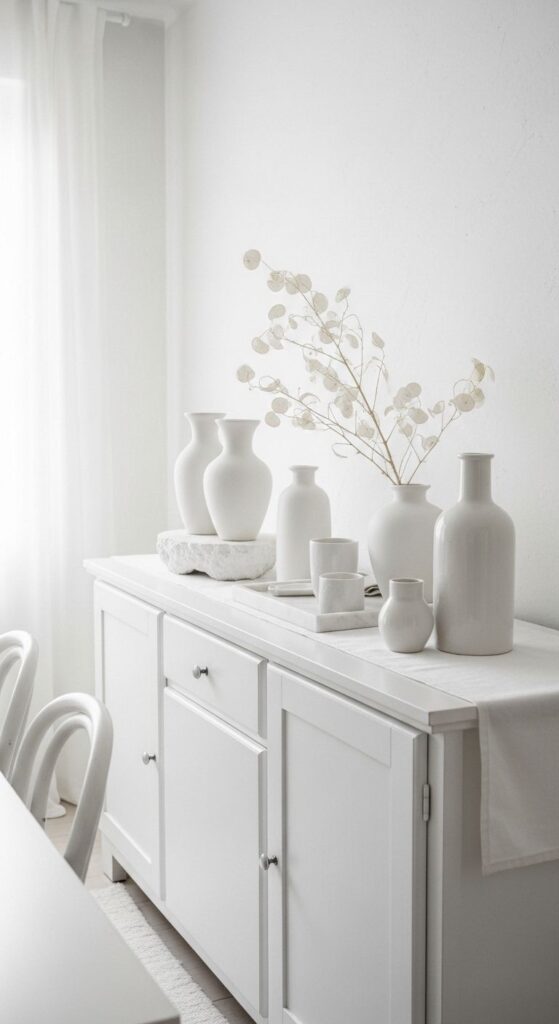
White-on-white is one of those looks that sounds boring until you see it done well, and then it’s completely arresting. The entire premise relies on texture doing the work that color usually does — matte ceramic versus glossy glaze versus rough linen versus smooth marble, all in the same tonal family, creating a composition that’s endlessly interesting to look at even though it’s technically all one color.
For this to work, you genuinely need variety in surface finish. A collection of all-matte white ceramics just looks like a shelf of unpainted pottery. Introduce one glossy piece, one rough-textured one, a piece of white veined marble, a dried lunaria branch — suddenly the whole arrangement has dimension.
This look suits rooms that already get a lot of natural light, or rooms where you’re actively trying to make things feel larger and airier. If your dining room is dark, white-on-white risks looking flat and a bit cold.
Pair it with warm wood flooring and you get the texture contrast the scheme needs to breathe.
11. The Color-Blocked Display
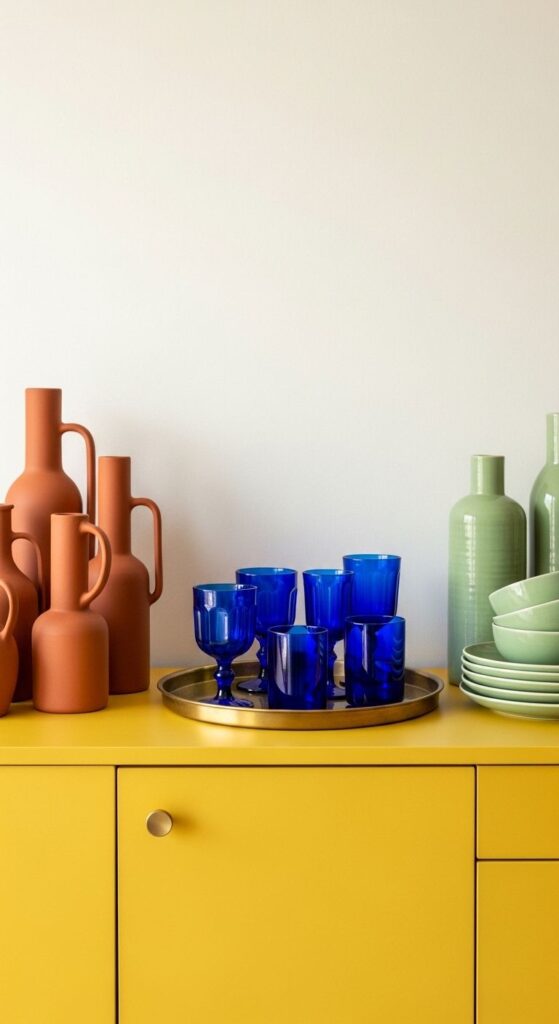
Color blocking in interiors borrows from fashion — the practice of grouping objects not by height or type but by color, creating distinct visual zones across the surface. On a buffet, this creates a composed, graphic quality that looks bold but is actually quite simple to execute.
The formula: choose three colors that work together (terracotta, cobalt, sage is a perennial favorite), then group your objects by color rather than mixing them. Your terracotta pieces live together on the left. Your blue glassware clusters in the center. Your green ceramics sit on the right. Suddenly an eclectic mix of objects looks curated.
The buffet color itself should be a fourth player — a mustard yellow sideboard, for instance, ties the warm terracotta and earthy sage together without competing with the cobalt.
Skip this if you prefer a calmer, more neutral aesthetic. This look has energy, and in small dining rooms it can feel like a lot. In bigger rooms with high ceilings, it’s absolutely joyful.
12. The Ambient Lamp Layer
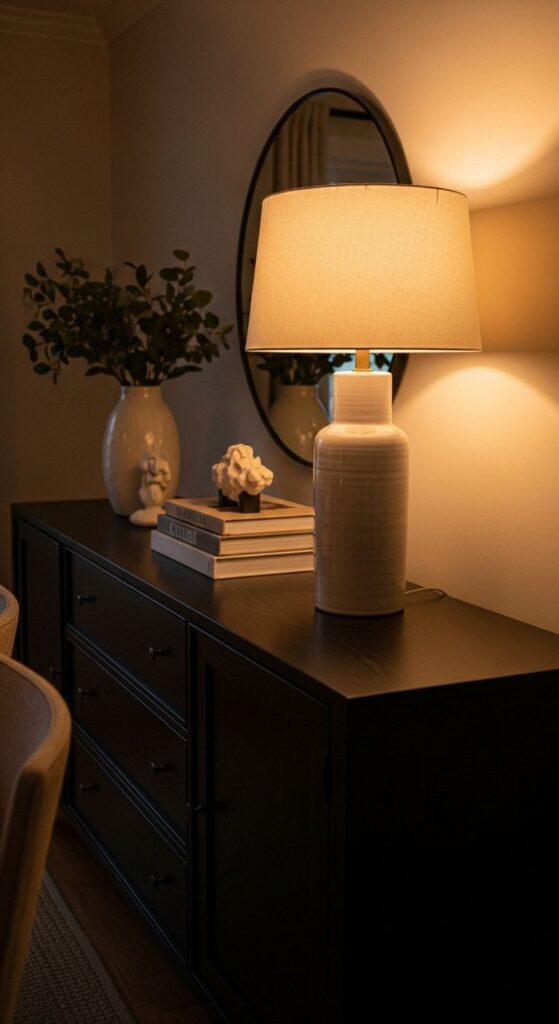
Every dining room buffet deserves a lamp. This is possibly the single highest-impact thing you can do for this piece of furniture — and for the room — that costs less than a full restyling. A table lamp on a sideboard does two things simultaneously: it adds height and visual anchor to the arrangement, and it layers in a source of warm, low ambient light that makes every dinner in the room better.
Choose a lamp whose scale respects the buffet — not so small it looks like an afterthought, not so tall it overwhelms everything around it. A ceramic base in an interesting form, topped with a drum or empire shade in cream or warm white linen, is almost universally flattering.
Position the lamp slightly off-center rather than at the exact edge — this creates a more relaxed, organic feel than rigid symmetry. A round mirror leaning casually behind the arrangement catches the light and makes the whole vignette feel twice as considered.
The lamp earns its rent every single evening. Don’t skip it.
A Final Word
The dining room buffet is one of the most underestimated pieces in the home. It works hard — storing linens, housing your good glasses, holding the serving pieces that don’t fit anywhere else — and it deserves to look good while doing it. The twelve ideas here span different aesthetics, budgets, and room sizes because the truth is there’s no single right way to style this piece. There’s only the right way for your space, your habits, and what you actually want to look at over dinner every night.
What all twelve approaches share is intention. A buffet that looks good isn’t one that cost more money — it’s one where someone made deliberate choices about what to put on it, what to leave off, and how to let the room’s existing light and color inform the arrangement. You learned today that the surface itself is almost secondary to the layering, the lighting, and the edit. Come back here when you’re ready to restyle. We’ll have more ideas waiting.