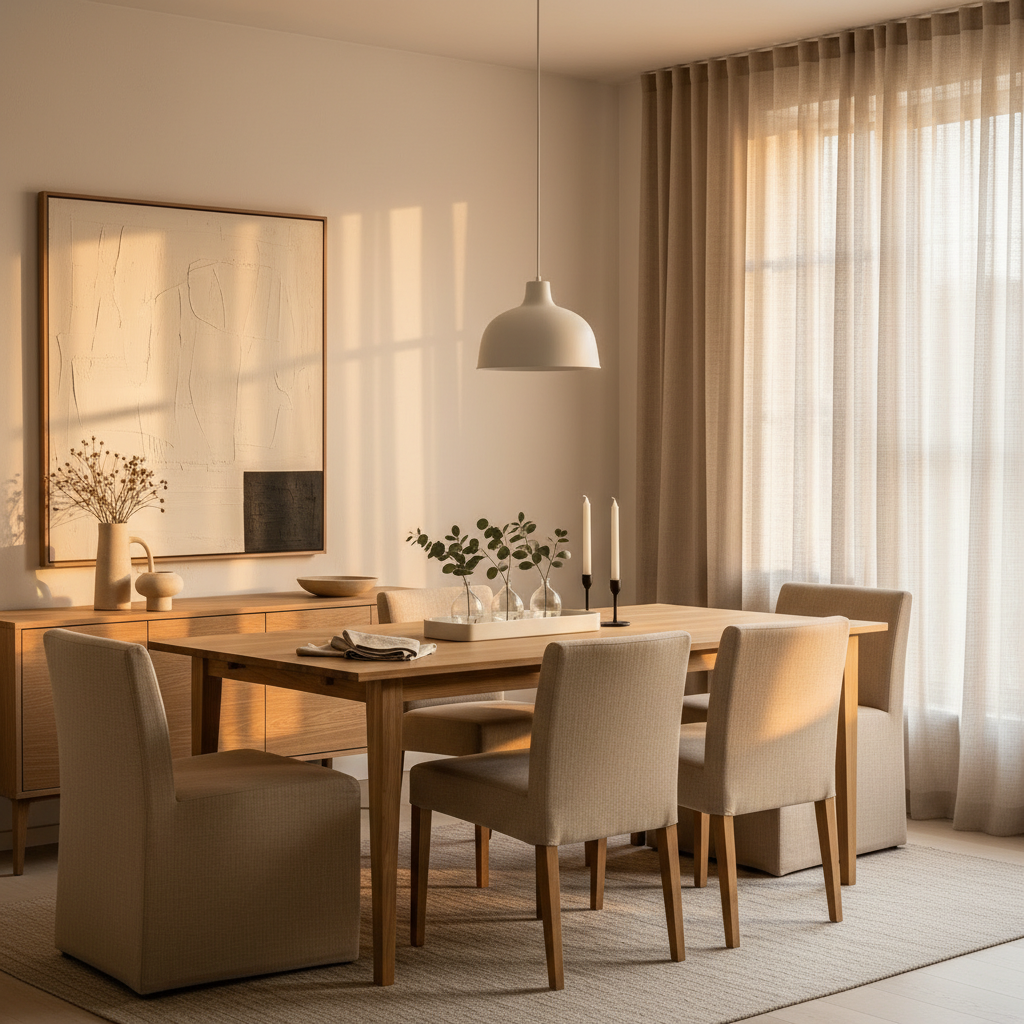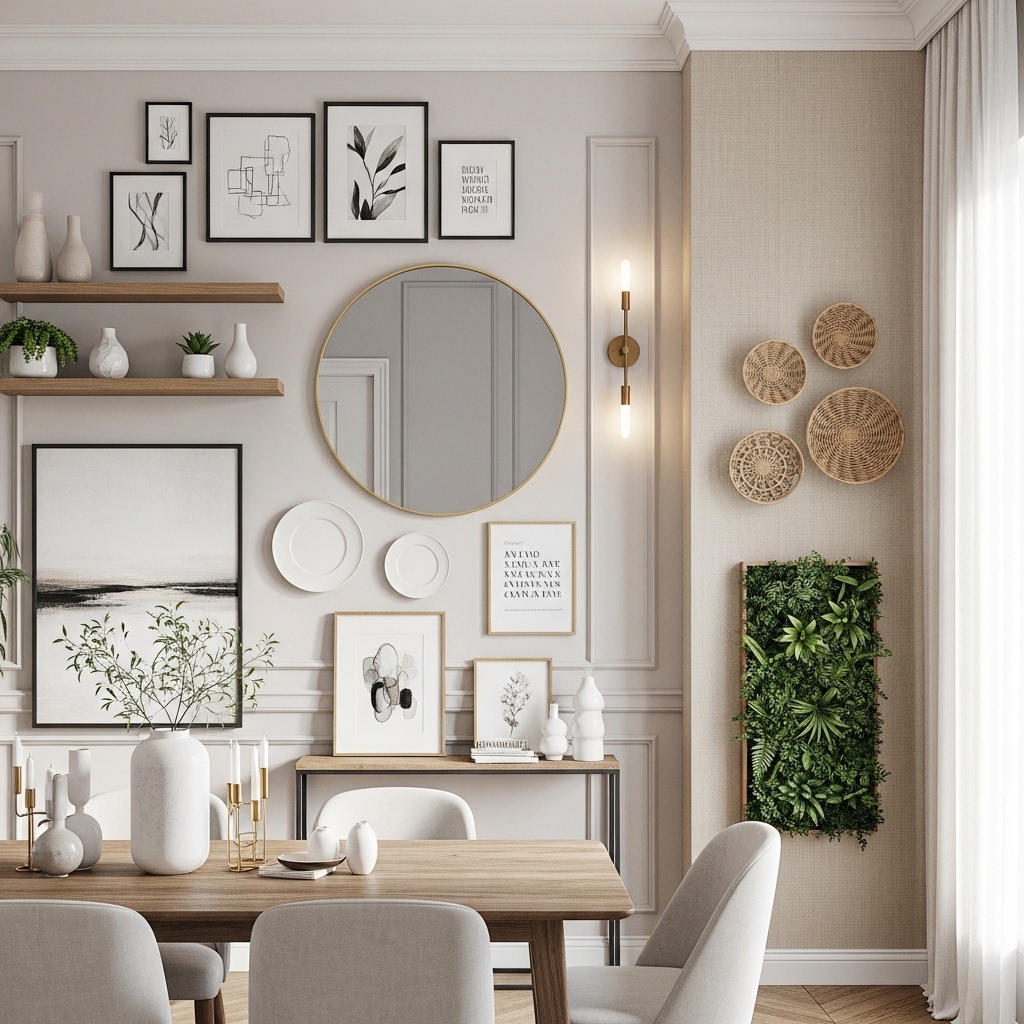
A casual dining room is the unsung hero of the house. It’s where you eat standing up while the microwave beeps, where someone spreads out papers “just for a minute,” where friends end up lingering long after dessert because the chairs are actually comfortable. And honestly, that’s the vibe we want: a space that looks pulled together but never precious.
The biggest mistake people make is decorating their dining room like it’s only for holidays—formal, stiff, and a little nervous. Everyday living needs a softer approach: forgiving materials, easy storage, lighting that flatters at 8 p.m., and styling that can survive backpacks, pet hair, and Tuesday night takeout. Casual doesn’t mean sloppy. It means welcoming, functional, and not trying too hard. Below are twelve ideas that keep things relaxed while still feeling intentional—because you deserve a dining space that works with your life, not against it.
1. Start With Comfortable Chairs (Yes, Before the Table)
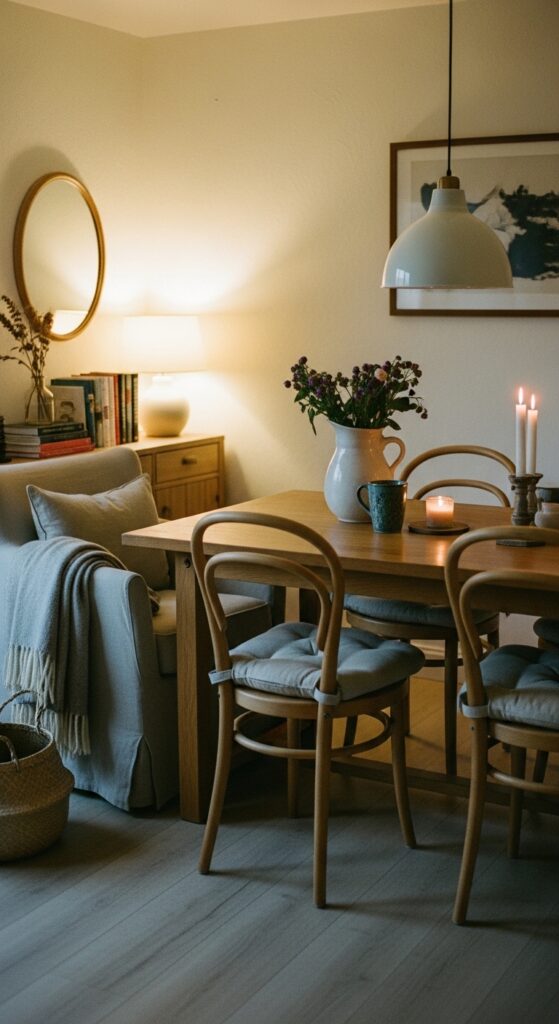
Here’s my slightly bossy opinion: if your dining chairs aren’t comfortable, your dining room will never feel casual. It’ll feel like a waiting room. Comfortable seating is what makes people stay—and what makes you actually use the space for more than five-minute meals.
Try this:
- Choose chairs with a curved back or upholstered seat (linen or performance fabric is ideal for real life).
- Mix chair styles if you want an easygoing look—just keep one consistent element, like wood tone or leg color.
- Add one “extra comfy” chair at the head of the table to set the tone.
Watch out: super light fabrics look great, but skip them if you have messy kids or red-wine friends. Go washable or patterned.
The takeaway: comfort is the foundation of casual—everything else is just styling.
2. Use a Washable Rug That Can Take a Beating
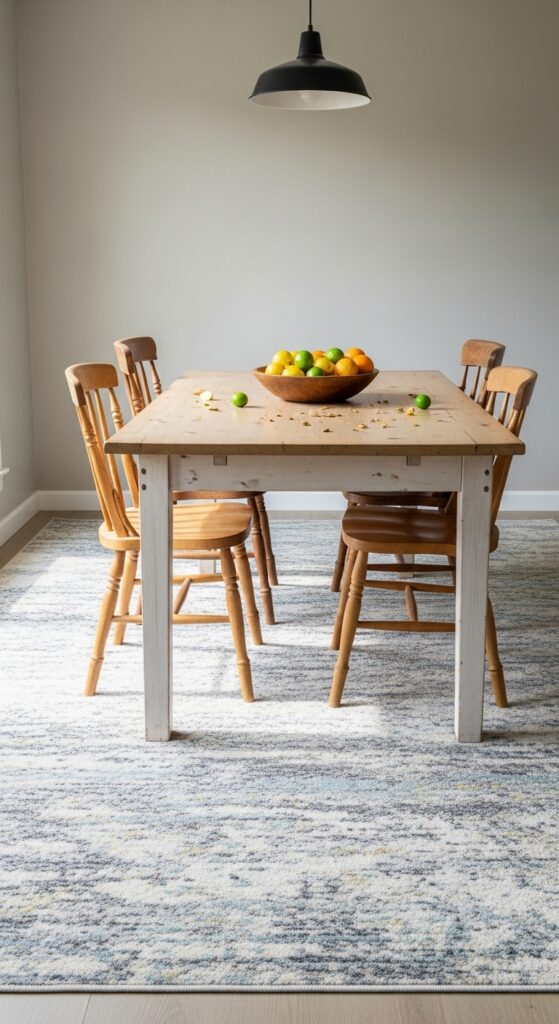
A rug under the dining table makes a room feel finished, but casual living demands one that won’t make you panic over spaghetti night. The goal is softness underfoot and visual grounding—without the constant anxiety.
Try this:
- Choose low-pile or flatweave so chairs glide instead of snagging.
- Go slightly patterned (faded stripes, small geometrics) to hide crumbs and scuffs.
- Size up so chairs stay on the rug when pulled out—nothing screams “awkward” like chair legs teetering off the edge.
Watch out: thick plush rugs trap food and fight chair legs. They’re cozy, but not here.
The takeaway: a dining rug should be hardworking and forgiving, not a museum piece.
3. Keep the Table Surface “Clear-ish” With One Contained Centerpiece
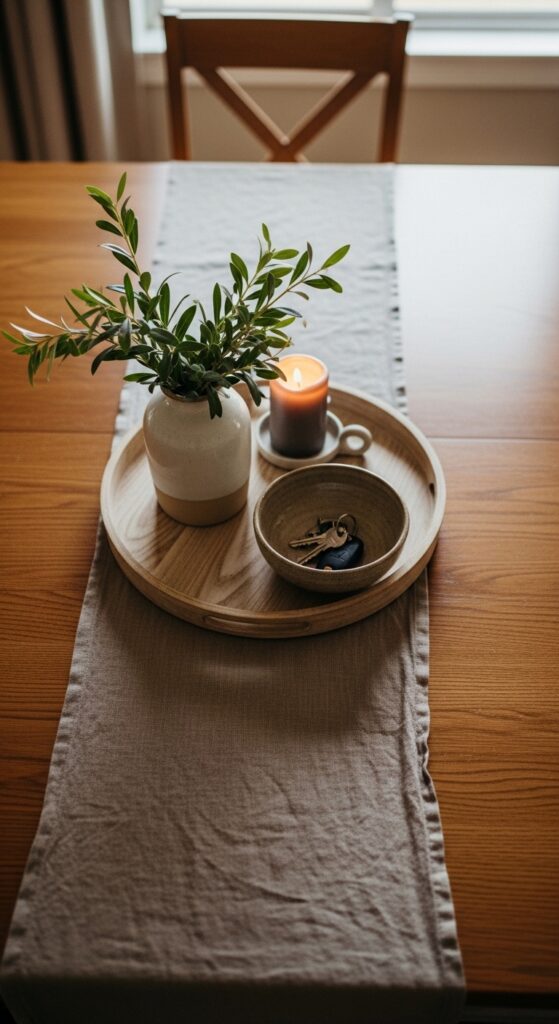
Casual dining rooms don’t have perfect tablescapes. They have a table that’s ready for life. The trick is a centerpiece that looks intentional but moves in five seconds when you need space.
Try this:
- Use a low tray as a “landing pad” for a small vase, salt/pepper, or a candle.
- Keep everything low so conversation stays easy and sightlines stay open.
- Add one practical item to the vignette—like a small bowl for keys or a coaster stack—so it feels real.
Watch out: tall arrangements feel fancy but get annoying fast when you’re eating cereal or helping with homework.
The takeaway: contain the styling so the table stays usable every day.
4. Choose a Table Finish That Likes Imperfection

If you’re aiming for casual, glossy finishes are not your friend. Gloss shows everything: fingerprints, water rings, yesterday’s smudge. Matte and textured finishes are where everyday living thrives.
Try this:
- Look for matte wood, lightly distressed finishes, or sealed natural wood with visible grain.
- If you already own a shiny table, use a linen runner or placemats to break up the sheen.
- Consider a tablecloth—yes, really—if you want peak casual. A relaxed linen one looks intentionally unfussy.
Watch out: raw wood without proper sealing can stain easily. If you love the look, protect it with a good sealant.
The takeaway: the best casual table is the one you’re not afraid to live on.
5. Layer Lighting Like You Actually Eat at Night
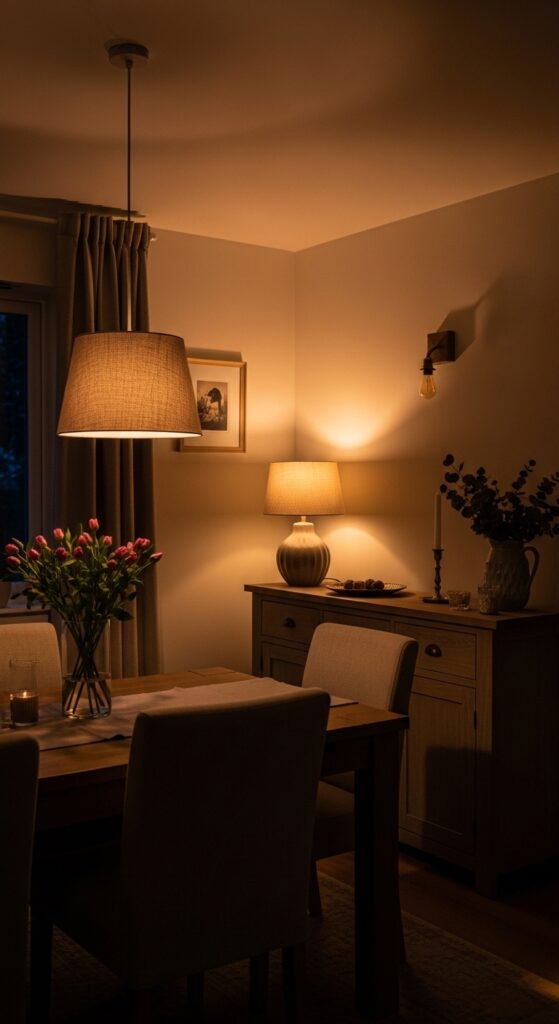
Overhead-only lighting is a casual killer. It turns dinner into a task. You want soft layers that make Tuesday feel a little nicer without trying too hard.
Try this:
- Add a small lamp on a sideboard or console (linen shades are magic for softening light).
- Use warm bulbs (around 2700K) so skin tones and food look good.
- If you can, put the overhead on a dimmer—casual dining loves control.
Watch out: cool-white bulbs will make everything feel stark, especially if your walls are warm.
The takeaway: layered, warm lighting is what makes people linger.
6. Try a Bench for the “Drop In, Slide Over” Energy
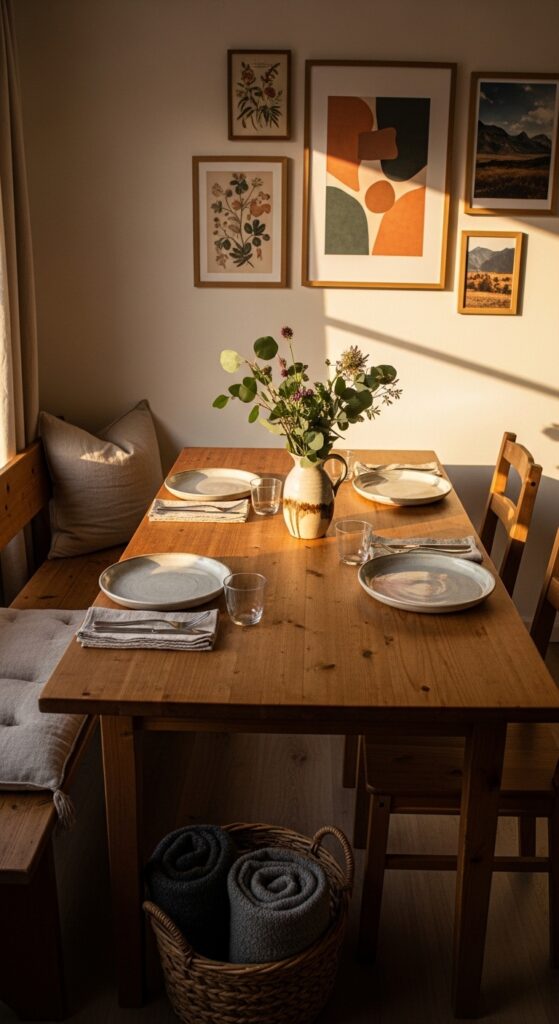
Benches are casual by nature. They say “we’re not measuring place settings,” and they make it easy to squeeze in one more person. They’re also great in tight spaces because they tuck in neatly.
Try this:
- Pair a bench with chairs for a balanced look—too many benches can feel like a cafeteria.
- Add a thin cushion or a sheepskin-style throw for comfort (and a little texture).
- Use the bench side against a wall if space is tight; it keeps the walkway clear.
Watch out: benches aren’t everyone’s favorite for long meals—no back support. Keep at least two comfy chairs in the mix.
The takeaway: a bench brings instant relaxed, flexible seating.
7. Make a Little “Breakfast Corner” Even if It’s Not a Nook
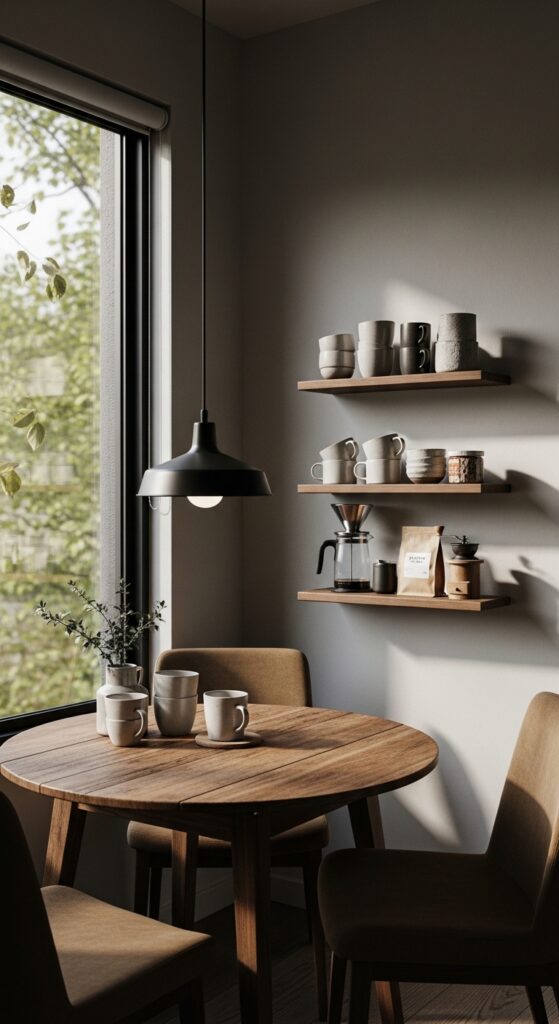
You don’t need a built-in banquette to have a breakfast vibe. What you need is a spot that feels easy to land in—especially if mornings are chaotic.
Try this:
- Place the table near natural light if possible; it makes even quick meals feel nicer.
- Add one small shelf or cart nearby for mugs, napkins, or breakfast essentials.
- Keep the styling minimal—this is a functional zone, not a staged moment.
Watch out: if the table becomes your permanent office, it won’t feel like a breakfast corner. Create a “reset” habit with a tray that clears quickly.
The takeaway: carve out a morning-friendly spot and you’ll use it more than you expect.
8. Use Open Shelving Carefully (And Only If You Like Editing)
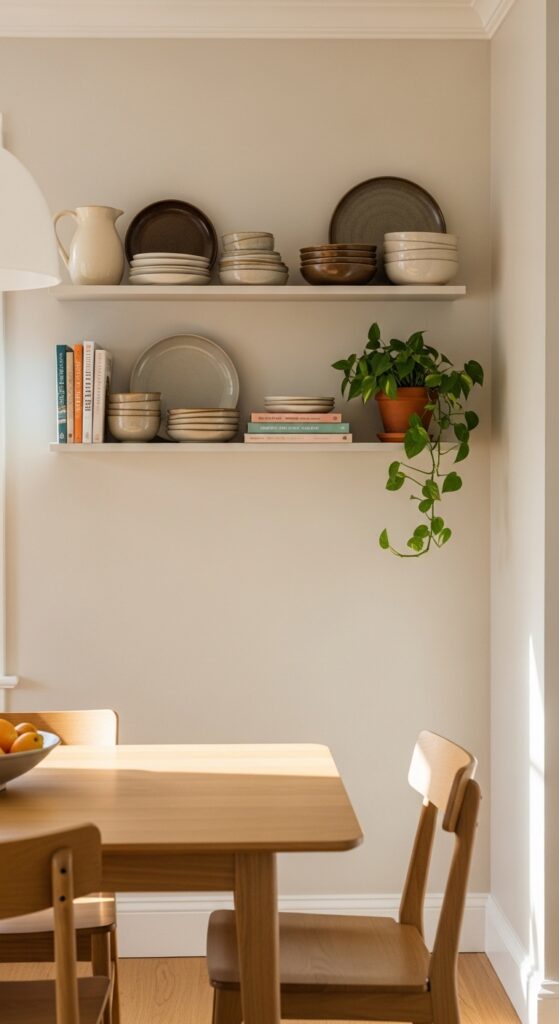
Open shelves can make a dining room feel casual and homey—if you keep them edited. The vibe should be “useful and pretty,” not “everything we own on display.”
Try this:
- Stick to one palette for dishes (creams, whites, soft grays) so it looks calm.
- Mix in a few warm materials: wood bowls, woven baskets, a ceramic pitcher.
- Leave negative space. Empty shelf space is not wasted space; it’s what makes it look intentional.
Watch out: if you hate visual clutter, skip open shelving and go closed storage instead.
The takeaway: open shelves work when they’re curated, not crammed.
9. Add Soft Curtains to De-Echo the Room
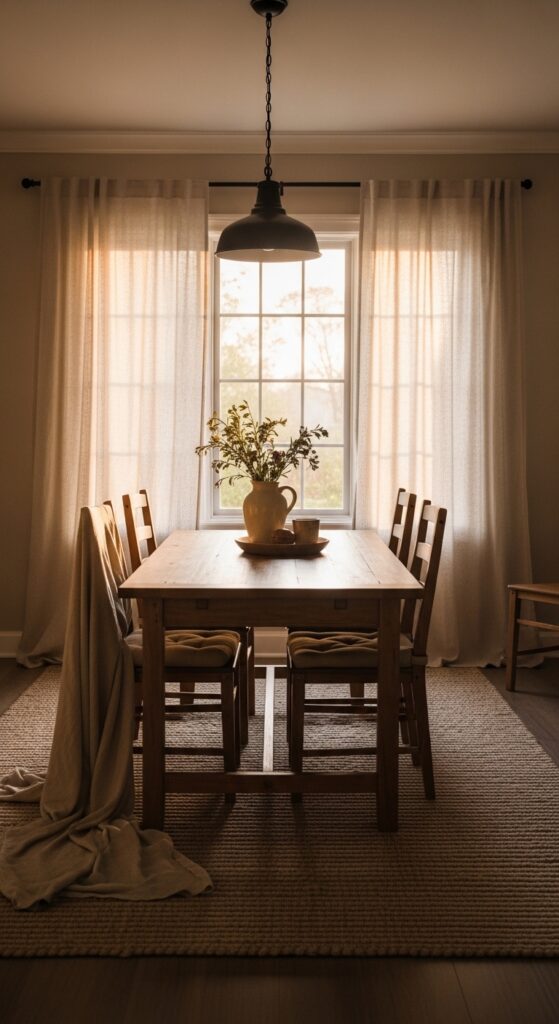
Dining rooms can get echo-y—hard surfaces, bare windows, lots of angles. Curtains are one of the fastest ways to make the space feel softer and more casual. Plus, they add height, which makes everything feel a little more grown-up.
Try this:
- Choose linen or linen-blend curtains for that relaxed, slightly rumpled look.
- Hang them higher than the window frame to visually lift the ceiling.
- If privacy is an issue, layer sheer panels with heavier side panels.
Watch out: overly crisp, shiny drapes can feel formal. Keep it matte and textured for everyday ease.
The takeaway: soft window treatments make a dining room feel quieter and more welcoming.
10. Do a “Casual Gallery Wall” That Isn’t Too Perfect
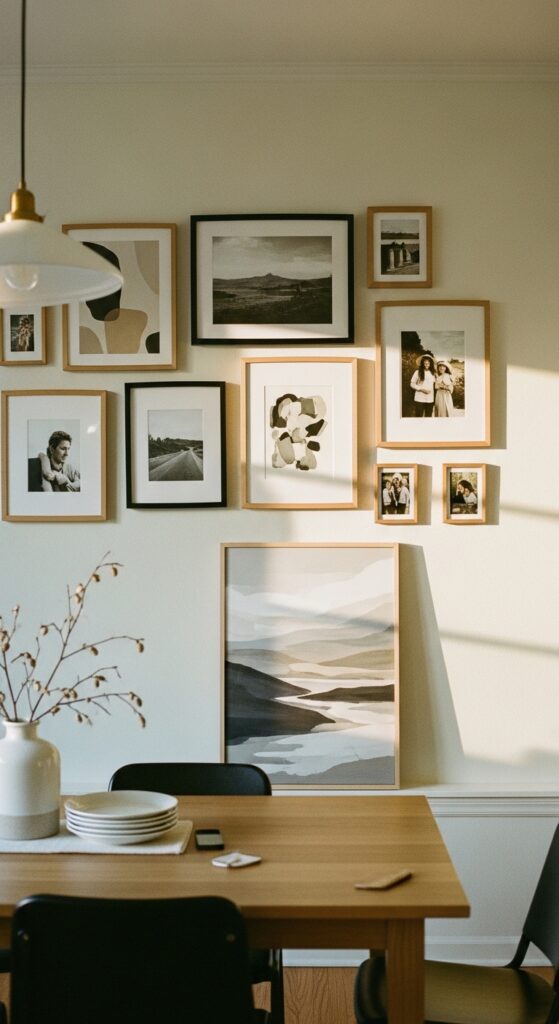
Perfectly aligned gallery walls can feel a little…stiff. Casual dining rooms do better with a looser mix: a few frames, some breathing room, and at least one piece that feels personal.
Try this:
- Keep the frames within one “family” (all wood tones, or all thin black frames) so it doesn’t get chaotic.
- Mix sizes for a collected feel, but limit the color palette so it stays calm.
- Add one unexpected piece: a kids’ drawing, a small textile, or a vintage print.
Watch out: too many tiny frames can look busy from across the room. Scale matters—include at least one medium-to-large piece.
The takeaway: a relaxed wall tells a story without turning into visual noise.
11. Bring in a Sideboard That Acts Like a Life Buffer

If your dining room is where life lands—mail, bags, random cords—a sideboard is the grown-up solution. Casual doesn’t mean chaos; it means you have a place to put things so the room still feels peaceful.
Try this:
- Choose a slim piece so it doesn’t crowd the walkway.
- Style the top with restraint: one lamp, one tray, one bowl—done.
- Use the inside for table linens, candles, and the “we use it sometimes” serving stuff.
Watch out: open cubbies and baskets can look messy unless you’re committed to tidying. Closed doors are kinder to everyday living.
The takeaway: a sideboard keeps your dining room calm even when life isn’t.
12. Add One Cozy Element That Feels Slightly Unexpected

Dining rooms don’t have to be all hard surfaces. One cozy element makes the whole space feel more “everyday”—and it subtly invites people to stay longer.
Try this:
- Keep a textured throw on the chair closest to the living area (linen, wool, or a soft cotton weave).
- Add a basket for spare napkins, placemats, or even a blanket if your house runs cold.
- If space allows, tuck a small upholstered stool in the corner for flexible seating.
Watch out: too many cozy extras can start to look like the dining room is trying to be the living room. One or two is enough.
The takeaway: a single soft, cozy detail makes the room feel human—not staged.
Conclusion
The best casual dining rooms have one thing in common: they’re designed for the way people actually live. That means comfortable chairs you don’t want to escape from, finishes that forgive real life, lighting that looks good after dark, and storage that keeps the table from becoming a permanent dumping ground. It also means letting the room breathe—less fussy styling, more thoughtful materials like linen, warm wood, matte ceramics, and woven textures that make the space feel friendly.
If you’re not sure where to start, pick the friction point. Is it the harsh overhead light? The cluttered table? The chairs nobody likes? Fix that first. A casual dining room isn’t about perfection—it’s about ease with intention. And when it’s done well, you’ll notice something simple but meaningful: you’ll use the space more, you’ll linger longer, and your home will feel just a little more like it’s working with you every day.